

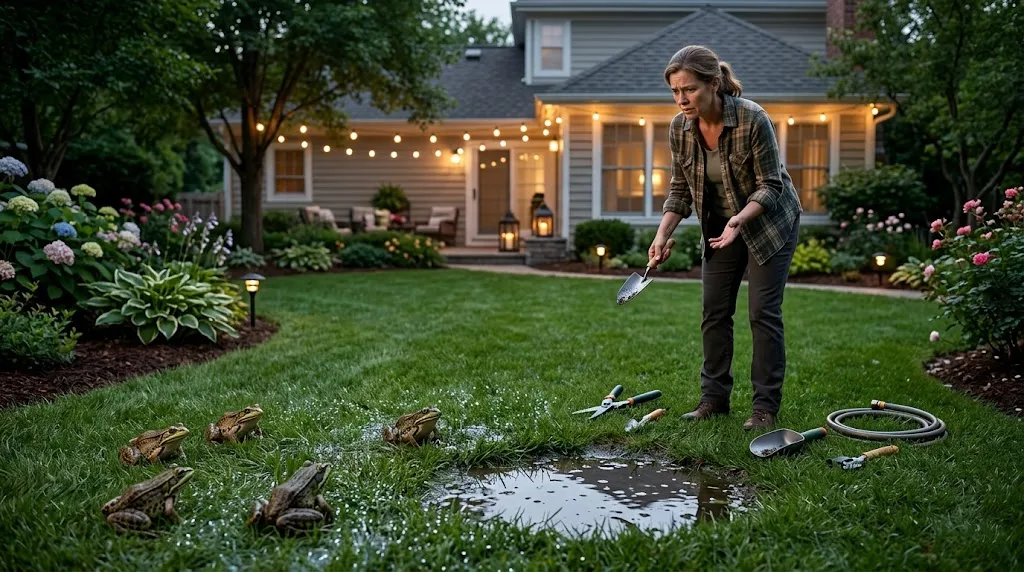
To get rid of frogs in your yard, remove standing water, cut your grass short, turn off outdoor lights at night, and spray a 50/50 vinegar-water solution around your yard’s perimeter. These steps eliminate what attracts frogs — moisture, insects, and shelter — and encourage them to move on naturally.
You step outside on a warm evening and hear it — that relentless, echoing chorus of croaking. A few frogs here and there are harmless enough, but when your yard starts to feel like a pond, it’s time to take action. If you want to know how to get rid of frogs in your yard, the good news is you don’t need harsh chemicals or professional pest control to do it. With the right approach, you can clear them out and keep them from coming back.
Why Frogs Keep Showing Up in Your Yard
Before you can fix the problem, it helps to understand what’s drawing them in. Frogs don’t wander into your yard by accident — they follow a specific set of needs: water, food, and shelter.
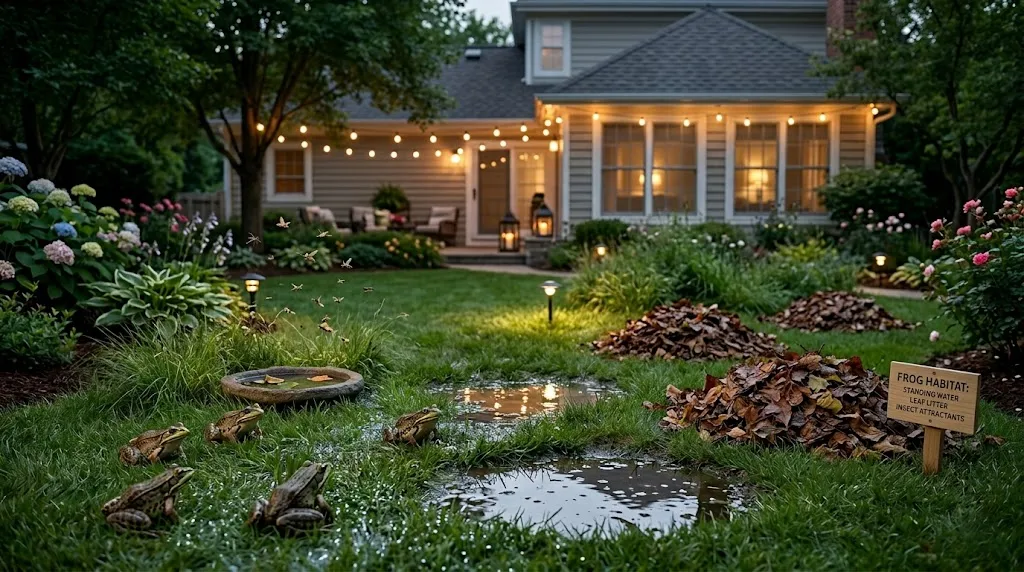
One of the most common reasons frogs show up is a nearby body of water. If you have a creek, lake, pond, or even a swimming pool in the area, frogs may be wandering over from those sources. Even smaller water features count. Bird baths, fountains, and water that collects on your lawn due to poor drainage can all draw frogs in.
Food is the other major pull. If your yard has fruit flies, grasshoppers, crickets, worms, caterpillars, snails, or spiders, you may also have hungry frogs ready to eat them. A yard with a high insect population is essentially an open buffet.
Finally, frogs love cover. Long grass, leaf piles, and rock stacks all give them cool, damp places to hide during the day. Remove those three things — water, food, and shelter — and most frogs will simply leave on their own.
Should You Even Try to Remove Them?
It’s a fair question. Frogs aren’t generally destructive, and they can actually be beneficial if you have a garden since they eat plenty of bugs, which reduces your need for chemical pesticides.
That said, there are real reasons to manage a frog population. Frogs can carry various pathogens and bacteria, including Salmonella, which can spread to you or your pets through direct and indirect contact. Frogs also attract snakes — snakes like garter snakes and ringneck snakes prey on frogs, so a yard full of frogs may soon have snakes lurking around too.
And of course, the noise. A large group of frogs croaking through the night can make it genuinely hard to sleep or enjoy your outdoor space.
One important note before you do anything: some frog species are protected by law, and killing or relocating them may require a permit. This is especially true of tree frogs from the genus Hylidae, which are among the most protected species. Always identify the species in your yard first and check your local wildlife regulations.
How to Get Rid of Frogs in Your Yard: Step by Step
Start by Eliminating Standing Water
Water is the single biggest reason frogs are in your yard, and removing it is the most effective long-term fix.
If your yard has a water feature such as a pond or pool, draining it and leaving it empty for a couple of weeks can drive frogs away. If water pools in certain spots after rain, you may need to re-grade your landscaping or install a French drain to improve runoff.
Also check for smaller, easy-to-miss water sources. Clogged gutters, tipped-over plant saucers, and even pet water bowls left outside overnight can all create the moist conditions frogs need.
Cut Your Grass and Clear the Clutter
Long grass traps moisture and provides excellent breeding and living conditions for frogs. Trimming it short decreases soil moisture and removes one of the main reasons frogs want to stay.
Beyond mowing, take a look around your yard for unnecessary hiding spots. Leaf piles, stacked rocks, wood piles, and dense low-growing shrubs all work as frog hotels. Clearing these out makes your yard far less appealing to any frog scouting for a new home.
Turn Off Outdoor Lights at Night
This one surprises a lot of homeowners, but it makes complete sense once you understand frog behavior. Night lights attract moths and other insects by the hundreds, and frogs simply follow the food chain. The pattern is light → bugs → frogs → noise.
Switching path and deck lights off at dusk, or installing motion sensors so they only activate when needed, can break this cycle. If security lighting must stay on, warm 2000K LED bulbs are a smarter swap — insects largely ignore that spectrum, which means fewer bugs and fewer frogs.
Use a Vinegar Spray Around the Perimeter
This is one of the most popular home remedies, and it actually works. Combine equal parts water and white vinegar in a spray bottle, then spray the mixture around the edges of your garden and yard. The vinegar causes a mild stinging sensation on frogs’ feet, discouraging them from entering the area.
A few important cautions here: never spray vinegar directly on plants because it will kill them, and never spray it into pond water since it changes the pH and can harm fish. Stick to rocks, pavement, and bare ground, and reapply after it rains.
Coffee grounds work in a similar way — scattering them into the soil creates a mild burning sensation on frogs’ feet and discourages them from lingering.
Set Up a Physical Barrier
Once you’ve cleaned up your yard and removed the attractions, a simple fence can prevent new frogs from wandering in. A fine-mesh fence works best — it stops large frogs from jumping over and prevents small frogs from squeezing through the gaps.
Make sure the fence holes are smaller than standard chicken wire, and secure the posts firmly so they don’t tip over. This doesn’t need to be expensive or elaborate. Even a short mesh barrier around the most problematic areas of your yard can make a noticeable difference.
Try Natural Repellent Plants
Certain plants naturally deter frogs through scent alone. Citrus-scented plants like lemongrass, marigolds, and mint produce odors that frogs find unpleasant. Citronella is also an effective natural repellent.
Planting a border of these around your yard serves a dual purpose — they look great and quietly tell frogs to move along.
Use Decoy Predators Strategically
Frogs are prey animals with sharp survival instincts. Placing a realistic heron decoy, owl statue, or rubber snake near pond edges or problem areas can deter frogs from settling in. The key is to move the decoy every few days — frogs quickly learn to ignore objects that never move.
Some homeowners combine decoys with motion-activated sprinklers for an even more convincing setup. The sudden spray of water at night is harmless but startles frogs enough to make them think twice about staying.
How to Remove Frogs That Are Already There
Once you’ve made your yard less welcoming, you’ll want to physically remove the frogs already on your property so they don’t just hunker down and wait it out.
Use a long-handled net with small-holed mesh to scoop frogs out of pools or ponds and place them into a tall container. This is easier with two people.
When relocating frogs, carry them at least half a mile away to a public wetland, creek, or marshy area. Frogs have strong homing instincts within a few hundred yards, so short-distance drops often don’t stick.
Don’t forget the next generation either. Frog eggs clump together in water — scoop them out and leave them on dry ground. Use a net to gather any tadpoles from the bottom of your pool or pond as well.
When to Call a Professional
Most frog problems can be resolved with the steps above, but there are situations where professional help makes sense.
If you suspect the frogs in your yard belong to a rare or protected species, it’s crucial to involve a wildlife management expert who can correctly identify them and handle the situation legally. If the frog population is causing health hazards for your family or pets — particularly if toxic species like cane toads are involved — a professional should handle the removal.
Keeping Frogs Away for Good
Getting rid of frogs is one thing. Keeping them away is another. The long-term strategy is straightforward: keep grass short, eliminate standing water, reduce outdoor lighting at night, and spray a vinegar-water solution along the perimeter at dusk during peak frog season (spring through early fall).
A solid insect control program also helps. Since frogs feed on insects, reducing the bug population in your yard removes their main reason for visiting. This doesn’t mean spraying harmful chemicals everywhere — smart landscaping choices, fewer lights, and proper drainage do most of the work naturally.
Consistency matters more than any single fix. A yard that’s dry, tidy, and bug-light is one frogs simply won’t choose when there are better options nearby.
Conclusion
Dealing with a frog invasion is frustrating, but it’s also very fixable. The most effective approach combines habitat changes — draining water, mowing regularly, clearing debris — with simple deterrents like vinegar spray, smart lighting, and physical barriers. Start with the root causes, and the frogs will follow their needs somewhere else.
Just remember to check your local regulations before relocating or handling any frogs, and always identify the species first. With a little patience and the right steps, your yard can be quiet, frog-free, and back to being a space you actually enjoy.
