

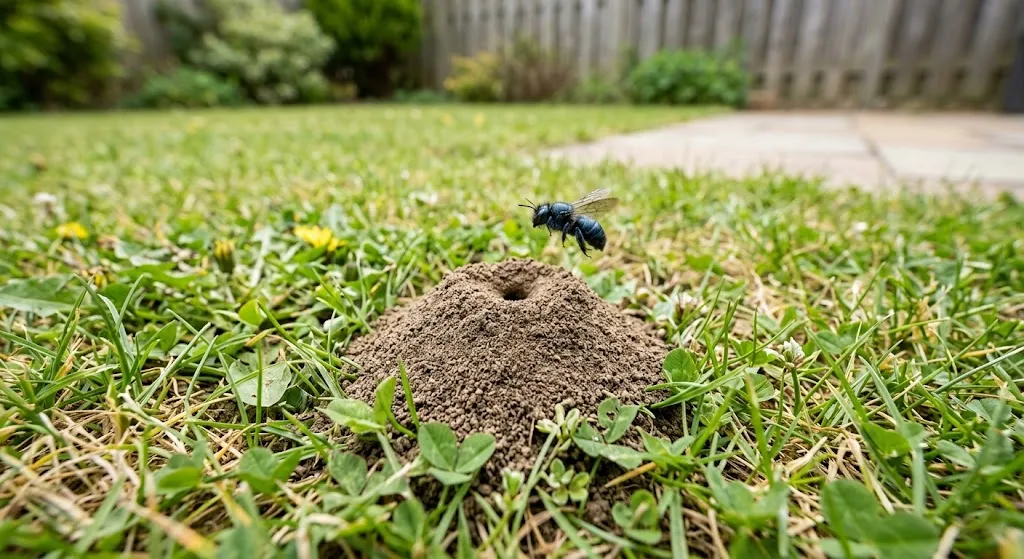
To get rid of ground bees, water their nesting areas daily to make the soil less appealing, block burrow entrances with bricks or rocks, or sprinkle cinnamon and peppermint oil around the holes. For severe infestations, use insecticide dust at dusk or call a pest control professional.
You step outside one morning and notice small cone-shaped mounds of dirt scattered across your lawn. Tiny bees zip in and out of pencil-sized holes in the ground. If this sounds familiar, you’re dealing with ground bees — and figuring out how to get rid of ground bees is probably your first priority.
The good news? Most ground bees are far less dangerous than they look. And with the right approach, you can handle them safely, protect your family, and keep your lawn looking clean.
What Are Ground Bees and Should You Be Worried?
Ground bees — also called mining bees or solitary bees — are a broad group of bee species that nest underground instead of in hives. They create underground galleries and, unlike bumblebees, are generally docile and unlikely to sting. Male ground bees may appear aggressive, but they don’t have stingers and are harmless.
They’re typically about ½ inch to ¾ inch long and can vary in color from black and yellow to blue, purple, or even green with a metallic tint.
So why do people want them gone? The main concerns are:
The sight of multiple holes in a lawn can be alarming. If you have young children or pets running around, even a low-risk sting situation feels unacceptable. And some homeowners simply don’t want bees nesting right where they walk, play, or garden.
That’s completely understandable. Let’s look at how to identify them first, and then get into the real solutions.
How to Identify a Ground Bee Nest
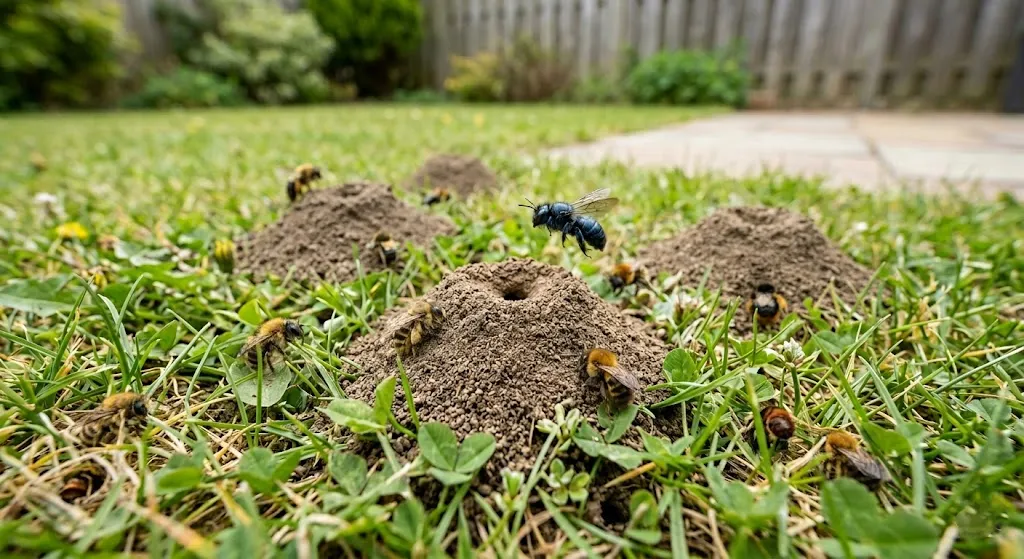
Before you treat anything, make sure you’re actually dealing with ground bees and not yellow jackets or wasps. Look for pointed piles of dirt that resemble cones with a pencil-sized hole at the top. That’s a strong indicator of a ground bee nest.
Small mounds of soil near entrance holes are another telltale sign of ground bee activity. Multiple bees hovering or entering and exiting holes in the ground is also a strong confirmation.
Yellow jackets and wasps are far more aggressive and require a different removal strategy altogether. If the insects coming in and out look thin and wasp-like, don’t proceed with the methods below — call a pest professional instead.
Natural Ways to Get Rid of Ground Bees
If you prefer to handle things without chemicals, you have several effective options. These methods work best early in the season before the colony grows larger.
Water Their Nesting Area Consistently
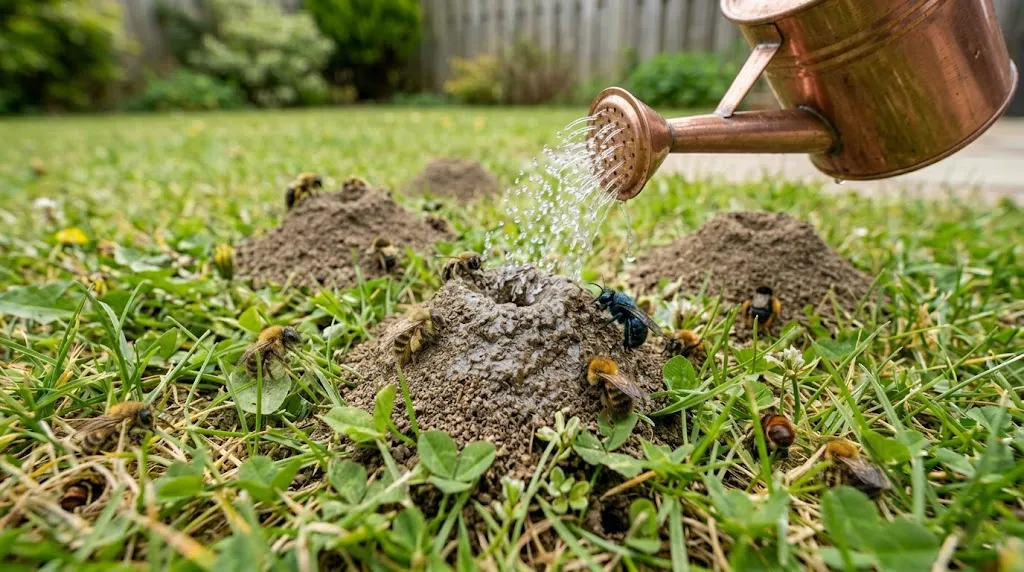
Ground bees prefer dry conditions, so the more you water the lawn, the less likely they are to build nests. Consistent watering can also encourage current ground bees to move elsewhere.
Soak the soil around the burrow entrances once or twice a day for several days in a row. The goal is to keep it damp enough that the area stops feeling like a good home. This method is completely chemical-free and won’t harm your grass.
Try this method early in the season when bees are just starting to build their nests — it’s far more effective before the colony grows.
Use Scents That Repel Ground Bees
Ground bees are surprisingly sensitive to certain smells. They’re also sensitive to certain plants, including peppermint and cucumbers. Cinnamon is also an effective repellent — sprinkle it on the holes and around the ground to drive them away.
Peppermint oil works well too. Mix a few drops with water in a spray bottle and apply it around the nest entrance in the evening. Repeat every couple of days. It won’t harm the bees or your soil, but it makes the area unappealing enough that they’ll look for a better spot.
Block the Burrow Entrances
Placing spare bricks or large rocks over the holes keeps bees from going back inside their nests and laying more eggs. Once the insects realize they can’t go in or out, they’ll likely search for other areas to create nests.
Do this at night when the bees are inside and less active. It’s a simple fix that requires no products at all.
Chemical Methods to Remove Ground Bees
When natural methods don’t get the job done, you can move on to chemical treatments. These are more effective for established colonies or large infestations.
Insecticide Dust or Spray
Chemical treatments like dusts and sprays work best when applied at dusk when bees are inside their burrows. This reduces your risk of being stung and maximizes the treatment’s effectiveness since the product gets into the nest while the bees are resting.
Insecticides come in many varieties, including dust powders, liquids, and sprays. Follow the instructions closely and avoid applying them directly into the ground bee nests, as they may contaminate and be toxic to your soil and plants.
Always wear long sleeves, gloves, and protective eyewear when applying any chemical treatment.
Soapy Water Solution
A dish soap and water mix is a gentler chemical option. The soap helps break down the bees’ waxy coating, making it uncomfortable for them to stay in their nests. Mix a few tablespoons of dish soap into a bucket of warm water and pour it slowly into the burrow entrance at night.
This method is more effective than plain water and doesn’t leave harmful residues in your soil.
How to Prevent Ground Bees From Coming Back
Getting rid of them is one thing. Keeping them gone is another. The best long-term strategy is making your yard less appealing as a nesting site.
Making the soil surface less accessible is the most practical and effective approach for discouraging ground-nesting bees in the future. For lawns, that means improving density through overseeding, or mulching exposed soil in garden beds with about 2 to 3 inches of mulch.
Ground bees are strongly attracted to dry, bare, loose soil. The more you can cover bare patches and keep the ground moist and dense with grass, the less interesting your yard becomes to them.
Sealing cracks around patios and walkways, and covering bare spots with mulch or groundcovers, are also effective prevention steps.
When to Call a Professional
Some situations call for expert help rather than DIY fixes.
If ground bees have taken over your yard, professional pest intervention offers the most effective removal method. An experienced pest control company can locate all nests and build a targeted treatment plan.
You should strongly consider calling a pro if:
The infestation is large and spread across multiple areas of the yard. The nests are close to a play area, front door, or high-traffic path. Someone in your household is allergic to bee stings. You’ve tried multiple DIY methods and nothing has worked.
Pest control technicians use targeted insecticides that minimize harm to beneficial insects and the environment. They also have the expertise and equipment to safely remove bees without putting your health at risk.
Some local beekeepers even offer bee removal for free, especially if they can relocate the bees rather than exterminate them. It’s worth a quick call to a local beekeeper before spending money on an exterminator.
A Word on Ground Bee Safety
Here’s something worth knowing before you head outside with a bucket of soapy water: ground bees are genuinely useful. They are avid pollinators and spend many of their waking hours searching for nectar and pollen.
Their burrows also help to aerate the soil, which benefits plant roots. Habitat for ground-nesting bees is shrinking because of development and pesticide use, so if you can tolerate them for the short season they’re active, that’s worth considering.
Each active ground bee nest lasts one season. When the next generation emerges in the spring, those females establish their own nests. In many cases, waiting them out is a perfectly reasonable choice.
That said, if they’re posing a real safety concern in your yard, removing them is the right call. Just try the gentler methods first, and escalate only if needed.
How to Get Rid of Ground Bees: A Practical Summary
The best approach depends on your situation. If the bees are in a low-traffic corner of the yard and you have no allergies in the household, consistent watering and natural repellents are likely all you need. If the nest is near your front door or children’s play area, move faster with blocking the entrance or using insecticide dust at dusk.
Always work in the evening or at night when bees are resting inside their burrows. Wear protective clothing no matter which method you choose. And if anything feels unsafe or the problem is too large to manage, don’t hesitate to call a professional.
Ground bees are manageable. With a little patience and the right method, you can reclaim your yard without overcomplicating things
