

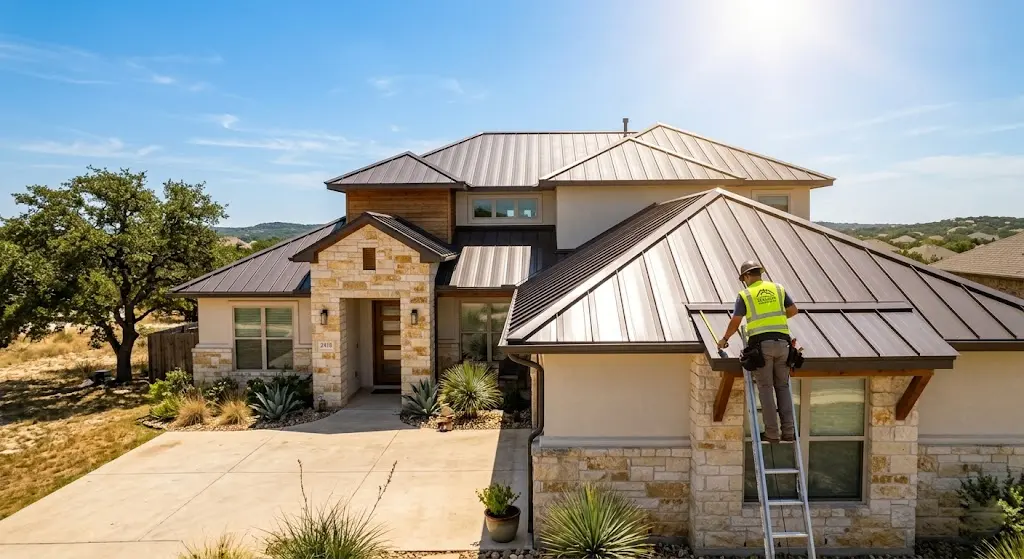
What is metal roofing in Central Texas? Metal roofing in Central Texas is a durable, long-lasting roofing system — typically standing seam or R-panel steel — designed to handle intense heat, hailstorms, and high winds. It lasts 40–70 years, reflects solar heat to cut cooling costs, and often qualifies for homeowner insurance discounts in storm-prone Texas regions.
If you own a home in Central Texas, you already know what your roof goes through. Spring hailstorms. Brutal summer heat that pushes past 100°F for weeks at a time. Sudden downpours. Then a surprise freeze. It’s a lot to ask of any roofing material.
That’s exactly why more homeowners across Austin, San Antonio, Waco, and the Hill Country are turning to metal roofing in Central Texas. It’s built tough, it lasts a long time, and it can actually save you money in more ways than one. But before you commit, it helps to understand what you’re getting into — the costs, the options, the trade-offs, and why your neighbor just put one on their house.
This guide walks you through everything you need to know.
Why Central Texas Is Hard on Roofs
The climate here is unlike most places in the country. Central Texas sits in what’s sometimes called “Hail Alley,” a region that sees some of the most frequent and severe hailstorms in the United States. Add to that roughly 2,300 hours of intense sun exposure each year, and you have conditions that can age an asphalt shingle roof fast.
A standard asphalt roof in this climate typically lasts 15 to 25 years — and that’s if it doesn’t take a direct hit from hail. After a bad storm, you might find yourself on the phone with your insurance company far sooner than expected.
Metal roofing, on the other hand, is engineered specifically to handle these extremes. Its durability isn’t a marketing claim — it’s a practical solution to a real regional problem.
How Long Does a Metal Roof Last in Central Texas?
This is the big number that gets people’s attention. A properly installed metal roof in Central Texas can last 40 to 70 years — and some standing seam and copper systems go well beyond that. Compare that to asphalt shingles that might need replacement every 15 to 20 years in this climate, and the math starts to shift in metal’s favor over the life of a home.
The key phrase is “properly installed.” Central Texas temperatures cause materials to expand and contract significantly between seasons. A quality installation uses the right clips, fastener spacing, and underlayment to accommodate that movement. Cut corners here, and you lose a lot of that longevity.
Types of Metal Roofing Available in Central Texas
Not all metal roofs look the same or cost the same. In this region, you’ll typically hear about three main systems.
Standing Seam Metal Roofing
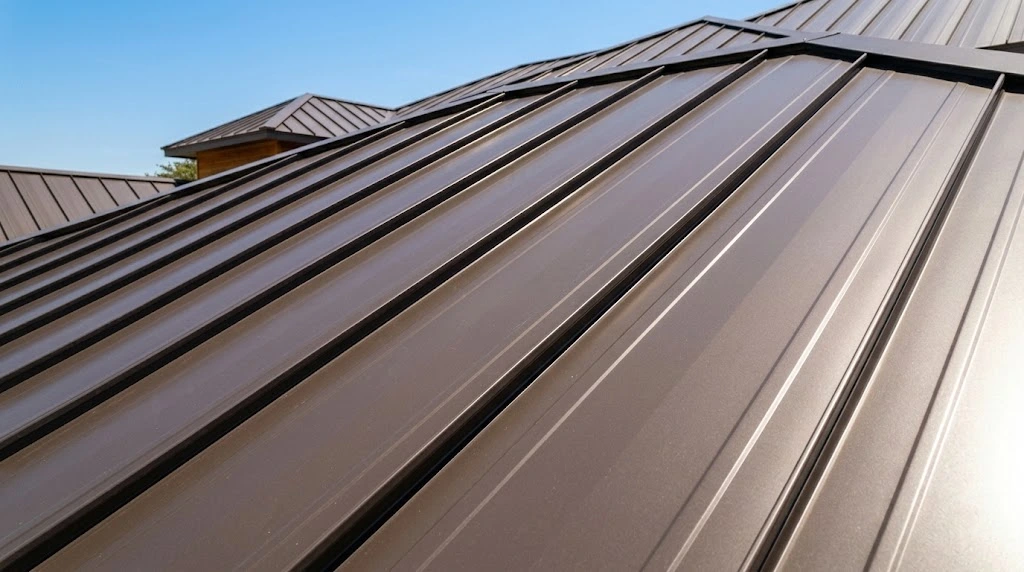
This is the gold standard. Standing seam panels interlock at raised seams, hiding all the fasteners from view. That means fewer penetrations in the roof surface and fewer points where water can get in over time. It’s the most durable option, the lowest maintenance, and the best-looking for modern Hill Country homes and Austin infill builds. It’s also the most expensive.
R-Panel (Exposed Fastener) Metal Roofing
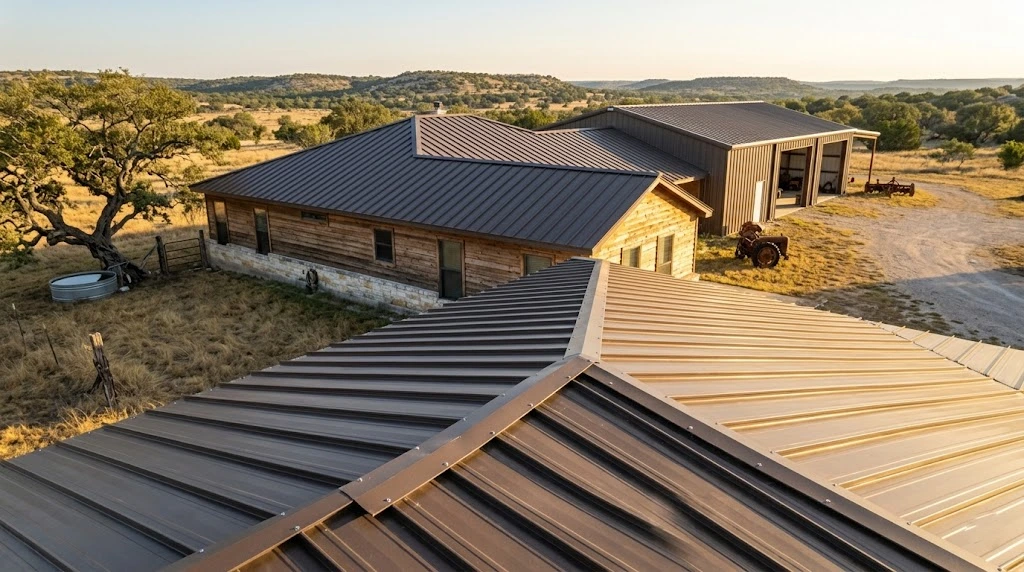
R-panel uses overlapping ridged panels secured with visible fasteners. It’s a more affordable entry point into metal roofing and is widely used on ranches, agricultural buildings, and rural properties across Central Texas. The trade-off is that the exposed fasteners need periodic inspection and resealing to prevent leaks as the rubber gaskets age.
Galvalume and Galvanized Steel
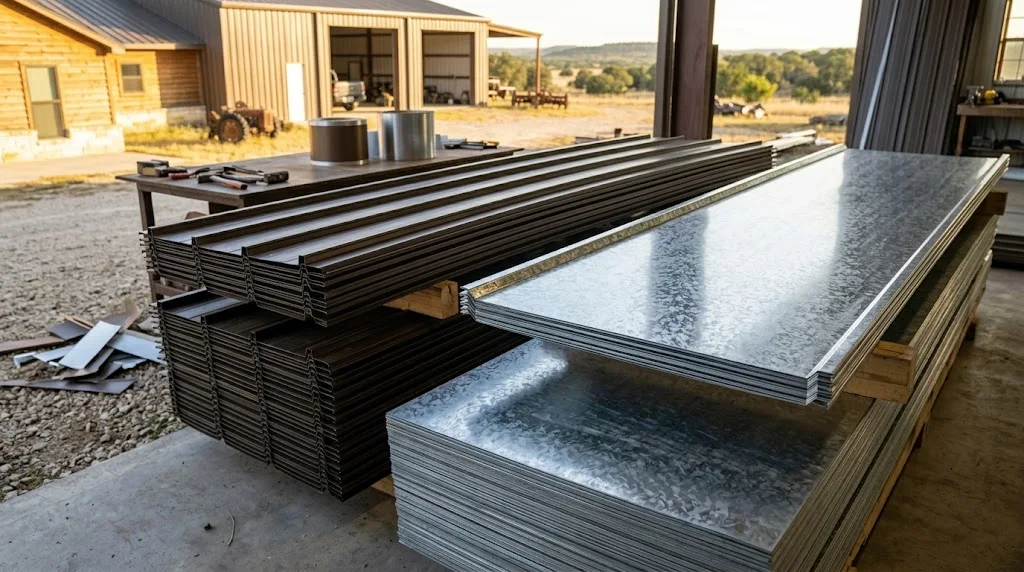
These are the most common materials used in both standing seam and R-panel systems. Galvalume steel — a steel sheet coated with aluminum and zinc — offers excellent corrosion resistance and holds up well under the Central Texas sun. It’s durable, relatively affordable, and widely available from manufacturers who serve this region.
The Real Cost of Metal Roofing in Central Texas
Here’s where most homeowners get sticker shock. Metal roofing costs more upfront than asphalt — there’s no getting around that. In the Austin metro and surrounding Central Texas markets, labor demand tends to push prices about 5 to 8 percent higher than the state average.
For a typical 2,000-square-foot home, you can generally expect to pay somewhere in the range of $18,000 to $23,000 for a mid-grade metal roof installation. Standing seam systems run higher — often $12 to $18 per square foot installed — while R-panel systems are closer to $9 to $12 per square foot.
Factors that move the price up or down include the pitch and complexity of your roof, the gauge and quality of the panels, the type of underlayment used, and whether tear-off of an existing roof is required.
That said, the upfront cost tells only part of the story.
What You Save Over Time
An asphalt roof in Central Texas may need replacing two or even three times over the same period a metal roof is still performing. When you factor in those future replacement costs, a metal roof often ends up being the more economical choice over the decades.
Energy savings add another layer of value. Metal roofing reflects a significant portion of the sun’s solar radiation — some coatings bounce back up to 70 percent of incoming heat. That keeps your attic cooler, which means your air conditioner works less. In a state where the AC runs nearly nine months a year, the reduction in cooling costs — often somewhere between 15 and 25 percent — adds up to real money over time.
Then there’s insurance. Because metal roofs are fire-resistant and many carry a Class 4 impact rating — the highest available — some Texas insurers offer meaningful premium discounts to homeowners who install them. In areas that experience severe hail regularly, those discounts can reach up to 35 percent annually. It’s worth calling your insurance agent before installation to find out exactly what you qualify for.
Metal Roofing and Central Texas Weather Events
Hailstorms
Central Texas sees hail throughout the spring and early summer, and some storms produce stones large enough to punch through asphalt shingles. A Class 4 impact-rated metal roof is designed to withstand two-inch hailstones without cracking or failing. Cosmetic dents may occur in very severe storms, but the roof continues to protect your home.
Before purchasing any metal roofing system, ask your contractor whether the panels carry UL 2218 Class 4 certification. Not every metal panel automatically qualifies — it needs to have been formally tested.
Extreme Heat
Standing seam metal roofs with reflective coatings are particularly effective at managing Central Texas heat. Lighter color choices reflect more solar radiation, keeping the surface of the roof — and by extension, your attic — significantly cooler than darker materials. For homes in Austin, San Antonio, or the Hill Country, this is not a minor detail. It directly affects how much your HVAC system strains through July and August.
Wind and Storms
Quality metal systems are rated to handle winds between 140 and 170 miles per hour when properly installed. Unlike asphalt shingles, which can lift and peel off one section at a time during high winds, interlocked metal panels are designed to stay put as a unified system.
Wildfire Risk
This one matters more than many homeowners realize. Parts of Central Texas and the Hill Country carry real wildfire risk. Metal roofing is non-combustible and carries a Class A fire rating — the highest possible. That means it won’t ignite from airborne embers or radiant heat the way a wood shake roof might. For homes on acreage or in more rural Hill Country settings, that’s a meaningful layer of protection.
What to Watch Out For
Metal roofing has some genuine trade-offs worth knowing.
The biggest one is noise. Without proper insulation and a solid underlayment beneath the panels, rain can be noticeably louder on a metal roof than on shingles. A good installer will use high-quality underlayment and ensure your attic insulation is adequate — this largely eliminates the issue.
Thermal expansion is another factor. Central Texas temperature swings are dramatic, and metal expands and contracts with the heat. Panels and fasteners need to be installed with this movement in mind. A properly specified system handles it without problems, but a rushed or inexperienced installation can lead to panel waviness (called oil canning) or fastener issues over time.
Finally, the color and finish you choose today is what you’ll live with for decades. Premium coatings maintain their reflectivity and color for 15 to 30 years under Central Texas sun, but cheaper finishes can fade faster. Choosing a quality PVDF (Kynar) coating over a standard polyester paint will pay off in the long run.
Metal Roofing and Solar Panels
If you’re thinking about adding solar panels to your home, a standing seam metal roof is one of the most compatible surfaces available. Solar mounting systems can clamp directly to the raised seams without penetrating the roof surface at all. That means no holes, no potential leak points, and a cleaner installation overall. If you’re planning both projects, it makes sense to coordinate your roofer and solar installer at the same time.
How to Choose a Metal Roofing Contractor in Central Texas
The quality of your installation matters as much as the quality of the panels. When evaluating contractors, look for licensing with the Texas Department of Licensing and Regulation (TDLR), proof of insurance, and specific experience with the type of metal system you’re choosing. Ask for references from local jobs, not just a portfolio from another state.
Get itemized quotes from at least two or three contractors so you can compare what’s actually included — underlayment type, panel gauge, warranty coverage, and labor guarantees. The lowest bid isn’t always the best deal, especially with a product meant to last 50 years.
Is Metal Roofing Right for Your Central Texas Home?
It comes down to how long you plan to stay in your home and how you weigh upfront cost against long-term value.
If you’re planning to live in your home for 10 years or more, metal roofing in Central Texas makes a strong case for itself. The durability, energy savings, storm resistance, and insurance benefits add up meaningfully over time. If you’re likely to sell within the next few years, a quality impact-resistant shingle system might offer a better balance of cost and return.
For long-term owners — especially those in storm-prone areas around Austin, Round Rock, Georgetown, and the Hill Country — metal roofing is often the last roof they’ll ever need. That alone is worth a lot.
Conclusion
Central Texas is one of the most demanding climates for roofing in the country. Heat, hail, wind, UV exposure, and occasional wildfires all put pressure on the same structure year after year. Metal roofing is designed to stand up to all of it — and then some.
Yes, the upfront cost is real. But when you factor in the lifespan, the energy savings, the potential insurance discounts, and the peace of mind that comes with not worrying about your roof for the next several decades, the value becomes clear. If you’re ready to stop replacing your roof every 15 to 20 years and start investing in something built to last, metal roofing in Central Texas is worth a serious look.
Talk to a licensed local contractor, get a few detailed quotes, and ask about Class 4 impact ratings. Your roof will thank you — and so will your energy bill.
