

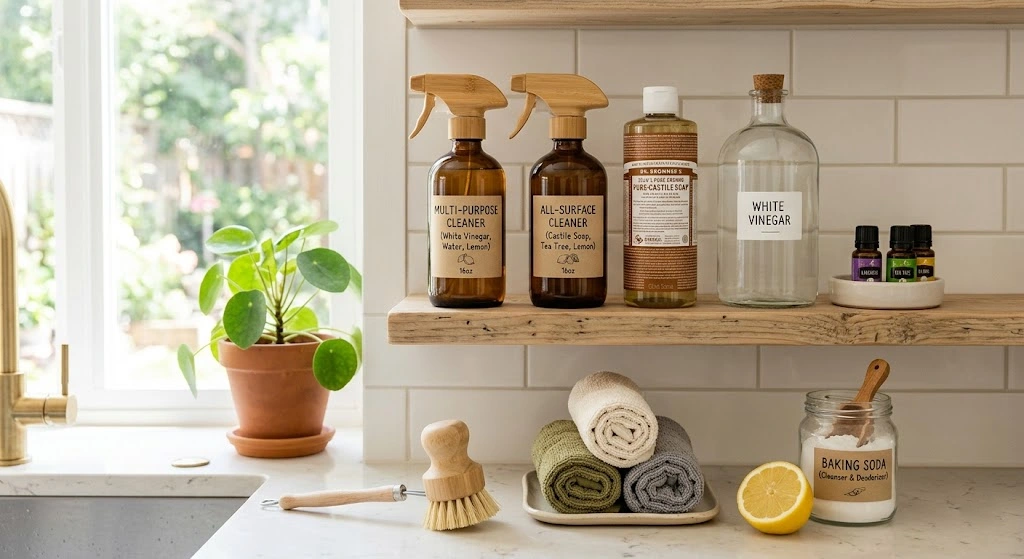
Natural cleaning products use plant-based, biodegradable ingredients — like vinegar, baking soda, castile soap, and essential oils — to clean your home safely and effectively. They contain no harsh synthetic chemicals, making them safer for your family, pets, and the environment, while still tackling dirt, grease, and germs with real power.
If you’ve ever read the back of a conventional cleaning product and wondered what half those ingredients actually are, you’re not alone. More people than ever are turning to natural cleaning products as a smarter, safer alternative — and for good reason.
These plant-based cleaners work just as well as their chemical-heavy counterparts, but without filling your home with fumes, residues, or synthetic compounds you can’t pronounce. Whether you’re a first-time switcher or someone looking to go deeper into eco-friendly living, this guide covers everything you need to know.
Why People Are Making the Switch to Natural Cleaning Products
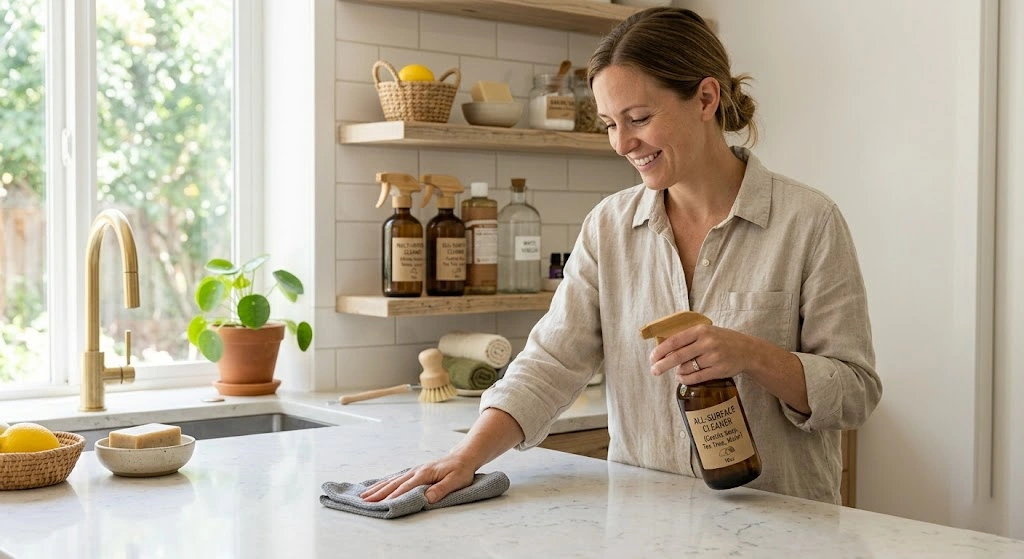
A decade ago, “green cleaning” felt like a niche hobby. Today, it’s mainstream — and the shift is driven by something simple: awareness.
Traditional cleaning products often contain toxic chemicals like ammonia, phthalates, and triclosan that can trigger allergies, asthma, and other sensitivities. When you use these products regularly, especially in enclosed spaces like bathrooms and kitchens, the exposure adds up over time.
Indoor air quality is an often-overlooked aspect of home health, and natural cleaning products stand out for their absence of volatile organic compounds — chemical substances that evaporate at room temperature and pollute indoor air.
That’s a real concern, especially for households with young children, elderly family members, or anyone dealing with respiratory issues. Swapping to plant-based cleaners can genuinely make the air in your home cleaner and safer to breathe.
What Actually Makes a Cleaning Product “Natural”?
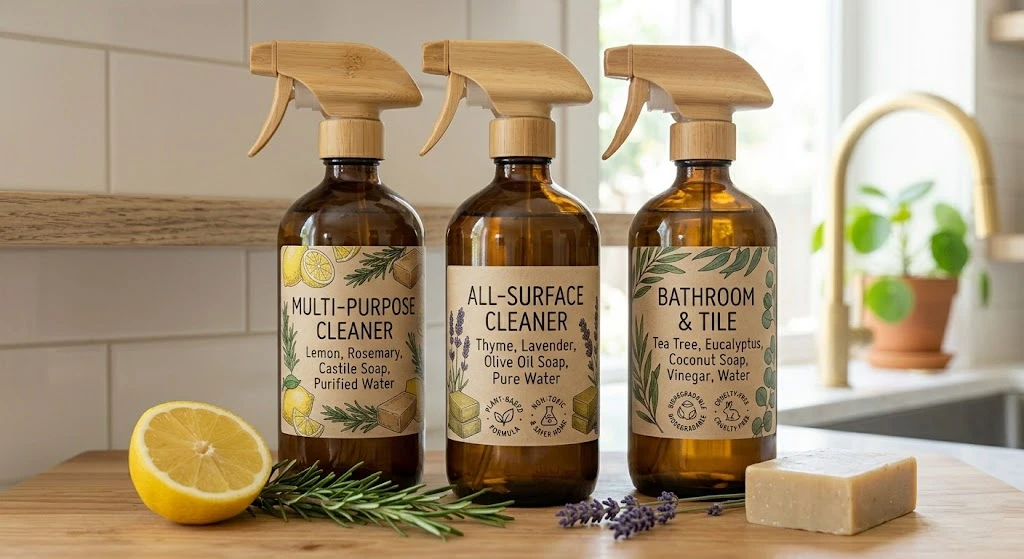
The word “natural” gets thrown around a lot, and not every product that uses it deserves the label. So what should you actually look for?
Eco-friendly cleaning products are typically free from harmful chemicals like ammonia, chlorine bleach, and artificial fragrances. They rely on plant-based ingredients, essential oils, and biodegradable substances to clean surfaces effectively without leaving behind toxic residues.
If a brand won’t show you their full ingredient list, that’s a red flag. Look for specific plant names — like “coconut-derived surfactant” instead of a vague “cleaning agent” — and avoid any product that just lists “fragrance,” a loophole that allows companies to hide thousands of chemicals, including phthalates.
Third-party certifications matter too. The EPA Safer Choice label means every component has been reviewed by the EPA for human and environmental safety. Labels like EWG Verified and MADE SAFE® are equally worth looking for.
MADE SAFE® certification means a product has been made with safe ingredients that are not known or suspected to harm human health, animals, aquatic life, or ecosystems.
The Core Ingredients That Power Natural Cleaners
You don’t need a chemistry degree to understand what goes into a good natural cleaner. Most of them are built on just a handful of powerhouse ingredients.
Baking Soda
Baking soda has been a cleaning staple for decades. Sodium bicarbonate is a mild abrasive that lifts away grime without scratching surfaces, and it’s a proven odor eliminator. You’ll find it in everything from all-purpose sprays to toilet bowl cleaners and laundry powders.
White Vinegar
Acetic acid — better known as white vinegar — has a myriad of uses, from disinfecting to deodorizing. It cuts through grease, dissolves mineral buildup, and neutralizes odors naturally. One important note: avoid using vinegar on natural stone, waxed wood, cast iron, or aluminum, and check appliance manuals before using it near rubber components.
Castile Soap
Castile soap is made of plant oils — including coconut, hemp, sunflower seed, jojoba, and olive — and is gentle on both people and the environment. As a cleaner, it can substitute for at least 11 personal care products and home cleaners. It’s the backbone of many DIY spray recipes and commercial plant-based dish soaps.
Essential Oils
Essential oils do more than just make your cleaner smell good. Lemon, orange, lime, grapefruit, tea tree, thyme, lemongrass, lavender, rosemary, and eucalyptus oils all have antibacterial, antifungal, and grease-cutting properties. A few drops go a long way when added to a cleaning spray.
Citric Acid
Citric acid is excellent for dissolving hard water spots and soap scum, making it a go-to ingredient for bathroom and kitchen surfaces. It’s completely plant-derived and biodegrades quickly once it goes down the drain.
The Real Benefits of Natural Cleaning Products
Switching to non-toxic cleaners isn’t just a feel-good choice. The benefits are practical and measurable.
Better for Your Health
By choosing natural cleaning solutions, you create a safer living environment for your family, pets, and colleagues — with no harsh fumes or toxic residues left behind to cause headaches, dizziness, or respiratory distress. This is particularly important in kitchens and bathrooms, where conventional cleaners are used most heavily and ventilation is often limited.
For households with babies, toddlers, or pets who spend a lot of time on floors and surfaces, this matters even more. Residue from synthetic cleaners lingers long after the surface appears dry.
Gentler on the Planet
Unlike conventional cleaners that often contain synthetic ingredients derived from petroleum, natural cleaners use renewable raw materials that are biodegradable — meaning they break down quickly in the environment without leaving toxic residues.
Traditional cleaning products often contain phosphates and other chemicals that can contaminate water supplies and harm aquatic life when washed down the drain. Plant-based alternatives sidestep this problem entirely.
Sustainable Packaging
Many natural cleaning brands use recycled packaging, glass bottles, compostable materials, or refill systems, making them low-waste and mindful of their carbon impact. Several brands now offer concentrated refill tablets that dissolve in water, eliminating the need for single-use plastic bottles entirely.
Surprisingly Effective
One of the biggest myths about natural cleaners is that they don’t work as well. Many green cleaning products perform just as well as — if not better than — traditional cleaners. Ingredients like vinegar, baking soda, and essential oils can clean, deodorize, and disinfect effectively without leaving behind harmful residues.
Room-by-Room Guide to Using Natural Cleaners
Knowing what to reach for in each room makes the transition much smoother.
Kitchen
The kitchen is where grease, food residue, and bacteria meet. A castile soap-based spray handles everyday countertop cleaning beautifully. For stubborn grease on stovetops, orange extract acts as a powerful natural degreaser, capable of removing stubborn stains and greasy residues from countertops, sinks, and appliances. A paste made from baking soda and water works wonders on oven interiors without the toxic fumes of commercial oven cleaners.
Bathroom
Citric acid is your best friend in the bathroom. It dissolves soap scum and hard water stains without scrubbing for minutes on end. For disinfecting, you can make an effective disinfectant by mixing one cup of water, one and a quarter cups of rubbing alcohol at least 70 percent strength, and a quarter cup of distilled white vinegar, with ten drops of essential oils if desired.
Floors and Surfaces
For natural products like hardwood floors, wooden furniture, or bamboo cutting boards, natural oils like aged linseed oil, pure tung oil, and pure beeswax can clean and protect without synthetic chemicals. For tile and vinyl floors, a diluted castile soap solution does the job without leaving behind a slippery residue.
Laundry
Washing soda, baking soda, sodium percarbonate, and soap made from organic coconut oil are the backbone of effective natural laundry products. If you have sensitive skin, fragrance-free laundry powders are worth seeking out — they clean just as well without any risk of skin irritation from synthetic perfumes.
How to Read Labels and Avoid Greenwashing
This is where many shoppers get tripped up. A product with a leaf on the label and words like “eco” or “green” isn’t automatically safe or sustainable.
If a label contains vague terms like “fragrance” or “proprietary blend,” it could be greenwashing — many brands use eco-friendly buzzwords without backing them up. Always check for third-party certifications and research unfamiliar ingredients to ensure you’re choosing genuinely safe, sustainable products.
Look for brands that publish their full ingredient lists — not just marketing claims. Transparency is a strong signal of integrity. If a brand makes you dig to find out what’s in their product, that’s worth noting.
Making Your Own Natural Cleaning Products at Home
You don’t have to buy anything special to start cleaning naturally. Some of the most effective natural cleaners are already in your kitchen.
A simple all-purpose spray can be made with equal parts water and white vinegar, a squeeze of lemon juice, and ten drops of tea tree oil. It works on countertops, stovetops, and bathroom tiles. For a mild scrubbing paste, mix baking soda with a small amount of liquid castile soap until it reaches a toothpaste-like consistency — perfect for sinks and tubs.
For a stronger disinfecting formula, combine white vinegar, washing soda, castile soap, and hot water in a spray bottle. This extra-strength recipe works well as a disinfectant on most surfaces.
Making your own cleaners gives you full control over ingredients, concentration, and scent — and it costs a fraction of what you’d pay for store-bought options.
Choosing the Right Store-Bought Natural Cleaners
If you prefer the convenience of ready-made products, there are excellent options across every price point. Brands like Seventh Generation, Dr. Bronner’s, and Method are widely available and trusted for their plant-based formulations and sustainable credentials.
When shopping, prioritize brands that offer refill options, concentrated formulas, and clear labeling. Concentrated products give you more cleaning power per bottle and dramatically cut down on plastic waste over time.
A Cleaner Home Starts with Smarter Choices
Switching to natural cleaning products doesn’t mean sacrificing performance, convenience, or your budget. It means making a deliberate choice — for the health of your family, for the quality of your indoor air, and for the world outside your front door.
Start with one room, one product, or even one DIY recipe. As you see results, expanding your natural cleaning routine becomes effortless. The ingredients are simple, the science is solid, and the benefits — for your health and the planet — are very real.
Your home deserves to be clean. It also deserves to be safe. With natural cleaning products, it can be both.
