

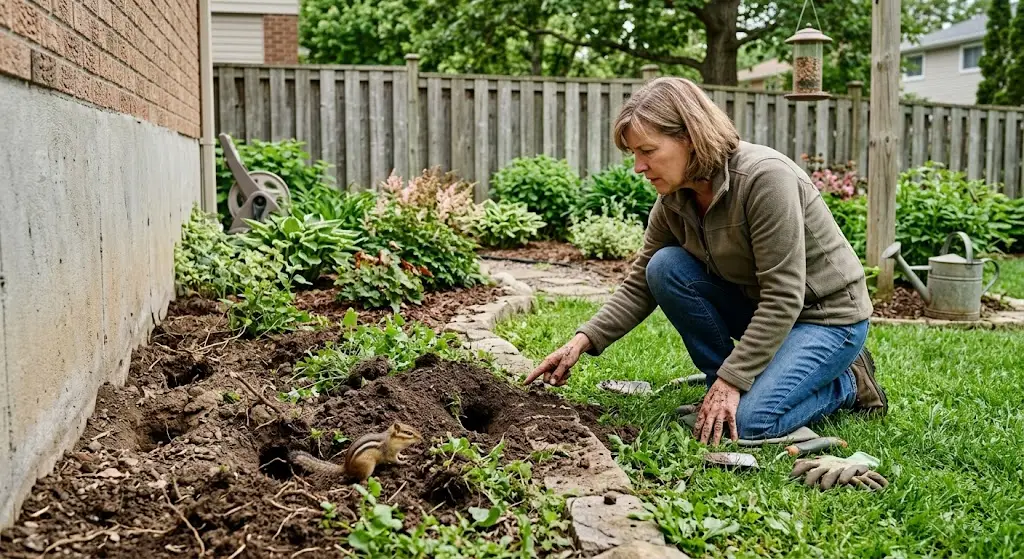
To get rid of chipmunks, remove food sources like birdseed and fallen fruit, use natural repellents such as cayenne pepper or predator urine, set live traps baited with peanut butter, and seal entry points around your home’s foundation. Combining two or more of these methods gives you the fastest and most lasting results.
Those striped little critters look harmless enough — until you notice holes all over your lawn, uprooted flower bulbs, and fresh damage along your home’s foundation. If you’ve been wondering how to get rid of chipmunks, you’re not alone. Millions of homeowners deal with these persistent rodents every year, and the good news is that you don’t need to hire an exterminator to solve the problem.
This guide covers everything you need to know — from spotting the signs early to choosing the right removal method for your situation.
Why Chipmunks Are a Real Problem (Not Just a Nuisance)
It’s easy to underestimate chipmunks because they’re small and, honestly, kind of cute. But the damage they cause is far from minor.
Chipmunks are dedicated burrowers. Their underground tunnels can stretch up to 30 feet long, going several feet deep beneath patios, driveways, retaining walls, and home foundations. Over time, that kind of burrowing weakens the soil underneath structures — and that leads to cracking, sinking, and costly repairs.
In the garden, chipmunks dig up flower bulbs, eat tender plant roots, and raid vegetable beds. They’ll also clean out a bird feeder in no time and scatter seeds across your yard. If they find a way inside your home, the situation gets worse. Like all rodents, chipmunks chew — and that means wiring, insulation, and stored belongings are all fair game.
A single yard can host up to 20 chipmunks at once, and their population grows quickly if left unchecked. Acting early saves you a lot of trouble down the line.
How to Tell If Chipmunks Are the Culprit
Before you start treating the problem, it helps to confirm chipmunks are actually to blame. Many homeowners mistake chipmunk damage for that caused by moles, voles, or squirrels.
The most reliable sign is finding small, clean holes in your yard — roughly the size of a quarter. Unlike moles, chipmunks carry the displaced dirt away in their cheek pouches, so there’s no mound of soil around the opening. If you see tidy little holes near your foundation, flower beds, or under steps, chipmunks are almost certainly responsible.
Other signs include uprooted flowering bulbs, scattered seed shells under bird feeders, and small food caches tucked away in garages, crawl spaces, or under decks. Chipmunks are also active during the day — mostly in the morning and late afternoon — so spotting them directly is not unusual.
How to Get Rid of Chipmunks: 6 Methods That Actually Work
There’s no single magic solution here. The most effective approach combines prevention, repellents, and targeted removal. Here’s what works.
1. Remove What’s Attracting Them
This step comes first because no repellent or trap will work long-term if you’re still leaving out a buffet. Chipmunks are drawn to easy food and safe shelter.
Move bird feeders at least 15 feet away from your home, or switch to a squirrel- and chipmunk-proof feeder. Clean up fallen fruit, nuts, and berries from your yard regularly. Store pet food indoors and secure compost bins with a tight lid. Clear away woodpiles, rock piles, and dense ground cover near your foundation — these are exactly the kinds of spots chipmunks love to nest in.
2. Use Natural Repellents Around Your Yard
Several natural substances irritate chipmunks and discourage them from lingering. Cayenne pepper is one of the most popular options. Sprinkling it around garden beds, planting areas, and entry points creates an unpleasant experience for chipmunks without harming them or your plants.
Predator urine — available at most garden and hardware stores — taps into a chipmunk’s natural instinct to avoid danger. The scent signals that a predator is nearby, and most chipmunks will steer clear. Reapply these natural deterrents after rain for consistent results.
You can also try planting natural deterrents alongside your flowers. Chipmunks strongly dislike the smell of marigolds, daffodils, hyacinths, and onion plants. Mixing these into your garden layout creates a less inviting space for them to forage.
3. Create Physical Barriers
If chipmunks keep getting into specific areas — like a flower bed or crawl space — physical barriers are one of the most reliable long-term fixes.
For garden beds, bury a hardware cloth (a sturdy wire mesh) in an L-shape around the perimeter. The horizontal part of the “L” should extend outward underground, which prevents chipmunks from digging under the fence. Use quarter-inch galvanized mesh for the best results.
Around your home’s foundation, seal any gaps or holes using caulk, copper mesh, or an expanding foam sealant. Pay close attention to spots where pipes, vents, or utility lines enter the building — these are common entry points. A gravel border around the perimeter of your home also discourages burrowing, since chipmunks prefer soft soil.
4. Try Ultrasonic Repellers
Electronic ultrasonic devices emit high-frequency sound waves that are uncomfortable for rodents but completely silent to humans and most pets. You can plug them into an exterior outlet and let them run continuously.
These devices work reasonably well as a supplementary measure, especially above ground. They’re not particularly effective for chipmunks that are already deep in established burrows, but they can help discourage new activity from taking hold in treated areas. Units typically run between $20 and $30 and cover around 900 to 1,200 square feet.
5. Set Live Traps for Direct Removal
When the population is already established, sometimes the most direct solution is trapping. Live traps let you catch and relocate chipmunks without harming them.
Use a small or extra-small wire cage trap — the smaller mesh openings prevent escapes. Bait the trap with peanut butter, sunflower seeds, or pumpkin seeds placed toward the back, behind the trigger plate. Position traps along pathways where you’ve seen chipmunk activity. Chipmunks are most active on warm, sunny days, so set your traps in good weather and check them at midday and again before dusk.
Once caught, release chipmunks at least five miles away in a suitable wild habitat. Always wear gloves when handling the trap, and check it frequently — never leave a captured animal inside for an extended period.
It can take several weeks of consistent trapping to significantly reduce the population, but it does work.
6. Fill and Discourage Burrows
Once you’ve reduced the chipmunk population through trapping or deterrents, address the burrows themselves. Left open, old tunnels invite new visitors.
Locate burrow entrances — look for two- to three-inch openings near walls, foundations, woodpiles, and stumps. Fill them with a combination of dirt and fine gravel, packing firmly as you go. Some homeowners add used cat litter to the mixture, as traces of cat scent signal a predator and make the spot less inviting. Along foundations and walls, sand capped with quick-dry cement works especially well.
Cover filled holes with a couple of inches of topsoil so ground cover can grow back naturally.
What About Getting Rid of Chipmunks Inside the House?
If a chipmunk has made it indoors, the priority is sealing off how it got in while giving it a clear way out. Set a live trap inside near where you’ve spotted activity, baited with peanut butter or seeds. Keep the rest of the space quiet and give the trap time to work.
Once removed, do a thorough inspection of your home’s lower level. Check vents, foundation gaps, utility entry points, and spaces where pipes run through walls. Seal everything with copper mesh or caulk — foam alone won’t hold, since chipmunks can chew through it.
If you find chewed wires or significant nesting damage inside walls, it’s worth calling a professional pest control service. Electrical damage from rodent chewing is a fire risk and shouldn’t be ignored.
When to Call a Professional
Most chipmunk problems are manageable with the DIY methods above. But there are times when calling in a professional makes more sense.
If you’ve been trapping consistently for several weeks without reducing the population, or if chipmunks have found their way inside your walls and caused structural damage, a licensed wildlife removal service can assess the situation and offer solutions you may not have access to on your own. Professional removal typically costs between $150 and $600 depending on the severity of the infestation.
Keeping Chipmunks Away for Good
Getting rid of chipmunks is only half the job — keeping them gone is the other half. The most effective long-term strategy is making your property as unattractive to them as possible.
Maintain a tidy yard, keep food sources secured, and inspect your home’s foundation and entry points at the start of each spring. Chipmunks become most active again in late spring after winter dormancy, so that’s the best time to refresh any repellents, check your barriers, and reset traps if needed.
Consistency is what makes the difference. A yard that offers no easy food and no safe shelter simply isn’t worth the effort for a chipmunk looking for a new home.
Conclusion
Chipmunks may be small, but the damage they leave behind can be surprisingly serious — from torn-up gardens and ruined flower beds to cracked foundations and chewed wiring. The good news is that you have plenty of effective, humane tools at your disposal.
Start by cutting off food sources and adding natural repellents. Back that up with physical barriers, live traps, and burrow management. Stay consistent, and most chipmunk problems will resolve within a few weeks. For anything more serious, don’t hesitate to bring in a professional.
Your yard and your home are worth protecting — and now you have exactly what you need to do it.
