

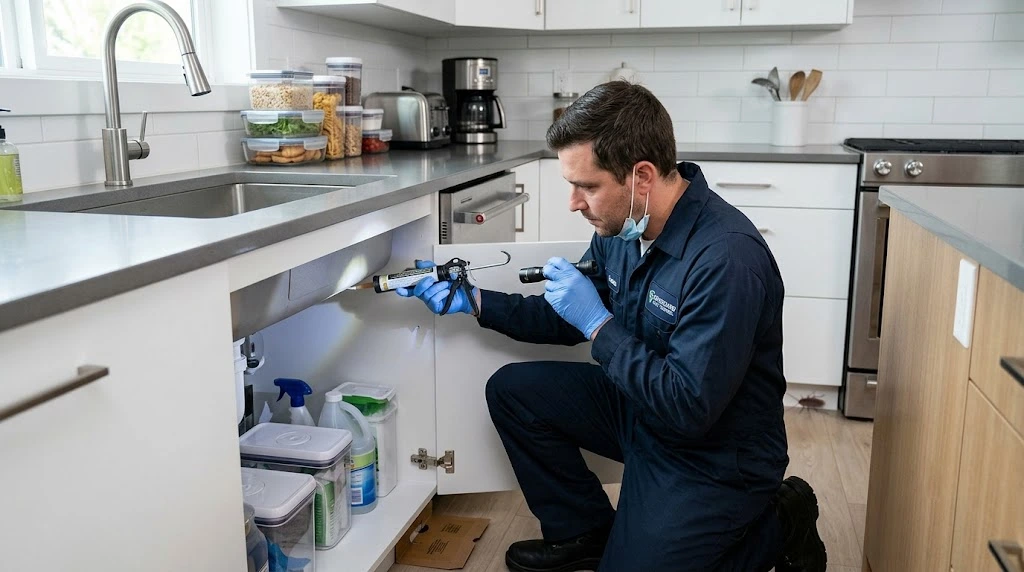
Effective cockroach control combines three steps: eliminate food and water sources, seal entry points like cracks and pipes, and use targeted bait or gel treatments in hiding spots. Sticky traps help you track activity, while professional treatment works best for large or persistent infestations.
Nobody wants to flip on the kitchen light and watch a roach scurry under the fridge. It’s one of those moments that makes your skin crawl, and it usually means there’s more than one hiding somewhere close by. Cockroach control isn’t just about killing the bug you see. It’s about finding out why they’re there in the first place and making your home a place they can’t survive.
The good news? You don’t need to live with roaches, and you don’t always need to call an exterminator right away. With the right approach, most infestations can be managed at home. Let’s walk through exactly how to spot the problem, treat it, and keep it from coming back.
Why Roaches Show Up in Your Home
Roaches aren’t picky. They come inside looking for three things: food, water, and warmth. A dripping pipe under the sink, crumbs behind the stove, or even pet food left out overnight can be enough to invite them in.
They also love clutter. Cardboard boxes, stacks of paper, and piles of clothes give them dark, quiet places to hide during the day. Roaches are nocturnal, so if you’re seeing them during daylight hours, that’s often a sign the infestation has grown large enough that there’s simply not enough hiding room left at night.
Older homes and apartment buildings tend to have more roach problems because of shared walls and pipes. If your neighbor has an infestation, it can spread through wall gaps and plumbing lines without you ever knowing where it started.
Signs You Actually Have a Roach Problem
Before jumping into treatment, it helps to confirm what you’re dealing with. Roach droppings look like small black pepper flakes or coffee grounds, and you’ll usually find them near food sources or in cabinet corners.
A musty, oily smell is another clue. Roaches release pheromones that build up over time, and in bigger infestations, that smell becomes noticeable even to people without a strong sense of smell.
Egg casings, which look like small brown capsules, are another red flag. Each one can hold dozens of eggs, so finding even a few means the population could grow fast if it’s not addressed soon.
Cockroach Control Methods That Actually Work
Once you know you’re dealing with roaches, it’s time to act. The most effective cockroach control plans combine cleaning, prevention, and targeted treatment rather than relying on just one method.
Clean Up Their Food and Water Sources
This step matters more than people realize. Wipe down counters every night, store food in sealed containers, and don’t leave dirty dishes in the sink. Fix leaky faucets and pipes, since roaches can survive on water alone for weeks. Even pet bowls should be washed and dried after each feeding instead of left out.
Seal Entry Points
Roaches can squeeze through gaps as thin as a coin’s edge. Check around baseboards, window frames, and where pipes enter the wall. Caulk any cracks you find, and use weather stripping on doors that don’t sit flush against the floor. This one step can cut off a huge percentage of new roaches entering your home.
Use Gel Baits and Bait Stations
Gel bait is one of the most reliable tools for cockroach control because roaches carry it back to their nests, where it spreads to others through contact and droppings. Apply small dots of gel bait along baseboards, inside cabinets, and near appliances where roaches travel. Bait stations work the same way but come in a contained plastic housing, which is a good option if you have pets or kids in the house.
Try Boric Acid for Stubborn Cases
Boric acid has been used for decades because it works by damaging a roach’s exoskeleton and digestive system after they walk through it and groom themselves. Dust a thin layer behind appliances and in wall voids, but keep it away from areas where food is prepared or where pets can reach it.
Set Out Sticky Traps to Monitor Activity
Glue traps won’t solve an infestation on their own, but they’re incredibly useful for figuring out where roaches are most active. Place a few near suspected hiding spots and check them every few days. This helps you target your treatment instead of guessing.
Natural and Home Remedies Worth Trying
Some people prefer to start with natural options before using chemical treatments, especially in kitchens or homes with small children. Diatomaceous earth is a popular choice. It’s a fine powder made from fossilized algae that dehydrates roaches on contact, and it’s safe around pets when used correctly.
A mixture of baking soda and sugar can also work as a simple bait, since the sugar attracts roaches while the baking soda disrupts their digestion. It’s not as fast-acting as commercial gel bait, but it’s a low-cost option to try alongside other methods.
Essential oils like peppermint or tea tree oil are sometimes recommended as repellents. They may discourage roaches from certain areas, but they won’t eliminate an established infestation, so it’s best to treat them as a supplement rather than a solution.
When to Call a Professional
If you’ve cleaned thoroughly, sealed entry points, and used bait for a few weeks without seeing improvement, it’s probably time to bring in a pest control professional. Large infestations, especially in apartment buildings or homes with structural gaps, often need treatments that aren’t available to the average homeowner.
Professionals also have access to insect growth regulators, which stop roaches from reaching adulthood and reproducing. Combined with targeted insecticide application, this approach can break the reproduction cycle faster than store-bought products alone.
If you’re dealing with German cockroaches, which reproduce faster than most other species, professional help is often the quickest path to actually solving the problem instead of just reducing the numbers temporarily.
How to Keep Roaches from Coming Back
Getting rid of roaches is only half the job. Keeping them out for good means sticking to a few simple habits. Take out the trash regularly and use a can with a tight-fitting lid. Store cardboard boxes off the floor, since roaches love the glue used in packaging.
Vacuum regularly, especially in kitchens and around baseboards, to remove crumbs and egg casings you might not see. Check under sinks and around appliances every few months for any new leaks or gaps that need sealing.
If you live in an apartment, talk to your building manager if you suspect a neighboring unit has an infestation. Buildings often need to treat multiple units at once to fully solve a shared roach problem.
Final Thoughts
Cockroach control comes down to consistency more than any single product or trick. The combination of cleaning, sealing entry points, and using bait in the right spots handles most infestations within a few weeks. For bigger or more stubborn problems, professional treatment gives you access to tools that work faster and last longer.
The most important thing is not to wait. Roaches reproduce quickly, and a small problem today can turn into a much bigger one within a month. Start with the basics, stay consistent, and you’ll notice the difference sooner than you’d expect.
