

The System Buried in Your Yard (That You Can’t Ignore)
If your home isn’t on city sewer, everything you flush and drain goes into a septic system buried in your yard — a system with no warning lights, no monthly bill, and failure costs of $5,000 to $20,000+. Most septic failures aren’t bad luck; they’re the result of never pumping the tank, flushing the wrong things, or parking on the drain field. A maintained septic system lasts 25–40 years. A neglected one fails in 10–15. Here’s what every septic homeowner must know.
How a Septic System Works
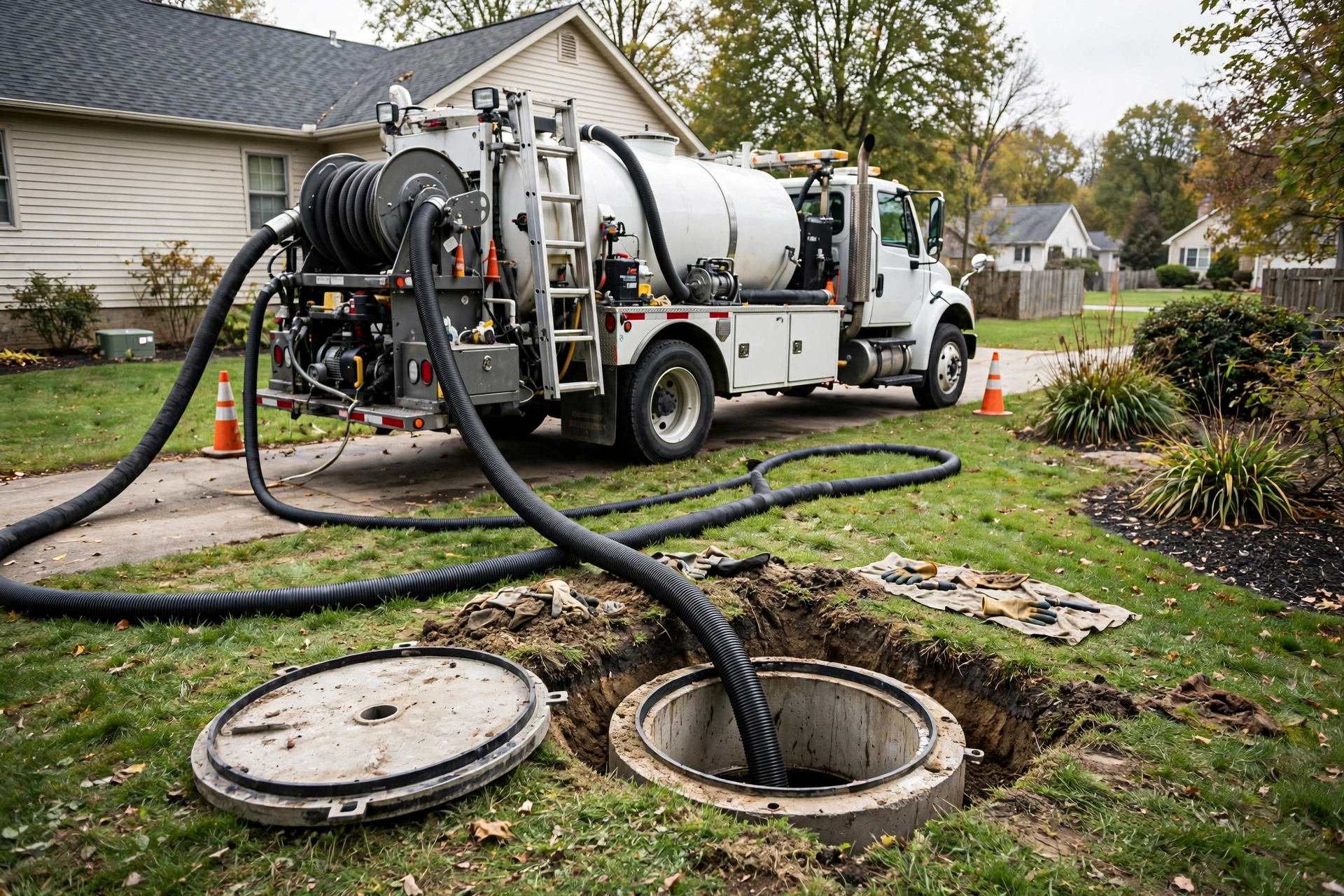
Wastewater flows from your house into the septic tank (typically 1,000–1,500 gallons), where solids settle to the bottom (sludge) and oils float to the top (scum). The clarified liquid in the middle flows out to the drain field (leach field) — perforated pipes in gravel trenches — where soil filters and treats it. The system is elegantly simple, which is exactly why neglect kills it: there’s nothing to “break” loudly, just slow degradation until sewage backs up or surfaces in the yard.
Pumping: The Non-Negotiable Schedule
- Every 3–5 years for a typical family — the single most important maintenance task.
- More often if: you have a garbage disposal (adds solids — see our garbage disposal guide for septic-specific rules), a large household, or a smaller-than-average tank.
- Cost: $300–$600 — versus $5,000–$20,000 for a failed drain field. The cheapest insurance in homeownership.
- What pumping does: removes accumulated sludge and scum before they flow into the drain field and clog it permanently. A clogged drain field usually can’t be “fixed” — it’s replaced.
- Keep records: pumping receipts prove maintenance — valuable at resale and required by some local regulations.
What NEVER Goes Down the Drain
Your septic system is a living bacterial ecosystem. Kill the bacteria or clog the works, and the system fails:
- Grease and cooking oil — solidifies into drain-field-killing blockages. Wipe pans, trash the grease.
- “Flushable” wipes — they are not flushable. Not in septic, not in sewers. They don’t break down.
- Feminine products, diapers, condoms — trash, never toilet.
- Chemicals: paint, solvents, pesticides, harsh drain cleaners — they kill the treatment bacteria.
- Medications: don’t flush old pills — they pass through to groundwater. Use pharmacy take-back programs.
- Coffee grounds and eggshells — they don’t decompose fast enough; they become sludge.
- Excessive bleach: normal laundry amounts are fine; dumping gallons is not.
Water Usage: Don’t Drown the System
Septic systems treat a designed daily volume. Overwhelm it and solids wash into the drain field:
- Spread out laundry: one load a day beats five on Saturday — surge flows are the enemy.
- Fix leaky toilets and faucets: a running toilet can dump 200+ gallons a day into the system — more than the whole household’s normal use.
- High-efficiency fixtures pay off doubly on septic — less water, less strain.
- Divert roof and foundation drainage away from the drain field — rainwater saturating the field stops treatment cold.
Protecting the Drain Field (The Expensive Part)
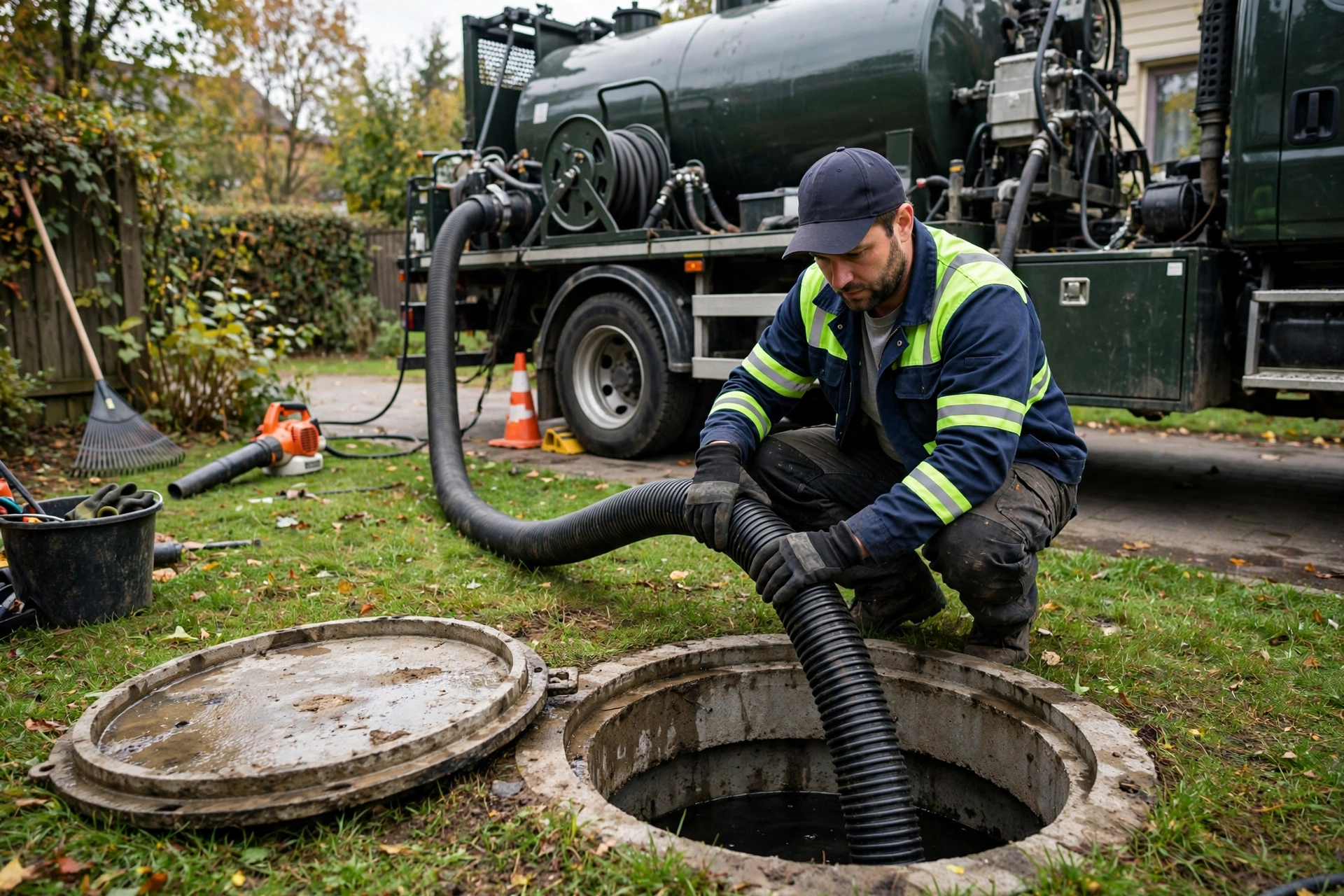
The drain field is the most expensive component to replace — protect it like it:
- Never drive or park on it — vehicle weight crushes pipes and compacts soil.
- Never build on it — no sheds, patios, pools, or additions.
- Keep trees away: roots seek the nutrient-rich water and invade pipes — no deep-rooted trees within 30 feet.
- Grass only: shallow-rooted grass is the ideal cover — it prevents erosion without root invasion.
- Don’t pave over it — the field needs oxygen exchange with the air.
- Know where it is: get the as-built diagram from your county health department. You can’t protect what you can’t locate.
Warning Signs of Trouble
- Slow drains throughout the house (not just one fixture — that suggests a system problem, not a local clog)
- Sewage odors inside or over the drain field
- Wet, soggy spots or lush green stripes over the drain field (especially in dry weather)
- Gurgling sounds in plumbing
- Sewage backing up into tubs, showers, or floor drains (lowest fixtures first)
- Algae or unusually green grass over the field — nutrients surfacing
Any of these means: stop heavy water use immediately and call a septic professional. Early intervention (pumping, baffle repair) costs hundreds; late intervention costs thousands.
Additives and “Miracle” Treatments: The Truth
Septic additives are a $100M+ industry built on fear. The reality:
- Your tank doesn’t need “starter bacteria” — human waste supplies all the bacteria the system needs.
- No additive fixes a failing drain field — despite what the labels promise.
- Some additives harm the system — hydrogen peroxide and strong solvents kill beneficial bacteria; some “drain field rejuvenators” just push solids deeper.
- The EPA and every state health department agree: additives are unnecessary for a properly maintained system.
- Save the money. Spend it on pumping instead.
Aerobic vs. Conventional Systems
- Conventional (anaerobic): the standard tank + drain field described above — passive, simple, pump every 3–5 years.
- Aerobic treatment units (ATUs): add oxygen to speed bacterial breakdown — produce cleaner effluent, work in poor soils, but need electricity, annual service contracts ($200–$400/year), and more attention. Common where conventional fields won’t pass soil tests.
- Mound systems: raised drain fields for high water tables — same maintenance rules, plus keep the mound’s grass cover intact.
- Cesspools: old-style pits with no tank — if you have one, plan for replacement; most jurisdictions phase them out.
Know which type you have — your pumper or county records can tell you — because maintenance differs.
Inspections: Before You Buy (And Periodically After)
- Buying a septic home? Get a full septic inspection (not just a “dye test”) — tank opened, sludge measured, drain field evaluated. $300–$500 that can reveal a $15,000 problem before you own it.
- Existing owners: have the tank inspected at each pumping — baffles, tees, and tank integrity checked.
- Know your system’s age and type — conventional gravity, chamber, mound, or aerobic systems have different maintenance needs. Your pumper can identify yours.
Septic-Smart Landscaping
- Plant only grass over the field and tank area.
- Keep vegetable gardens away — pathogens can contaminate crops.
- Maintain surface grading so rainwater runs away from, not onto, the field.
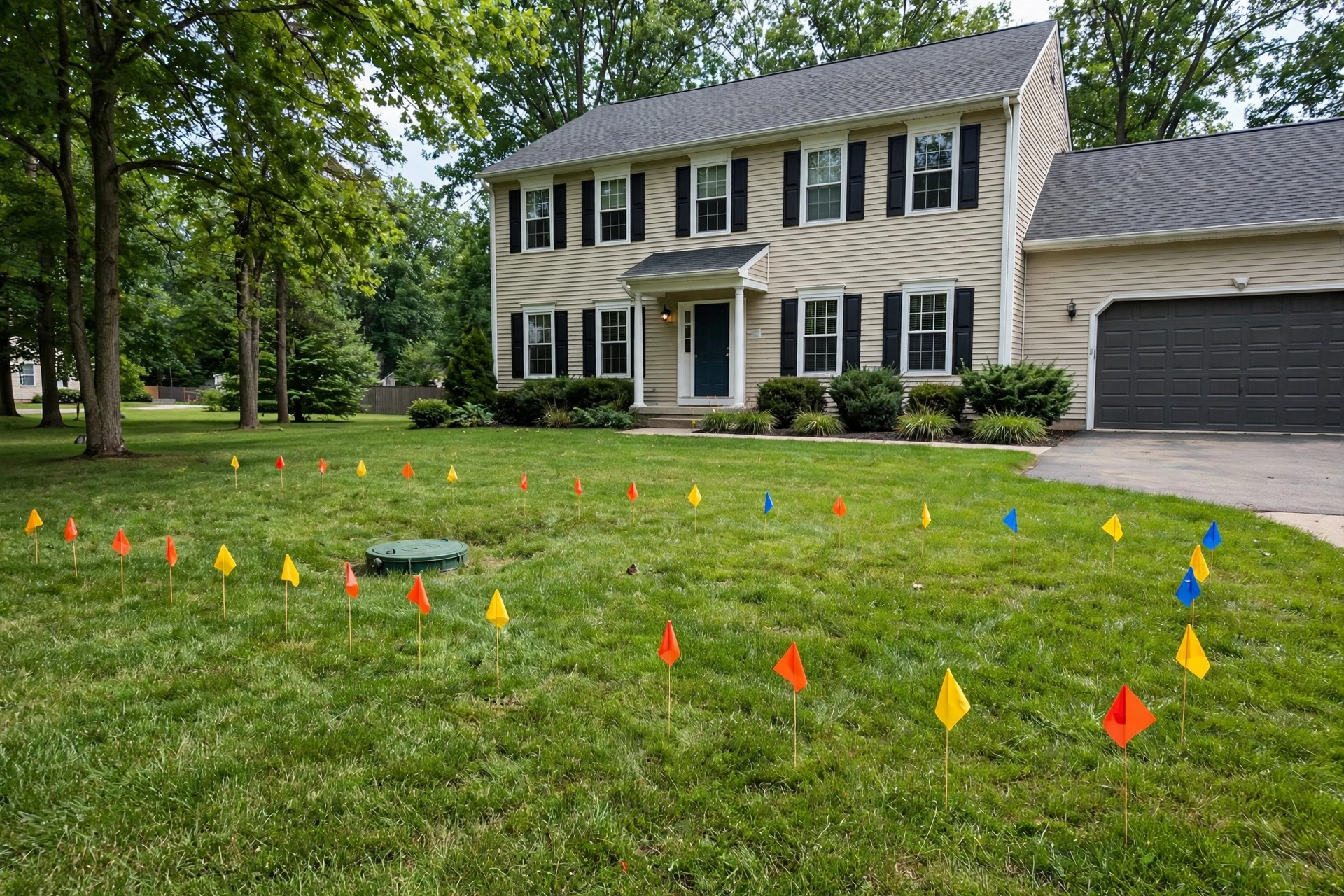
- Mark the tank and field boundaries — future-you (and future contractors) will thank you.
Know Your Local Rules
Septic regulations vary wildly — and ignorance is expensive:
- Many counties require pumping every 3–5 years with proof submitted to the health department.
- Some areas mandate inspections at property transfer — a failing system can block the sale.
- Setback rules dictate how close the system can be to wells, property lines, and waterways — critical if you’re building or adding on.
- Garbage disposals are restricted or require larger tanks in some jurisdictions.
- Aerobic systems often require annual service contracts by law.
Call your county health or environmental department — one call tells you exactly what your area requires. Non-compliance fines start around $500 and climb fast.
Costs: What Things Actually Cost
- Routine pumping: $300–$600 every 3–5 years.
- Baffle or tee repair: $200–$500.
- Drain field replacement: $5,000–$20,000+ (the catastrophe you’re preventing).
- Full system replacement: $10,000–$30,000+ depending on soil and local codes.
- Aerobic system service contracts: $200–$400/year (required in many areas for advanced systems).
Selling a Home With a Septic System
- Get inspected before listing — a failed inspection mid-sale kills deals or costs you $15,000 in concessions.
- Gather records: pumping history, as-built diagrams, permits — buyers (and their lenders) want documentation.
- Disclose honestly: septic age, type, and any past issues — required by law in most states.
- Price it right: a documented, well-maintained system is a selling point; an unknown 30-year-old system is a negotiation weapon for the buyer.
- Some lenders (FHA, VA) require septic inspections — have yours ready before the appraisal.
The Bottom Line
Pump every 3–5 years, flush only human waste and toilet paper, spread out water use, and keep vehicles and roots off the drain field. Four rules — and your septic system quietly does its job for decades instead of failing catastrophically at year twelve.
