

The $15,000 Appliance Nobody Maintains
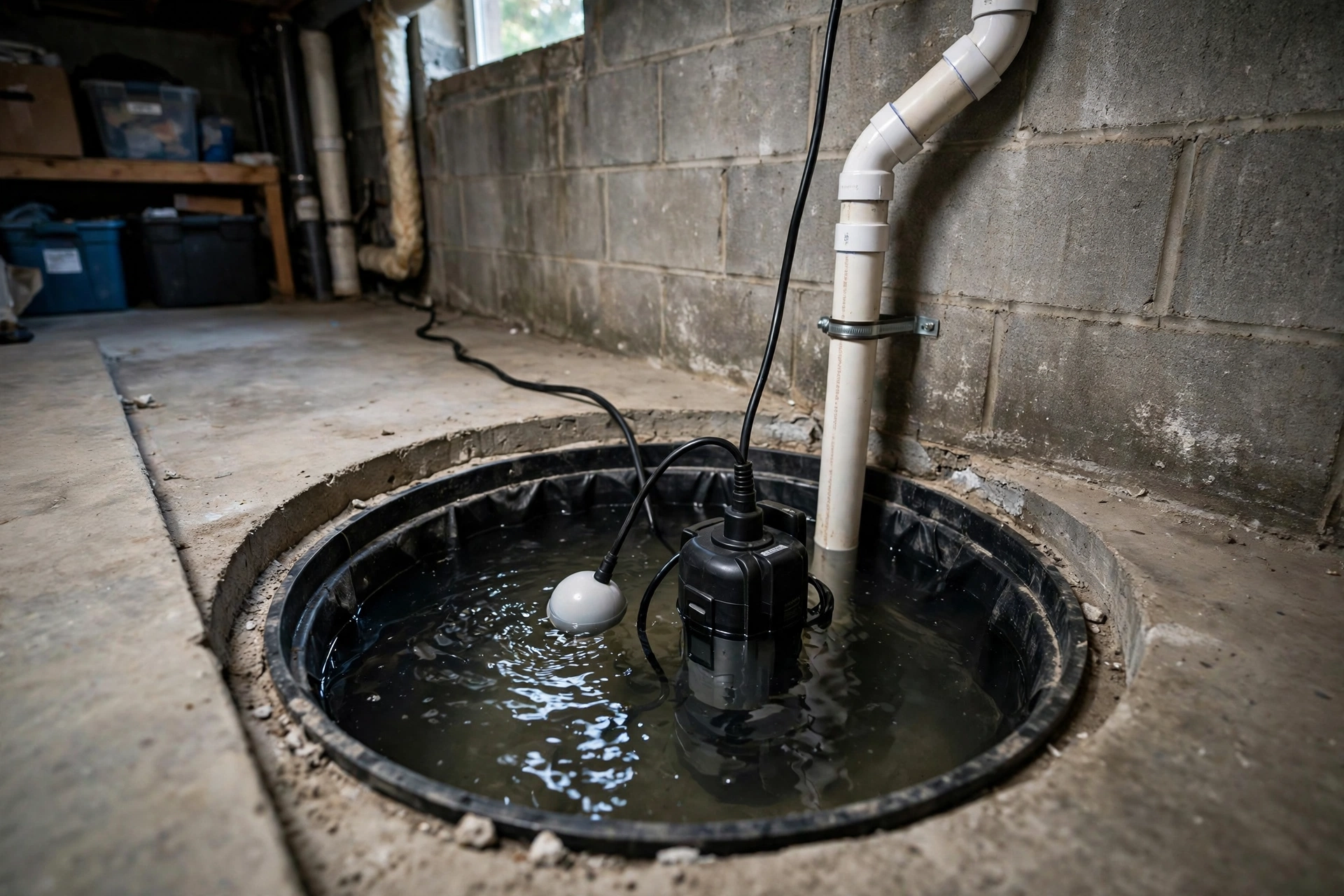
A sump pump sits in a dark pit in your basement, doing nothing for months — until the one night it matters. When heavy rain or spring melt overwhelms your foundation drainage, that little pump is the only thing between you and several inches of water across your basement floor. The average basement flood costs $15,000+ in damage, and most sump pump failures are discovered exactly when the water starts rising. The pump needs about 30 minutes of your attention twice a year. Here’s everything worth knowing.
How a Sump Pump Works (60-Second Version)
Groundwater collects in a pit (the sump basin) at the lowest point of your basement. When water rises, a float switch triggers the pump, which pushes water up and out through a discharge pipe — away from your foundation. When the water drops, the float falls and the pump stops. That’s it. Two failure points cause 90% of floods: the float switch sticks, or the pump has no power when it needs it.
The Twice-Yearly Test (Do This Now)
- Pour water in: slowly pour 5 gallons of water into the pit until the float rises. The pump should kick on, drain the pit, and shut off.
- Listen: smooth humming is good. Grinding, rattling, or a pump that runs but moves no water means trouble.
- Check the discharge: go outside and confirm water is actually exiting the pipe — far from the foundation (at least 10–20 feet). If it just dumps next to the house, it cycles back in.
- Test the check valve: after the pump stops, listen for water rushing back down the pipe — that means the check valve failed and the pump will short-cycle itself to death.
- Verify the alarm: if you have a high-water alarm, test it.
Do this every spring (before rain season) and every fall. Mark it on the calendar next to your smoke detector battery check.
Cleaning the Pit (The Gross But Essential Job)
- Unplug the pump before reaching into the pit.
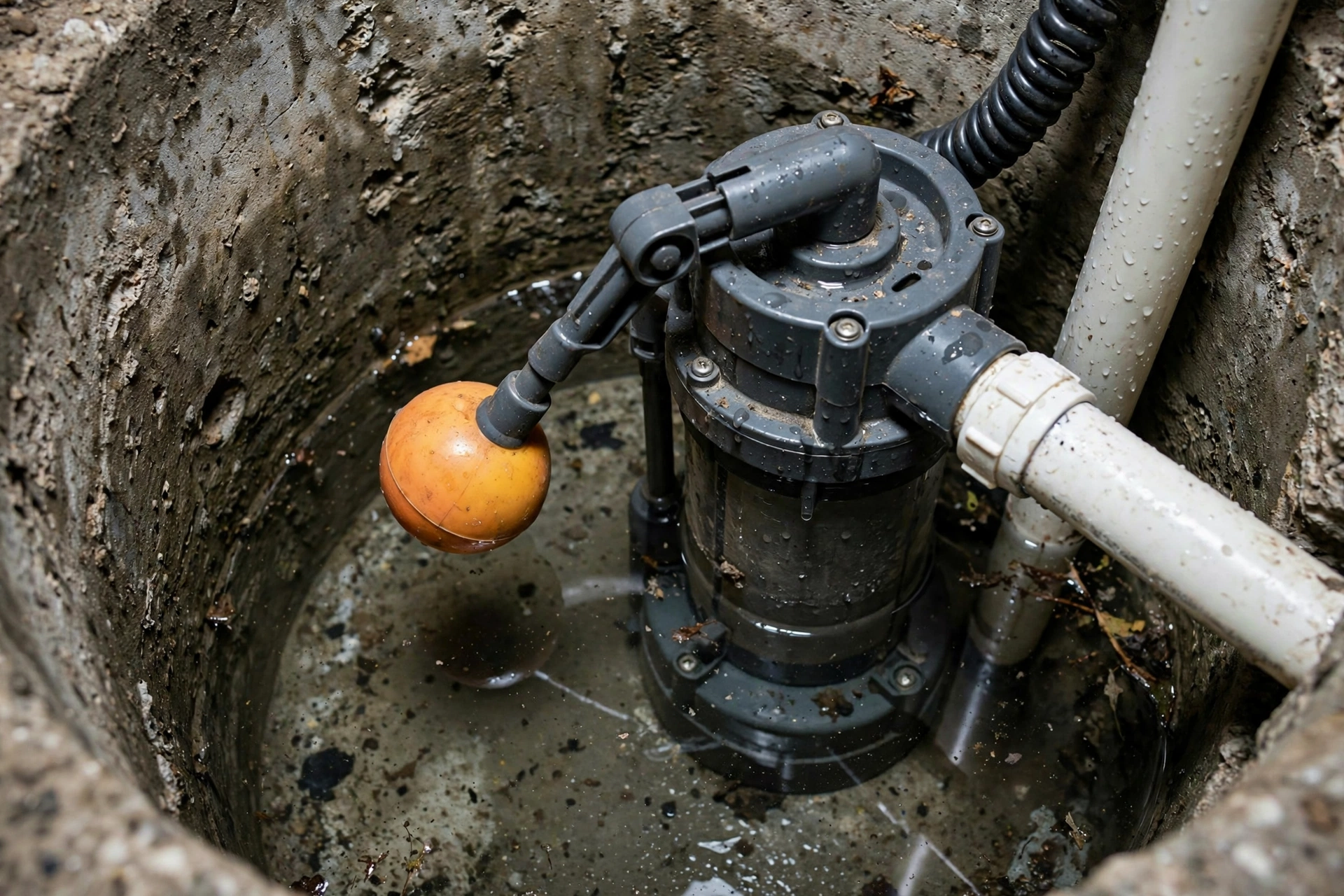
- Scoop out silt, gravel, and debris — sediment clogs the intake and burns out motors.
- Scrub the float switch mechanism — slime and mineral buildup are the #1 cause of stuck floats.
- Make sure the pump sits level on the pit floor (or on bricks, if the pit is deep) — a tilted pump binds the float.
- Check that the float moves freely up and down with nothing to catch on (pit walls, cords, the discharge pipe).
- Plug back in and run the water test again.
The Float Switch: Your Real Point of Failure
Pumps rarely die; switches fail constantly. Know your type:
- Tethered floats (ball on a cord): need room to swing — the most jam-prone in narrow pits.
- Vertical floats (rod-mounted): more reliable in tight pits, but the rod gums up — clean it.
- Electronic sensors: no moving parts, most reliable — worth the upgrade when replacing.
If your pump is over 7 years old, consider replacing the switch proactively ($20–$50 part) rather than waiting for it to stick during a storm.
Power Outages: When Pumps Fail Most
Storms that flood basements also knock out power — the cruelest timing. Your backup options:
- Battery backup pump: a second pump on a deep-cycle marine battery ($300–$600). Runs 4–8 hours depending on inflow. The battery needs replacement every 3–5 years — test it annually.
- Water-powered backup: uses municipal water pressure to pump (no electricity needed). $150–$300 plus plumbing. Only works on city water, and uses ~2 gallons of city water per gallon pumped.
- Portable generator: powers the primary pump during outages — but never run a generator in the basement (carbon monoxide). Outside only, with a proper transfer setup.
- Smart monitoring: WiFi water sensors ($30–$50) text you when water rises — useless without a backup pump, but priceless for catching failures early when you’re away.
If your basement has ever flooded, a battery backup isn’t optional — it’s the actual flood prevention. The primary pump handles the rain; the backup handles the outage.

Discharge Line Problems
- Frozen discharge: in winter, the outdoor pipe can freeze solid — the pump runs, water goes nowhere, basement floods. Bury the line below frost depth or use a freeze-relief tee.
- Clogged line: disconnect and flush annually; check the outdoor outlet for nests, leaves, and ice.
- Too-short discharge: water dumped within a few feet of the foundation just seeps back in — extend it 10–20 feet out, downhill.
- Check valve orientation: the arrow points away from the pump (flow direction). Installed backward, it blocks everything.
When to Replace the Pump
- Age 7–10 years (even if working — pumps owe you nothing past this)
- Runs constantly or cycles every few seconds (undersized or check valve failed)
- Trips the breaker or GFCI repeatedly
- Visible rust, cracks, or a wobbling motor shaft
- Can’t keep up during heavy rain (upgrade to higher GPH or add a second pump)
Replacement is a straightforward DIY ($150–$300 for a quality 1/3–1/2 HP cast-iron pump): unplug, disconnect the pipe, lift out, drop in the new one, reconnect. Match the horsepower and discharge size.
Sizing: Don’t Buy Too Small
- 1/3 HP: adequate for most homes with moderate water.
- 1/2 HP: better for high water tables, finished basements, or long discharge runs.
- Cast iron housing dissipates heat far better than plastic — worth the extra $50.
- GPH rating: check gallons per hour at your actual lift height (head) — a pump rated 3,000 GPH at 0 feet may deliver half that at 10 feet of lift.
Pedestal vs. Submersible: Which Pump Type?
- Submersible: sits in the water — quieter, more powerful, handles debris better, lasts longer (10–15 years). The right choice for most homes. Costs more ($150–$300).
- Pedestal: motor sits above the pit on a column — louder, easier to service (motor stays dry), cheaper ($80–$150). Fine for shallow pits or light duty.
- For a finished basement or high water table: submersible, no debate.
Alarms and Smart Monitors: Early Warning
- Basic high-water alarm ($15–$30): a float-triggered screamer — loud enough to wake you. The minimum every sump owner should have.
- WiFi sensors ($30–$60): text/email alerts when water rises or the pump loses power — essential if you travel.
- Pump monitors ($100–$200): track pump cycles and runtime — a pump cycling twice as often as last year is telling you something before it fails.
- Whole-system controllers combine primary + battery backup + alerts in one unit — the premium option for finished basements.
An alarm doesn’t prevent floods — but it turns a 3 AM disaster into a 3 AM fix.
Reducing the Water Load (Help the Pump Help You)
The best sump pump is one that runs less:
- Extend downspouts 6+ feet from the foundation.
- Grade soil away from the house (6 inches of fall in the first 10 feet).
- Keep gutters clean — overflowing gutters dump water exactly where you don’t want it. See our winterizing checklist for fall gutter and drainage prep.
- Seal foundation cracks — water entry points the pump can’t fix.
- Consider exterior waterproofing (french drains) if the pump runs constantly — it may be undersized for the water table.
The 15-Minute Seasonal Checklist
Spring (before rain season): run the water test, clean the pit, verify outdoor discharge is clear, test the battery backup, confirm the alarm works.
Fall (before winter): run the water test again, check the discharge line for freeze risk, clear leaves from the outdoor outlet, verify the check valve.
After any power outage: confirm the pump restarts (some need manual reset), check the battery backup’s charge, look for water the backup may have missed.
Tape this checklist inside the basement door. Future-you, ankle-deep in a spring storm, will be glad past-you was diligent.
The Bottom Line
Test twice a year, clean the pit, keep the float free, and have a backup for outages. Thirty minutes of maintenance versus a $15,000 flood — the easiest math in homeownership.
