

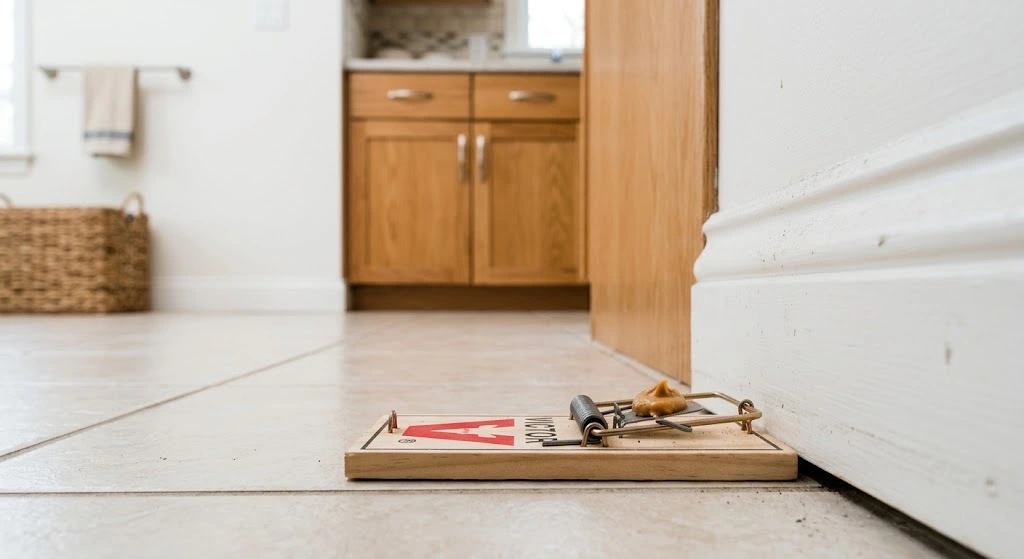
Mice are small animals, but they can cause big problems in your home. They can eat your food, damage your furniture, and even spread diseases. If you see one mouse, there are often more hiding nearby.
The good news is that you can solve this problem at home using mouse traps. In this guide, you will learn how to set up different types of mouse traps, where to place them, what bait to use, and how to stop mice from coming back again.
This article is written in very simple English so anyone can understand it easily.
Why Do Mice Come Into Homes?
Before setting traps, it is important to understand why mice enter houses.
Main reasons mice come inside:
- They are looking for food
- They want a warm place to live
- They need nesting materials
- They are escaping cold weather
- They find easy entry points in walls or doors
Mice can enter through very small holes, even as small as a coin. That is why homes must be checked carefully.
How Mice Behave (Important to Know)
Mice are smart in their own way. They follow the same paths every day.
Mouse behavior facts:
- They usually walk near walls
- They avoid open spaces
- They repeat the same routes
- They move at night (mostly)
👉 This is very important because traps should be placed where mice normally travel.
Types of Mouse Traps
There are different types of mouse traps. Each one works in a different way.
Table: Types of Mouse Traps
| Type of Trap | How It Works | Good Points | Bad Points |
|---|---|---|---|
| Metal Snap Trap | Snaps quickly to kill mouse | Cheap and strong | Can be unsafe if not careful |
| Plastic Snap Trap | Spring-based killing trap | Easy to use and safer | Still kills mouse |
| Covered Kill Trap | Hides mouse after capture | Clean and hidden | Costs more |
| Electronic Trap | Gives electric shock | Fast and effective | Needs batteries |
| Live Cage Trap | Catches mouse alive | Humane option | You must release mouse |
1. Metal Snap Mouse Trap
This is the most common trap used in homes.
How to set it:
- Pull back the metal bar carefully
- Put a small amount of peanut butter on the trigger
- Lock the bar in place
- Place it near a wall
Tips:
- Do not use too much bait
- Be careful while setting it
- Place it where mouse activity is high
This trap works well but must be handled carefully.
2. Plastic Snap Trap
This is a modern version of the metal trap.
How to use it:
- Press the spring lever
- Add a small amount of bait
- Place it along walls or corners
Benefits:
- Easier to set
- Safer than metal traps
- Can be reused
It is a good choice for beginners.
3. Covered Kill Trap
This trap hides the mouse after it is caught.
How to use:
- Put bait inside the trap
- Close the lid
- Activate the trigger
- Place it along walls
Benefits:
- You do not see the mouse
- Cleaner disposal
- Good for indoor use
This is a more hygienic option.
4. Electronic Mouse Trap
This trap uses electricity to kill mice instantly.
How to use:
- Insert batteries
- Add bait inside
- Place near walls or corners
Benefits:
- Fast and effective
- No blood or mess
- Easy to clean
Drawback:
- Needs power (batteries)
- More expensive
5. Live Cage Trap
This trap catches mice without killing them.
How to use:
- Put food inside cage (peanut butter or nuts)
- Set trap according to instructions
- Place in mouse areas
Important:
You must release the mouse far away from your home (check local rules first).
Best Mouse Trap Placement
Placement is the most important step. Even the best trap will not work if placed incorrectly.
Where to place traps:
- Along walls
- In dark corners
- Behind furniture
- Near kitchen areas
- Near holes or cracks
Table: Best Placement Strategy
| Location | Why It Works |
|---|---|
| Walls | Mice always travel along edges |
| Corners | Safe movement area for mice |
| Kitchen | Food source area |
| Dark areas | Mice hide here |
| Entry points | Where they come in |
Pro Tip:
Place traps 2–3 feet apart for better results.
Best Bait for Mouse Traps
Food bait is very important for success.
Best bait options:
- Peanut butter (best choice)
- Chocolate
- Nuts
- Small pieces of bread
- Bacon
Important tips:
- Use only a small amount
- Replace bait every few days
- Avoid strong-smelling spoiled food
Smart Trick for Better Results
Here is a smart method used by professionals:
- Place traps but do NOT set them for 2–3 days
- Let mice get used to them
- Then activate traps in same spots
This trick increases success rate.
How to Stop Mice from Coming Back
Traps solve the current problem, but prevention is more important.
1. Seal Entry Points
Check your house carefully.
What to do:
- Fill cracks in walls
- Close holes near doors
- Use steel wool for small gaps
- Use foam sealant for bigger holes
Mice can enter through very small spaces, so check carefully.
2. Keep House Clean
Clean homes attract fewer mice.
Cleaning tips:
- Store food in sealed containers
- Clean crumbs immediately
- Take out trash daily
- Do not leave dirty dishes overnight
3. Outdoor Cleaning
Outside areas also matter.
- Keep grass short
- Remove garbage piles
- Avoid clutter near walls
- Store firewood away from house
4. Use Repellents
Some smells keep mice away.
Natural repellents:
- Peppermint oil
- Cloves
- Vinegar smell
You can place cotton balls with peppermint oil near entry points.
Safety Tips When Using Mouse Traps
Always be careful while using traps.
Safety rules:
- Wear gloves when handling traps
- Keep traps away from children
- Dispose mice properly
- Wash hands after handling traps
- Follow instructions carefully
If infestation is big, call a professional pest control service.
Common Mistakes People Make
Avoid these mistakes:
- Using too much bait
- Placing traps in open areas
- Not checking traps regularly
- Using only one trap
- Ignoring entry points
These mistakes reduce success rate.
Quick Summary
- Mice enter homes for food and shelter
- They travel along walls and corners
- Different traps work in different ways
- Peanut butter is the best bait
- Placement is the most important factor
- Prevention is key to long-term control
Conclusion
Setting a mouse trap is not difficult if you know the right method. The most important things are correct trap type, proper placement, and good bait. But catching mice is only half of the solution. You must also seal entry points and keep your home clean.
If you follow the steps in this guide, you can easily reduce or completely remove mice from your home.
