

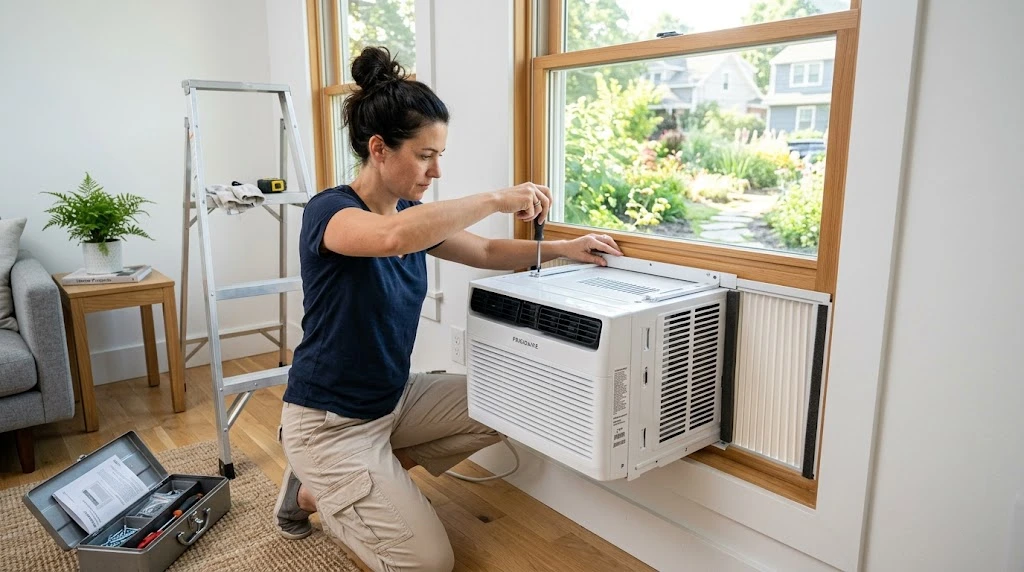
To install a window AC unit: measure your window, remove the screen, attach side panels to the unit, lift it onto the sill with the exhaust facing out, lower the sash over the top flange, secure with brackets, seal the gaps with foam weatherstripping, and plug it into a grounded outlet.
Installing a window AC unit is one of the fastest ways to beat the heat without spending a fortune on central air. If you’ve been wondering how to install a window AC unit on your own, the good news is that it’s very doable — even if you’ve never done it before. Most people can get it done in under an hour with basic tools and a little patience.
What You’ll Need Before You Start
Before you lift a single tool, take a few minutes to get organized. Having everything ready saves you from stopping mid-installation to hunt for something.
You’ll need a measuring tape, a screwdriver (flathead and Phillips), a level, foam weatherstripping or insulation strips, and possibly a drill if your window frame requires screws. Some units also recommend a support bracket, especially for heavier models — check your unit’s manual to see if one is required.
It also helps to have a second person with you. Window AC units can weigh anywhere from 40 to 80 pounds depending on the BTU rating. Having an extra set of hands makes lifting much safer and less stressful.
Choosing the Right Window and Unit Size
Not all windows work equally well for AC installation. The best spot is a shaded window on the north or east side of your home, since south-facing windows that get direct sunlight can make the unit work harder and waste energy.
You also need to match the unit size to your room. Cooling capacity is measured in British Thermal Units (BTUs). A unit that’s too large will struggle to remove moisture effectively, while one that’s too small won’t cool properly on hot summer days. As a rough guide, a 5,000–6,000 BTU unit works well for rooms up to 250 square feet. For larger spaces around 400–450 square feet, you’ll want something in the 10,000 BTU range.
Before you begin, confirm that the window frame size matches the AC unit’s dimensions, and check whether your window type is compatible — this matters especially if you have a sliding window rather than a traditional double-hung style.
How to Prepare the Window
Once you’ve picked the right window, take a few minutes to get it ready.
Start by cleaning the window sill and the surrounding frame, removing any dust, dirt, or debris that could interfere with a tight seal. If there’s a screen in the window, take it out and store it safely.
Next, inspect the window frame carefully. Look for signs of damage like rot, cracks, or soft spots. A weak frame won’t safely hold the weight of an AC unit. If you notice any soft or damaged wood, repair it before continuing. This is a step many people skip, and it’s the reason some units end up shifting or falling out later.
Finally, apply foam weatherstripping around the edges of the window frame if your unit didn’t include any. This creates a tighter barrier against warm outside air once the unit is in place.
How to Install a Window AC Unit: Step-by-Step
Step 1: Unbox and Attach the Side Panels
Take the unit out of the box and inspect it for any damage before you do anything else. Make sure that all parts are included, such as the fitting kit and, if needed, the remote control.
Your window AC likely has accordion-style side panels that slide into grooves on each side of the unit. Attach these before placing the system into the open window. Attaching them on the ground is much easier than trying to do it after the unit is already in the window.
Step 2: Raise the Window and Position the Unit
Raise the lower sash of the window all the way up. With the help of another person, lift the AC unit and position it on the windowsill. Make sure the bottom lip sits inside the window and that the exhaust side sticks out toward the back — which faces outside.
Center the unit in the window frame. Once it’s centered, tilt the unit very slightly downward toward the outside. This small angle allows condensation to drain properly rather than dripping back into your room.
Step 3: Lower the Sash and Lock It Down
Lower the window sash until it rests behind the top lip of the AC unit. The sash doesn’t support the weight of the unit, but it helps hold it securely in place.
To prevent the sash from being raised accidentally — which would let the unit fall — insert at least two screws through the upper flange on the AC case into the window sash. Drill pilot holes first to keep the screws from splitting the wood.
Step 4: Secure With Brackets
Install the mounting brackets included with your unit to make sure it stays firmly in place. If your window design needs extra support, use L-shaped brackets or wood strips.
For heavier units (50 lbs or more), a dedicated window AC support bracket that attaches to the exterior wall is a smart investment. These brackets are available at most hardware stores and install with a few screws.
Step 5: Extend the Side Panels and Seal the Gaps
Pull the accordion-style side panels outward until they fill the gaps on each side of the unit, and screw them into the window frame. Expanding the side panels helps seal your room, but they’re not a substitute for real insulation. If your window gets a lot of direct sun, consider cutting white foam insulation board to fit snugly around the outside opening.
Any gaps between the upper and lower sashes need to be filled too. If your unit came with a foam seal, cut it to size and slip it into place. You can also buy foam fillers separately if you need more.
Step 6: Plug In and Test the Unit
Refer to your owner’s manual to confirm all installation steps have been completed. Then plug your unit into a grounded wall outlet and set it to your desired temperature and fan speed.
Use a dedicated outlet if possible, especially for units 10,000 BTUs or higher. Running a large AC unit on an overloaded circuit can trip breakers or, in rare cases, create a fire hazard. If you’re unsure whether your outlet is rated for the load, consult a licensed electrician.
Common Mistakes to Avoid
A few small errors can make a big difference in how well your unit performs — and how long it lasts.
One of the most common mistakes is skipping the foam sealing step. Even small gaps allow warm air to sneak in, which forces the unit to work harder and increases your energy bill. Take the extra ten minutes to seal everything properly.
Another frequent issue is incorrect tilting. If the unit tilts slightly inward instead of outward, water will drain back into your room. Always double-check the angle with a level before you step back.
Finally, don’t ignore the electrical side. Window AC units should always be plugged into a grounded (three-prong) outlet. Never use an adapter to force a three-prong plug into a two-prong outlet — this removes the grounding protection entirely.
How to Keep Your Window AC Running Well
Installation is only half the battle. A little regular maintenance goes a long way toward keeping your unit efficient and extending its life.
Clean or replace the air filter every two to four weeks during heavy use. A clogged filter makes the unit work harder and can cause the evaporator coil to freeze up. Most filters are easy to remove, rinse under water, let dry, and slide back in.
At the start of each season, wipe down the exterior louvers and check the foam sealing for any cracks or gaps that may have developed over winter. If the foam looks worn, replace it before temperatures climb.
When summer ends and you’re ready to remove the unit, store it upright in a dry location. Storing it on its side can damage the compressor oil, which shortens the lifespan of the unit considerably.
Conclusion
Installing a window AC unit yourself is a practical, budget-friendly way to stay comfortable through the hottest months. When you take the time to measure carefully, prepare the window properly, and seal everything tightly, the unit works efficiently and stays safe all season long. Whether this is your first install or your fifth, following each step in order makes the whole process smooth and straightforward. Now go get cool — you’ve got this.
