

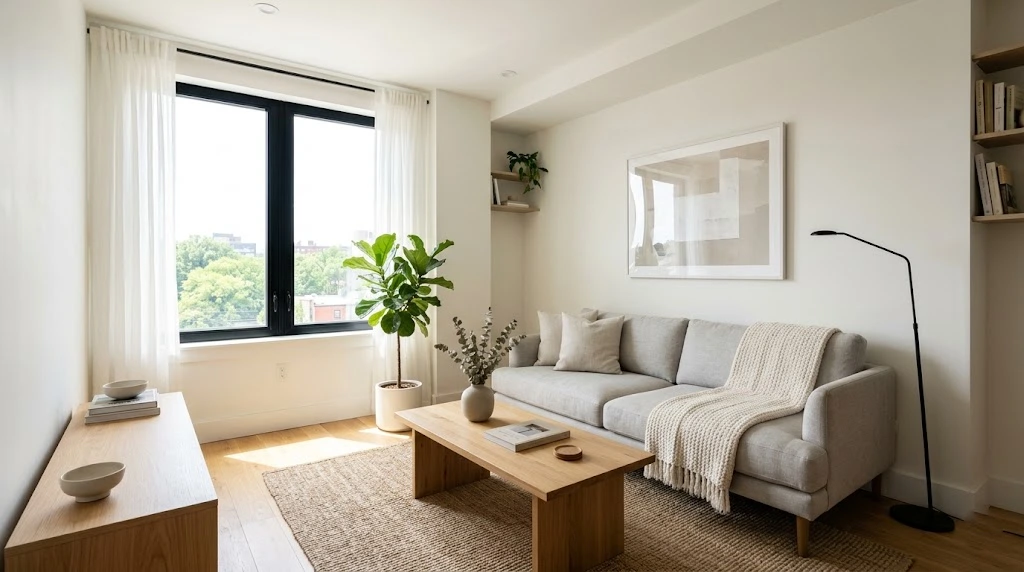
What is small home minimalism? Small home minimalism is the practice of intentionally reducing clutter, keeping only what you need, and designing your living space for calm and function. It helps you feel more at ease, spend less money, and make even the tiniest room feel open, airy, and deeply livable.
Living in a small home doesn’t have to feel cramped or chaotic. In fact, it can be the perfect starting point for a calmer, more intentional life. Small home minimalism is about making smart choices — keeping only what serves you and letting go of everything else. The result is a space that feels bigger, cleaner, and a lot more peaceful than the square footage suggests.
Whether you’re in a studio apartment, a compact house, or just tired of feeling squeezed by your belongings, this guide is for you.
Why Small Home Minimalism Works So Well
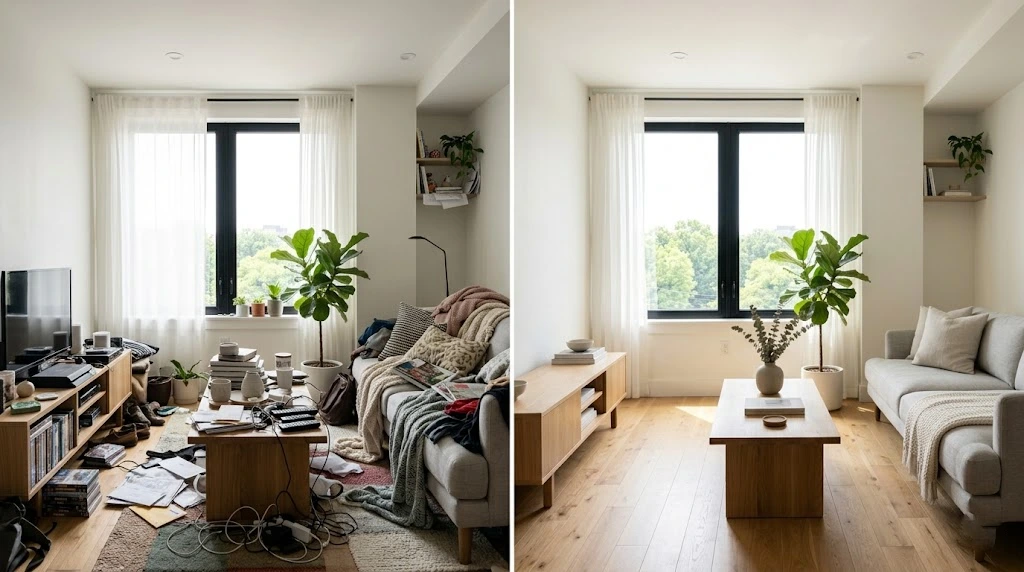
There’s a reason minimalism and small-space living go hand in hand. A minimalist home eliminates visual noise. With fewer objects and more open space, the mind can relax, creating a more peaceful and stress-free environment.
When you live in a smaller space, every item matters. You notice clutter more quickly. You feel the weight of unnecessary things more sharply. That’s not a disadvantage — it’s actually a powerful motivator. Small homes naturally push you toward intentional living, and minimalism gives you the tools to do it well.
When you live in a smaller space, you have a smaller mortgage and spend less on utilities and home maintenance costs in general. Add in fewer possessions to buy, repair, and replace, and the financial benefits stack up fast.
How to Start Decluttering a Small Home
Starting is usually the hardest part. The good news is that you don’t need to overhaul your entire home in a weekend.
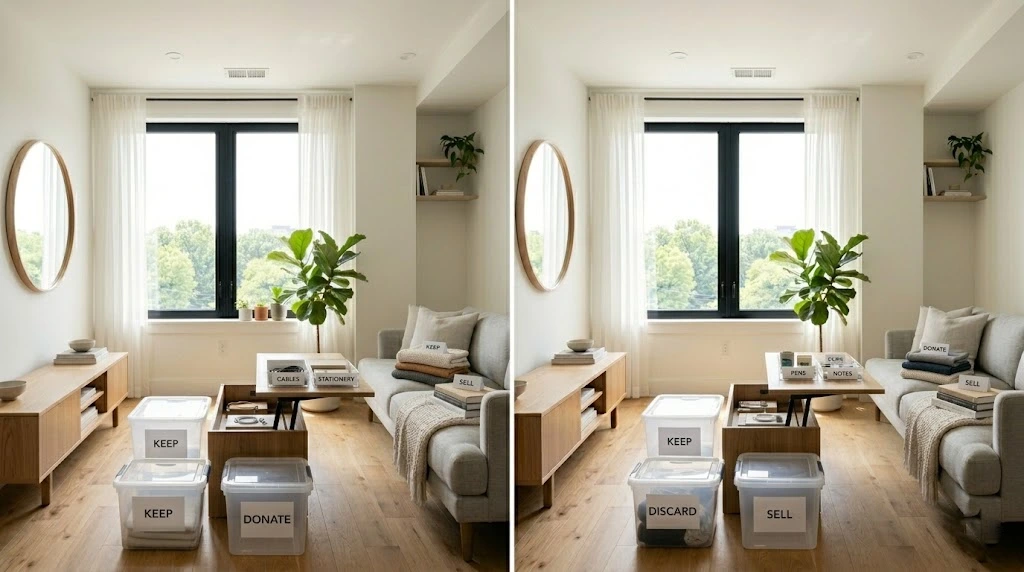
Breaking an overwhelming decluttering task into smaller bits that feel more manageable makes the whole process far less daunting. Pick one drawer. One shelf. One corner of a room. Clear it completely, then step back and notice how much lighter that small area feels. That feeling is the motivation you need to keep going.
A simple method that works well is the four-box approach. You grab four containers and label them: keep, donate, sell, and discard. As you go through your belongings, every item goes into one of those boxes. No leaving things in limbo. No “maybe” pile. Every decision moves you forward.
Start with the furniture. The biggest things in any room are the furniture pieces, so beginning there gives you the most visible results the fastest. Think about what you actually use versus what just takes up floor space.
Designing a Small Minimalist Home
Decluttering and design go together. Once you’ve cleared the excess, you can start thinking about how your space actually looks and flows.
Use Light and Neutral Colors
Neutral colors such as white, beige, and gray are a hallmark of minimalist design. These colors create a calm and relaxing atmosphere and serve as a background that lets a few statement pieces shine. In a small home, light walls and floors visually push the walls outward. The room doesn’t change size, but it feels like it does.
Natural light is your best friend. Minimalist homes are designed with large windows and open layouts, allowing sunlight to fill the space. This improves mood, reduces electricity use, and creates a connection with nature. If you can’t add windows, use mirrors strategically. They bounce light around and make a tight space feel surprisingly open.
Embrace Negative Space
One of the hardest things for people new to minimalism is resisting the urge to fill every surface. Embracing empty space in your home can be just as important as filling it with furniture and decor. Negative space helps create a sense of balance and harmony.
Bare countertops and clear floors don’t look empty — they look intentional. They give your eyes a place to rest.
Choose Furniture That Does Double Duty
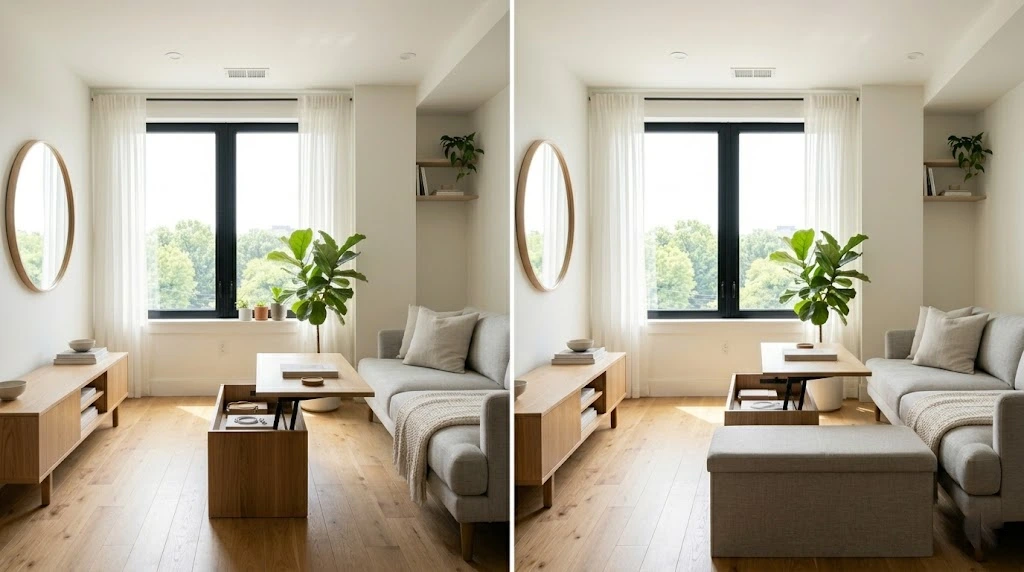
In a small minimalist home, every piece of furniture should earn its place. Convertible furniture like ottomans with storage, Murphy beds, and extendable tables help make a tiny home feel much more functional. Wall-mounted shelves free up floor space. A bed with built-in drawers eliminates the need for a separate dresser. A coffee table with a lift-top lid gives you a dining surface and hidden storage in one.
Think of furniture as tools, not just decoration. If a piece doesn’t serve at least one clear purpose in your daily life, it probably doesn’t belong.
The Mental Benefits of Small Home Minimalism
A clutter-free home isn’t just easier to clean. It genuinely changes how you feel.
Clutter is a form of visual distraction, and everything in our vision pulls at our attention at least a little. The less clutter, the less visual stress we have. When you walk into a tidy, minimal room, your nervous system actually settles. Your brain isn’t processing a hundred competing objects. It can just rest.
When there are fewer things cluttering a home, the feeling is calmer and there’s more mental clarity. Many people who embrace minimalism report that they feel less anxious at home, sleep better, and find it easier to focus on work or creative projects.
There’s also something freeing about owning less. Minimalism gives you the space and time to align your life with your values. When your home isn’t packed with things you don’t need, you stop spending energy maintaining, organizing, and feeling guilty about stuff. That energy goes back to you.
Keeping It Minimalist Long-Term
Getting to a minimalist state is one challenge. Staying there is another.
The key is building simple habits rather than relying on motivation. Dedicating 15 minutes a day to decluttering a small area, such as a nightstand or countertop, creates an immediate sense of calm and keeps things from piling up again.
A rule that many minimalists swear by is the “one in, one out” approach. Every time something new comes into the home, something old has to leave. It sounds strict, but it becomes second nature quickly. It also makes you think twice before buying something new, which is exactly the point.
When you declutter seasonally — for instance, reviewing winter clothes when you bring them out — you break the job into small, manageable moments that don’t require a whole weekend. Over time, maintaining a minimal space takes almost no effort at all.
Small Home Minimalism and Sustainability
One thing that often surprises people is how naturally minimalism aligns with eco-conscious living.
In 2025, minimalism is increasingly intersecting with eco-conscious choices, such as prioritizing secondhand shopping over new purchases and choosing durable, long-lasting items. When you buy less and buy better, you produce less waste. When you donate or rehome instead of tossing, you extend the life of objects that still have value.
Living in a smaller, more intentional space also means lower energy use, less water consumption, and a smaller footprint overall. Being minimalist and being environmentally thoughtful aren’t separate goals — they reinforce each other naturally.
Common Mistakes to Avoid
Even with the best intentions, it’s easy to go off track. Here are a few pitfalls worth knowing.
Minimalism doesn’t mean a completely bare home. Without warmth, rooms can feel sterile. The balance comes from clean lines paired with textures, rugs, cushions, or warm lighting.
Another mistake is trying to do everything at once. Tackling every room in a single weekend usually leads to burnout and a pile of decisions you never finish making. Slow and steady genuinely wins here.
Finally, don’t let social media set your standard. The hyper-perfect white rooms with not a single item on any surface look great in photos, but they’re not how people actually live. Real minimalism is personal. Your minimalist home is about your calm and your story. It doesn’t have to look like anyone else’s.
Conclusion
Small home minimalism isn’t about sacrifice. It’s about making room — for calm, for clarity, for the things and people that actually matter. A smaller space managed with intention can feel richer and more satisfying than a large home overflowing with stuff.
Start small. Pick one corner today. Notice how it feels when it’s clear. That one small shift might be the beginning of the most peaceful version of your home you’ve ever had.
