

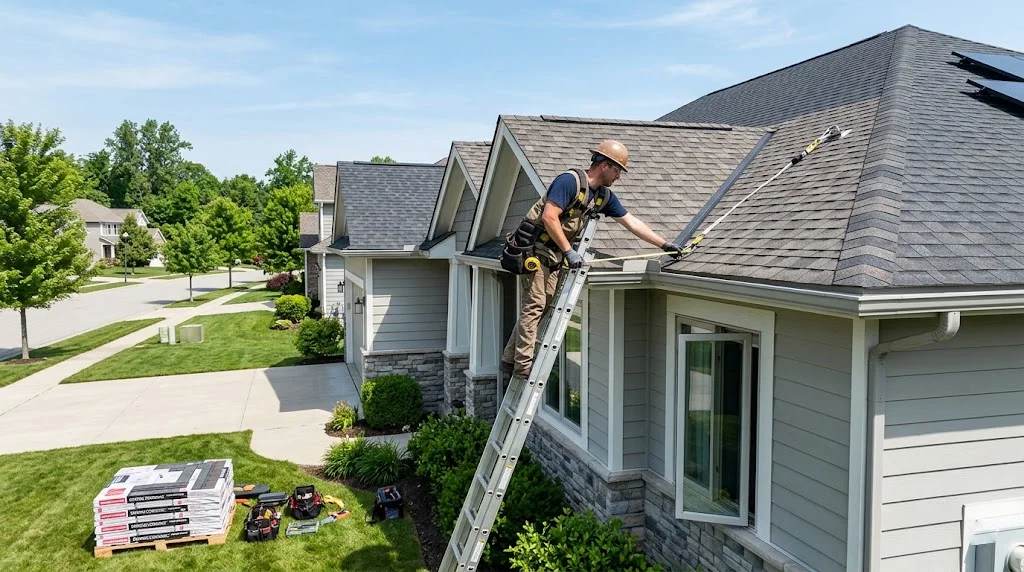
To calculate how many shingles you need, first measure your roof’s total square footage. Divide that number by 100 to get roofing squares, then multiply by 3 to find bundles. Always add 10–15% extra for waste and cuts.
Replacing your roof can cost a lot of money. But many homeowners spend more than they should—just because they don’t know how many shingles they actually need.
The good news? You don’t need to be an expert to figure this out.
With a few simple measurements and basic math, you can estimate the number of shingles for your roof. This helps you plan your budget, avoid waste, and make smarter decisions.
In this easy guide, you’ll learn:
- How to measure your roof step by step
- How to calculate shingles correctly
- How roof pitch affects materials
- Which shingles are best for your home
Let’s get started.
Step 1: Measure Your Roof Area
Before you can calculate shingles, you need to know your roof size.
Draw a Simple Roof Diagram
Start by drawing a basic sketch of your roof. Include:
- All sides (planes)
- Slopes
- Extra parts like dormers or garages
This will help you stay organized when measuring.
Tools You Need
| Tool | Purpose |
|---|---|
| Tape measure | Measure length and width |
| Ladder | Reach the roof safely |
| Notepad | Write measurements |
| Calculator | Do quick math |
👉 Always be careful. Wear non-slip shoes and make sure your ladder is stable.
Step 2: Break Roof Into Simple Shapes
Most roofs are not perfect rectangles. So, break your roof into simple shapes like:
- Rectangles
- Squares
- Triangles
- Trapezoids
Then calculate each part separately.
1. Rectangle or Square Area
Use this formula:
Length × Width
Example:
20 ft × 10 ft = 200 sq. ft.
2. Triangle Area
Use this formula:
(Base × Height) ÷ 2
Example:
(15 × 10) ÷ 2 = 75 sq. ft.
3. Trapezoid Area
Use this formula:
(Top + Bottom) × Height ÷ 2
Example:
(8 + 12) × 4 ÷ 2 = 40 sq. ft.
Step 3: Add Total Roof Area
Once you calculate all sections:
👉 Add them together
👉 Subtract areas like:
- Chimneys
- Skylights
- Vents
Now you have your total roof square footage.
Step 4: Convert to Roofing Squares
Roofing materials are sold in “squares.”
👉 1 roofing square = 100 sq. ft.
Formula:
Total area ÷ 100
Example:
| Total Area | Roofing Squares |
|---|---|
| 1,800 sq. ft. | 18 squares |
| 2,000 sq. ft. | 20 squares |
Step 5: Adjust for Roof Pitch
Not all roofs are flat. Steeper roofs need more shingles.
What Is Roof Pitch?
Pitch shows how steep your roof is.
Example:
- 4:12 = low slope
- 6:12 = medium slope
- 9:12 = steep roof
Roof Pitch Multiplier Table
| Roof Pitch | Multiplier |
|---|---|
| 3:12 | 1.03 |
| 4:12 | 1.05 |
| 5:12 | 1.08 |
| 6:12 | 1.12 |
| 7:12 | 1.16 |
| 8:12 | 1.20 |
| 9:12 | 1.25 |
How to Use It
Multiply your total roof area by the multiplier.
Example:
| Step | Value |
|---|---|
| Roof area | 1,800 sq. ft. |
| Pitch | 6:12 |
| Multiplier | 1.12 |
| Adjusted area | 2,016 sq. ft. |
Step 6: Calculate Number of Shingles
Shingles come in bundles.
👉 1 bundle covers about 33 sq. ft.
👉 3 bundles = 1 roofing square
Formula:
Roofing squares × 3 = number of bundles
Example:
| Squares | Bundles Needed |
|---|---|
| 18 | 54 bundles |
| 20 | 60 bundles |
Step 7: Add Extra for Waste
You will always need extra shingles.
Why?
- Cutting around edges
- Mistakes
- Broken shingles
👉 Add 10–15% extra
Waste Calculation Example
| Bundles | +15% Waste | Final Total |
|---|---|---|
| 60 | 9 extra | 69 bundles |
Step 8: Types of Roof Shingles
Not all shingles are the same. Here are common options:
Shingle Types Comparison Table
| Type | Lifespan | Cost | Best For |
|---|---|---|---|
| Asphalt | 15–30 years | Low | Most homes |
| Architectural | 25–40 years | Medium | Better durability |
| Metal | 40–70 years | High | Long-term use |
| Wood | 20–40 years | Medium | Natural look |
| Slate | 75–100 years | Very high | Luxury homes |
| Solar | 25–30 years | High | Energy saving |
Quick Guide
- Asphalt → cheapest and most popular
- Metal → strong and long-lasting
- Slate → very expensive but premium
- Solar → saves electricity
Step 9: Should You DIY or Hire a Pro?
Measuring is easy. Installing a roof is not.
DIY Is Good For:
- Measuring
- Planning
- Budgeting
Hire a Pro For:
- Installation
- Safety
- Long-term durability
How to Choose a Roofing Contractor
Before hiring, check these things:
- License and insurance
- Customer reviews
- Past work photos
- Written estimate
- Warranty details
👉 Always compare at least 3 contractors
Common Mistakes to Avoid
Here are mistakes many homeowners make:
❌ Not measuring correctly
❌ Forgetting roof pitch
❌ Not adding waste
❌ Buying low-quality shingles
❌ Ignoring safety
Simple Roof Shingle Calculator (Quick Method)
If you want a fast estimate:
| Roof Size | Bundles Needed |
|---|---|
| 1,000 sq. ft. | 30 bundles |
| 1,500 sq. ft. | 45 bundles |
| 2,000 sq. ft. | 60 bundles |
| 2,500 sq. ft. | 75 bundles |
👉 Then add 10–15% extra
Conclusion
Now you know how to calculate how many shingles you need for your roof.
Just follow these steps:
- Measure your roof
- Calculate total area
- Convert to roofing squares
- Adjust for pitch
- Add waste
With this method, you can plan your project better and avoid overspending.
If you are unsure, you can still use a roofing calculator or ask a professional—but now you understand the basics yourself.
FAQ – Frequently Asked Questions
How many shingles are in one bundle?
Usually 15–30 shingles, depending on type.
How much does one bundle cover?
About 33 square feet.
How many bundles do I need for 2,000 sq. ft.?
Around 60 bundles, plus extra for waste.
Can I install shingles myself?
It’s possible, but not recommended unless you have experience.
What is the best type of shingles?
Asphalt shingles are best for most homes because they are affordable and easy to install.
Also Read : Roof Insurance Claims: A Complete Guide for Homeowners
