

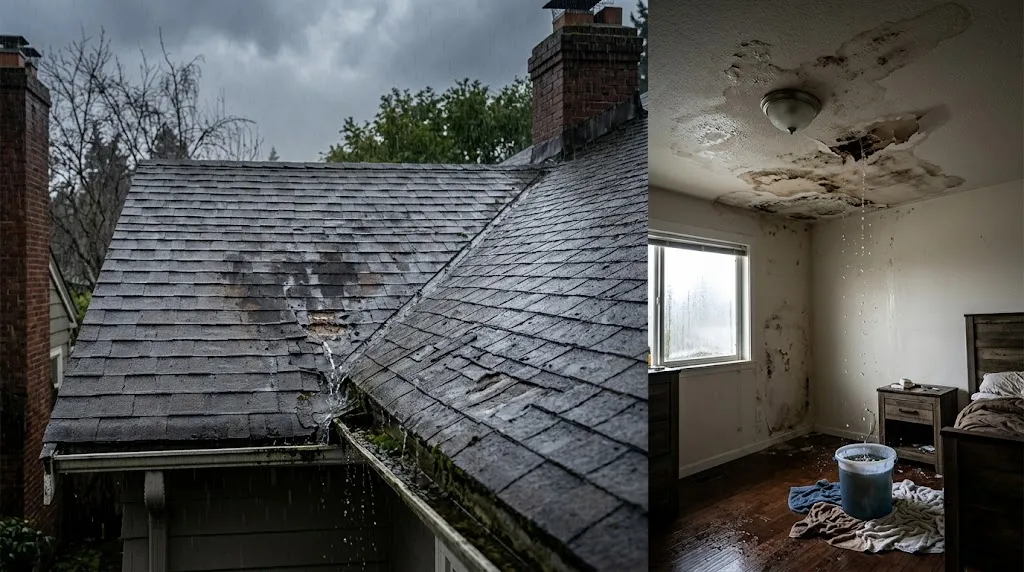
To find and fix a roof leak, start in your attic with a flashlight and look for water stains, damp insulation, or dark streaks on rafters. Trace the moisture uphill toward the roof. Common fixes include replacing damaged shingles, resealing flashing, and patching cracked vent boots with roofing cement.
A roof leak rarely announces itself at a convenient time. One day you notice a yellowish stain spreading across your ceiling, or you hear that soft, unsettling drip during a rainstorm. When that happens, the clock starts ticking. Knowing how to find and fix a roof leak quickly can mean the difference between a minor repair and a major, expensive problem.
The good news? Many roof leaks are something you can handle yourself — or at least diagnose — before calling in a professional.
Why Roof Leaks Are Tricky to Track Down
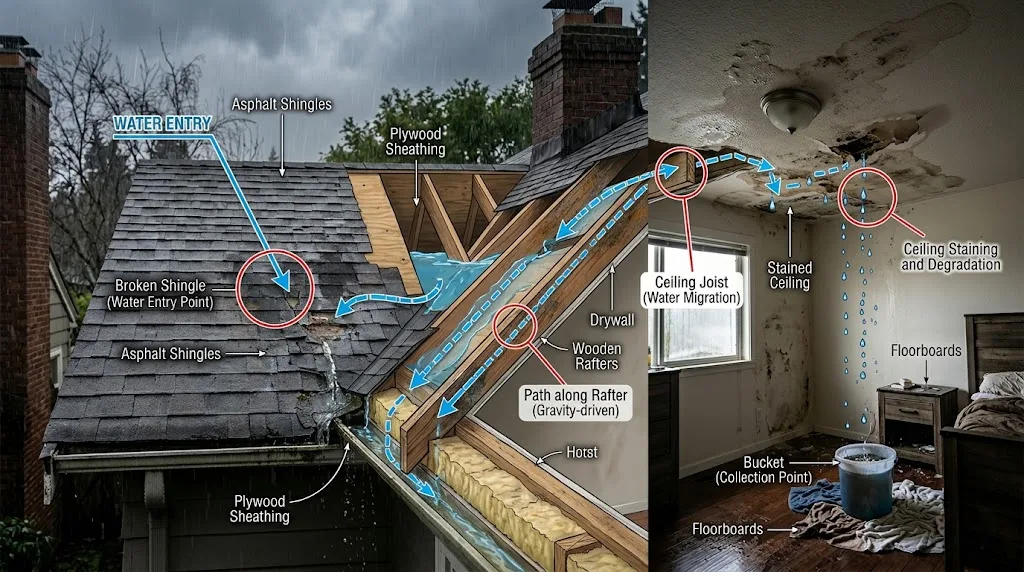
The frustrating truth about a leaky roof is that water rarely enters and drips straight down to the spot where you see the damage. Water tends to seep along the roof decking before it finds a way through, which means the actual hole in the roofing through which it entered could be far away from where the drip appears inside.
That ceiling stain in your living room might actually be caused by a damaged shingle several feet away and a few feet higher up the slope. Gravity does the work, and water follows whatever path is available to it — along joists, down rafters, through insulation — until it finally pools somewhere visible.
So before you go patching anything, you need to find the real source. That detective work starts from the inside.
Step 1: Check the Attic First
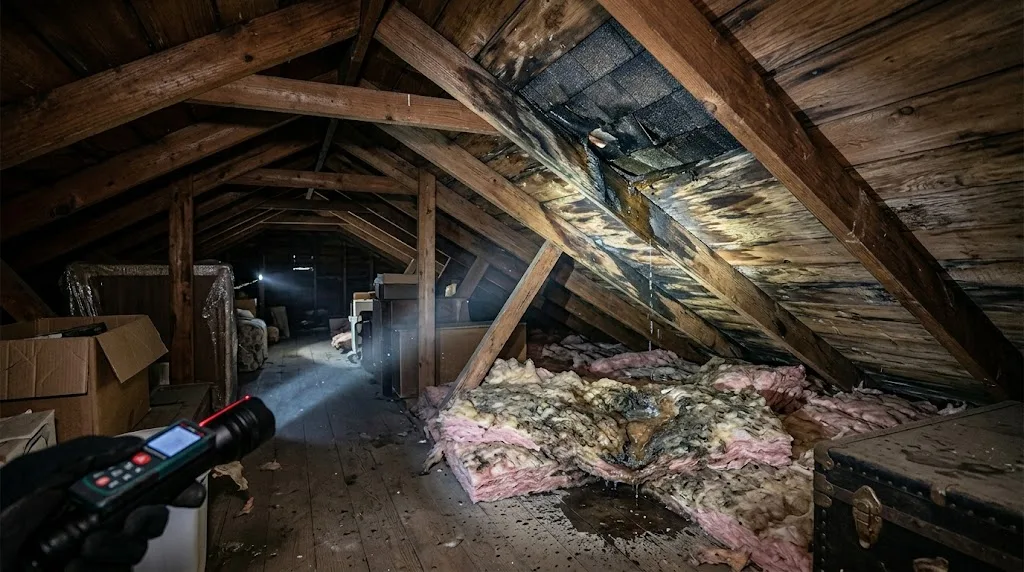
Your attic is your best starting point. Grab a flashlight, head up there, and let your eyes adjust to the dark before you start scanning.
Look for water stains, dark spots, mold growth, or trails of moisture along the rafters and roof sheathing. Remember, the leak likely originates higher up, so follow any signs of water uphill to pinpoint the source.
If your attic has a plastic vapor barrier between the drywall and the insulation, push the insulation aside and look for flow stains on the plastic. These streaks can point you right to the entry spot. Always step on secure structural beams when you’re up there — never on the insulation itself, which can hide the gaps between joists.
Once you find something suspicious, mark the area with a piece of chalk so you can find it again easily.
Step 2: Look for the Most Common Leak Sources
The first thing to look for is roof penetrations — items poking through the roofing are the most common source of leaks. In fact, it’s rare for leaks to develop in open areas of uninterrupted shingles, even on older roofs.
Here is where to focus your attention once you get outside and onto the roof safely:
Damaged or Missing Shingles Look for shingles that are cracked, curling at the edges, missing entirely, or covered in granule loss. Even one bad shingle can let water in during a heavy rain.
Deteriorated Flashing Flashing is the thin metal that seals the joints around your chimney, skylights, and where walls meet the roof. Pay close attention to these metal strips and look for rust, cracks, or gaps in the sealant. This is one of the most frequent culprits behind persistent leaks.
Cracked Vent Boots The rubber or plastic seals around plumbing vents can become brittle and crack from sun exposure, creating a direct path for water. These are easy to overlook but simple to replace.
Clogged Roof Valleys Valleys where two roof planes meet are natural channels for water. If they are clogged with leaves and debris, water can back up and seep under the shingles.
Chimney Issues Galvanized steel flashing around chimneys can rust through, especially at the 90-degree bend at the bottom, and water can seep into the chimney and onto the roof, where it can rot the decking. Always inspect this area closely.
Step 3: Use the Water Hose Test If You’re Still Stuck
If your attic inspection and visual roof check didn’t reveal the source, there’s a reliable method that works surprisingly well.
Recruit a helper and try the water spray test. Grab your garden hose and start soaking the suspected problem areas. Start on the lower part of the roof and work your way up. Your helper should be inside the house, watching for new wet spots and drips.
Spend several minutes soaking each section before moving on. This can take patience, but it almost always reveals where the water is getting in. Once your helper spots a drip or wet spot, mark the area from inside and call it done. Now you know exactly where to focus the repair.
How To Fix a Roof Leak: The Most Common Repairs
Once you’ve found the source, the repair method depends on what you’re dealing with. Here are the most common fixes a homeowner can handle with basic tools and a little confidence.
Replacing Damaged Shingles
Begin by making sure you have enough new shingles and that they match your existing set. You’ll need a hammer, a flat pry bar, a utility knife, roofing cement, and roofing nails.
Carefully lift the edges of the surrounding shingles and remove the damaged one by pulling out the nails. Slide the new shingle into place, nail it down, and press the surrounding shingles back flat. Apply a dab of roofing cement under the edges of the new shingle to seal everything tight.
Resealing or Replacing Flashing
If your flashing is cracked but still mostly intact, clean the area thoroughly and apply a generous bead of roofing caulk or roofing cement along the seam. Press it in firmly and smooth it out with a putty knife. If the flashing is rusted through or pulling away from the surface, it’s worth replacing the section entirely rather than just patching over it.
Fixing Cracked Vent Boots
A cracked rubber boot around a vent pipe is a quick fix. Remove the old boot by sliding it up and off the pipe, then slip a new one down from the top. Secure it with roofing nails and seal around the base with roofing caulk. This repair takes less than an hour and costs very little.
Patching Small Holes
If you’re patching a hole or fixing a minor roof leak, roofing adhesive and caulk can provide a watertight seal. For tiny holes — like those left by old antenna mounts or satellite dish brackets — fill the hole with roofing caulk and press a piece of flashing or metal patch over it, sealing all four edges. This is a simple but effective long-term repair for pinhole-sized damage.
Emergency Fixes During Active Leaks
If it’s actively raining and water is getting in, your first priority is damage control inside the house. Place buckets or pans under the drip to catch the water. If you see a bulge in the ceiling paint, water is pooling — carefully puncture the center of the bulge with a screwdriver to allow the water to drain in a controlled way, which prevents a ceiling collapse.
Once the rain stops and it’s safe, cover the exterior leak area with a tarp secured at the ridge. This buys you time until you can make a proper repair.
When To Call a Professional
DIY repairs work well for isolated, minor issues. But some situations call for a professional roofer, and there’s no shame in knowing your limits.
Call a professional roofer if you’re dealing with large or multiple leaks, a steep or high roof that requires specialized safety equipment, or if you’ve checked the attic and simply can’t pinpoint the entry point.
If you’ve made a repair and the leak keeps coming back, that’s also a sign that something deeper is going on — possibly with the underlayment, decking, or overall roof structure. A professional can assess the real scope of the problem and give you a clear picture of what you’re working with. For help finding a qualified roofer, see the National Roofing Contractors Association.
How To Prevent Roof Leaks in the Future
The easiest roof leak to deal with is one that never happens. A little regular attention goes a long way.
Inspect your roof biannually and after significant storms. Keep gutters clear, trim overhanging branches, and ensure proper attic insulation and ventilation to avoid ice dams and condensation, which can also cause leaks.
Clean your gutters every spring and fall. Replace cracked caulk around flashing before it has a chance to open up fully. And if you notice a missing shingle after a storm, replace it right away — that small gap can cause an outsized amount of damage over a single rainy season.
The Bottom Line on Roof Leaks: Find the Source, Then the Fix Is Simple
Finding and fixing a roof leak feels intimidating at first, but once you understand how water moves through a roof, the whole process becomes much more logical. You start inside, trace the evidence uphill, confirm the source, and then make the right repair for the type of damage you’ve found.
Most minor leaks — a bad shingle, a cracked vent boot, failing flashing — are well within reach for a careful homeowner with a few basic tools. Act quickly, work safely, and don’t hesitate to bring in a professional when the problem goes beyond what you can confidently handle. Your roof is your home’s first line of defense. Giving it the attention it needs now saves you from far bigger headaches later.
Leak Source Checklist: Match the Clue to the Cause
Use this checklist alongside the steps above. It summarises the most common leak sources covered in this guide, what to look for, and the repair that usually fits.
| Likely source | What to look for | Usual fix in this guide |
|---|---|---|
| Damaged or missing shingles | Shingles that are cracked, curling at the edges, or missing | Replace the damaged shingles |
| Deteriorated flashing | Cracked or rusted metal sealing joints around chimneys and other roof features | Reseal or replace the flashing |
| Cracked vent boots | Rubber or plastic seals around plumbing vents that have become brittle or cracked | Replace the vent boot, or reseal it as a short-term fix |
| Clogged roof valleys | Debris collecting where two roof planes meet, trapping water | Clear the valley so water can drain freely |
| Chimney flashing | Galvanised steel flashing around the chimney that has rusted through | Repair or replace the chimney flashing |
| Small holes | A minor puncture or gap in the roofing surface | Patch with roofing adhesive and caulk |
Frequently Asked Questions
Why is the stain on my ceiling not directly below the leak? Water rarely drips straight down. It can travel along rafters and roof sheathing before it shows up, so a ceiling stain may be caused by damage several feet away. That is why this guide starts the search in the attic and traces moisture uphill toward the roof.
What should I check first when I suspect a roof leak? Start in the attic with a flashlight. Look for water stains, dark spots, mold growth, or trails of moisture along the rafters and roof sheathing, and mark anything suspicious with chalk so you can find it again easily.
What if I still cannot find the leak? Try the water hose test described in Step 3: soak one suspected section at a time for several minutes while a helper watches inside for drips, working methodically until the entry point shows itself.
When should I call a professional roofer? Call a professional for large or multiple leaks, a steep or high roof that is unsafe to work on, or a leak that keeps coming back after a repair.
Related Guides
If the leak turns out to be around a plumbing vent, see How to Fix a Leaking Roof Vent Pipe (Complete DIY Guide). For a flat or rubber roof, read How to Patch a Leaking Rubber Roof: A Complete Step-by-Step Guide.
