

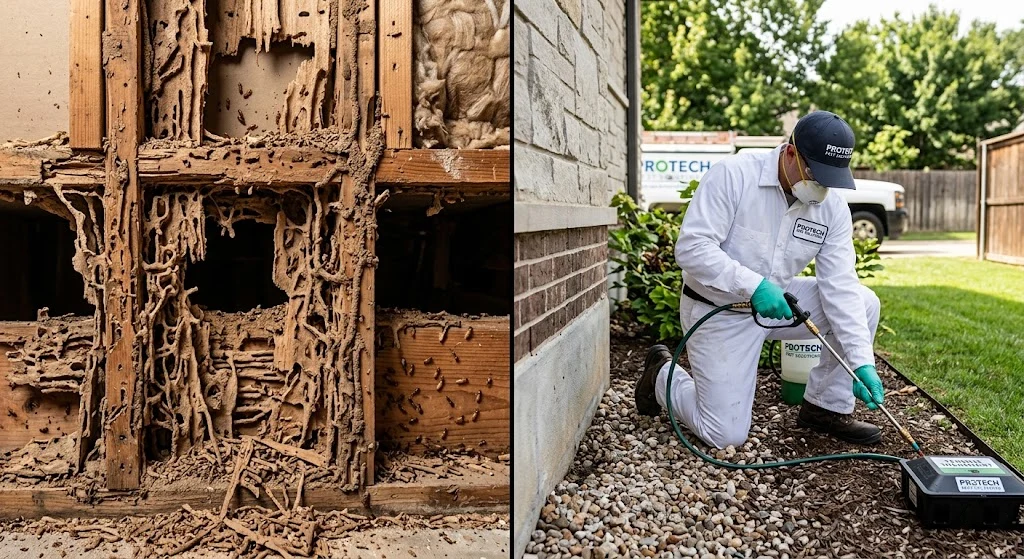
To get rid of termites, use a liquid termiticide to create a chemical barrier around your home’s foundation, or install bait stations to poison the colony over time. For severe infestations, professional fumigation is the most effective option. Always address moisture problems and wood-to-soil contact to prevent them from returning.
Finding termites in your home is one of the most stressful things a homeowner can face. These tiny insects work silently, chewing through wood day and night, often for months before anyone notices. If you want to know how to get rid of termites — for good — you’re in the right place.
The good news? There are proven, effective treatments available, whether you want to tackle a small problem yourself or bring in a professional for a full-scale infestation. This guide covers everything you need to know, from spotting the early signs to choosing the right treatment and keeping termites from ever coming back.
How to Know If You Actually Have Termites
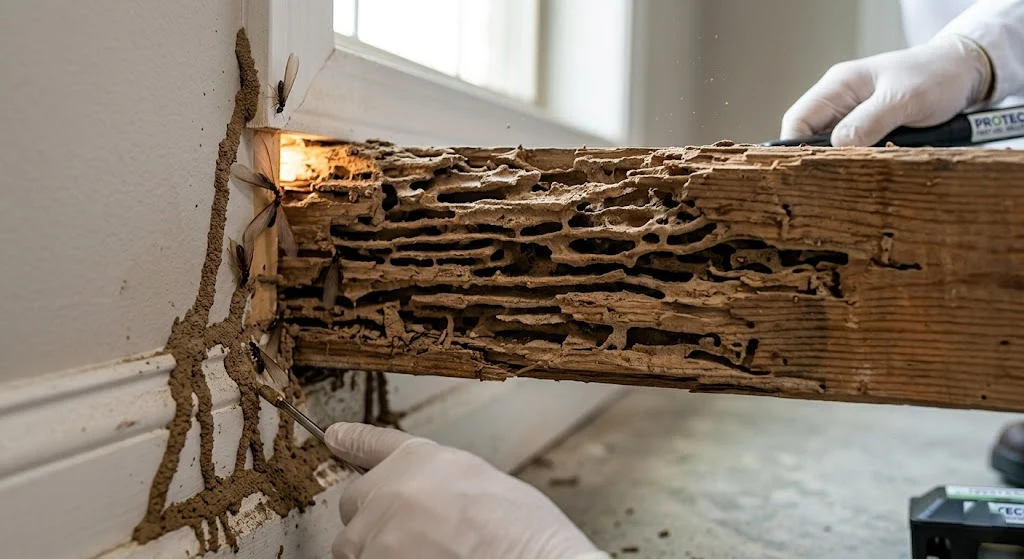
Before you treat anything, you need to confirm what you’re dealing with. Signs of termites in your home include hollow-sounding wood, wood damage beneath floors or walls, stuck windows and doors, drywall damage, and squeaky floors. Other signs include mud tubes, discarded wings, swarmers (flying termites), frass (termite droppings), and a musty or moldy scent.
Subterranean termites build mud tubes along your foundation walls to serve as bridges between their colony and the wood they consume. These tubes are made of tiny pieces of soil, wood, and debris, and protect the colony from predators while conserving moisture.
Termite swarmers are winged termites that emerge to find a new place to establish a colony. They are often mistaken for flying ants, but termites have straight antennae and wings of equal length, while ants have bent antennae and uneven wings. Swarmers usually appear in spring or after a warm rain, and if you see them near windows or light sources, a colony is likely close by.
One of the most overlooked clues is sound. If you knock on a wooden beam or baseboard and it sounds hollow, that’s a red flag. Drywood termites also leave behind frass, which looks like small piles of sand or sawdust, typically found beneath infested wood.
Termites cause over $5 billion in property damage annually in the United States, yet most homeowners don’t realize they have a problem until significant structural damage has already occurred. That’s why catching things early matters so much.
How to Get Rid of Termites: Your Best Treatment Options
Once you’ve confirmed an infestation, it’s time to act. The right treatment depends on the type of termites you have, how widespread the damage is, and whether you want a DIY approach or professional help.
Liquid Termiticide Barriers
The fastest way to kill termites is a liquid termiticide applied to infested areas and surrounding soil. This is the most popular professional treatment, and it works by creating an invisible chemical barrier around your home’s foundation.
Termiticides work by spreading like a virus. When one termite comes into contact with the termiticide, it unknowingly carries it around, infecting other termites and ultimately killing the colony. Fipronil and imidacloprid are common active ingredients used in these barriers.
Applying a liquid termiticide requires digging a trench about 6 inches deep and 6 inches wide around the structure. For homes with concrete areas like driveways, drilling may also be required to treat underneath. This is typically done by a licensed pest control technician, though some homeowner-grade products are available for smaller applications.
Termite Bait Stations
Bait stations are a slower but highly effective method, especially for subterranean termites. Termites carry poisoned cellulose from bait stations back to their colony. Place them around the perimeter of your house at intervals of 10 to 20 feet. Although this method is slow, it works well in eradicating an entire colony.
For long-term colony elimination, baiting systems like Sentricon work by spreading poison through the colony. The termites don’t die right away — they take the bait back to the nest, which is exactly what makes it so effective. Over several weeks or months, the whole colony is wiped out.
Fumigation (Tent Treatment)
For serious drywood termite infestations, fumigation is the gold standard. Fumigation — where the entire house is tented and filled with gas — is effective against drywood termites and the satellite nests of Formosan termites, but requires the family and pets to move out for two nights, and all food and medicines must be bagged.
This intensive treatment, which releases penetrating fumigant gas and seals the building under tarps, reaches termites deep within walls and structural wood, achieving nearly 100% elimination. It’s disruptive, but when an infestation has spread throughout the home, nothing else comes close.
Spot Treatments and Wood Injections
If the infestation is small and confined to one area, spot treatment can be a practical first step. Direct wood treatment involves drilling a ¼” to ½” hole into infested wood until you reach the nest, then applying foams, dusts, or aerosols to the exposed nest.
Topical sprays of borates, like Timbor and Bora-Care, can penetrate infested wood to kill termites. Once absorbed into the wood, borate insecticides remain effective for the life of the wood. This makes them a smart preventive treatment as well, especially during construction or renovation.
DIY Home Remedies: What Actually Works
There’s no shortage of home remedies online, but it’s important to be realistic about what they can do. Boric acid disrupts termites’ digestive systems, ultimately killing them over time. It is best used in bait stations or as a direct application to infested wood for drywood termite control.
Orange oil, which contains d-limonene, dissolves termites’ exoskeletons on contact, dehydrating and killing them. It can be useful for very localized problems, like a single piece of furniture or a small section of wood.
That said, DIY methods like vinegar or boric acid may kill individual termites but won’t solve the root problem. If you have a colony established inside your walls or beneath your foundation, surface-level treatments won’t reach them.
When to Call a Professional
Some situations simply call for expert help. If termites are widespread or causing visible damage, calling a professional is the best way to protect your home and investment.
A licensed pest control company can inspect the entire structure, identify what species you’re dealing with, and recommend a targeted treatment plan. Regular self-inspections, combined with professional assessments every two to three years, provide comprehensive protection for your property investment.
If you’ve already tried a DIY treatment without success, or if you’ve noticed damage to load-bearing structures like beams or floor joists, don’t wait. The longer termites are active, the more expensive the repair bill becomes.
How to Prevent Termites From Coming Back
Getting rid of termites is only half the battle. The other half is making sure they don’t return. Prevention focuses on eliminating moisture, fixing leaky pipes, ensuring proper drainage, reducing wood-to-soil contact, keeping firewood and mulch away from your home’s foundation, sealing cracks and gaps in your foundation and walls, and scheduling regular professional inspections.
Moisture is one of the biggest draws for termites. Homeowners are often surprised to learn that termites are drawn to moisture more than wood. Fix any plumbing leaks, improve ventilation in crawl spaces, and make sure gutters and downspouts direct water away from the foundation.
Removing old wood, fixing drainage, and reducing mulch can help stop termites from spreading in your yard. Old tree stumps, rotting fence posts, and piles of scrap wood sitting near your home are open invitations.
It’s also worth having your home treated preventively even if you haven’t seen signs of termites yet. The currently available chemical barrier pesticides are designed to last no more than 5 to 10 years, so staying on a regular treatment schedule is smart, especially in warmer climates where termites are more active year-round.
A Quick Look at Termite Types
Not all termites behave the same way, and knowing what kind you’re dealing with makes a difference.
Subterranean termites live in the soil and travel up through mud tubes to reach wood. They’re the most common species in the U.S. and cause the majority of structural damage. Liquid termiticides and bait stations work best against them.
Drywood termites don’t need soil contact — they live directly inside the wood they eat. They’re harder to detect and typically require spot treatments or fumigation.
Formosan termites are an aggressive subterranean species found mainly in the South. They are one of the most destructive termite species in the U.S., primarily in warmer areas like Louisiana, Texas, Florida, Alabama, Georgia, and South Carolina.
Knowing your enemy helps you choose the right weapon.
Conclusion
Termites are a serious problem, but they’re not unbeatable. The key is acting quickly once you spot the signs, choosing a treatment that matches the severity of your infestation, and then taking steps to keep them away for good.
For small, contained problems, boric acid, borate wood treatments, or bait stations may be enough. For anything more serious — especially subterranean or widespread infestations — a professional liquid termiticide treatment or fumigation will give you the best chance of full elimination.
Above all, don’t ignore the warning signs or put off treatment hoping the problem will resolve itself. Termites never stop eating. The sooner you take action, the more of your home — and your wallet — you’ll protect.
