

To get rid of carpenter ants, locate the nest, then use ant bait, non-repellent insecticide spray, or diatomaceous earth to eliminate the colony. Fix moisture problems and seal entry points to stop them from returning. For severe infestations, call a licensed pest control professional.
What Are Carpenter Ants and Why Should You Worry?
Finding large black ants crawling across your kitchen counter is alarming enough. But when those ants turn out to be carpenter ants, you have a much bigger problem on your hands.
Carpenter ants are among the most destructive household pests in North America. They can measure anywhere from ¼ to ½ inch long, are usually black or reddish-brown, and have bent antennae with a clearly segmented waist. That last detail helps you tell them apart from termites, which have straight antennae and a thicker body.
Here’s the key thing to understand: carpenter ants do not eat wood. Instead, they tunnel through it to build smooth, clean galleries where they live and raise their young. Over time, this hidden excavation weakens floor joists, wall studs, and support beams — often without any visible signs on the surface.
The damage can take months or even years to become obvious. By the time you notice sagging floors, warped walls, or stuck doors and windows, the colony may already be well-established inside your home’s structure.
Acting quickly is everything with carpenter ants. The sooner you learn how to get rid of carpenter ants, the less damage your home will suffer — and the less money you’ll spend on repairs.
How To Spot a Carpenter Ant Infestation Early
Catching a carpenter ant problem early gives you a real advantage. These pests are sneaky, but they do leave behind some clear clues if you know what to look for.
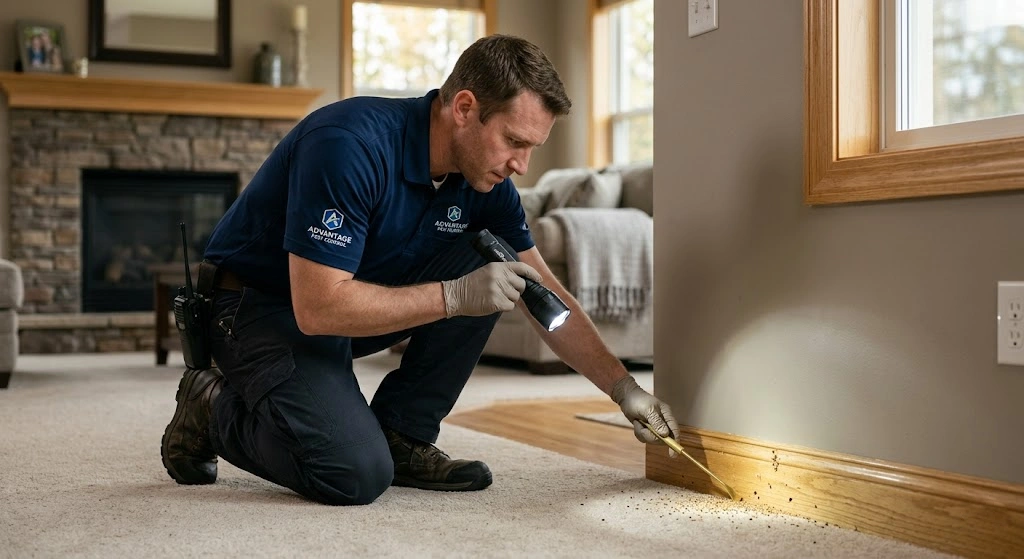
The most telling sign is frass — a fine, sawdust-like material that carpenter ants push out of their tunnels as they excavate wood. Unlike termite damage, which mixes mud and soil with wood particles, carpenter ant frass looks clean and dry, almost like fresh sawdust. Finding small piles of it near wooden baseboards, window frames, or door casings is a strong red flag.
Hollow-sounding wood is another warning sign. Tap wooden surfaces with your knuckles in suspected areas. A deep, hollow thud instead of a solid knock means carpenter ants may have already created tunnels inside.
At night, when the house is quiet, you might also hear faint rustling or crackling sounds coming from inside your walls. Carpenter ants are most active after dark, and a large colony can create surprisingly audible movement.
Winged carpenter ants (called swarmers) appearing indoors — especially in late winter or early spring — are a serious warning. Swarmers are reproductive ants that signal the colony is mature and ready to expand. Seeing them inside your home almost always means the nest is somewhere within the structure itself.
How To Find the Carpenter Ant Nest
Before you can eliminate carpenter ants, you need to know where they’re living. Treating random areas without targeting the nest is a waste of time and product.
Carpenter ants prefer damp or decaying wood because it’s easier to tunnel through. Start your search in places where moisture problems are likely: basements, crawl spaces, attics near roof leaks, bathroom walls, and areas around windows with poor seals. Pay special attention to wood that has had any water damage, even old damage that has since dried out.
Outside the home, check tree stumps, rotting logs, and wood piles stored close to the foundation. These are classic outdoor nest sites, and carpenter ants often use them as a base before moving indoors.
One reliable method for tracking down a nest is to follow the ants themselves. Place a small amount of honey or a sugary food near where you’ve spotted activity, then wait and watch. Worker ants will eventually form a trail back toward the nest. Follow that trail patiently — it might lead you to a crack in the foundation, a gap around a pipe, or a soft spot in the wood trim.
Once you’ve narrowed down the location, use a screwdriver to probe suspect wood. If it crumbles or feels soft and hollow, that’s your nest area.
How To Get Rid of Carpenter Ants: The Most Effective Methods
With the nest located, you’re ready to take action. There are several proven approaches, and the best results usually come from combining more than one of them.
Use Ant Bait First
Baiting is widely considered the most effective long-term strategy for eliminating carpenter ants. The reason it works so well is that the ants carry the poison back to the colony themselves, which eventually kills the queen and collapses the entire nest from the inside.
Place both sugar-based and protein-based baits near active trails, along the home’s foundation, around wood piles, and close to any suspected entry points. Rotate between bait types if one doesn’t seem to attract them — carpenter ant preferences can shift based on the season and colony needs.
Be patient. Baiting takes time, sometimes a few weeks, because the goal is to let the poison spread through the whole colony rather than just killing a few foragers on the surface.
Apply a Non-Repellent Insecticide Spray
Standard repellent sprays will kill carpenter ants on contact, but they also warn the colony away before the poison can spread. Non-repellent sprays are far more effective because the ants walk through the treated area without detecting it, then carry the chemical back to their nestmates.
Apply a non-repellent spray around your home’s exterior perimeter, focusing on foundation edges, window and door frames, and any visible entry points. For indoor use, look for formulas specifically labeled as safe for interior cracks and crevices. Always follow label directions carefully.
Treat the Nest Directly with Insecticide Dust
If you’ve located the nest, direct treatment gives you the fastest results. Insecticide dust — or diatomaceous earth as a natural alternative — can be injected or puffed directly into the nest cavity.
Diatomaceous earth works by physically damaging the ants’ outer shells, causing them to dry out and die. It’s a good option for those who want to avoid synthetic chemicals, particularly in homes with children or pets. Apply it carefully into crevices and wall voids, and avoid inhaling the fine powder.
For nests inside walls, you may need to drill a small hole to access the void, apply the dust treatment, then seal the hole afterward.
Try Boric Acid
Boric acid is another effective and relatively low-toxicity option. Carpenter ants pick it up on their bodies as they walk through treated areas, then ingest it during grooming. It disrupts their digestive system and kills them gradually, giving enough time for the poison to spread back to the colony.
Mix boric acid with a sweet attractant like sugar syrup or peanut butter and place it along ant trails. Keep it away from pets and small children, and refresh the bait every few days until activity stops.
Pour Boiling Water Into Outdoor Nests
If the nest is located outside — in a tree stump, wood pile, or soil — you can destroy it by pouring several liters of boiling water directly into the nest opening. This method is simple, chemical-free, and surprisingly effective when the colony is small or newly established. You may need to repeat it two or three times to fully eliminate the colony.
Adding a natural insecticide or a few drops of dish soap to the water can improve results. Use extreme caution to avoid burns and wear closed-toe shoes.
Natural and Home Remedies That Actually Help
Not everyone wants to reach for chemical sprays right away, and there are some natural approaches worth trying — especially for light infestations or as a preventive measure.
Essential oils like peppermint, tea tree, cedarwood, and lemon oil are known to disrupt ant scent trails and act as a natural deterrent. Dampen a cloth or cotton ball with your chosen oil and wipe it along windowsills, baseboards, and the edges of countertops. This won’t eliminate an established colony on its own, but it can slow their movement and discourage new scouts from exploring.
A simple homemade bait made from equal parts baking soda and powdered sugar placed in shallow dishes near ant activity can also work as a low-cost option. The sugar draws the ants in, while the baking soda disrupts their digestive chemistry.
These natural methods work best in combination with more direct treatments, not as a standalone solution for an active infestation.
When To Call a Professional Exterminator
DIY methods work well for many carpenter ant situations, but there are times when calling a licensed pest professional is the smarter move.
If you’ve tried baiting and treating for several weeks without a clear reduction in ant activity, the colony may be larger than expected, or there may be multiple satellite nests throughout the structure. Carpenter ants sometimes establish secondary nests away from the main colony, which makes complete elimination much harder without professional-grade tools and inspections.
You should also call a professional if you notice signs of serious structural damage — soft spots in flooring, sagging ceilings, or walls that sound deeply hollow when tapped. In those cases, you need both pest control and a structural assessment to understand the full scope of the problem.
Professional pest control services typically use a combination of nest treatments, perimeter barrier applications, and pesticidal dust materials that can reach hidden cavities that homeowners can’t easily access. They also identify moisture sources and other conditions that made your home attractive to carpenter ants in the first place.
How To Prevent Carpenter Ants From Coming Back
Getting rid of carpenter ants is only half the battle. Without addressing the conditions that attracted them, there’s a good chance they’ll return.
Moisture is the single biggest factor. Carpenter ants are drawn to damp, soft wood because it’s easier to excavate. Fix any leaking pipes, improve drainage around your foundation, clear clogged gutters, and repair any water-damaged wood as soon as possible. Dry, sound wood is far less appealing to these pests.
Seal every possible entry point. Use caulk or weatherstripping to close gaps around doors, windows, utility lines, and foundation cracks. Even small openings give carpenter ants a way in.
Keep firewood stored away from your home — ideally off the ground and at least 20 feet from the foundation. Wood piles stacked against the house are practically an open invitation. The same goes for tree branches and shrubs that touch the exterior walls; carpenter ants use them as bridges to reach your roof and siding, so trim them back regularly.
Replace any moisture-damaged or rotting wood around your home, both inside and out. Old deck boards, damaged window frames, and water-stained fascia boards are all prime nesting targets. Removing that wood eliminates one of the most common reasons carpenter ants show up.
Maintaining a perimeter spray around the base of your home once or twice a year can also provide a useful barrier against new colonies trying to move in.
Conclusion
Carpenter ants are one of those problems that seem small at first and quietly become expensive. Because they nest inside wood rather than on the surface, the real damage stays hidden until it’s already significant. The good news is that when you catch them early and take the right steps, you can eliminate them fully and protect your home for years to come.
Start by identifying the signs, locate the nest, and use a combination of baiting, direct treatment, and perimeter sprays to wipe out the colony. Then fix whatever moisture or wood issues gave them a reason to move in. If the problem is beyond what DIY can handle, don’t hesitate to bring in a professional — your home’s structure is worth protecting.
Stay observant, stay proactive, and carpenter ants won’t stand a chance.
