

Your electricity bill just arrived — and the number made you blink twice. You’re not alone. Electricity rates in 2026 have climbed 12–18% compared to last year, and air conditioners are the single biggest culprit, sometimes eating up 50–60% of your total summer bill. In this guide, we will share simple hacks to slash your AC bills so you can stay cool without breaking the bank.
Here’s the good news: you don’t need to sweat it out or buy expensive new equipment. Small, consistent changes can cut your AC energy consumption by 20–30% — that’s real money back in your pocket, every single month.
We’ve put together 10 field-tested, HVAC-expert-approved tips that work whether you have a central AC unit, a mini-split, or a window unit. Let’s get into it.
Tip 1: The 24-Degree Rule — Set It and Save It
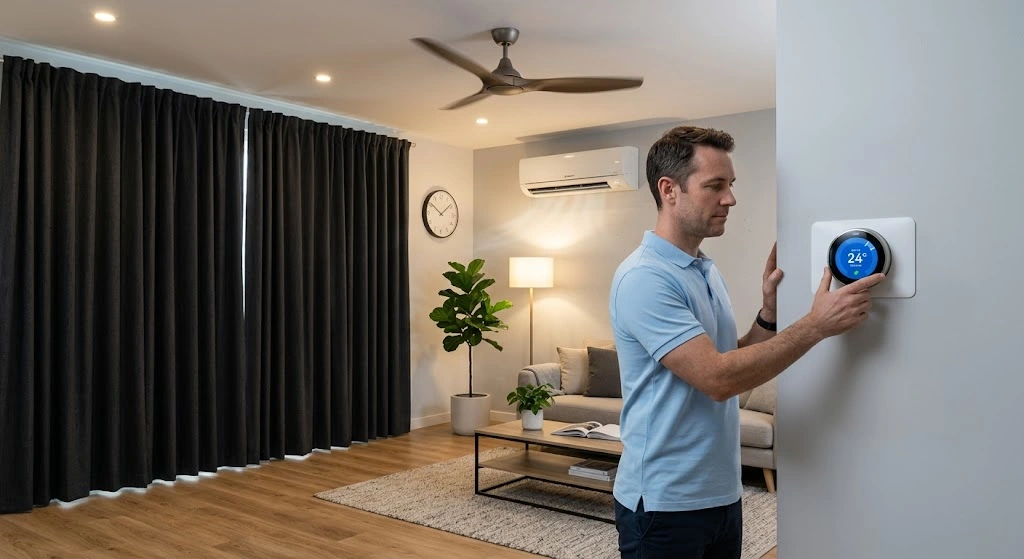
The single easiest way to lower your electricity bill? Set your thermostat to 24°C (75°F) when you’re home. According to the U.S. Department of Energy, every degree above 22°C saves you roughly 3% on your cooling costs.
Going lower than 24°C doesn’t cool your room faster — it just runs your AC longer and harder. Pro Tip: Set it to 26–28°C when you’re out, and let it pre-cool 30 minutes before you return.
Tip 2: The Ceiling Fan Strategy — AC’s Best Friend
A ceiling fan uses just 10–15 watts of electricity compared to an AC’s 1,000–3,500 watts. Running both together lets you raise the thermostat by 2–4°C without feeling any difference in comfort.
Make sure your ceiling fan runs counter-clockwise in summer — this pushes cool air down directly. And always turn the fan off when you leave the room; fans cool people, not spaces.
Tip 3: Seal Air Leaks — Stop Paying to Cool the Outdoors
The U.S. EPA estimates that air leaks around doors and windows can waste 25–40% of your cooling energy. Feel for drafts around window frames, door gaps, and electrical outlets on exterior walls.
Fixes are cheap and fast: use weatherstripping tape for doors and silicone caulk for window frames. A single afternoon of sealing can save hundreds of rupees/dollars per season.
Tip 4: Blackout Curtains — Your Secret Weapon Against Heat
Up to 30% of unwanted heat enters your home through windows. Blackout curtains or thermal drapes block solar radiation before it ever warms your room — meaning your AC doesn’t have to work as hard.
Keep curtains closed on south- and west-facing windows during peak sun hours (10 AM – 4 PM). Light-colored or reflective curtain liners work even better than dark ones for blocking heat.
Tip 5: Schedule Professional HVAC Maintenance — Once a Year Pays Off
A poorly maintained AC unit can lose 5–15% of its efficiency every year. Annual professional servicing includes refrigerant checks, coil cleaning, and electrical connection tightening — all things that silently drain your wallet.
Book a pre-summer tune-up in April or May before technicians get busy. A $75–$150 service call can easily save $200–$400 in energy costs over the summer.
💡 While you’re doing home maintenance, don’t overlook your plumbing! How to Fix a Leaky Kitchen Faucet — this guide will help ensure your whole home is in top shape and running efficiently.
Tip 6: Clean Your Air Filters — The Easiest DIY Fix
A clogged air filter is one of the most common — and most overlooked — reasons for high AC bills. Dirty filters restrict airflow, forcing your unit to work 15–20% harder to push the same amount of cool air.
The fix takes 5 minutes: check your filter every 30 days, clean reusable ones with warm water, and replace disposable ones every 60–90 days. A clean MERV 8–11 rated filter gives the best balance of airflow and air quality.
Tip 7: Avoid Heat-Generating Appliances During the Day
Your oven, dryer, and dishwasher dump significant heat into your home — making your AC fight harder to cool the space. On hot days, this internal heat gain can raise room temperature by 3–5°C.
Simple habit changes: cook on the stove or use a microwave instead of the oven; run your dishwasher and dryer after 8 PM when outdoor temps drop. Air-drying dishes also saves extra energy.
Tip 8: Install a Smart Thermostat — Set It, Forget It, Save It
A smart thermostat like Google Nest or Ecobee learns your schedule and automatically adjusts temperatures. Studies show they save 10–15% on cooling bills on average, paying for themselves within a year.
Key features to look for: geofencing (auto-adjusts when you leave/arrive), energy usage reports, and remote control via smartphone app. You can even set vacation modes so you never cool an empty house again.
Tip 9: Shading your Outdoor Unit — One of the best hacks to slash your AC bills
Your outdoor condenser unit works by expelling heat from inside your home. When it sits in direct sunlight all day, it has to work 10–15% harder to do the same job.
Plant shrubs or trees on the west and south sides of the unit for natural shading — but maintain at least 2 feet of clearance on all sides for airflow. You can also install a simple shade awning. Avoid enclosing it or blocking airflow, which will cause more harm than good.
Tip 10: Use a Dehumidifier — Fight the ‘Feels Like’ Temperature
High humidity makes 28°C feel like 35°C. Your AC struggles to remove moisture from the air — especially in humid climates. A portable dehumidifier reduces the load on your AC and makes you feel comfortable at a higher thermostat setting.
Target indoor humidity between 40–50% relative humidity (RH). At this level, your body’s natural cooling (sweat evaporation) works efficiently, and you can comfortably set the AC 2–3°C higher.
Frequently Asked Questions (FAQ)
Q: AC ko kitne temperature par chalana chahiye? (What’s the ideal AC temperature?)
The sweet spot is 24°C (75°F) when you’re home. This balances comfort and efficiency. If you’re in a humid climate, combine it with a ceiling fan to feel cooler without lowering the temperature further.
When you’re out or asleep, 26–28°C is perfectly fine — your body temperature drops during sleep, so you don’t need the room as cool as you think.
Q: Kya baar baar AC on-off karne se bill zyada aata hai? (Does turning AC on/off frequently increase the bill?)
Yes — and this is a very common mistake. Frequent on/off cycling forces the compressor to do repeated startup draws, which consume 3–5x more electricity than steady-state operation. It also wears out the compressor faster.
The smarter approach: use the temperature setting to manage comfort, not the power button. Raise the temperature when leaving rather than turning the AC fully off. Your unit will maintain the temperature efficiently without full restarts.
Conclusion — Small Changes, Big Savings
You don’t need to choose between comfort and a reasonable electricity bill. These 10 energy-saving strategies — from the 24-degree rule and ceiling fan pairing to smart thermostats and sealing air leaks — can collectively reduce your summer AC costs by 20–30% without sacrificing a single degree of comfort.
Start with the free and low-cost tips first (cleaning filters, sealing leaks, adjusting curtains) and you’ll see results on your very next bill. Then layer in smart thermostats and professional maintenance for long-term gains.
👇 We’d love to hear from you: Which of these energy-saving tips are you going to try first? Or do you have a favourite hack that cuts your AC bill every summer? Drop it in the comments below!
