

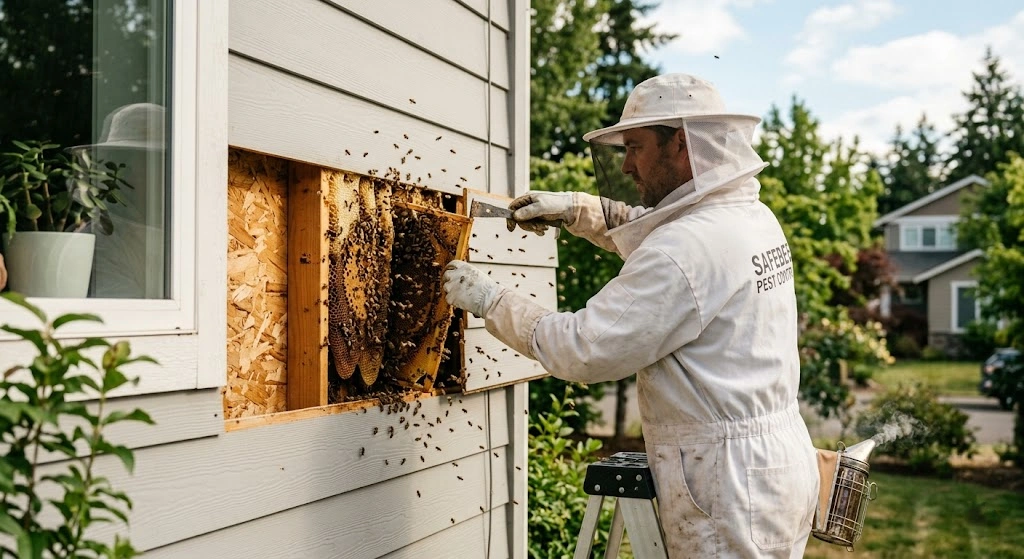
Bee removal typically costs between $150 and $500, with a national average around $280. Simple swarm removal can be as low as $75, while complex infestations inside walls or attics can push costs up to $2,000 or more, depending on the bee species, hive location, and method used.
What to Expect When You Get a Bee Removal Quote
Discovering a beehive on your property can feel stressful — and the first question most homeowners ask is, “How much does bee removal cost?” The short answer is that most people spend somewhere between $150 and $500. But like most home services, the real number depends on several things specific to your situation.
Whether you have a small swarm hanging off a tree branch or a full colony living inside your walls, the price can swing dramatically. This guide walks you through everything you need to know so you can make a smart, informed decision — and avoid getting overcharged.
The Average Cost of Bee Removal
Bee removal costs an average of $280, with most homeowners spending between $150 and $500. Costs can be as low as $75 but may reach up to $2,000 for structural infestations that require opening up walls.
While bees play an essential role in pollination, nests near your home can pose real safety risks and cause structural damage if left untreated.
The type of job makes a big difference. A beekeeper removing an accessible outdoor swarm is a very different job from a pest control professional cutting into your siding to extract a 50,000-bee honeycomb colony. Both fall under “bee removal,” but they sit at opposite ends of the price spectrum.
Here’s a quick look at typical price ranges by job type:
A basic swarm removal from an outdoor surface runs roughly $75 to $200. A standard hive removal from a yard or outbuilding typically costs $150 to $500. A hive removal from inside a wall, attic, or crawl space can run $500 to $2,000, especially once you add structural repairs.
What Factors Drive the Cost of Bee Removal
The Type of Bee Matters a Lot
Not all bees are handled the same way, and the species on your property plays a big role in pricing.
Both bumble bees and honeybees typically cost $125 to $1,000 to remove, depending on colony size. Beekeepers value honeybees the most since they form larger nests and produce quality honey. Carpenter bee removal costs $200 to $850 on average because, while they rarely sting, the removal process can be challenging due to the structural damage they cause. Killer bees — also known as Africanized honeybees — cost $375 to $1,600 due to their highly aggressive nature.
Some beekeepers will relocate honey beehives or swarms for free to establish new hives on their own property, making relocation a far more affordable option than extermination in some cases.
Where the Hive Is Located
This is probably the single biggest cost driver. A hive sitting on a fence post is simple work. A hive tucked inside your attic, between your walls, or under your porch floor is a completely different project.
Small hives may cost as little as $180, while larger nests or multiple hives can range from $600 to $1,000. If removal requires cutting into exterior or interior walls or other structural areas, labor costs will increase significantly.
Professionals also charge more when the hive is high off the ground or requires special equipment to reach safely. A second-story soffit or a steep roofline adds ladder work, time, and risk — and that shows up on your invoice.
The Size of the Colony
Bees live in colonies that can range from 20,000 to 80,000 individuals in one hive. If you have a large hive or multiple hives, this will impact the price since a professional bee removal expert will have more work to do.
Larger colonies also tend to leave behind more honeycomb, which needs to be cleaned out completely. Leftover comb attracts new bees, other pests, and can melt in hot weather — causing staining and damage to your walls or ceilings.
Live Removal vs. Extermination
Live removal, where a beekeeper carefully extracts and relocates the colony, typically costs more than extermination. But it’s often the right call for honeybees, which are critical pollinators and are even regulated by law in some states.
Because bees play a vital role in our ecosystem, many states such as Florida, Maine, and Arizona regulate their extermination and removal. Always check with your state’s agriculture department for any special provisions before hiring a pest control company.
Extermination is faster and usually cheaper, but it’s not always the appropriate — or even legal — option depending on your location and the species involved.
Bee Removal Cost by Location in Your Home
Where the bees have set up camp has a direct impact on both the complexity of the job and the final bill.
Bees nesting outdoors in a tree, shrub, or yard structure are the easiest and cheapest to deal with. You’re looking at the lower end of the price range, often between $100 and $300, and the job is usually completed in an hour or two.
Bees nesting inside your home’s structure — in walls, attics, soffits, or chimneys — require much more invasive work. Plan for repairs after removal, since drywall replacement runs $275 to $750 and soffits need patching. Hiring a local bee removal pro protects your household from stings and supports safe, minimally destructive hive removal.
Ground-nesting bees, like some bumble bee species, fall somewhere in between. They’re less destructive than carpenter bees but can still be tricky to fully eliminate if the colony is large.
Can a Beekeeper Remove Bees for Free?
Yes — sometimes. In some lucky cases, a beekeeper might remove your bees for free. This usually happens when you have a healthy honeybee swarm that a beekeeper wants to add to their apiary. They get free bees; you get free removal. It’s a genuine win-win.
That said, don’t count on it. Free removals are most likely to happen with outdoor swarms of honeybees during spring swarm season. If the hive is inside a wall, requires structural work, or involves an aggressive species, a beekeeper won’t take it on without compensation.
To find out if free removal is possible, reach out to your local beekeeping association. Many regions have swarm hotlines that connect homeowners with beekeepers looking for new colonies.
What Does a Bee Inspection Cost?
Before any removal happens, a professional will typically inspect your property to assess the situation. You’ll need to hire a professional beekeeper to identify the type of bees on your property. This typically costs $75 per hour, but could increase depending on the hive’s location and the severity of the infestation. Be on the lookout for companies that offer free inspections and quotes.
Getting a few quotes is always a smart move. Prices vary between companies, and a free inspection means you can compare your options without spending anything upfront.
Should You Try DIY Bee Removal?
It’s tempting to save money by handling it yourself, especially for a small visible swarm. But DIY bee removal carries real risks that are worth understanding before you grab a can of spray.
DIY methods can save money but involve risks. Emergency services demand higher fees due to immediate response requirements if something goes wrong.
Beyond the obvious risk of getting stung — which can be life-threatening if you’re allergic — DIY removal often fails to address the root problem. If you don’t remove the entire hive, including the comb, honey, and queen, you’ll likely see the bees return or attract a new colony to the same spot.
For small, accessible outdoor swarms and non-aggressive species, a DIY approach might be reasonable with proper protective gear. For anything inside your home, large colonies, or aggressive species like Africanized honeybees, professional removal is strongly recommended.
Hidden Costs to Watch Out For
The initial removal fee is just one part of the total picture. Several add-on costs can catch homeowners off guard.
Structural repairs are the most significant. Opening a wall to access a hive means paying to close it back up. Depending on how much drywall, insulation, or siding needs replacing, this alone can add hundreds to your bill.
Honeycomb removal and cleanup is another line item. If the hive has been in place for a while, the comb can be extensive and sticky. Removing it properly takes time.
After the bees have been removed, it’s essential to take preventative measures to avoid future infestations. This may include sealing entry points, installing bee traps, or implementing other deterrents. Some companies bundle these services into one package; others charge separately.
Emergency or after-hours service calls also cost more. If you’re dealing with a large swarm near a child’s play area or an entry point to your home, you may need to act fast — and urgency always adds to the price.
How to Save Money on Bee Removal
Getting multiple quotes is the most reliable way to find fair pricing. Don’t accept the first estimate you receive, especially for larger jobs.
Timing matters too. Seasonality influences costs since bees are more active in warmer months, and removal during peak season may increase prices by 20% to 30%. If you have flexibility, scheduling in late fall or early spring — when colonies are smaller — can reduce both the complexity and the cost.
Choosing live relocation over extermination can also open the door to discounts or even free service from local beekeepers, particularly for honeybees.
Finally, ask about bundled services. Some pest control companies offer discounts when you combine removal with sealing and preventative treatment in a single visit.
When to Call a Professional Right Away
Some bee situations don’t give you time to shop around. You should call a professional immediately if the hive is inside your home’s structure, if you or anyone in your household is allergic to bee stings, if the bees are showing aggressive behavior, or if you suspect you’re dealing with Africanized honeybees.
If you notice a swarm of bees on your property, hiring a professional to get rid of it immediately is the safest move to protect you and your home.
Waiting too long can allow a colony to grow significantly, pushing the removal cost much higher and increasing the risk of structural damage from expanding honeycomb.
The Bottom Line
Bee removal is one of those home services where the price truly depends on your specific situation. For most homeowners, the total falls between $150 and $500 — but complex jobs involving structural access or aggressive species can climb to $1,000 or more.
The best approach is to act early, get multiple quotes, and always confirm that the removal includes full hive and comb cleanup. A thorough job costs a little more upfront but protects you from repeat infestations down the road.
When in doubt, reach out to a licensed pest control company or your local beekeeping association. They can help you assess what you’re dealing with and find the right solution for your home and budget.
