

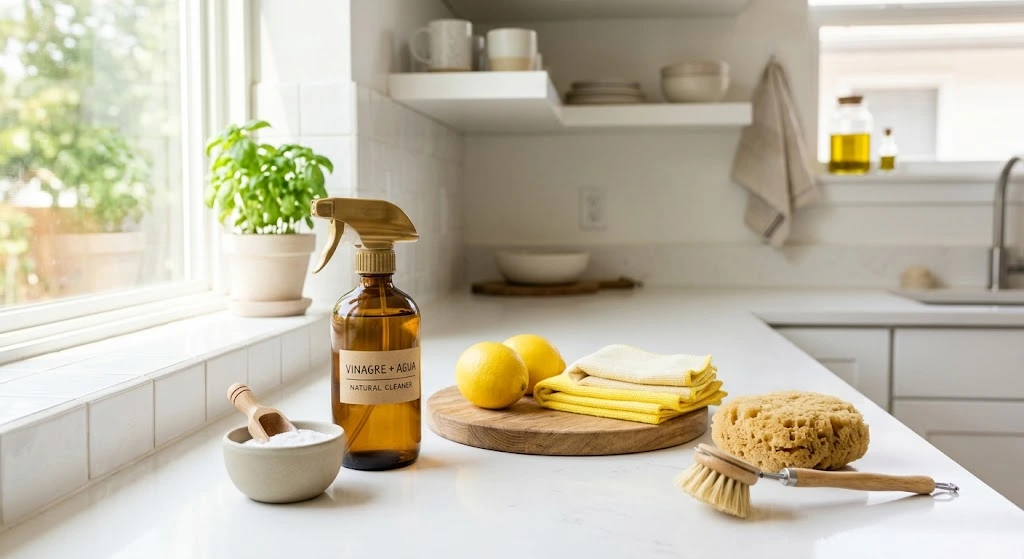
The most effective eco-friendly cleaning hacks use three kitchen staples: white vinegar, baking soda, and lemon juice. Mix equal parts vinegar and water for an all-purpose spray, use baking soda paste on tough stains, and apply lemon juice to cut grease and odors naturally.
You don’t need a cabinet full of chemical sprays to keep your home spotless. Some of the most effective cleaning tools are already sitting in your kitchen — and they cost a fraction of what you’d pay at the store. Eco-friendly cleaning hacks work because they rely on simple science: acid cuts grease, baking soda scrubs gently, and natural oils deodorize without masking smells with toxic synthetic fragrance. Once you see the results, it’s hard to go back.
Why Natural Cleaners Are Worth Switching To
Traditional cleaning products often contain volatile organic compounds (VOCs), synthetic fragrances, and surfactants that linger in your indoor air long after the cleaning is done. Natural cleaning products release fewer VOCs, which directly improves the air quality inside your home. That matters more than most people realize — the EPA consistently ranks indoor air as more polluted than outdoor air in many homes.
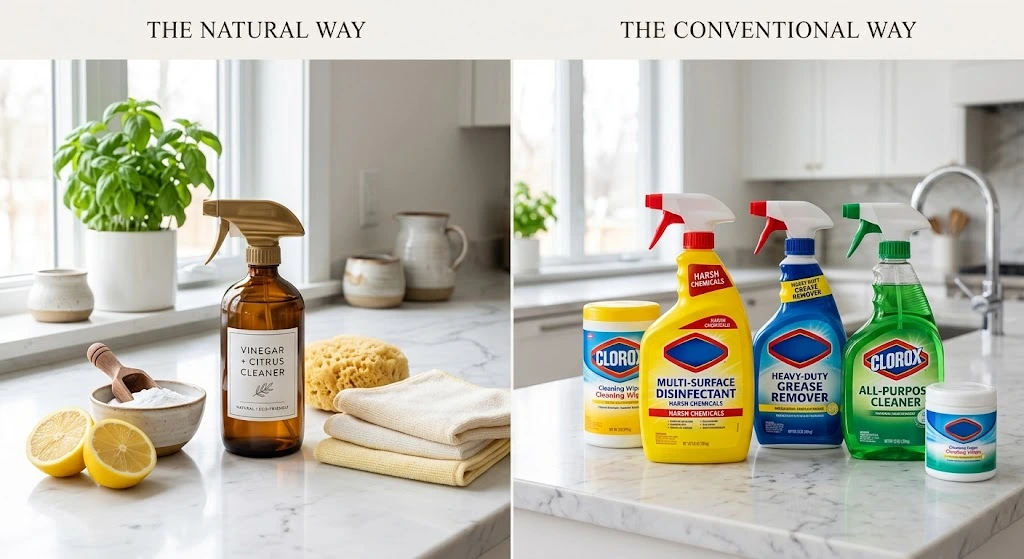
The cost argument is just as strong. Natural ingredients like vinegar, baking soda, and lemon juice can create highly effective cleaning solutions for a fraction of the cost of store-bought cleaners. A large bottle of white vinegar costs less than a dollar per use. Most commercial multi-surface sprays cost several times more and come wrapped in single-use plastic.
There’s also the safety factor. Traditional cleaning products can irritate your skin, eyes, and respiratory system. If you have children, pets, or anyone with allergies at home, that risk goes up significantly. Switching to plant-based or homemade solutions reduces that exposure without sacrificing a clean result.
The Big Three: Vinegar, Baking Soda, and Lemon
These three ingredients do the heavy lifting in almost every eco-friendly cleaning hack. Understanding what each one does helps you use them correctly — and avoid the common mistake of mixing them together and canceling out their effectiveness.
White Vinegar is acidic, which makes it effective against mineral deposits, soap scum, and most bacteria on non-porous surfaces. Mix equal parts white vinegar and water in a spray bottle, add a few drops of essential oil for scent, and you have a reliable all-purpose cleaner. Use it on countertops, stovetops, sinks, and glass. One important note: avoid vinegar-based solutions on marble, granite, or unsealed tiles — the acid can etch natural stone over time.
Baking Soda works differently. It’s mildly alkaline and acts as a gentle abrasive without scratching surfaces. Mix baking soda and water into a paste, apply it to the surface you want to clean, let it sit for 5–10 minutes, and scrub with a sponge or brush. This works beautifully on bathroom tiles, sink stains, and stovetop grease. It also absorbs odors rather than covering them.
Lemon Juice brings natural acidity and a clean scent. Its natural acidity makes it a powerful degreaser and deodorizer. Rub a cut lemon directly on a cutting board to remove stains and bacteria, or add a splash of lemon juice to your vinegar spray for extra cutting power on kitchen grease.
Eco-Friendly Cleaning Hacks Room by Room
Kitchen Hacks That Save Time
The microwave is one of the most neglected spots in most kitchens. Fill a bowl with water and lemon slices, then microwave for 2–3 minutes. The steam loosens grime, making it easy to wipe clean with a cloth. No scrubbing, no chemical spray — just steam doing the work.
For your garbage disposal, freeze vinegar in ice cube trays and run them through the disposal. The vinegar freshens and cleans the disposal while removing odors. The ice physically scrubs the blades at the same time. It takes two minutes and costs almost nothing.
Greasy stovetops respond well to a paste of baking soda and a few drops of castile soap. Apply it, let it sit for ten minutes, then wipe away. For burnt-on residue, a few drops of lemon juice on top of the baking soda paste speeds things up considerably.
Bathroom Hacks That Go Deeper
The showerhead is one of the first places mineral buildup shows up, especially in areas with hard water. Fill a plastic bag with vinegar and tie it around the showerhead. Leave it overnight to dissolve mineral deposits, then rinse for a cleaner shower. It requires zero effort and works better than most commercial descalers.
For the toilet, sprinkle baking soda into the bowl, then add vinegar. Let it fizz for a few minutes before scrubbing with a toilet brush. The reaction helps lift stains and deodorize at the same time. Do this once a week and you’ll rarely need anything stronger.
Tile grout is another spot where natural cleaners shine. A thick paste of baking soda and water, applied with an old toothbrush, lifts grime from grout lines without bleach. Let it sit for ten minutes before scrubbing.
Living Room and Carpets
Carpets trap odors from pets, cooking, and daily life. You don’t need a chemical deodorizer to fix it. Sprinkle baking soda liberally over the carpet, let it sit for 15–30 minutes to absorb odors, then vacuum thoroughly. For light stains, a mix of vinegar, water, and a small drop of dish soap applied with a cloth works on most spills.
For windows and mirrors, combine one part white vinegar, one part water, and a few drops of lemon juice in a spray bottle. Buff dry with a microfiber cloth for a streak-free finish. Microfiber cloths with water are 98.9% effective at removing bacteria — more effective than conventional towels used with chemical disinfectants.
Swap Disposables for Reusables
The product you use matters, but so does the tool you use it with. Paper towels are one of the biggest sources of household waste. Switching to washable microfiber cloths reduces both cost and waste over time. Microfiber cloths pick up dirt and require fewer chemicals — look for ones made from recycled plastics.
Old cotton t-shirts make excellent cleaning rags. Cut them into squares and keep a stack under the sink. They’re free, absorbent, and go straight in the wash. Replacing disposable wipes and paper towels with washable cleaning cloths reduces waste and creates a healthier environment for your household.
Compostable sponges made from cellulose, loofah, or coconut fibers break down in home compost bins — a direct upgrade from plastic-backed synthetic sponges that sit in landfill for decades.
Freshen Your Home Without Synthetic Fragrance
Most commercial air fresheners work by masking odors with synthetic fragrance compounds. The word “fragrance” on a label is a loophole that allows companies to hide thousands of chemicals, including phthalates. That’s a significant concern for anyone breathing the air inside their home every day.
The natural alternative is straightforward. Simmer a small pot of water on the stove with cinnamon sticks, orange peel, and cloves. It fills the home with a genuine scent — not a chemical approximation of one. Essential oils like eucalyptus, lavender, and lemon can also be added to your cleaning sprays to leave surfaces smelling clean without synthetic additives.
Plants like the Snake Plant, Spider Plant, and Fiddle Leaf Fig act as natural air filters, helping to keep your indoor air cleaner while adding a fresh feel to any room. They’re a passive, ongoing contribution to indoor air quality that requires no spray bottle at all.
When to Choose Certified Eco Products Over DIY
Homemade solutions handle most daily cleaning tasks well, but there are moments where you need a verified disinfectant — particularly during cold and flu season or if someone in your household is immunocompromised. Many botanical disinfectants now meet EPA standards for pathogen removal, including viruses and bacteria — always check the label for “EPA registered” claims.
When buying commercial green products, look for certifications rather than packaging claims. The EPA Safer Choice, Green Seal, and EU Ecolabel are reliable signs of product safety — each requires that every ingredient pass a review for human and environmental safety. A green label or vague “eco” claim means nothing without one of these certifications behind it.
Build a Sustainable Cleaning Kit
Getting started doesn’t require a complete overhaul of your cleaning routine. Pick one room, one product swap, and one reusable tool. Most people start with an all-purpose spray — vinegar, water, and a few drops of tea tree oil in a glass bottle — and find it covers 80% of their daily cleaning needs.
From there, add a baking soda paste for bathrooms, a lemon-based glass cleaner, and a stack of microfiber cloths. Within a few weeks, you’ve replaced most of what was under your sink with three natural ingredients and a handful of reusable tools. The results are the same, the cost is lower, and the chemicals are gone.
That’s the real case for eco-friendly cleaning hacks: they work, they’re affordable, and they don’t leave a trail of plastic bottles or chemical residue behind. Starting simple is the fastest way to make it stick.
