

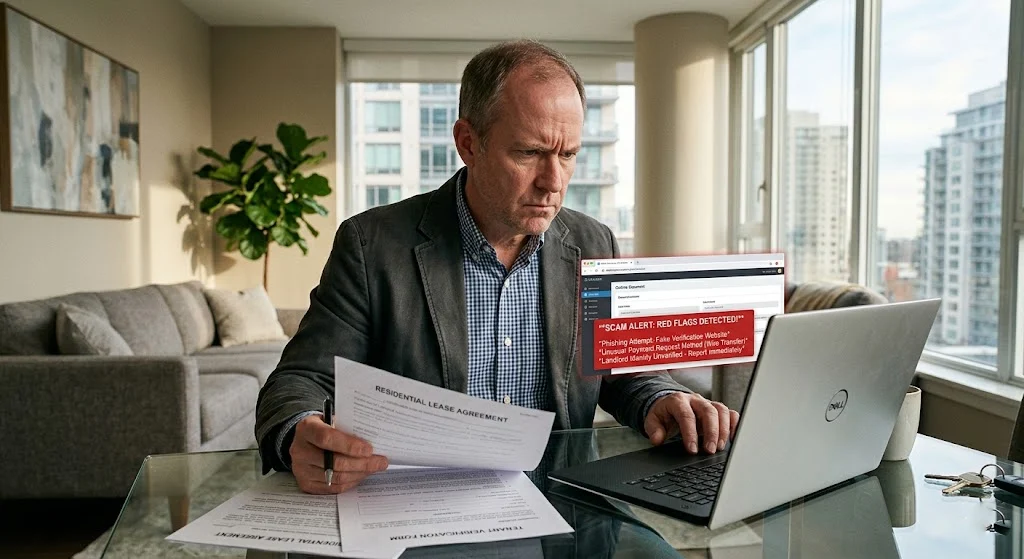
Why Landlords Need to Stay Alert
Every year, thousands of landlords lose money because of rental scams. Some lose a few hundred dollars, while others lose thousands. The worst part? Many scams look real at first.
Scammers are getting smarter. They use fake documents, stolen identities, and even emotional stories to trick landlords. If you are not careful, you can easily become a target.
The good news is that you can protect yourself. In this guide, you will learn about the most common rental scams and simple steps to avoid them.
What Are Rental Scams?
Rental scams happen when someone tries to cheat a landlord or property owner for money, access, or personal information.
These scams can include:
- Fake tenants
- Fake payments
- Phishing emails
- Identity fraud
Understanding these scams is the first step to staying safe.
5 Common Rental Scams Landlords Must Know
1. Suspicious Communication and Fake Urgency
One of the most common tricks scammers use is creating urgency. They may contact you and say things like:
- “I need to rent immediately.”
- “Please send details fast.”
- “Verify your account now or it will be locked.”
Sometimes, they pretend to be:
- Tenants
- Property managers
- Support agents
Warning Signs
- Asking for login details or codes
- Pressuring you to act quickly
- Messages that feel unusual or rushed
How to Stay Safe
- Never share passwords or verification codes
- Take your time before making decisions
- Keep all communication on trusted platforms
2. Fake or Stolen Tenant Identities
Some scammers use fake documents to look like real tenants. These may include:
- Fake salary slips
- Edited bank statements
- Fake job letters
They may pass basic checks but still be dangerous.
Warning Signs
- Mismatched addresses or job details
- Low-quality or edited documents
- Refusal to verify identity
How to Stay Safe
- Always verify identity documents
- Call employers using official numbers
- Ask for multiple proofs if needed
3. Phishing Emails and Fake Links
Phishing is when scammers send emails or messages that look real but are fake. Their goal is to steal your:
- Passwords
- Bank details
- Personal data
They may send links that take you to fake websites.
Warning Signs
- Strange email addresses
- Spelling mistakes in messages
- Links that look suspicious
How to Stay Safe
- Do not click unknown links
- Always check website URLs carefully
- Use official websites directly
4. Fake Payments and Refund Scams
This is a very dangerous scam. A “tenant” may send you a payment and then say:
“Oops, I paid too much. Please send the extra back.”
Later, the original payment fails or is fake. You lose money.
Warning Signs
- Paying before seeing the property
- Asking for refunds quickly
- Payment confirmation without bank proof
How to Stay Safe
- Wait until payment fully clears
- Never send refunds quickly
- Use secure payment methods only
5. Account Hacking and Password Reuse
If you use the same password on multiple sites, scammers can hack your account easily.
Once inside, they can:
- Change your listing
- Talk to tenants
- Steal payments
How to Stay Safe
- Use strong and unique passwords
- Turn on two-factor authentication
- Monitor your account regularly
Quick Overview Table: Scams and Solutions
| Scam Type | Common Trick | Risk Level | Best Protection |
|---|---|---|---|
| Fake Communication | Urgent messages | High | Stay calm, verify identity |
| Fake Tenant | Fake documents | High | Verify all documents |
| Phishing | Fake emails/links | Medium | Avoid unknown links |
| Payment Scam | Overpayment refund | Very High | Wait for payment clearance |
| Account Hack | Weak passwords | High | Use strong security |
Real-Life Example of a Rental Scam
Let’s look at a simple example:
Ali, a landlord, received a message from a “tenant” who said he was moving urgently. The tenant sent a payment and asked for a small refund.
Ali trusted him and sent the money back.
A few days later, the original payment was canceled.
👉 Result: Ali lost money.
Lesson: Never trust fast payments without verification.
Best Practices for Landlords (Checklist)
Use this simple checklist before accepting any tenant:
✅ Tenant Verification Checklist
- Check ID documents carefully
- Verify job and income
- Call references directly
✅ Communication Safety
- Avoid sharing personal details
- Do not trust urgent messages
- Keep records of conversations
✅ Payment Safety
- Accept secure payment methods
- Wait for full payment clearance
- Avoid refunds without confirmation
✅ Account Security
- Use strong passwords
- Enable two-factor authentication
- Check account activity regularly
Common Mistakes Landlords Should Avoid
Many landlords fall into scams because of simple mistakes:
- Trusting too quickly
- Skipping verification
- Ignoring warning signs
- Using weak passwords
Avoid these mistakes to stay safe.
Tools That Can Help You Stay Safe
Here are some tools you can use:
| Tool Type | Purpose |
|---|---|
| Tenant screening tools | Verify identity and background |
| Secure payment platforms | Safe transactions |
| Password managers | Strong password storage |
| Two-factor authentication | Extra security layer |
Using these tools makes your job easier and safer.
Why Scammers Target Landlords
Landlords are easy targets because:
- Large money transactions
- Many new applicants
- Limited verification time
Scammers take advantage of busy landlords who don’t double-check details.
How Technology Is Changing Rental Scams
Scammers are now using:
- AI-generated documents
- Fake profiles
- Advanced phishing methods
This means landlords must stay updated and careful.
Pro Tips to Stay Ahead of Scammers
- Always trust your instincts
- Double-check everything
- Take your time
- Stay informed about new scams
If something feels wrong, it probably is.
Frequently Asked Questions (FAQs)
1. What is the most common rental scam?
The most common scam is fake tenants using stolen or edited documents.
2. How can I verify a tenant?
You can verify by checking ID, calling employers, and reviewing documents carefully.
3. Should I accept advance payments?
Only if they are verified and cleared in your bank.
4. What should I do if I suspect a scam?
Stop communication immediately and report it to the platform or authorities.
5. Are online rental platforms safe?
Yes, but only if you use their official tools and stay alert.
Final Thoughts
Rental scams are growing every year, but you don’t have to be a victim. By staying alert, verifying information, and using secure methods, you can protect your property and money.
Always remember:
👉 If something feels too good to be true, it probably is.
Take your time, stay careful, and make smart decisions.
Also Read : How Princeton Properties Increased Lease Conversions While Cutting Costs
