

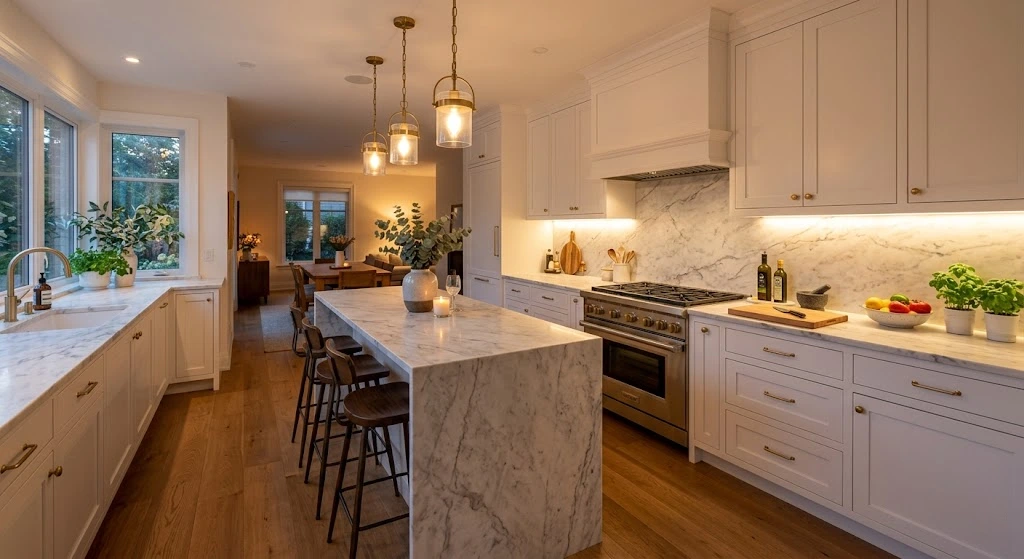
To install under cabinet lighting, choose your fixture type (LED strip, puck light, or hardwired bar), turn off the power, mark your mounting positions, secure the lights to the cabinet bottom, connect the wiring or plug into an outlet, then test. Most plug-in installs take under two hours.
Good lighting can completely change the way your kitchen feels and functions. If your countertops are always in shadow, or you’re squinting every time you chop vegetables, learning how to install under cabinet lighting is one of the best upgrades you can make. It’s affordable, surprisingly straightforward, and the results are immediate. Whether you go plug-in or hardwired, this guide walks you through every step clearly and simply.
Why Under Cabinet Lighting Is Worth It
Before diving into the how-to, it helps to understand why so many homeowners make this upgrade.
Under cabinet lights shine directly onto your countertop, giving you clean, focused task lighting right where you need it. That means no more working in the shadow cast by your own body or the overhead light above you.
Beyond function, the soft glow that bounces off your backsplash adds warmth and a polished, high-end feel to the kitchen. It’s the kind of detail that makes a space feel finished rather than just functional.
On the practical side, LED under cabinet lighting uses far less electricity than adding another overhead fixture. And if you ever decide to sell your home, permanently installed lighting is a feature buyers notice.
Choosing the Right Type of Under Cabinet Lighting
This is the most important decision you’ll make before the first screw goes in. The type you choose determines how you install it, how much it costs, and how the final result looks.
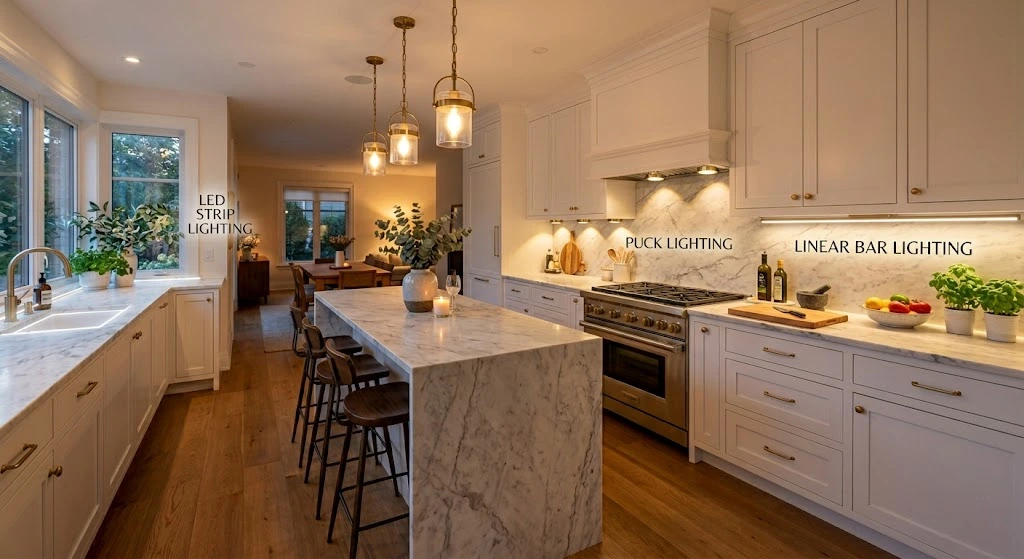
LED Strip Lights
LED strip lights are thin, flexible tapes lined with tiny LEDs. They come with a peel-and-stick adhesive backing, which makes them one of the easiest options to mount. Most strips run on low voltage (12V or 24V) and plug into a power supply that connects to a standard outlet.
For a clean, professional look, many people mount their strips inside aluminum channels with a frosted diffuser cover. This hides the individual LED dots and spreads the light evenly, preventing the “dotted” reflection you sometimes see on shiny countertops.
LED strips are best for long, continuous countertop runs where you want smooth, even illumination. They’re also ideal for renters who want a no-damage, removable solution.
Puck Lights
Puck lights are small, round fixtures — typically one and a half to three inches in diameter — that create a focused pool of light. They work great as accent lighting or in smaller spaces, but they can create uneven coverage if spaced too far apart. You can find them in battery-powered, plug-in, and hardwired versions.
Battery-operated puck lights are a great option if you don’t want to deal with wiring at all. Just stick them up and go. The tradeoff is that you’ll need to swap or recharge batteries regularly.
Hardwired LED Bar Fixtures
Hardwired linear bar fixtures are the most permanent and polished option. They connect directly to your home’s electrical system, controlled by a wall switch or dimmer. There are no visible cords, no power bricks, and no outlets to worry about.
The downside is that this option typically requires at least some electrical knowledge, and in many areas, you’ll need a permit and possibly a licensed electrician to run new wiring. If you’re mid-remodel with walls already open, hardwiring is the clear choice.
What You’ll Need Before You Start
Gathering your materials ahead of time saves you a frustrating mid-project trip to the hardware store. Here’s what the job typically calls for:
For a plug-in LED strip installation, you’ll need your LED strip kit (which usually includes the strips, a power supply, and connectors), aluminum mounting channels if you want a cleaner finish, a tape measure, a pencil, a drill with small bits, short screws appropriate for your cabinet material, and a level.
For a hardwired installation, add to that list: a voltage tester, wire stripper, appropriate gauge electrical cable, wire connectors, a junction box, and a dimmer or wall switch. If you’re not comfortable identifying live wires and making connections inside electrical boxes, seriously consider calling a licensed electrician for the wiring portion and handling the fixture mounting yourself.
One safety reminder that matters more than any tool on the list: always turn off the power at the breaker before touching any wiring. Plug a lamp into a nearby outlet to confirm the circuit is dead before you start work.
How to Install Under Cabinet Lighting: Step by Step
Step 1 — Plan Your Layout
Start by measuring the length of each cabinet section where you want lights. Sketch a simple diagram of your kitchen showing cabinet positions, outlet locations, and where you want your switch to go. This helps you figure out how many fixtures you need and how much wire or strip length to buy.
For even coverage, plan to run your lights close to the front edge of the cabinet bottom. This positions the light source to reach all the way to the edge of your countertop instead of casting most of the light toward the wall.
Step 2 — Mark Your Mounting Positions
Use a pencil and a level to mark a straight line along the bottom of each cabinet where the lights will sit. For strip lights in channels, mark the screw positions for the mounting clips. For puck lights, mark the center of each fixture, spacing them evenly — typically six to eight inches apart for decent coverage.
Pre-drilling pilot holes before you drive screws makes a real difference. It prevents the cabinet wood from splitting and keeps everything aligned. Use a drill bit slightly smaller than your screw diameter.
Step 3 — Mount the Fixtures
For LED strip lights going into aluminum channels, attach the mounting clips or the channel itself to the cabinet bottom using short screws. Make sure the screws aren’t so long that they poke through the shelf above — this is a surprisingly common mistake. Once the channel is secured, slide the LED strip in and press it into place.
For puck lights, hold each fixture against your marked position and drive the screws through the mounting bracket into the cabinet. Keep it snug but don’t overtighten — you’re usually screwing into MDF or plywood, not solid wood.
For hardwired bar fixtures, follow the manufacturer’s template to mount the housing, then thread the wiring through the knockout hole in the fixture before making your electrical connections.
Step 4 — Run and Connect the Wiring
For plug-in systems, this step is mostly about managing the cord neatly. Route the low-voltage wire from one fixture to the next, using cable clips or staples to keep it tucked against the cabinet. Then run the power supply cord to the nearest outlet. If the cord is visible along your backsplash, consider using a cord cover channel painted to match the wall.
For hardwired systems, you’ll run your cable from a power source — usually an existing outlet circuit — through the inside of your base cabinets and up to the junction box you installed behind the upper cabinets. Pull the cable through the flex conduit or approved conduit depending on your local code requirements. The National Electrical Code requires cable in areas where it could be damaged, so use appropriate protection throughout the run.
Connect wires color to color: black to black (hot), white to white (neutral), and bare copper to bare copper (ground). Secure each connection with a wire nut and give each one a gentle tug to confirm it’s solid.
Step 5 — Install the Switch or Dimmer
A dimmer switch is worth the small extra investment. Being able to dial your kitchen lights from bright task-level illumination down to a soft ambient glow at dinner time is one of those features you’ll use every single day.
For hardwired systems, connect your dimmer switch in the wall box according to the manufacturer’s wiring diagram — they vary slightly by brand. Tuck the wires carefully into the box, secure the dimmer with the provided screws, and attach the cover plate.
For plug-in systems, many LED drivers have a built-in inline dimmer on the cord, so you may not need any wall work at all.
Step 6 — Test Everything
Turn the breaker back on (or plug in your power supply) and flip the switch. Check every fixture to make sure it lights up. If something doesn’t come on, go back and check the connections at that fixture first — a loose wire nut is usually the culprit.
Look for any flickering, which often signals a loose connection or a dimmer that isn’t compatible with your LED fixtures. Most LED-compatible dimmers list compatible load types on the packaging.
Once everything is working, step back and take a look at the light from your normal standing position at the counter. If you can see the LED strip itself rather than just the light it produces, repositioning it slightly further back or adding a diffuser cover will eliminate the glare.
Tips for a Cleaner, More Professional Result
Choosing a color temperature of 2700K to 3000K gives you a warm, inviting glow that feels natural in a kitchen. If you prefer something brighter and crisper for food prep, 3500K to 4000K is a good range. Avoid anything above 5000K under cabinets — that blue-white light tends to feel cold and clinical in a home kitchen.
If you’re using LED strips, always mount them inside aluminum channels. As one source puts it, the aluminum channel isn’t just decorative — it acts as a heat sink, drawing heat away from the LEDs and extending their lifespan considerably. Skipping the channel can mean premature dimming and early failure.
For hardwired systems, check with your local building department before you start. Many areas require a permit for new electrical work, and some jurisdictions now require kitchen lighting circuits to have both GFCI and AFCI protection under current electrical codes.
How Much Does It Cost to Install Under Cabinet Lighting?
The price range is wide because the options are so different. A basic plug-in LED strip kit for one counter run might cost as little as $20 to $40. A full set of quality plug-in fixtures for an entire kitchen typically runs $80 to $200 in materials.
Hardwired installations cost more upfront. Professional installation by an electrician generally runs $50 to $100 per hour, and a typical kitchen lighting job can take three to six hours depending on complexity. The total project cost often lands between $230 and $400 or more for a full hardwired setup.
That said, the long-term energy savings from LED technology are real. LED fixtures use a fraction of the power that older fluorescent or halogen options consumed, which gradually offsets the upfront cost.
When to Call a Professional
Plug-in and battery-powered installs are genuinely beginner-friendly. If you can use a drill and follow directions, you can handle those yourself in an afternoon.
Hardwiring is a different story. If you’re not comfortable working inside electrical boxes, identifying live and neutral wires, or understanding your home’s circuit load, this is the time to bring in a licensed electrician. It’s not about lacking skill — it’s about safety and code compliance. A mistake with household wiring can cause a fire or a dangerous shock, and the cost of a professional is almost always worth the peace of mind.
Conclusion
Installing under cabinet lighting is one of the most rewarding home improvement projects you can tackle. The transformation is instant — a kitchen that once felt dim and shadowy suddenly looks bright, intentional, and inviting. Whether you go with simple plug-in LED strips on a Saturday afternoon or invest in a fully hardwired system, the result is functional lighting that works for you every time you step into the kitchen. Start by choosing your fixture type, gather your tools, and take it one step at a time. You’ll wonder why you waited this long.
