

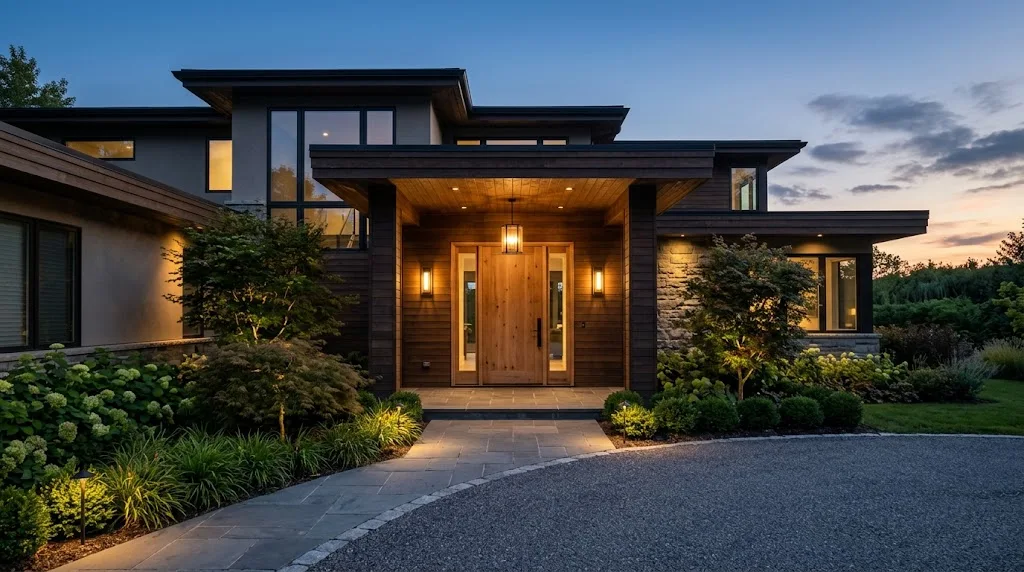
Front entry lighting refers to the exterior and interior fixtures that illuminate your home’s main entrance. The right setup combines wall sconces, overhead mounts, or pendant lights to improve safety, boost curb appeal, and create a warm welcome. Choose fixtures proportional to your door, use warm white bulbs (2700K–3000K), and layer light sources for best results.
Why Front Entry Lighting Matters More Than You Think
Your front entry is the first thing anyone sees when they arrive at your home — day or night. Good front entry lighting does a lot more than just help you find your keys. It shapes how your home feels from the street, signals safety, and sets the mood for everyone who walks through your door.
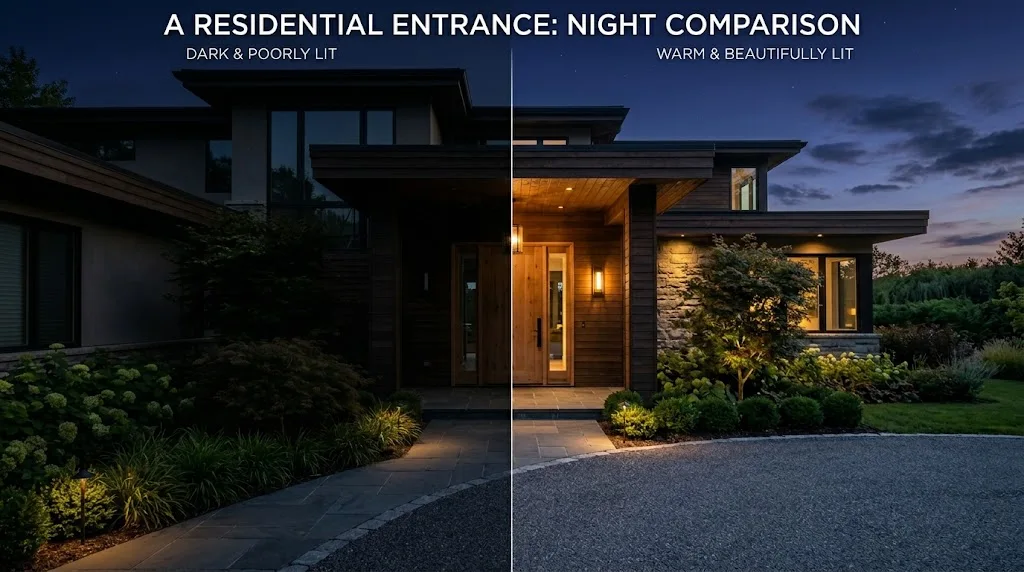
Think of it as your home’s opening statement. A well-lit entrance feels warm and intentional. A dark or poorly lit one can feel neglected, even when the rest of your home is beautiful.
The good news? You don’t need a big renovation budget to get it right. Understanding a few key principles — fixture type, sizing, placement, and light temperature — goes a long way.
The Three Main Types of Front Entry Fixtures
Before picking a style, it helps to understand the three fundamental fixture categories. Each one suits a different kind of entry, and many homes use a combination of two or all three.
Wall-Mount Fixtures (Sconces)
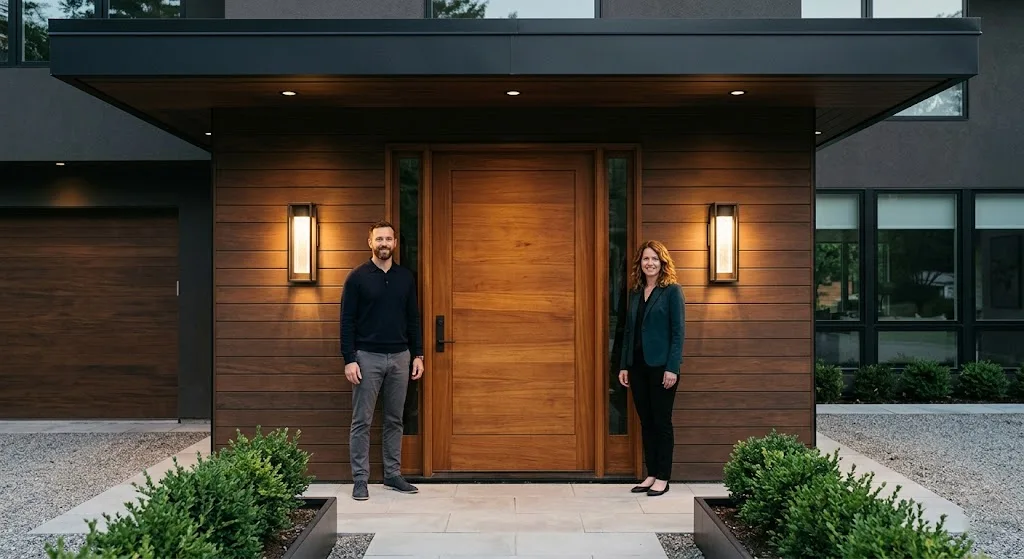
Wall sconces are the most common choice for front entries, and for good reason. They mount directly to the wall on one or both sides of the door, casting light at a natural height that illuminates visitors’ faces and makes the door hardware easy to see at night.
For a symmetrical entry, two sconces flanking the door create a classic, balanced look. If your entryway is narrow or asymmetrical, a single sconce on the doorknob side works just as well and still provides effective illumination.
Sizing matters a lot here. A common mistake is choosing fixtures that are too small. A good rule of thumb is to select a fixture that is roughly one-quarter to one-third the height of your door and its casing. For placement, position sconces about 6 to 12 inches from the door casing and hang them so the center of the fixture falls between 65 and 75 inches from the ground.
Ceiling-Mount Fixtures
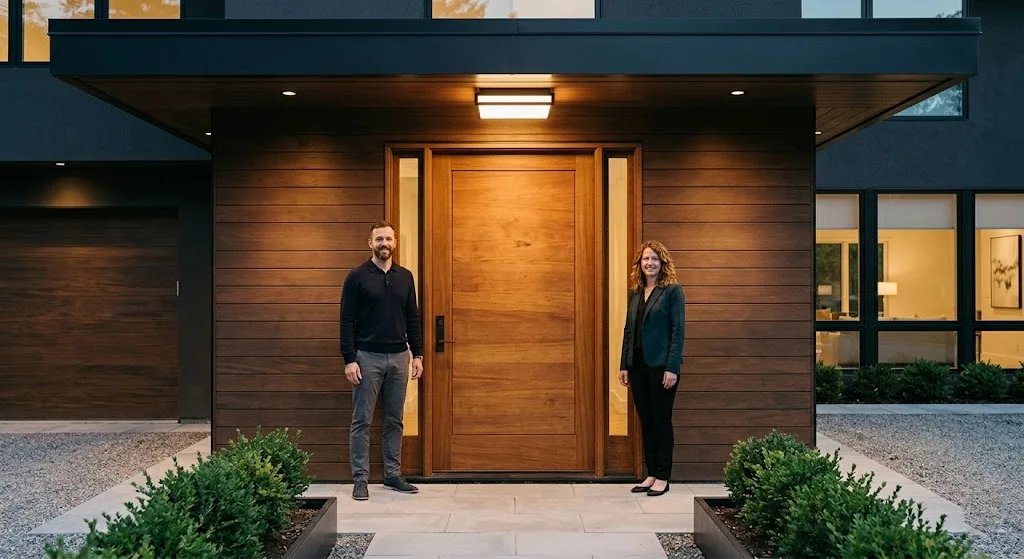
If your porch has a low ceiling, is exposed to heavy rain, or has a screen or storm door that swings outward, a ceiling-mounted fixture is often the smarter solution. Flush-mount and semi-flush-mount fixtures sit close to the ceiling and stay out of the way while still delivering solid light coverage.
For ceiling-mounted lights, make sure the bottom of the fixture clears at least seven feet from the ground so it doesn’t feel intrusive as people walk under it.
Pendant Lights
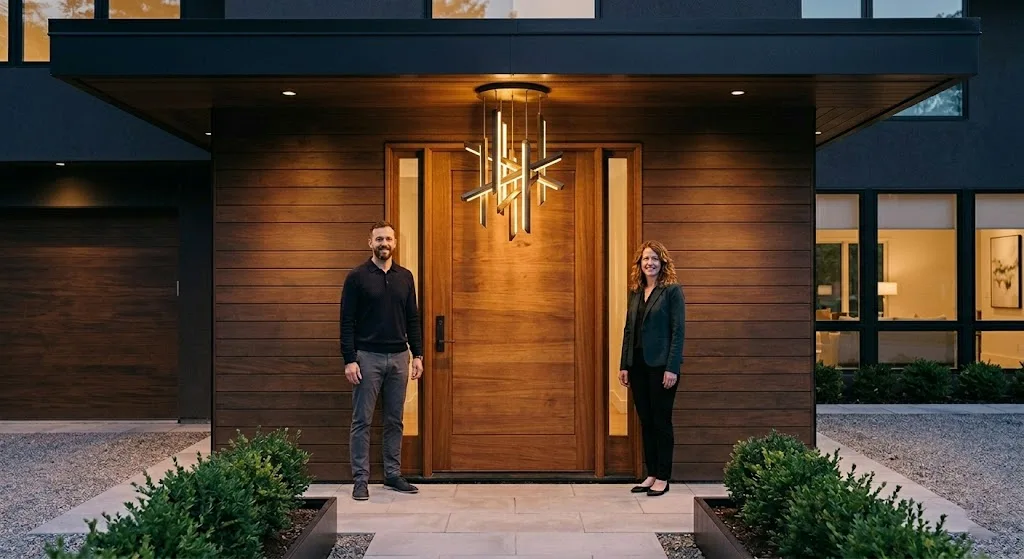
Pendant lights work beautifully for covered porches and deeper entryways with higher ceilings. A single oversized pendant can make a bold design statement on its own, or you can pair one with wall sconces for a layered look that feels both dramatic and functional.
If you live somewhere with frequent strong winds, avoid hanging pendants and opt for flush mounts instead — they’re far more stable and require less maintenance over time.
How to Size Your Front Entry Lighting Correctly
Getting the size right is one of the most important — and most overlooked — parts of choosing entry lighting. Most homeowners end up with fixtures that are too small and hung too high, which makes the entry feel underwhelming.
A simple formula many lighting designers use: add the length and width of your entryway in feet, then convert that number to inches. That total gives you a good target diameter or height for your main fixture. So if your entry area is roughly 10 feet by 12 feet, you’re looking for a fixture around 22 inches in scale.
For wall sconces specifically, the fixture height should be about one-quarter the total height of the door plus its surrounding trim. Two sconces on either side of a standard eight-foot door, for example, should each be around 24 to 26 inches tall.
Bulb wattage is another consideration. For double sconces framing a door, a 13 to 15-watt LED bulb per fixture is typically enough. For a ceiling-mounted fixture covering more area, aim for a combined 23 to 40 watts in LED output.
Choosing the Right Light Temperature
The color of light coming from your fixture has a big impact on how your entrance feels. Light temperature is measured in Kelvins (K), and the number tells you whether the light leans warm or cool.
Warm white light, in the range of 2700K to 3000K, gives off a soft, amber-leaning glow that feels cozy and inviting. This is the most popular choice for front entries because it creates a welcoming atmosphere without feeling harsh or clinical.
Cool white light, around 4000K to 5000K, is brighter and crisper. It works well in entries that need maximum visibility, particularly smaller spaces or entryways with limited natural light during the day.
Daylight bulbs at 5000K and above mimic natural sunlight. They can be useful in very dark entry areas, but for most homes, they feel too bright and sterile for a welcoming exterior.
A practical upgrade worth considering: dimmable fixtures. Dimmable lights give you flexibility to dial up the brightness when you need it and soften things down for a more relaxed evening atmosphere.
Layering Your Entry Lighting for Maximum Impact
A single light source is rarely enough for a truly well-lit front entry, especially in larger or more complex spaces. Professional lighting designers talk about “layering” — combining different types of fixtures to address different needs at once.
Ambient lighting is your foundation. This is the main overhead or wall-mounted light that handles the bulk of illumination. It keeps the space visible and safe.
Task lighting handles specific functional needs. A well-placed sconce near the door helps you see the lock, the doorbell, and any mail slots clearly, even in the dark.
Accent lighting adds personality. Landscape spotlights aimed up at architectural features, string lights along a porch railing, or a small uplight at the base of a column draws attention to your home’s best features and makes the whole entry feel more dimensional.
When you combine all three layers, the result is an entry that looks considered and intentional rather than just “lit.”
Matching Your Fixture Style to Your Home’s Architecture
Your front entry lighting should feel like a natural extension of your home’s personality — not an afterthought. The fixture style you choose sends a visual message that either harmonizes with the overall look or clashes with it.
Traditional and craftsman-style homes look best with lantern-style sconces, often in bronze, oil-rubbed finishes, or black iron. Seeded glass panels and clean bracket designs add warmth without being fussy.
Modern and contemporary homes lean toward clean geometric shapes, matte black finishes, or brushed nickel. A single sleek sconce combined with recessed overhead lighting keeps things minimal without sacrificing light quality.
Farmhouse and rustic exteriors often go big with oversized black sconces on either side of the door. The proportional boldness is part of the look, and it works well with natural wood tones and shiplap siding.
Mid-century modern homes benefit from globe-style fixtures or bowl-shaped pendants in warm metallic tones. One well-chosen fixture can look more intentional than a matched pair, especially on an asymmetrical facade.
Don’t be afraid to mix styles thoughtfully. A modern pendant paired with traditional sconces can create a layered look that feels curated rather than mismatched — as long as the finishes coordinate.
Smart Lighting and Modern Upgrades for Your Front Entry
Technology has added a lot of useful options to the world of front entry lighting. Motion-sensor lights are a practical addition — they switch on automatically when someone approaches, improving security and convenience without keeping lights burning all night.
Smart outdoor lighting takes it further. Many newer fixtures connect to your home’s Wi-Fi and can be controlled from a smartphone app. You can set schedules, adjust brightness remotely, and even change colors on certain models. Some systems allow you to link up to 40 lights together and control them as a group.
Security-focused homeowners increasingly pair outdoor lights with built-in cameras. These floodlight-camera combos illuminate the entry while also recording activity, giving you both light coverage and peace of mind in one fixture.
LED technology is the clear winner for energy efficiency. LED bulbs use significantly less power than older incandescent options, last far longer, and have improved considerably in warmth and quality over the past few years. When shopping for LEDs for your entryway, look for bulbs labeled “warm white” to avoid the harsh bluish tone that some cheaper LEDs produce.
Placement Tips That Make a Real Difference
Even a beautiful fixture can underperform if it’s in the wrong spot. Placement affects both the quality of light and how safe and welcoming your entry actually feels.
Outdoor fixtures should generally be installed above shoulder height to cast light downward without shining directly into visitors’ eyes. At the same time, they shouldn’t be so high that they leave the area around the door in shadow.
If you’re working with ground-level uplighting — spotlights aimed at the facade from below — keep the angles in mind. Lights placed too low or too close to the door can create an unwelcome glare when someone is leaving the house.
For homes with covered porches or deep overhangs, use the overhead area to your advantage. A pendant hung beneath a pitched porch roof creates a sense of arrival and makes the space feel intentional from the street.
When in doubt about wiring or fixture placement, bring in a licensed electrician. Exterior installations need to meet code, and fixtures need to carry the appropriate UL wet or damp rating for outdoor use to hold up against weather over time.
A Well-Lit Entry Is Worth the Effort
Front entry lighting is one of those home improvements that pays you back every single day. It improves how your home looks from the street, makes arriving home feel more welcoming, and adds a genuine layer of safety for your family and guests.
Start by identifying what type of fixture your entry calls for — wall-mounted, ceiling-mounted, or pendant. Then size it correctly, place it at the right height, and choose a warm, inviting bulb temperature. Layer in accent or task lighting if your space allows, and consider a smart or motion-sensor upgrade for added convenience.
You don’t have to overhaul everything at once. Even one well-chosen, properly placed sconce can transform a dull entry into something that genuinely makes people feel welcome before they’ve even knocked.
That’s the real power of good front entry lighting — and it’s absolutely within reach.
