

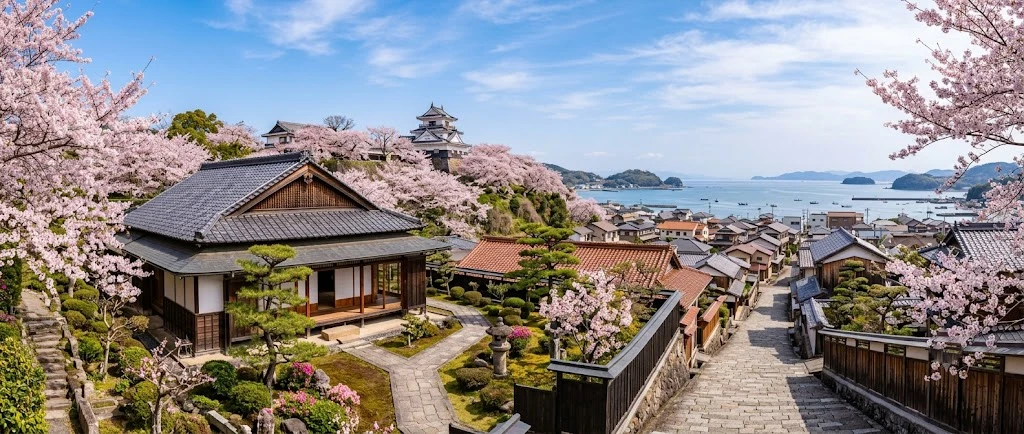
Kitsuki real estate sits in Oita Prefecture, Japan, and offers detached houses, traditional homes, and land at prices far below Tokyo or Osaka. Many akiya (vacant homes) list between ¥3.9 million and ¥50 million. Buyers get coastal access, hot springs, and a preserved Edo-period castle town, all with no restrictions on foreign ownership.
Why Kitsuki Keeps Showing Up on Buyers’ Radars
You want a home that doesn’t drain your savings. You also want somewhere real, with actual character, not another cookie-cutter suburb. Kitsuki might fit that search better than you expect.
This small coastal city sits in Oita Prefecture, on the island of Kyushu. It faces the Sea of Hyuga, so you get ocean views without paying ocean-view prices. It won’t show up in glossy travel magazines. That’s actually the point. Kitsuki draws buyers who want substance, not hype.
The city holds onto its Edo-period castle town, with samurai houses and traditional streets still standing. You can walk past preserved architecture on your way to buy groceries. Festivals here go back centuries, and the community feels tight-knit rather than transactional.
What Makes the Kitsuki Property Market Different
Property prices in Oita Prefecture run well below Japan’s major cities. Kitsuki offers detached houses starting from around ¥20 to 50 million, along with traditional homes, apartments, and land plots. Compare that to Tokyo, where a similar house can cost ten times more, and the appeal becomes obvious.
The market also stays steady. Local residents drive demand here, not foreign investors or corporate buyers chasing speculation. That means prices don’t swing wildly based on outside trends. You’re buying into a community, not a bubble.
Kitsuki Station puts you less than an hour from Oita City. Oita Airport sits close enough for weekend trips or business travel. So you get small-town living without cutting yourself off from the rest of Japan.
Types of Homes You’ll Find in Kitsuki
Detached houses make up most of the local market. These standalone homes give you your own parking, your own garden, and no shared walls or condo board politics to deal with. Floor plans range from tight three-bedroom layouts to larger family homes with room to grow.
Traditional Japanese houses show up often too. Many feature sliding shoji doors, tatami mat rooms, and engawa verandas that open onto small gardens. Some of these homes date back decades. They carry a level of craftsmanship you simply won’t find in new builds. Living in one connects you to Japanese culture in a way a modern apartment never will. Yes, older homes need upkeep. But the tradeoff is a house with real history behind it.
Land plots are also common, especially for buyers who want to design and build from scratch. Some properties near downtown Kitsuki even allow renovations, vegetable gardens, and pets, with certain listings including detached outbuildings or parking suited for small commercial use.
Understanding Kitsuki’s Vacant House Bank
Like most of rural Japan, Kitsuki deals with a growing number of empty homes as the population shrinks and young people move to bigger cities. The country has roughly 9 million vacant houses total, and that number keeps climbing every year. Local governments responded by launching akiya banks, official databases that list these vacant properties for sale.
The process works simply. An owner registers their empty home with the local government. The city publishes it online, sometimes with full photos and floor plans, sometimes as a bare-bones listing. Interested buyers then contact the municipality directly, and in some cases the city connects you with a local agent. The municipality acts as the go-between rather than a private real estate agent chasing a commission.
Kitsuki’s own vacant house bank lists real examples of this. One listing showed a four-bedroom detached house in the Yasaka area priced at ¥8.8 million, with a 405-square-meter house sitting on 346 square meters of land. Another listing in the Yamagacho Kuranari area priced a 464-square-meter house on 305 square meters of land at just ¥3.9 million.
These prices sound almost too good to be true, and in a way, they come with a catch. Older homes built before 1981 followed Japan’s original seismic code, which only required buildings to withstand moderate earthquakes. Many of those older structures suffered real damage during the 1995 Kobe earthquake. If you buy one, budget for a structural inspection and possibly a seismic retrofit, which can run a few million yen depending on the property.
Can Foreigners Buy Property in Kitsuki
Yes, and the process is more open than most people assume. Japan places no restrictions on foreigners buying property, whether you’re a resident or living overseas. You’ll need a passport for registration, and if you’re not a resident, you’ll need someone in Japan to act as your tax representative.
Financing gets trickier for non-residents. Cash purchases tend to be the simplest route, especially since many akiya properties sell for under ¥5 million. Some real estate companies do offer financing packages built specifically for foreign buyers, so it’s worth asking before ruling anything out.
One thing to know before you commit: an in-person viewing typically comes standard practice in Japan. Photos rarely tell the whole story, especially with older homes. Bringing a qualified inspector along, if you can arrange one, saves you from surprises after the sale closes.
Renting in Kitsuki If You’re Not Ready to Buy
Buying isn’t the only path into Kitsuki. Plenty of people rent first to test out the lifestyle before committing to a purchase. Rental properties here often come with parking, internet access, and even furnished options included, which makes the overall deal quite reasonable.
If you’re unemployed or between jobs, don’t assume that rules you out automatically. One renter reported that clearly explaining a planned relocation, rather than framing it as a random move, helped the landlord and agency understand and accept the situation. The real hurdle tends to be passing screening with a guarantor company, which most landlords now require regardless of your employment status.
Before signing anything, ask about early termination fees. Some contracts charge a penalty worth several months’ rent if you move out within the first year or two. Also ask about sound insulation, since wooden buildings tend to carry more noise between rooms than you might expect.
What Life in Kitsuki Actually Looks Like
Beyond the numbers, Kitsuki offers a slower pace that a lot of buyers are actively searching for. Mountains sit within minutes of town, with hiking trails and natural hot springs nearby. The coastline gives you swimming and surfing without a crowd. Residents also enjoy easy access to shops, restaurants, and transportation, so you’re not sacrificing modern convenience for small-town charm.
The city carries a strong sense of community too. Numerous temples, shrines, and traditional festivals run throughout the year, and the general atmosphere leans relaxed and friendly rather than rushed. For families or retirees looking to slow down, that alone can outweigh the appeal of a bigger city.
Getting Started With Your Kitsuki Property Search
If Kitsuki sounds like the right fit, start by deciding whether you want to buy through the city’s official vacant house bank or work with a bilingual agent who specializes in the region. The akiya bank route saves money on commissions but requires patience and, ideally, some Japanese language support. A bilingual agent costs more but handles negotiation, paperwork, and communication with sellers on your behalf.
Either way, plan a visit before you commit. No listing, however detailed, replaces walking through the actual house and neighborhood yourself. Kitsuki isn’t flashy, and it doesn’t try to be. For buyers who want real value, a genuine community, and a slower, more grounded way of life, that’s exactly the appeal.
