

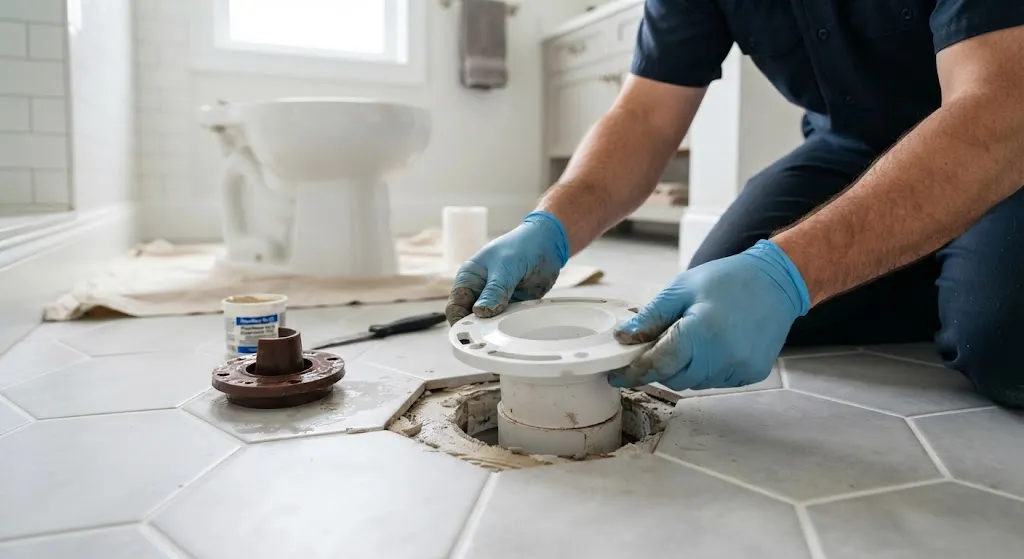
If your toilet rocks back and forth even though the bolts feel tight, don’t just tighten them harder. That wobble is often a sign of a bigger problem hiding under the base: a damaged or worn-out toilet flange.
The good news? Fixing it is one of the more affordable plumbing repairs you can make. Most homeowners pay between $145 and $165 for professional flange replacement, and the job rarely drags on for more than a few hours. The bad news is that if you ignore it, a cracked or loose flange can let water seep into your subfloor, and that kind of damage gets expensive fast.
This guide breaks down exactly what drives the cost up or down, when it makes sense to call a plumber, and how you can save money whether you hire a pro or tackle it yourself.
Key Takeaways
- Typical cost: Professional toilet flange replacement runs $145–$165 on average, with most complete jobs landing under $200.
- Labor is the biggest expense, usually $45–$150, while the flange itself and related materials are cheap by comparison.
- Hidden water damage is the wildcard. If a leaking flange has soaked your subfloor or drywall, repair costs can jump by several hundred dollars.
- DIY is realistic for confident homeowners — parts alone can cost as little as $20 — but a heavy toilet and rusted bolts can turn a simple job into a workout.
What Is a Toilet Flange, and Why Does It Matter?
The toilet flange (sometimes called a closet flange) is the ring that anchors your toilet to the floor and connects the base of the bowl to the drain pipe running into your home’s waste line. A wax ring sits on top of the flange to create a watertight seal between the toilet and the pipe below.
When the flange cracks, rusts through, or sits at the wrong height, that seal breaks down. The result is usually one or more of these warning signs:
- A toilet that rocks or wobbles even when the bolts are snug
- Water pooling around the base of the toilet
- A musty smell or soft, spongy flooring near the toilet
- Water stains on the ceiling of the room below (if the toilet is upstairs)
Catching the problem early — before water has time to soak into the subfloor — is the single best way to keep this repair cheap.
What Drives the Cost of Toilet Flange Replacement?
Two factors make up almost the entire bill: labor and materials. Everything else — old pipes, water damage, awkward access — just pushes those two numbers higher.
Labor Costs: $45–$150
Labor is where most of your money goes. A plumber’s time covers removing the old flange, prepping the drain opening, installing the new flange, and setting a fresh wax seal so the toilet doesn’t leak again.
Many plumbers quote a flat rate for a straightforward flange swap rather than billing strictly by the hour, since the job is fairly predictable when nothing unexpected turns up. Expect to pay somewhere in the $45–$150 range for labor alone, with the full project — labor plus materials — typically landing between $60 and $200.
That number climbs quickly if the plumber discovers a cracked drain pipe, corroded bolts that won’t budge, or rot in the subfloor once the old toilet is out of the way.
Material Costs: $7–$75+
Compared to labor, materials are cheap. You’re really only paying for the flange itself and a new wax ring, and both together often cost $7–$20 if you go with a standard PVC or stainless steel flange.
Pricing changes significantly depending on the material:
| Flange Material | Typical Cost | Why Choose It |
|---|---|---|
| PVC | $5–$20 | The most common choice — affordable, rust-proof, and easy to install |
| Stainless steel | $5–$30 | Slightly pricier than PVC but offers a stronger, longer-lasting seal |
| Copper | Up to $35 | Naturally resistant to rust and bacteria; a durable upgrade |
| Cast iron | $25–$40 | Reserved for older homes (pre-1980) with existing cast-iron drain pipes |
| Brass | Up to $75 | Extremely durable and easy to shape, but the most expensive option |
If your home still has the original cast-iron drain system, expect to pay more — not just for the flange, but for the extra labor. Cutting or chipping away an old cast-iron fitting without cracking the closet bend underneath takes skill, and rushing it can turn a $150 repair into a much bigger project. This is one job where it genuinely pays to bring in a professional rather than risk it yourself.
Offset or 45-degree flanges — used when the drain pipe doesn’t line up perfectly with the toilet — also cost slightly more than a standard straight flange.
Other Factors That Can Raise the Price
Beyond the basic labor-and-materials split, a few other issues can inflate your final bill.
Repair Complexity
Older plumbing systems, tight bathroom layouts, or a flange that’s been painted over, corroded, or improperly installed all add time to the job. If the flange is too deteriorated to remove cleanly, your plumber may need to cut it out entirely or access it from beneath the floor — both of which take extra labor hours.
Pre-existing Water Damage
If your toilet has been leaking for a while, don’t be surprised if there’s more to fix than just the flange. Water that’s soaked into the subfloor, flooring, or nearby drywall needs to be dried out, and damaged material often has to be replaced. This kind of cleanup can tack on several hundred dollars to your total, so it’s worth having a plumber inspect the surrounding area — not just the flange — before you finalize your budget.
Flange Height Problems
One issue that trips up a lot of DIYers is a flange sitting too low compared to the finished floor. This commonly happens when tile or other new flooring gets installed after the original plumbing rough-in, leaving the flange sitting below the surface instead of flush with — or slightly above — it. A flange set too low won’t create a proper seal, no matter how carefully you install the wax ring, and often needs a spacer or extender to fix correctly.
How to Save Money on Toilet Flange Replacement
A few practical strategies can bring your total cost down, whether you’re hiring a pro or going the DIY route:
- Do it yourself. If you’re comfortable with basic plumbing and have the right tools, you can complete this repair for the cost of parts alone — often $20 or less.
- Get multiple quotes. Plumbing rates vary more than people expect. Call at least two or three local plumbers before committing, and compare online prices if you’re buying parts yourself.
- Bundle repairs. If you have other plumbing issues on your list — a slow drain, a running toilet, a leaky faucet — ask your plumber to handle everything in one visit. You’ll often pay less combined than you would scheduling separate trips.
- Fix it early. The longer a bad flange goes unnoticed, the more likely you are to end up paying for water damage on top of the flange itself.
DIY vs. Professional Replacement: Which Should You Choose?
Taking the DIY Route
Replacing a toilet flange isn’t technically difficult, but it does require some physical effort. Toilets can weigh up to 120 pounds, and you’ll need to lift the entire unit off the floor and set it aside to access the flange underneath. If you’re not confident doing that solo, line up a second pair of hands before you start.
The basic steps mirror what you’d do to reinstall any toilet:
- Shut off and disconnect the water supply line
- Drain the tank and bowl completely
- Remove the nuts securing the toilet base to the floor
- Carefully break the wax seal and lift the toilet away
- Remove the old flange and install the new one
- Set a fresh wax ring and reseat the toilet
Once the toilet is out of the way, swapping the flange itself is usually quick. The main risks are discovering a more serious problem once you’re already mid-project — like a cracked drain pipe or rotted subfloor — or spending more time than expected if old bolts are rusted in place.
Hiring a Professional
Paying a plumber the extra $100–$150 in labor buys you more than convenience. A licensed plumber can quickly diagnose whether the issue really is the flange or something further down the line, install the replacement correctly the first time, and often back the work with a warranty. If your home has cast-iron pipes or the flange sits below the finished floor, professional experience becomes especially valuable — these are the situations where DIY mistakes get expensive.
The trade-offs are cost and scheduling. During busy seasons, you may wait a few days for an appointment, and you’ll have less control over exactly how the job is done.
How to Hire a Reliable Plumber
If you decide to bring in a professional, a little research goes a long way:
- Check your home warranty first. Many home warranty plans cover plumbing repairs, which can eliminate most or all of your out-of-pocket cost.
- Ask around. Recommendations from friends, family, or neighbors are often more reliable than cold online searches.
- Compare quotes. Reach out to at least two or three plumbers, and ask directly about pricing structure, availability, and whether the work comes with a guarantee.
- Verify credentials. Always confirm that any plumber you hire is properly licensed and insured in your state before work begins.
Final Thoughts
A wobbly toilet is annoying, but a bad flange is usually one of the cheaper plumbing problems you’ll run into — as long as you catch it before water damage sets in. Handy homeowners can often knock out this repair for $20 or less in parts, while hiring a professional typically adds another $45–$150 for the peace of mind that comes with expert diagnosis and a warranty on the work.
Whichever route you choose, the key is not to wait. The sooner you address a wobbling or leaking toilet, the more likely you are to keep this a simple, low-cost fix.
FAQs About Toilet Flange Replacement
What causes a toilet flange to leak?
A cracked, corroded, or improperly seated flange — or a worn-out wax ring — is the most common cause of leaks at the base of a toilet.
How do you know if your toilet flange is bad?
Watch for a wobbly toilet base, damp or soft flooring around the toilet, standing water near the base, or water stains on the ceiling below if the bathroom is upstairs.
How often does a toilet flange need to be replaced?
There’s no fixed schedule — it depends on the flange material and how well it was originally installed. However, it’s common to need a new wax ring before the flange itself requires replacement.
What’s the difference between a toilet flange and a wax ring?
The flange is a rigid ring (usually PVC, steel, or another metal) that connects the toilet to the drain pipe and anchors it to the floor. The wax ring sits on top of the flange and creates the watertight seal between the toilet base and the flange.
What does a toilet flange actually do?
It anchors the toilet securely to the floor and connects the base of the bowl to your home’s drain line, allowing wastewater to flow out properly while keeping the connection sealed.
