

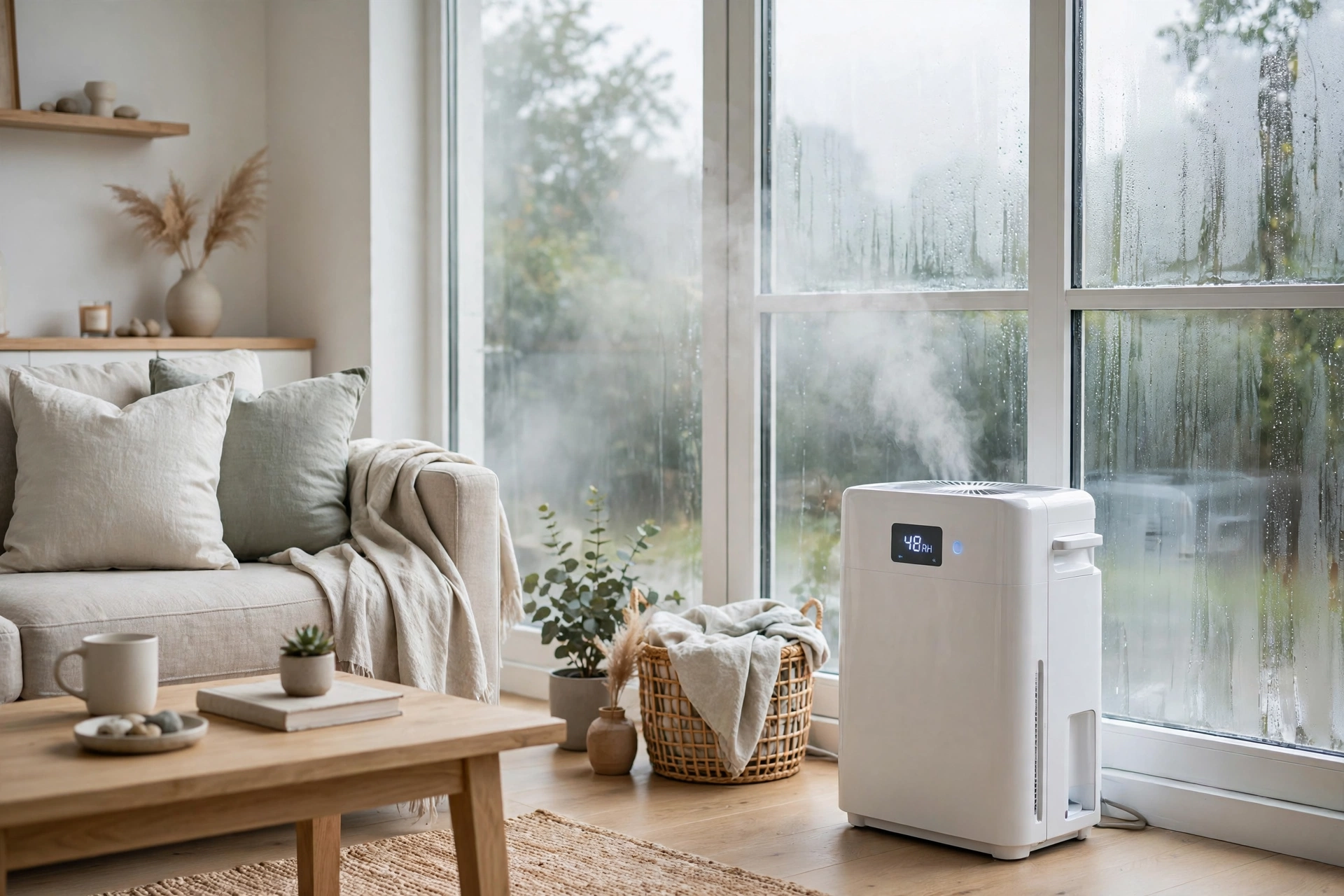
Why Indoor Humidity Matters
Humidity is the invisible force shaping your home’s health. Too much moisture and you get mold, musty odors, peeling paint, and dust mites thriving. Too little and you get dry skin, cracked woodwork, and static shocks. The sweet spot for indoor relative humidity is 30–50% — and keeping it there is easier than you think once you know where moisture comes from. This room-by-room guide covers the whole house.
First, get a $10–$15 hygrometer (digital humidity meter) and check a few rooms. You can’t fix what you don’t measure — and you might be surprised which rooms are the worst offenders.
Signs Your Home Is Too Humid
- Condensation on windows, especially in the morning
- A musty or mildew smell that never quite leaves
- Mold spots on walls, ceilings, or around windows
- Paint bubbling or wallpaper peeling
- Clammy, sticky feeling air even with the AC running
- Excessive dust mite allergy symptoms
If you see mold already growing, address the moisture source first — then clean it up. Mold in HVAC systems is particularly stubborn; our guide on removing mold from your air conditioner covers that tricky job.
The Bathroom: Ground Zero for Moisture
A single hot shower can dump half a pint of water into the air. Your defenses:
- Run the exhaust fan during every shower — and leave it on 20–30 minutes after. If your fan is weak or ancient, our bathroom exhaust fan guide shows how to size and place the right one.
- Take shorter, slightly cooler showers. Less steam, less moisture, lower bills.
- Squeegee shower walls after use — a 30-second habit that dramatically cuts drying time.
- Fix drips promptly. A constantly damp vanity cabinet is a mold farm.
- For small bathrooms with no good venting option, a mini dehumidifier can make a real difference.
The Kitchen: Steam, Boiling, and Dishwashers
- Always use the range hood when cooking — and make sure it vents outside, not just recirculating through a filter.
- Cover pots while boiling. An uncovered pot is basically a humidifier.
- Run the dishwasher at night with the heated-dry off, and crack it open afterward instead of letting steam flood the kitchen.
- Wipe down the sink area and check under it monthly — slow supply-line leaks are a classic hidden moisture source.
The Basement: The Dampest Room in the House
Basements are moisture magnets — cool surfaces condense humid summer air, and groundwater seeps through foundation walls. Fight back:
- Run a dehumidifier sized for the space (30–50 pint for most basements), and drain it to a floor drain or pump so you never empty a bucket.
- Check grading outside — soil should slope away from the foundation at least 6 inches over the first 10 feet.
- Extend downspouts at least 4–6 feet from the house.
- Seal foundation cracks with hydraulic cement or polyurethane injection.
- Don’t store cardboard boxes or fabric directly on basement floors — use plastic bins on shelving.
The Laundry Room: The Forgotten Moisture Source
A single load of laundry releases a surprising amount of water into the air. Make sure your dryer vents fully to the outdoors — disconnected or crushed dryer ducts pump gallons of moisture (plus lint, a fire hazard) into the house. If you hang-dry clothes indoors, do it in a ventilated room or run a dehumidifier nearby.
Whole-House Strategies
- Maintain your AC properly. Air conditioners dehumidify as they cool — but an oversized unit short-cycles and never runs long enough to pull moisture out, while a dirty one underperforms. Annual maintenance matters.
- Ventilate strategically. In humid climates, don’t open windows on muggy days — you’re inviting moisture in. In dry climates, night flushing (opening windows when it’s cool) works beautifully.
- Consider a whole-house dehumidifier integrated with your HVAC if multiple rooms stay above 55% despite your efforts. It’s pricier upfront ($1,500–$3,000 installed) but solves the problem everywhere at once.
- Houseplants in moderation. A jungle’s worth of plants in a small room measurably raises humidity — group them where you want the moisture, not in the already-damp bathroom.
What About Winter? (When Air Gets Too Dry)
The flip side: heated winter air can drop indoor humidity below 30%, causing dry skin, bloody noses, and shrinking wood floors. If winter dryness is your problem, a portable humidifier in the bedroom (cleaned weekly to prevent mold) or a whole-house humidifier on the furnace solves it. The goal is balance, not desert-dry.
The Bottom Line
Controlling humidity is mostly about source control: vent the bathroom, cover the pots, drain the basement, and maintain the AC. Measure with a hygrometer, fix the worst room first, and enjoy a home that smells fresh, feels comfortable, and stays mold-free year-round.
