

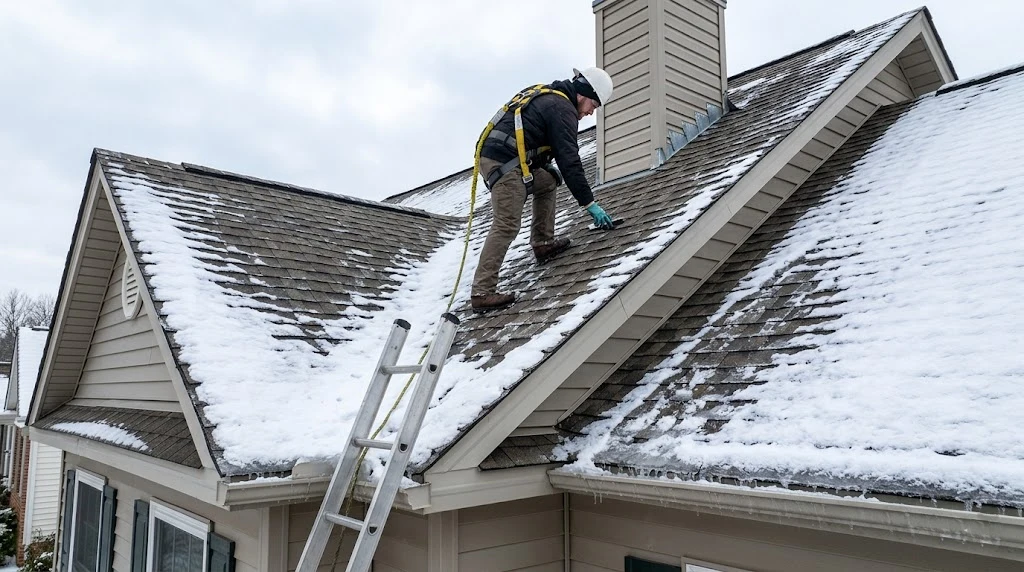
Winter roof repair and inspection in Virginia means checking for damaged shingles, flashing failures, ice dams, and moisture intrusion before or during the cold season. Virginia’s unpredictable freeze-thaw cycles make early detection critical. A professional inspection can catch hidden damage and prevent thousands in costly structural repairs.
If you own a home in Virginia, winter can be rough on your roof — even if it doesn’t look that way from the street. The state’s unpredictable cold-weather patterns make winter roof repair and inspection in Virginia more important than many homeowners realize. One week it’s 55 degrees and raining. The next, it’s freezing overnight and snowing by morning. That back-and-forth does real damage over time, and most of it happens silently.
The good news? A little awareness and the right timing can save you thousands of dollars. Here’s everything you need to know to protect your roof this winter season.
Why Virginia Winters Are Especially Hard on Roofs
Virginia doesn’t get the brutal, sustained winters you’d find in upstate New York or Minnesota — but that’s actually part of the problem. Virginia’s winters are much more unpredictable than those in the Northeast. There may be a snow or ice storm one week, warm weather the next, and then a bout of cold again. That back and forth of the freeze-thaw cycle takes a real toll on a roof.
When water seeps into roof cracks, freezes, and expands, it enlarges those cracks and openings — which can lead to leaks and structural problems. It’s a slow, invisible process. And because temperatures in Virginia don’t stay frozen for weeks on end, the cycle repeats itself over and over throughout the season.
The DC metro area and Northern Virginia average more freeze-thaw cycles per winter than most of the mid-Atlantic, which means ice dam formation is a recurring risk from November through March. Every freeze-thaw cycle forces water deeper into any existing gap or crack.
Even in Central Virginia and the Hampton Roads area, the combination of heavy rain, wind-driven moisture, and sudden cold snaps creates stress that most homeowners simply don’t see until a leak shows up inside the house.
What Is an Ice Dam and Why Should You Care?
One of the most common — and misunderstood — winter roof problems in Virginia is ice dam formation. An ice dam is a barrier of ice that forms along the edge of a roof, preventing proper drainage of melting snow. Enough ice buildup can lead to a range of issues, from roof leaks to structural damage.
Here’s how it happens: heat escapes from inside your home into the attic. That warmth melts the snow sitting on your roof. The melted water runs down toward the eaves, which are colder because they sit outside the heated envelope of your house. When it hits that colder zone, it refreezes — forming an icy ridge. Water backs up behind this ridge and has nowhere to go except under your shingles.
After several days of melting and freezing cycles, it’s common for water and ice to work up under the shingles until water enters the attic and eventually damages ceilings, walls, and contents.
Proper attic insulation and ventilation are essential to minimize heat loss and prevent the freeze-thaw cycle that creates ice dams. If your attic isn’t properly insulated, you’re not just losing heat — you’re actively setting up conditions for ice dam damage every time temperatures drop.
Signs Your Virginia Roof Needs Immediate Attention
You don’t need to be a roofing expert to notice warning signs. A careful look at your home from the outside — and a quick check inside your attic — can tell you a lot.
Missing or Damaged Shingles
As shingles endure freezing temperatures, moisture exposure, and shifting conditions, they may begin to show visible wear. Curling edges, granule loss, or separation are all forms of damage that may become more noticeable after winter. These changes can allow moisture to penetrate deeper layers if left unaddressed.
Look for shingles that appear buckled, cupped, or that have dark streaks where the granules have worn away. If you see bare spots or shingles that are clearly cracked, that’s a red flag that needs attention before the next heavy rain.
Damaged or Loose Flashing
Flashing is the thin metal material that seals the joints around your chimney, vents, skylights, and roof valleys. If the flashing is compromised, it’s a direct path for rainwater to enter your property.
Expansion and contraction caused by temperature changes can loosen flashing seals and create entry points for water. When flashing begins to deteriorate, it may contribute to damage even without a major weather event.
This is one of the most commonly overlooked areas during a DIY inspection — but it’s often the first place a leak starts.
Water Stains Inside Your Attic or Ceilings
One of the clearest signals something is wrong is what you find inside your home. Dark spots on ceilings, damp insulation in the attic, or walls that feel soft or discolored near the roofline are all signs that water has already found its way in.
A poorly insulated attic can result in condensation buildup during colder months. Warm indoor air rises, meets the cold roof surface, and condenses. Over time, this moisture can lead to mold and mildew growth, wood rot, and insulation damage, reducing energy efficiency and increasing repair costs.
If you spot any of these signs, don’t wait. What looks like a small stain today can mean rotting decking or mold growth within weeks if moisture is still entering.
Sagging or Uneven Roof Lines
Leaves, debris, and snow buildup can put a lot of stress on your roof. When you add freezing temperatures, this pressure can sometimes cause your roof to sag in the middle from the extra weight. If you see any sagging spots, don’t hesitate to reach out to a roofing team right away.
A straight roofline should look, well, straight. If you notice any dipping or waviness when you look at the ridge from the ground, that’s worth investigating immediately.
What a Professional Roof Inspection Covers in Winter
Many Virginia homeowners skip professional inspections because they assume their roof looks fine from the driveway. But a visual check from the ground only tells part of the story.
A licensed roofing contractor will examine the following during a proper winter inspection:
Shingle condition — checking for cracking, curling, missing sections, and granule loss across the entire surface.
Flashing integrity — looking closely around every chimney, vent, pipe boot, valley, and skylight for gaps, rust, or separation.
Gutter and drainage system — confirming gutters are securely attached, properly pitched, and free of ice or debris that could cause water to back up.
Attic ventilation and insulation — this is where many inspectors find the root cause of ice dams and moisture problems. Most experts agree the R-value of attic insulation should be at least R-30, and good airflow from the soffit area along the underside of the roof and out through the roof vents is essential. The insulation prevents heat loss from the interior of the home, while the venting allows the attic air to stay cold enough to prevent or minimize the freeze-thaw cycle on the roof.
Roof deck condition — in cases where shingles or flashing have been damaged, an inspector may identify soft spots or discoloration in the decking underneath, which signals rot or water saturation.
The roofs that fail in winter almost always showed warning signs beforehand. The difference between a simple fix and a major repair often comes down to awareness and timing. A small flashing gap found in October costs very little to fix. That same gap, left alone through a Virginia winter, can result in soaked insulation, rotted decking, and interior drywall damage that runs into the thousands.
Can Roofers Work in Virginia Winters?
This is a fair question, and the short answer is yes — with some conditions. Most roofing repairs can be completed in Virginia’s winter weather as long as temperatures are above freezing and there’s no active precipitation. Asphalt shingles require a minimum temperature for adhesive strips to seal properly, so experienced contractors know how and when to work effectively in cold conditions.
Emergency repairs — tarping a damaged section after a tree limb falls, for example — can and should happen regardless of the season. Having the right skills, proper equipment, and enough time makes all the difference for safety and quality when tackling roofing work in winter weather conditions.
If you’re planning a full replacement, late winter or early spring is often a better window. But for inspections and targeted repairs, there’s no reason to wait until spring.
How to Reduce Winter Roof Damage Before It Starts
Prevention is always cheaper than repair. A few proactive steps taken in late fall can significantly reduce the risk of serious winter damage.
Start by clearing your gutters of all leaves and debris before temperatures drop. Clogged gutters trap water and ice, which puts pressure on the gutter system and encourages water to back up onto the roof edge — exactly the conditions that form ice dams.
Trim any overhanging tree branches near your roofline. Heavy, dead, or ice-laden branches can snap under winter weight and land directly on your shingles or valley areas.
Have a professional check your attic insulation and ventilation. This one step alone dramatically reduces the risk of ice dams forming in the first place.
The Virginia State Corporation Commission encourages homeowners to remove debris from gutters to help prevent ice dams, and to inspect attic insulation and ventilation to ensure warm air stays in the living areas of the home and out of the attic. Keeping attic air cold can help minimize the freeze-thaw cycle that causes ice dams.
If heavy snow does accumulate on your roof, a long-handled roof rake used from the ground can safely remove it without you having to climb up. Keeping snow load manageable reduces structural stress and minimizes the material available to melt and refreeze.
Does Homeowners Insurance Cover Winter Roof Damage?
Virginia homeowners often wonder whether their insurance will pay for storm-related or winter roof damage. The answer depends on the specifics of your policy and the cause of the damage.
Most homeowner’s insurance policies cover roof damage caused by sudden and accidental events, such as heavy snow leading to a roof collapse. However, coverage may vary based on the cause of the damage. Insurance typically covers damage from weather-related events, but it may not cover damage caused by poor maintenance.
This is an important distinction. If a tree falls on your roof during an ice storm, that’s likely a covered event. But if a roof that was already worn out finally gives way after years of deferred maintenance, your insurer may deny or reduce the claim. This is yet another reason why regular inspections matter — they document the condition of your roof and show that you’ve been a responsible homeowner.
If winter damage does occur, document everything with photos before making any repairs, contact your insurance company promptly, and make only necessary emergency fixes — such as tarping — to prevent further damage while you wait for an adjuster.
When to Call a Virginia Roofing Contractor
You don’t need to wait for an obvious leak to pick up the phone. Schedule a professional inspection if your roof is more than 10 years old and hasn’t been inspected recently, if you’ve just come through a major storm, if you notice any of the warning signs described above, or if you’re buying or selling a home.
Northern Virginia winters are tough on roofs, with snow, ice dams, and freeze-thaw cycles causing damage. A post-winter damage assessment in spring allows time for repairs before the pre-summer storm season — but a fall check-up is equally important for preparing for snow and ice by identifying weak spots in advance.
Twice-a-year inspections — once in fall, once in spring — are the standard most roofing professionals recommend. For older roofs or homes that have had previous leak issues, more frequent checks are a smart investment.
Conclusion
Virginia’s winters may not be the harshest in the country, but they’re unpredictable in ways that put real strain on your roof year after year. The freeze-thaw cycle, wind-driven rain, ice dams, and moisture buildup are all part of the seasonal reality for homeowners across the state — from Northern Virginia down to the Hampton Roads area.
The smartest thing you can do right now is schedule a professional inspection if you haven’t had one recently. Catching a small flashing issue or a few damaged shingles before winter sets in is a minor expense. Ignoring those same problems until water is dripping through your ceiling is a major one.
Take care of your roof this season, and it will take care of you for years to come.
