

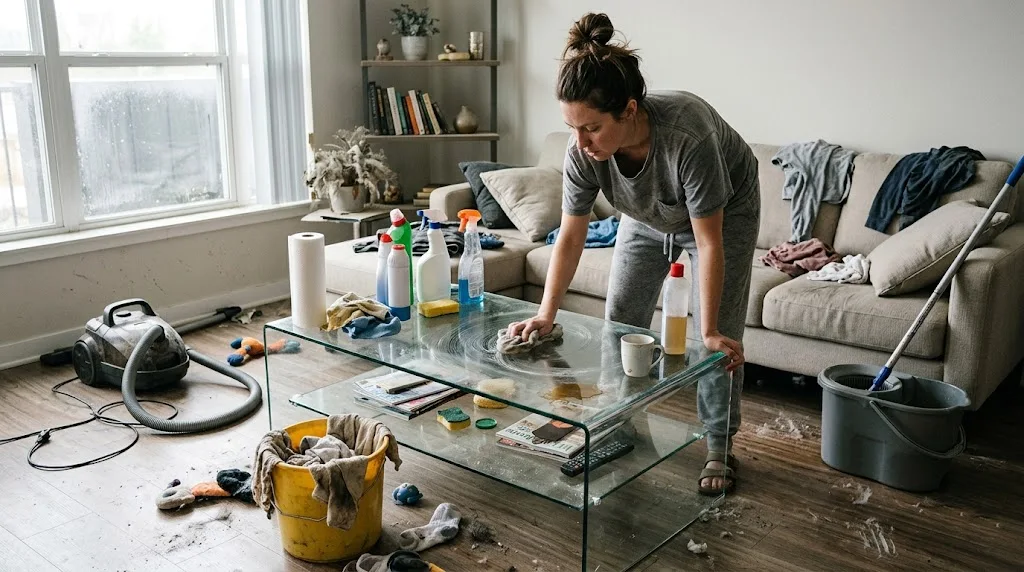
The most common house cleaning mistakes include cleaning from the bottom up, using the wrong products on surfaces, not letting disinfectants sit, skipping high-touch areas, and using dirty tools. Fixing these habits saves time, protects your surfaces, and keeps your home truly clean—not just looking clean.
Most people clean their homes regularly, but very few clean them correctly. You spray, wipe, scrub, and vacuum—and still feel like something is off. That feeling usually means one of your cleaning habits is working against you, not for you. The good news is that most of these mistakes are easy to fix once you know what they are.
You’re Cleaning From the Bottom Up
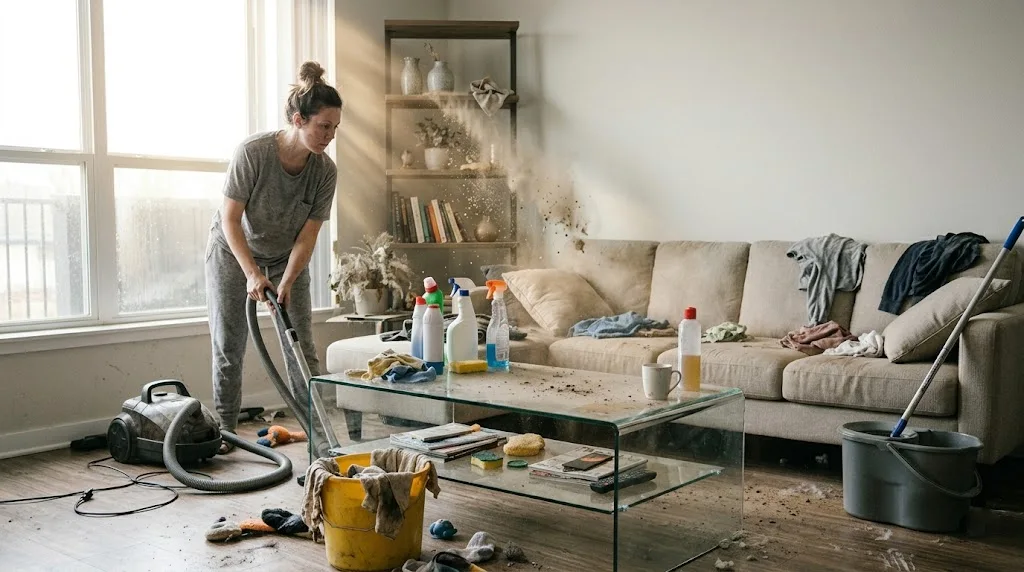
This is one of the most widespread cleaning mistakes, and it quietly undoes all your hard work. When you vacuum the floor before wiping down counters or dusting ceiling fans, you knock dust and debris right back onto the floors you just cleaned.
The right approach is simple: always start high and work your way down. Begin with crown molding, ceiling fans, and high shelves. Then move to windows, countertops, and furniture. Finish with sweeping, mopping, or vacuuming the floor. This way, everything that falls gets picked up at the end instead of sitting on a surface you already cleaned.
You’re Using the Wrong Cleaner on the Wrong Surface
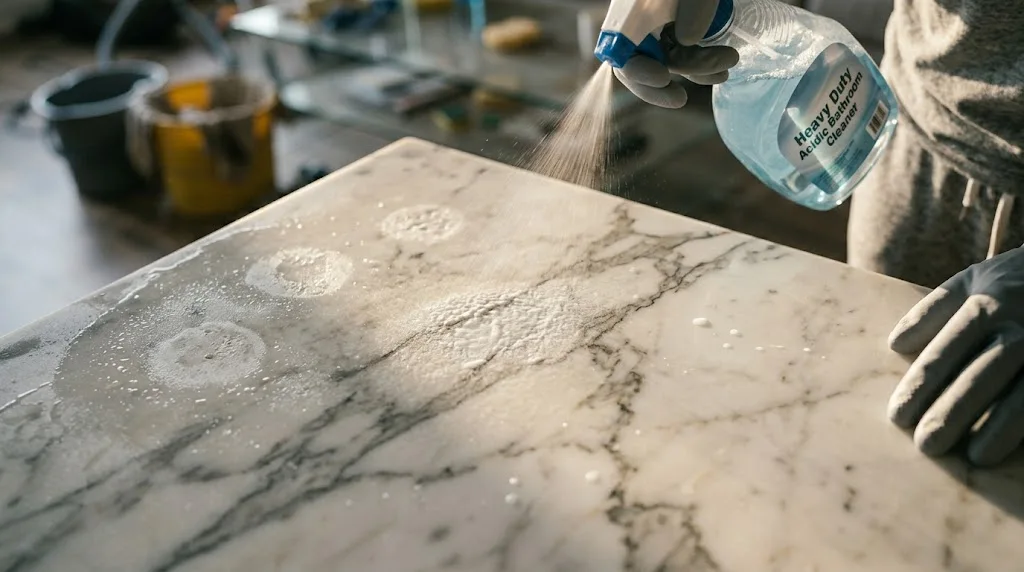
Not all surfaces respond the same way to cleaners, and picking the wrong one can cause real damage. Spraying glass cleaner on a marble countertop or using bleach on delicate fabrics can cause irreversible damage. Vinegar is a popular natural cleaner, but it is not safe everywhere. There are surfaces you should avoid using vinegar on, such as stone floors, metal, grout, and hardwood floors, as it could damage them.
Take a few minutes to read product labels before you use anything new. Different cleaners are made for different jobs, and knowing which one to reach for in each room saves you money, time, and the cost of replacing a damaged surface.
You’re Not Letting Products Do Their Job
This one catches a lot of people off guard. Many homeowners apply cleaning solutions and immediately wipe them off, not realizing that most products need time to break down grime, kill germs, and effectively clean surfaces.
Disinfectants are a good example. They need to stay wet on a surface for a set amount of time to actually kill bacteria and viruses. If you spray and wipe right away, you are mostly just spreading moisture around. Check the label for the recommended contact time—usually anywhere from 30 seconds to a few minutes—and let the product sit before you wipe it away.
You’re Spreading Germs Between Rooms
Carrying a single damp rag throughout your entire house is a major hygiene problem. If you wipe down your bathroom sink and then use that same cloth on your kitchen counters, you actively spread harmful bacteria from one room to another. Cross-contamination defeats the whole point of cleaning.
The fix is to use separate cloths for different areas of your home. Color-coding works well here. Assign one color to bathrooms, another to the kitchen, and another to general surfaces. Microfiber cloths are great for this because they pick up bacteria rather than just moving it around. Wash them after every use.
You’re Ignoring High-Touch Surfaces
Most people focus on visible dirt—the grimy stovetop, the dusty shelf, the smudged mirror. But some of the germiest spots in your home look perfectly clean. Light switches, door handles, remote controls, cabinet knobs, and appliance handles are all high-touch areas that quietly collect germs and oils every single day.
These small spots get touched dozens of times a day by everyone in the house, but they rarely make it onto the cleaning list. A quick wipe-down with a disinfecting cloth twice a week keeps bacteria from building up and spreading. It takes less than five minutes and makes a real difference in how healthy your home actually is.
You’re Using Too Much Cleaning Product
Many people assume that when it comes to household cleaners, more equals better—but this simply is not the case. Using too much product can oversaturate cleaning materials like microfiber cloths, which can leave streaks. You also end up spending more time wiping up excess product than actually cleaning the surface.
More product also does not mean better disinfection. Some chemicals emit toxic fumes, so using them excessively increases your risk of eye and respiratory damage. A small, controlled amount of cleaner does the job just as well—sometimes better. Start with less, and add more only if you need it.
You’re Cleaning With Dirty Tools
Think about it: a dirty mop just spreads dirty water across your floor. A vacuum with a full bag loses suction and stops picking up much of anything. Dirty tools can reintroduce grime and bacteria back onto surfaces. A sponge can become a breeding ground for germs.
Your cleaning tools need regular maintenance. Rinse mop heads after each use, wash microfiber cloths frequently, empty your vacuum bag or canister before it gets full, and replace sponges often. Sponges can be sterilized by running them through the dishwasher on the top rack, which extends their life while cutting down on bacteria. Clean tools are the foundation of a clean home.
You Don’t Have a Cleaning Schedule
Cleaning when things look dirty means you are always playing catch-up. Dirt and grime build up slowly, and by the time something is visibly dirty, it has been collecting bacteria and debris for a while. Waiting too long between cleanings makes it harder to fully clean surfaces. Dirt and grime build up over time, making cleaning an even more demanding job.
A simple schedule changes everything. High-traffic spots like the kitchen and bathrooms need attention a few times a week. Lower-traffic areas like closets and laundry rooms can go one to two weeks between cleanings. Write it down, put it on your phone, or stick it on the fridge. Consistency keeps the job manageable and your home genuinely clean.
You’re Not Ventilating While You Clean
Opening a window while you clean might seem unnecessary, but it actually matters. Failing to ventilate your home while cleaning can trap harmful fumes indoors, leading to respiratory issues and indoor air pollution. Many common cleaning products release fumes that are fine in small doses but uncomfortable—and potentially harmful—in an enclosed space.
Good airflow also helps surfaces dry faster after you clean them, which reduces the chance of mildew and streaking. Crack a window, turn on a bathroom fan, or open a door. It costs nothing and makes the whole experience better for you and everyone else in the house.
You’re Dusting With the Wrong Tool
A feather duster looks like the right tool for the job, but it does not actually clean anything. Feather dusters merely spread dust particles instead of picking them up. You end up moving dust from one surface to another, and it eventually settles right back where it started.
Switch to a slightly damp microfiber cloth instead. Microfiber grabs and holds dust rather than sending it back into the air. Use it on bookshelves, window sills, ceiling fans, and baseboards. You will be surprised how much more effective this small change is.
You’re Disorganized Before You Even Start
Rummaging around trying to figure out which cabinet the baking soda is in or where you last put your spray bottle is nothing more than a waste of time. Starting a cleaning session without your supplies in order adds frustration and drags out a task that should be quick.
Keep all your cleaning supplies in one place—a caddy, a bucket, or a dedicated cabinet. When everything has a spot, you spend less time searching and more time actually cleaning. It sounds basic, but this habit alone can cut your cleaning time by a noticeable amount.
Small Fixes, Big Results
Cleaning is not complicated, but the details matter. The order you clean in, the products you choose, the tools you use, and how often you do it all shape how clean your home actually gets. Fixing even two or three of the mistakes on this list will save you time and get you better results. Start with what feels easiest, build from there, and your home will stay cleaner with far less effort.
