

Standing Water in the Dishwasher? Don’t Panic
You open the dishwasher expecting clean dishes and find an inch of murky water sitting in the bottom. Before you call for service — or worse, replace the machine — know this: most drainage problems are caused by simple clogs in the filter, air gap, or drain hose, and they’re very fixable with basic tools. Work through these six checks in order, from easiest to hardest, and you’ll resolve the vast majority of “dishwasher not draining” cases yourself.
Safety First
Turn off power to the dishwasher at the breaker before reaching into the drain area or disconnecting anything — dishwashers combine water and electricity. Also turn off the water supply valve under the sink. Keep towels and a shallow pan handy; there will be water.
Reading the Symptoms: What the Water Tells You
Before you start unscrewing things, observe — the pattern of the problem points to the cause:
- Water appears only after running the sink disposal: the drain hose lacks a proper high loop, or the disposal’s knockout plug was never removed.
- Dirty water backs into the dishwasher when the sink drains: missing or sagging high loop, or a partially clogged shared drain.
- Water spurts from the air gap cap during cycles: clog between the air gap and the disposal — clear the air gap first.
- Clean water left after every cycle, slowly increasing: drain pump weakening or check valve stuck — the machine partially drains but can’t finish.
- Sudden total failure to drain: kinked hose (did anyone push the unit back recently?), jammed pump impeller, or a forgotten knockout plug after plumbing work.
Matching your symptom to this list often tells you exactly which check to run first, saving you from disassembling parts that were never the problem.
Hard Water’s Role in Drainage Problems
In hard-water areas, mineral scale builds up inside the drain hose, pump housing, and check valve — gradually narrowing the passages water must flow through. If your dishwasher has drained slower and slower over months (rather than failing suddenly), scale is a likely contributor. The monthly vinegar cycle in the prevention list below dissolves this buildup. For severe cases, remove the drain hose and soak it in a vinegar solution. If hard water plagues your whole house — spotty dishes, stiff laundry, scale on faucets — our low water pressure guide and dripping faucet guide address the same mineral culprits elsewhere in your plumbing, and a whole-house softener may be worth considering.
Check 1: Run the Garbage Disposal and Clear the Air Gap
In many kitchens, the dishwasher drains through the garbage disposal or an air gap fitting on the sink. Start here:
- Run the disposal for 30 seconds with water flowing — a full disposal blocks the dishwasher drain.
- New disposal? If a disposal was recently installed, the installer may have forgotten to knock out the drain plug — a small plastic disk inside the disposal’s dishwasher inlet. This is the #1 cause of drainage failure after a new disposal install. Disconnect the dishwasher hose and punch it out.
- Clean the air gap (the little chrome/metal cap next to the faucet): pop off the cover, remove the inner cap, and clear out any gunk with a bottle brush. Water spurting from the air gap during a cycle is the classic symptom of a clog here.
Check 2: Clean the Dishwasher Filter
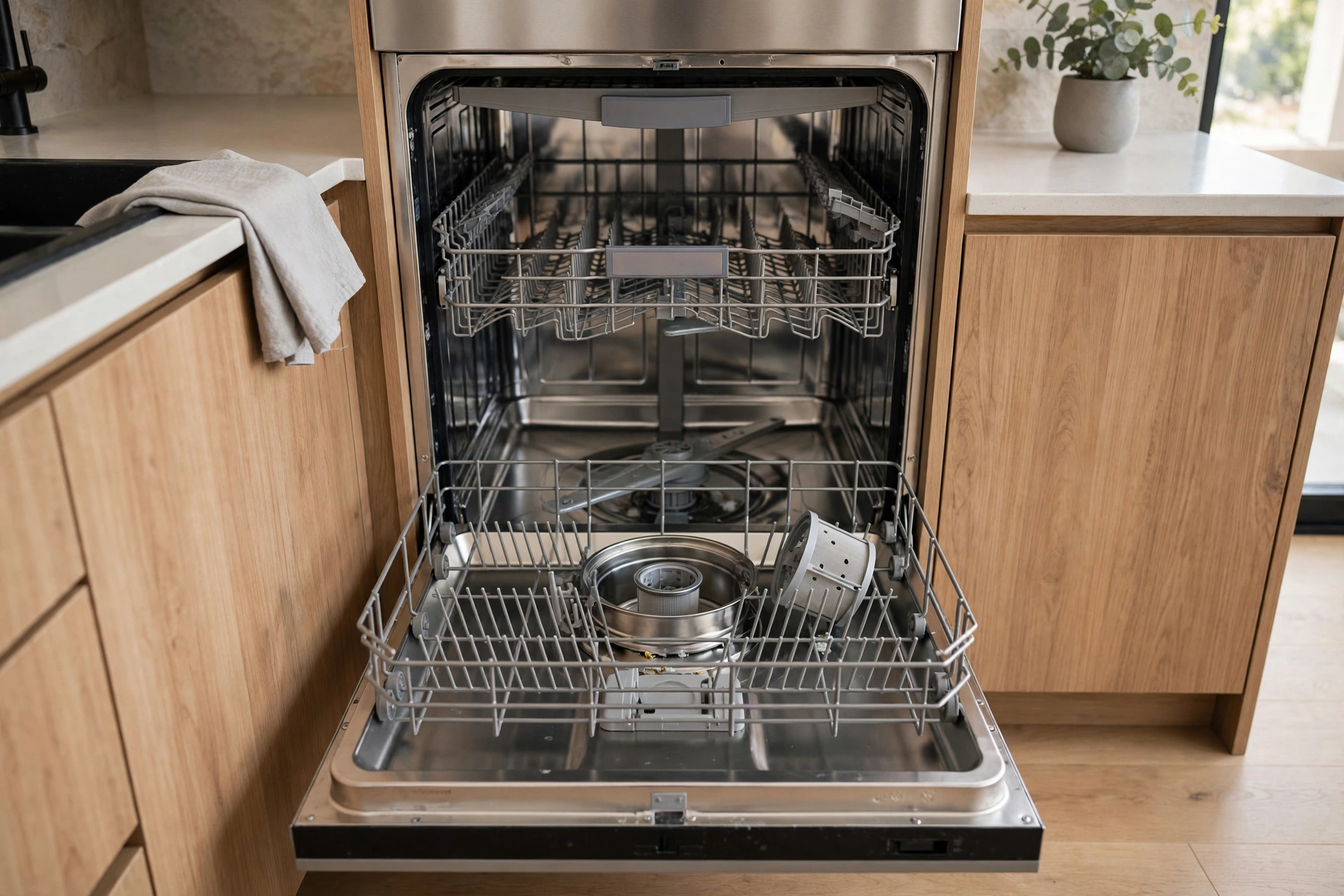
Modern dishwashers have a removable filter assembly at the tub floor that traps food particles. When it clogs, water can’t reach the drain pump.
- Remove the bottom rack.
- Twist and lift out the cylindrical filter (and the flat mesh screen under it, if present).
- Rinse under hot water, scrubbing with a soft brush and dish soap. For greasy buildup, soak in hot soapy water for 10 minutes.
- While it’s out, scoop out any standing water and debris from the sump area with a cup and sponge.
- Reinstall the filter — make sure it locks fully into place (an unseated filter lets debris into the pump).
Do this monthly as preventive maintenance and you’ll prevent most drainage issues before they start.

Check 3: Inspect the Drain Hose
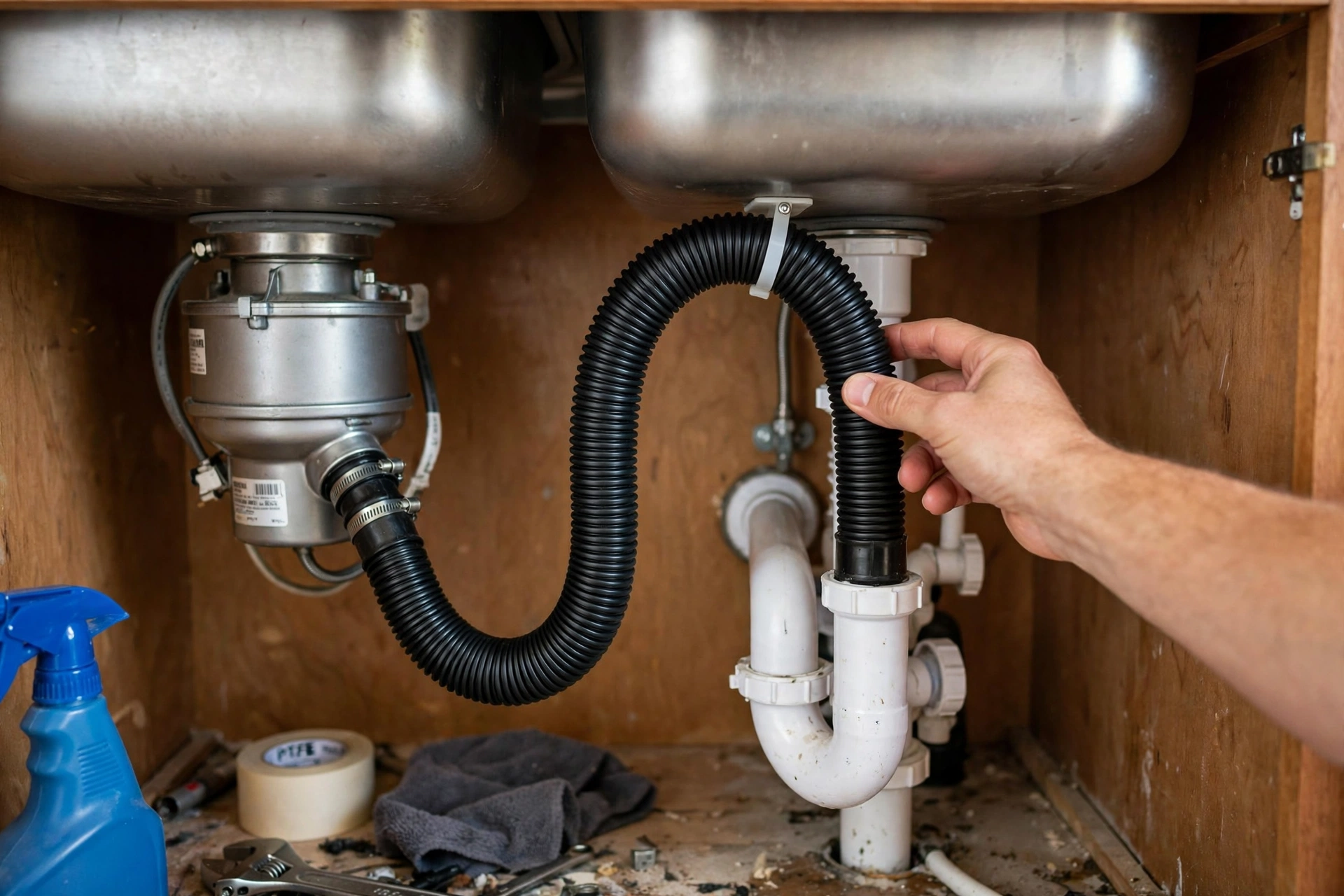
The corrugated hose running from the dishwasher to the disposal or sink drain is a prime clog and kink location.
- Find the hose under the sink (or pull the dishwasher out slightly for access).
- Check for kinks, sharp bends, or crushing — the hose needs a smooth path.
- Verify the high loop: the hose should rise up and attach high under the countertop before descending to the drain. Without this loop, sink water siphons back into the dishwasher.
- Disconnect the hose at the disposal/sink end, hold it over a bucket, and blow through it or flush it with a garden hose to clear clogs.
- Reconnect firmly with the clamp.
Check 4: Test the Drain Pump
If the filter and hose are clear but water still won’t pump out, the drain pump may be failing or jammed. Listen during the drain cycle: a humming pump that’s moving no water often has debris (glass shards, bones, twist ties) jammed in the impeller. Accessing the pump usually means removing the dishwasher’s lower front panel or pulling the unit out — disconnect power first. Clear any visible debris from the impeller. If the pump is silent during drain (no hum at all), it may have failed electrically — test with a multimeter if you’re comfortable, or call a pro.
Check 5: The Check Valve (Flapper)
Where the drain hose meets the pump or the sump, there’s often a small rubber check valve that prevents drained water from flowing back into the tub. If it sticks shut with gunk, water can’t get out; if it sticks open, dirty water flows back in. It’s a cheap part ($5–$15) and usually just pulls out for cleaning or replacement.
Check 6: Control and Cycle Issues
Rarely, the problem is electronic: a failed timer, control board, or a cycle interrupted mid-drain. Try running a full cycle and listen — if the machine never even attempts to drain (no pump sound at any point), suspect controls. Reset the dishwasher (breaker off for 5 minutes) and try again. Persistent electronic failures usually warrant a service call.
Understanding the Shared Drain (Dishwasher + Disposal)
It helps to picture the plumbing: your dishwasher pump pushes dirty water through the drain hose, which connects either to the garbage disposal’s side inlet or directly to the sink drain tailpiece. From there, everything shares the same trap and drain line to the wall. That means a clog anywhere downstream — disposal, tailpiece, or trap — backs up into the dishwasher first, because it’s the lowest point. If both your sink and dishwasher drain slowly, the blockage is in the shared drain, not the dishwasher: try a plunger on the sink drain (with the disposal off) or remove and clean the P-trap before suspecting dishwasher parts.
When to Call a Pro vs. Replace
- Call a pro ($100–$200 visit) if: the pump needs replacement and you’re not comfortable pulling the unit, there’s an electrical fault, or the machine is under warranty (DIY may void it).
- Consider replacing if: the dishwasher is 10+ years old, needs a $200+ repair, cleans poorly even when draining, or lacks modern efficiency. A new mid-range dishwasher ($500–$800) is quieter, uses far less water, and comes with a warranty. For context on bigger kitchen investments, see our 2026 kitchen remodel cost guide.
Preventing Future Drainage Problems
- Scrape (don’t pre-rinse excessively — modern detergents need some grease to work) plates before loading.
- Clean the filter monthly.
- Run hot water at the sink for 30 seconds before starting the dishwasher so it fills with hot water immediately.
- Use the right detergent amount — excess suds cause drainage and cleaning issues.
- Run the disposal before starting the dishwasher.
- Once a month, run an empty cycle with a cup of white vinegar on the top rack to dissolve grease buildup.
And if your kitchen sink itself drains slowly, the problem may be downstream of the dishwasher — our kitchen sink installation guide covers drain connections that affect both fixtures.
Smells Bad Too? Tackling Odor Alongside Drainage
Standing water and dishwasher odor usually share a root cause — trapped food and grease. Once drainage is restored, kill the smell:
- Remove and scrub the filter (again — it’s the #1 odor source).
- Wipe the door gasket and the tub edges where grime collects.
- Place a cup of white vinegar upright on the top rack and run a hot empty cycle.
- For stubborn smells, sprinkle a cup of baking soda across the tub floor and run a short hot cycle.
- Leave the door slightly ajar between cycles so the interior dries — sealed damp tubs breed odor fast.
Persistent rotten-egg smell can indicate a dry drain trap or garbage disposal issue rather than the dishwasher itself — run water in the sink and disposal to refill traps.
The Bottom Line
Filter, air gap, disposal, hose — in that order. Those four checks fix the overwhelming majority of dishwashers that won’t drain, and none of them requires more than a screwdriver and 20 minutes.
