

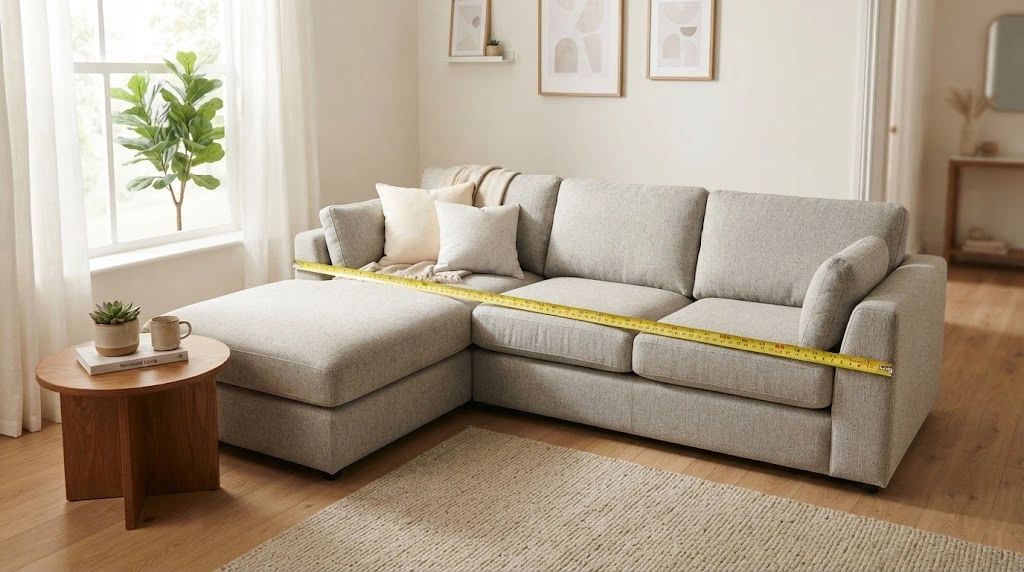
You’re scrolling through a furniture listing, and there it is: 41x72x43. Three numbers that either click instantly or read like a code nobody bothered to explain. Here’s the truth — those digits aren’t just a spec sheet detail. They can decide whether a piece glides into your room and feels right, or gets stuck in your hallway and sent right back.
Whether you’re eyeing a sectional wedge that won’t overwhelm your living room, or trying to work out if a storage cabinet will actually clear your front door, knowing how to read 41x72x43 saves you time, money, and a very awkward return shipment. Below, we’ll break down exactly what these numbers mean, how to convert and calculate with them, and how to avoid the mistakes that trip up even careful shoppers.
What Does 41x72x43 Actually Mean?
These three numbers describe physical dimensions — typically length, width, and height, in that order. Most manufacturers follow this convention, but not all of them. Some list width, depth, and height instead. The only way to know for sure is to check the product diagram or description before you buy.
The bigger question, though, is the unit of measurement. Without knowing whether you’re looking at inches, centimeters, or millimeters, “41x72x43” could describe anything from a small storage bin to a full-size sectional sofa. That’s not a small gap — it’s the difference between a piece that fits your room and one that doesn’t fit through your door at all.
This exact number sequence shows up across furniture catalogs, shipping labels, and manufacturing blueprints, which is part of why it causes so much confusion. Your first step, always, is to confirm the measurement system with the seller or product page. One missing unit label is the difference between “fits perfectly” and “back in the box it goes.”
Converting 41x72x43 Between Inches, Centimeters, and Millimeters
If 41x72x43 is measured in inches, here’s the metric equivalent:
- 104.1 × 182.9 × 109.2 centimeters
If the original measurement is in centimeters, converting to inches gives you:
- 16.1 × 28.3 × 16.9 inches
That’s a dramatic size difference depending on which system you’re working with — which is exactly why double-checking matters before you order.
Conversion factors worth memorizing:
- 1 inch = 2.54 centimeters
- 1 inch = 25.4 millimeters
- 1 foot = 30.48 centimeters
- To convert millimeters to inches, divide by 25.4
- To convert inches to feet, multiply by 0.0833
Keep these handy, especially if you’re comparing products from international sellers or cross-checking a contractor’s cut list. A rounding mistake here can cost real money once materials are cut or an order is placed.
Where 41x72x43 Shows Up in Furniture Listings
The 41x72x43 size is especially common for sectional sofa wedges — the angled piece that connects two straight sections of a modular sofa. One well-known example is the Ashley Next-Gen DuraPella sectional wedge, which measures exactly 41×72×43 inches and often serves as the anchor piece for larger modular layouts.
For context, sectional pieces generally range from compact two-seaters (around 75–85 inches total) to oversized configurations that stretch past 150 inches. A 72-inch wedge sits in the medium-to-large category, and it typically needs at least 12 feet of wall space once you factor in the perpendicular section it connects to.
One quirk to watch for: furniture listings often put width first, not length. So a wedge listed as 41×72×43 inches might actually mean 41 inches wide, 72 inches along the wall, and 43 inches tall — which flips the usual length-width-height order. Always check the manufacturer’s diagram to confirm which number maps to which side before you measure your space.
Calculating Volume and Space Requirements
Once you have all three dimensions, you can calculate volume with a simple formula:
Length × Width × Height = Volume
For 41x72x43 inches:
- 126,696 cubic inches, or roughly 73.3 cubic feet
This number matters for more than curiosity:
- Shipping companies often price by dimensional weight, which can exceed the item’s actual weight
- Storage facilities typically charge by cubic footage, not just floor space
- Suppliers need volume figures to quote insulation, packing material, or protective coatings
Surface area is another useful figure, especially if you’re covering, wrapping, or reupholstering something. The formula is:
2 × [(Length × Width) + (Length × Height) + (Width × Height)]
Knowing this ahead of time means you buy the right amount of fabric, paint, or wrap the first time — no extra trips to the store.
Measuring Your Space for 41x72x43 Furniture
1. Measure the installation area first. Record the length and width of the room, and note any permanent fixtures — outlets, radiators, built-in shelving — that could interfere with placement. Sketching a simple floor plan on graph paper (one square = one foot) makes it much easier to visualize the final layout.
2. Map the delivery path. Walk the route from the entry door to the installation spot, and measure the narrowest point at every turn — doorframes, stairwells, tight hallways. A pro tip: measure diagonally through doorways. Large items can sometimes pass through openings at an angle that they’d never clear head-on.
3. Check overhead clearance. Low light fixtures, ceiling fans, and sloped ceilings can all interfere with taller pieces. Measure floor-to-ceiling height at a few different points in the room, especially if there’s any architectural slope. A 43-inch-tall piece seems manageable — until you realize the ceiling dips right where you planned to put it.
Common Mistakes When Shopping for 41x72x43 Dimensions
- Assuming similar-looking furniture will fit the same way. Two pieces can look nearly identical in photos and still have very different footprints. Always check the listed dimensions, not just the picture.
- Prioritizing style over fit. A piece that looks great in the showroom photo can still be the wrong size for your actual room — and once it’s home, that’s a hard problem to fix.
- Ignoring nearby furniture and traffic flow. Placing a 41×72×43 cabinet too close to a doorway or window can block access and disrupt how you actually move through the room.
- Forgetting packaging adds size. Shipping boxes include padding and protective material, so an item listed as 41×72×43 inches might arrive boxed at something closer to 44×75×46 inches. That extra few inches can matter a lot in a tight hallway.
Careful measuring — of both the room and the delivery path — is the single best way to avoid all four of these mistakes.
Clearance and Safety Tips for 41x72x43 Furniture
- Leave 18–24 inches of walking clearance on all sides where people will pass by regularly. This keeps the room from feeling cramped and preserves natural traffic flow.
- Leave 2–3 inches behind wall-facing pieces to protect baseboards and prevent damage from repeated contact or shifting.
- Consider height context. A 43-inch height sits above standard countertop height (36 inches) but below typical standing-desk height (around 48 inches). For seating, that’s the total height from floor to the top of the backrest — comfortable for most adults, but potentially too tall for small children to climb onto safely.
- Check weight distribution. A piece that’s 72 inches wide but only 41 inches deep can be top-heavy if it isn’t well-engineered. Look for anti-tip hardware, especially in homes with kids or pets.
- Meet accessibility needs. If mobility is a consideration, leave at least 36 inches of clear floor space around the piece, and confirm seat height and arm height work for the people who’ll actually use it.
Using 41x72x43 Furniture Across Different Rooms
Living rooms get the most out of 41x72x43 sectional pieces. The 72-inch length offers generous seating without swallowing the entire wall, the 41-inch depth keeps the room from feeling narrow, and the 43-inch height provides solid back support while still preserving sightlines across the space.
Bedrooms can use these dimensions well for storage cabinets or dresser units. The width comfortably holds folded clothing, and the height keeps daily items within easy reach. Placing this against the wall opposite the bed helps balance the room visually — corner placement works too, if you’ve got the clearance.
Home offices benefit from 41x72x43 shelving or filing cabinets. The 72-inch width offers real storage capacity, the 43-inch height keeps items reachable without a step stool, and the 41-inch depth keeps the unit from eating into your usable workspace.
Quick Reference Table
| Measurement System | Length | Width | Height | Volume |
|---|---|---|---|---|
| Inches | 41″ | 72″ | 43″ | 73.3 cu ft |
| Centimeters | 104.1 cm | 182.9 cm | 109.2 cm | 2.07 cu m |
| Millimeters | 1,041 mm | 1,829 mm | 1,092 mm | 2,076,363 cu cm |
In inches, 41x72x43 typically describes a medium-to-large furniture piece that needs real space planning and often professional delivery. In centimeters, it’s a much smaller item — compact enough for personal transport and standard doorways. In millimeters, you’re likely looking at a small precision component used in technical or industrial applications.
Typical uses include sectional sofa wedges, storage furniture, commercial fixtures, shipping crates, and display units — which is exactly why context matters so much when you first spot this number.
Getting Delivery Right
A 41×72×43-inch item usually won’t fit in a standard pickup bed with the tailgate closed — you’ll likely need an 8-foot bed or a trailer. This is part of why many furniture retailers offer delivery service by default for pieces this size.
Standard interior doors run 30–36 inches wide, so a 72-inch-long item cannot pass through straight on. Check whether the piece is modular and breaks down for transport, or plan to bring it through a wider opening like a patio door. In some cases, temporarily removing a door or door frame is the only way to get it inside.
If you’re storing an item this size, think beyond floor space — a 43-inch height limits your stacking options. Climate-controlled storage is ideal for furniture; if you’re storing outdoors, weatherproof covering and elevation off the ground are essential to prevent moisture damage.
Understanding Manufacturing Tolerances
Listed dimensions are rarely exact to the millimeter. Furniture typically allows a tolerance of ±0.125 to 0.25 inches, while precision equipment may specify tolerances as tight as ±0.5 millimeters. These small variances matter more than you’d think when fitting multiple pieces together or working within a tight space.
Installation clearance needs vary by product type: appliances typically need 1–3 inches of ventilation space, furniture needs room for doors and drawers to swing open, and recliners need 12–18 inches of clearance behind them when fully extended. Always check manufacturer guidelines before finalizing a layout — they’re written for exactly this situation.
Final Takeaway
Understanding 41x72x43 isn’t about memorizing three numbers — it’s about knowing what they mean for your specific space, your delivery path, and your day-to-day use of the piece. Confirm the unit system, measure your room and your route, and account for packaging and clearance before you commit to a purchase.
The few extra minutes spent verifying dimensions upfront can save you from an expensive return, a stuck delivery truck, or a piece of furniture that simply doesn’t work in your home. Whether you’re shopping for a sectional, planning storage, or just trying to make sense of a listing, getting these numbers right is what makes everything else fall into place.
