

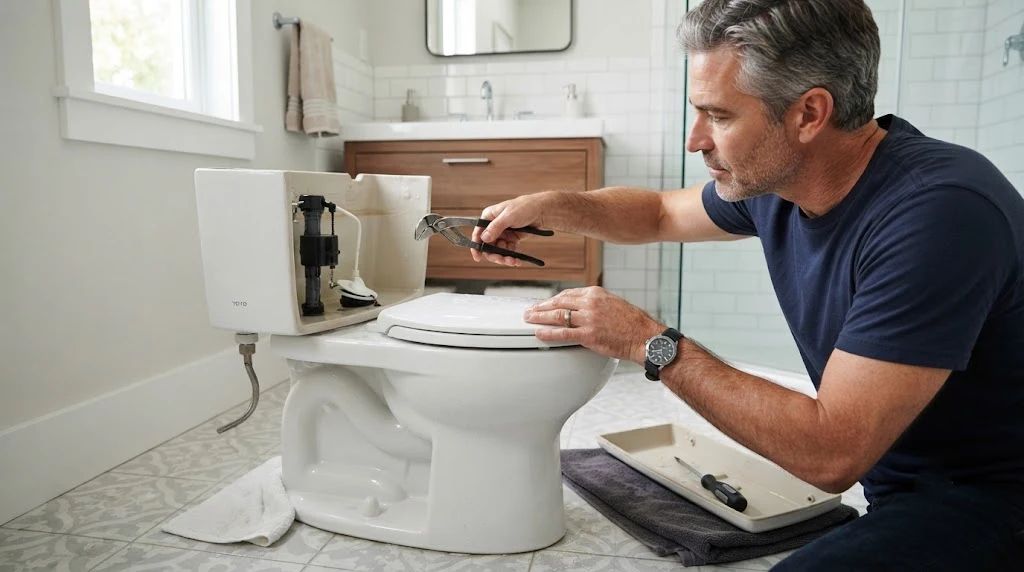
Nothing ruins a quiet evening like the sound of your toilet running long after you’ve flushed it. That hissing, gurgling noise isn’t just annoying—it’s also wasting water and quietly driving up your utility bill every single month. The good news? Most leaking or running toilets can be fixed in under an hour with basic tools and a little patience.
In this guide, we’ll break down every major toilet part, explain what each one does, and walk you through simple fixes for the most common toilet problems. By the end, you’ll know exactly what’s wrong with your toilet and whether you can fix it yourself or need to call a professional plumber.
Know Your Toilet Parts: A Simple Breakdown
Before you can fix a leaking toilet, you need to understand what’s inside the tank. Toilets look complicated, but they’re actually made up of a handful of simple parts that work together. Once you know what each one does, troubleshooting becomes a lot easier.
Refill Tube
The refill tube is a small, flexible hose that sends water back into the bowl after every flush. It’s an easy part to overlook, but it plays a big role in how your toilet fills.
Common issue: If your toilet runs on and off with no clear pattern, check where the refill tube sits. If the end of the tube is submerged below the water line in the tank, it can create a siphon effect that keeps pulling water out. Simply clip the tube back above the waterline, and the problem often disappears.
Ballcock (Fill Valve)
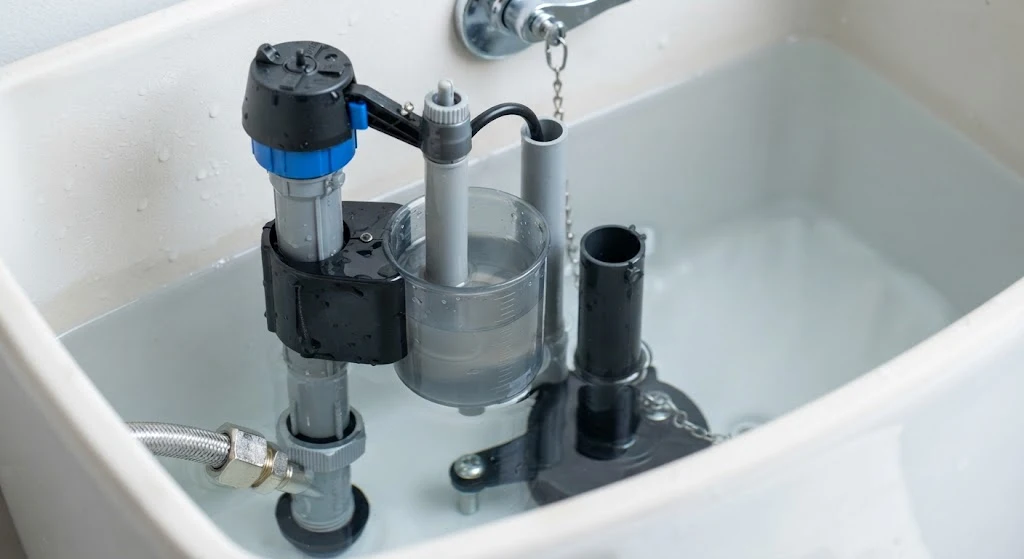
The ballcock is the fill valve that controls how much water enters the tank and bowl after each flush. It works with a float ball to know when to turn the water on and off.
Common issue: A worn-out or misaligned ballcock is one of the top reasons toilets run intermittently. Try adjusting the float first. If the running continues, the valve itself may be worn out and need replacing. Fill valves are inexpensive—usually under $15—and swapping one out is a beginner-friendly repair.
Tip: Giving your ballcock a quick inspection once or twice a year can help you catch wear and tear before it turns into a bigger (and wetter) problem.
Float Cup
Many newer toilets use a float cup instead of a traditional ballcock. This all-in-one plastic unit slides up and down a central shaft and is generally easier to install and adjust than older float-ball systems.
Why it’s popular: Float cups tend to be more durable and less prone to sticking or corroding compared to older float-ball assemblies. If you’re replacing a fill valve anyway, upgrading to a float-cup style is often a smart, low-cost improvement.
Float Ball
The float ball rises and falls with the water level in the tank. As it rises, it signals the ballcock to shut off the water supply once the tank is full.
Common issue: If your toilet keeps running or doesn’t fill properly, the float ball may need a small adjustment. Bending the metal arm slightly downward lowers the shut-off point; bending it up raises it. This five-minute fix can prevent constant overflow and cut down on wasted water.
Chain
The chain connects the flush handle to the flapper, lifting it every time you flush to release water into the bowl.
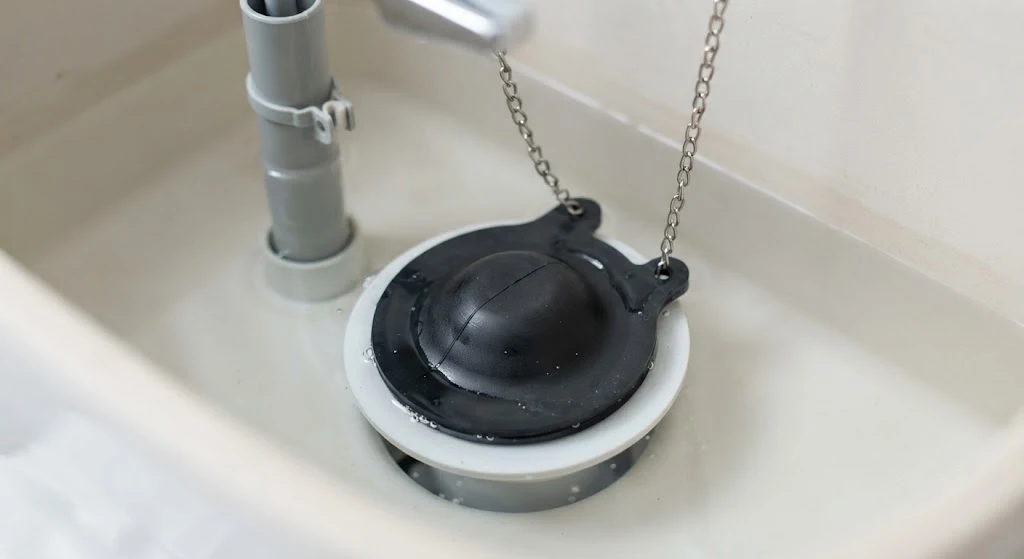
Common issue: Chain length matters more than people think. A chain that’s too short won’t let the flapper seal completely, causing a slow, steady leak. A chain that’s too long can get pinched under the flapper, holding it open. The fix is simple: adjust the chain so there’s about a half-inch of slack when the flapper is closed.
Overflow Tube
The overflow tube is a safety feature that prevents your tank from flooding if the water level gets too high. Any excess water drains through this tube directly into the bowl instead of spilling onto your floor.
Common issue: If you notice water constantly trickling into the overflow tube, your water level is set too high. Lower the float ball or float cup slightly so the water level sits about an inch below the top of the tube. This small adjustment can meaningfully reduce water waste over time.
Flapper
The flapper is the rubber seal at the bottom of the tank. It lifts during a flush to release water, then drops back down to reseal the tank.
Common issue: Over time, flappers collect mineral deposits or simply wear out, preventing a tight seal. This is one of the most common causes of a running toilet. Try cleaning the flapper and its seat first. If the hissing continues, replace the flapper—it’s one of the cheapest and most effective toilet repairs you can make, usually costing less than $10.
Gasket
The gasket is a rubber seal that sits between the tank and the bowl, preventing water from leaking out at that connection point.
Common issue: A cracked or worn gasket can cause water to seep out from between the tank and bowl, often pooling on the floor beneath. Regularly inspecting this seal—especially in older toilets—can help you catch a small leak before it turns into water damage.
Wax Ring
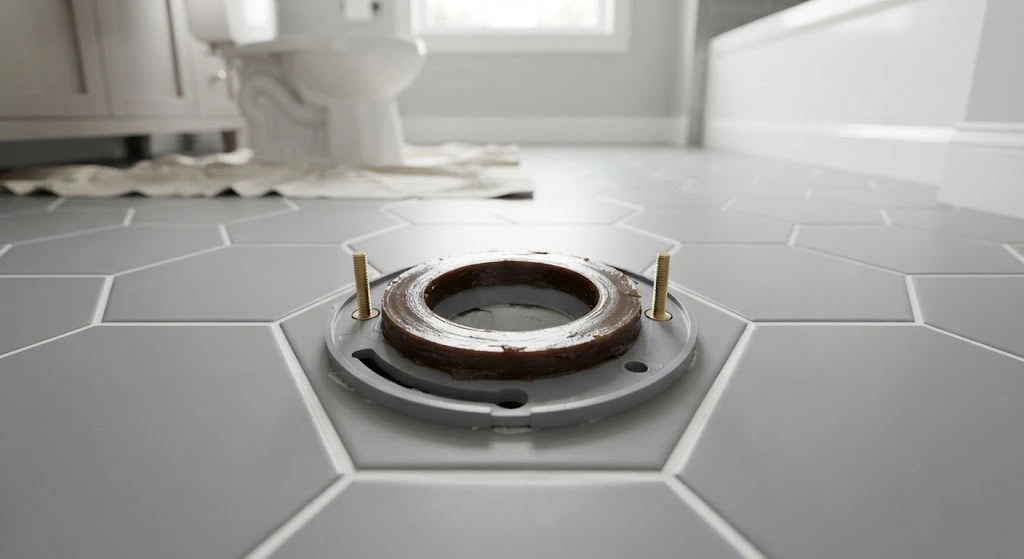
The wax ring creates a watertight seal between the base of the toilet and the drain pipe in your floor. It’s one of the most important seals in the entire toilet system.
Common issue: If you see water leaking from around the base of the toilet, a failed wax ring is often the cause. Unfortunately, replacing it requires removing the entire toilet, which can be tricky for beginners. If you’re not confident working with plumbing connections, this is a good time to call a licensed plumber. A failed wax ring left unaddressed can lead to costly subfloor damage.
Closet Bolt
Closet bolts anchor the toilet bowl to the closet flange, keeping the toilet stable and secure on the floor.
Common issue: A wobbly toilet is often caused by loose closet bolts. Tighten the nuts evenly, turning no more than a quarter-turn past finger-tight. Over-tightening is a common mistake that can crack the porcelain base, so take it slow.
Pro Tip: According to Richard Trethewey, plumbing expert for This Old House, a secure flange is key to preventing rocking. He recommends driving long screws through the tile and into the plywood subfloor so the flange stays firmly anchored, leaving no room for movement.
Closet Flange
The closet flange connects the toilet to the drain pipe and anchors it to the floor. It’s the foundation the entire toilet sits on.
Common issue: A cracked, corroded, or improperly installed flange can cause leaks at the base and make the toilet unstable, even if the bolts are tight. Flange repairs usually involve working with the drain pipe itself, so this is best left to a professional plumber.
Common Toilet Problems and How to Fix Them
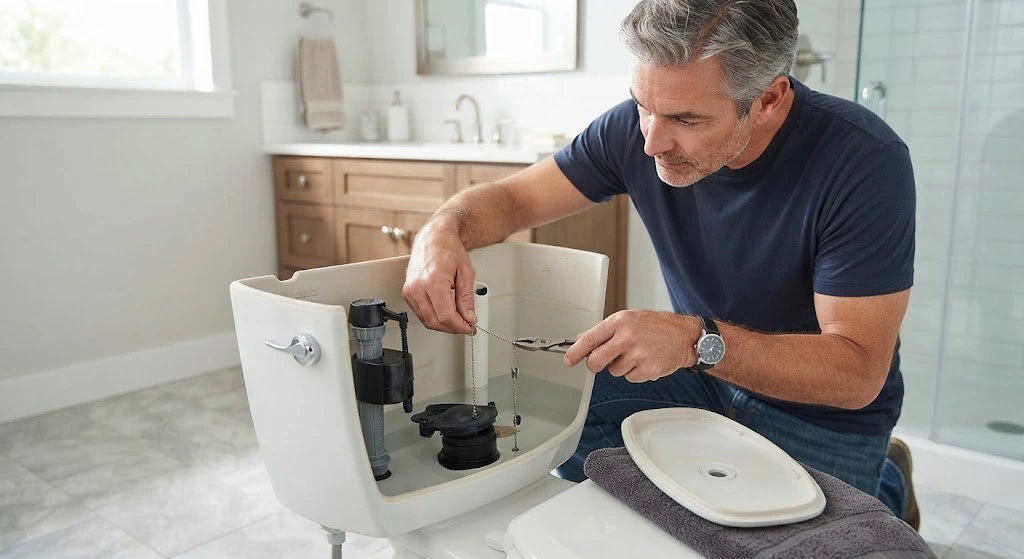
Now that you’re familiar with the parts, here’s a quick-reference guide to the most common toilet complaints and how to solve them.
- Constantly running toilet: That nonstop hissing sound is almost always caused by a worn flapper or a poorly adjusted chain. Start by checking the chain length, then inspect the flapper for buildup or damage.
- Toilet fills slowly: A sluggish fill is usually caused by a partially closed supply valve or a clogged fill valve. Make sure the shut-off valve behind the toilet is fully open, and clean any mineral deposits from the fill valve if needed.
- Toilet won’t flush: This is often a disconnected chain or a broken flush lever mechanism. Open the tank and check that the chain is still attached to both the handle arm and the flapper.
- Weak flush: If your flush doesn’t clear the bowl like it used to, clogged rim jets or a partially blocked trapway are likely culprits. Use a small wire or an old toothbrush to clean out the rim jets under the bowl’s rim, and try a plunger or toilet auger to clear deeper blockages.
- Leaking at the base: This usually points to a failing wax ring or a damaged closet flange—both of which may require removing the toilet to fix properly.
- Leaking between tank and bowl: A worn gasket or loose tank bolts are the most likely causes. Try tightening the tank bolts evenly first before replacing the gasket.
When to Call a Professional Plumber
DIY repairs can solve most toilet problems, but some situations call for professional help. Consider hiring a licensed plumber if:
- You notice significant water damage around the base of the toilet or on the surrounding floor.
- The toilet is leaking from more than one location at once, which usually points to a deeper issue.
- You’ve already attempted a repair, but the same problem keeps returning.
- You smell sewage or notice signs of a backup—this is a health hazard that needs immediate professional attention.
- You simply don’t feel confident tackling the repair yourself. There’s no shame in calling in an expert, especially for jobs involving the wax ring or closet flange.
Final Thoughts
A leaking or running toilet is one of the most common—and most fixable—problems in any home. With a basic understanding of how the tank’s parts work together, you can diagnose most issues in minutes and often solve them with tools you already have on hand. Regular maintenance, like checking the flapper, chain, and water level every few months, can help you avoid bigger repairs down the road.
If you’ve worked through the troubleshooting steps above and your toilet is still acting up, don’t hesitate to call a licensed plumber. Some jobs, especially anything involving the wax ring or closet flange, are worth the extra cost for peace of mind and a leak-free bathroom.
