

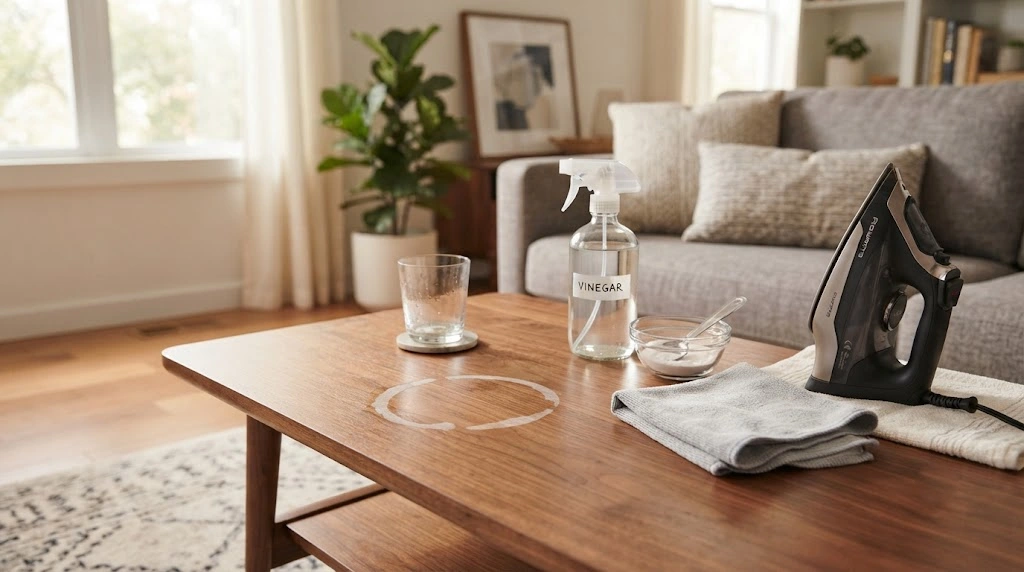
That pale, cloudy circle on your favorite wood table didn’t have to happen. Maybe it was a sweaty glass of iced tea left out too long, or a hot mug set down without a coaster. Either way, the damage is done — and now you’re staring at a stain that seems to shout “nobody uses coasters in this house.”
Here’s the good news: most ring stains on wood furniture can be fixed with things you already have in your kitchen cabinet. You don’t need to refinish the whole tabletop or call in a professional. With a little patience and the right technique, you can make that ring disappear — or at least fade so much you’ll stop noticing it.
In this guide, you’ll learn exactly how to remove ring stains from wood using three tried-and-true household methods: vinegar, baking soda, and a warm iron. We’ll also cover how to tell what kind of stain you’re dealing with, which method works best for each situation, and how to protect your furniture so this doesn’t happen again.
Why Ring Stains Happen in the First Place
Wood furniture is typically protected by a finish — varnish, lacquer, polyurethane, or oil — that sits on top of the raw wood. When moisture (from a cold glass, a hot mug, or a spilled drink) sits on that finish, it can seep into microscopic pores and get trapped beneath the surface. That trapped moisture scatters light differently than the surrounding finish, which is what creates the cloudy, whitish ring you see.
Not all ring stains are the same, though, and knowing the difference matters before you start scrubbing:
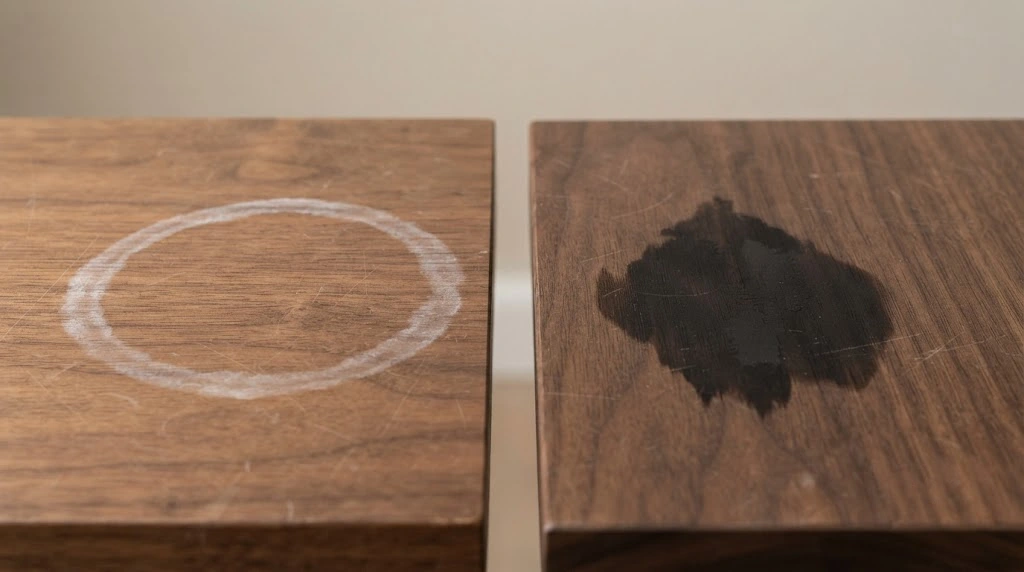
- White or cloudy rings mean moisture has only penetrated the finish, not the wood itself. These are the easiest to fix and respond well to the methods below.
- Dark or black rings mean moisture has broken through the finish and reached the actual wood, often causing it to stain or even start to rot. These require refinishing — sanding down the damaged area and reapplying stain and finish — rather than a quick fix.
If your stain is white or gray, keep reading. If it’s dark brown or black, the methods in this article won’t be enough, and you’ll likely need to strip and refinish that section of the piece.
Method 1: Removing Ring Stains with Vinegar
White vinegar is one of the simplest and most effective tools for lifting mineral deposits left behind by water. Because ring stains are often caused by mineral-rich moisture getting trapped in the finish, vinegar’s mild acidity helps dissolve those deposits and restore clarity to the wood.
What you’ll need:
- White distilled vinegar
- A soft cloth or rag
- Olive oil (for restoring shine afterward)
Steps:
- Pour a small amount of vinegar — a few tablespoons is plenty — directly onto the stain.
- Gently rub it into the wood with your fingertips or a soft cloth, using small circular motions.
- Let it sit for about a minute so the vinegar has time to break down the mineral buildup.
- Wipe away the excess with a clean, dry rag.
- If the area looks a little dull afterward, dab on a small amount of olive oil and buff it in. This helps blend the treated spot back into the surrounding finish and brings back the shine.
This method works best on lighter, cloudy stains and is a great first step to try before moving on to something more aggressive.
Method 2: Removing Ring Stains with Baking Soda
If vinegar alone doesn’t fully clear the stain, baking soda is a great next step. It’s mildly abrasive — fine enough not to scratch most finishes, but gritty enough to help lift stubborn residue that vinegar leaves behind.
What you’ll need:
- Baking soda
- Water
- A soft cloth
- Furniture polish
Steps:
- Mix baking soda and water in a 2-to-1 ratio (two parts baking soda to one part water) to form a thick paste.
- Apply the paste directly over the stain, covering it completely.
- Let it sit for several minutes so the mixture can work its way into the trapped moisture.
- Wipe away the excess paste, then gently rub the area with a soft cloth in small circles.
- Finish with a coat of furniture polish to blend the repaired area with the rest of the surface and restore its natural sheen.
Think of baking soda as a gentle, natural scouring agent — it’s abrasive enough to lift the stain without stripping the finish, as long as you’re not too rough with it.
Method 3: Removing Ring Stains with a Warm Iron
This method uses heat instead of chemicals to draw trapped moisture out of the finish. It tends to work especially well on oil-based or lacquer finishes, since heat helps re-melt and redistribute the finish slightly, closing the tiny pores where moisture got trapped.
What you’ll need:
- A clothing iron
- A cotton cloth or towel
- Olive oil (optional, for shine)
Steps:
- Set your iron to a medium heat setting — avoid steam or high heat, which can damage the wood.
- Lay a folded cotton cloth over the stained area.
- Press the iron onto the cloth for a few seconds at a time, checking frequently.
- Move the iron continuously and check the wood often to make sure the finish isn’t starting to bubble or melt.
- If the treated spot looks dull afterward, apply a light coat of olive oil to restore the shine.
Important: This technique isn’t recommended for water-based finishes, which can react poorly to direct heat. It works far better on furniture finished with oil-based varnish or lacquer. If you’re not sure what finish your furniture has, test the iron method on a hidden spot first, like the underside of the tabletop.
Bonus Methods Worth Trying
If the three classic methods above don’t fully do the job, a few other household items are worth a shot before you consider refinishing:
- Mayonnaise: The oils in mayonnaise can penetrate the finish similarly to olive oil. Spread a thick layer over the stain, let it sit overnight, then wipe clean in the morning.
- Non-gel toothpaste: Like baking soda, toothpaste has a mild abrasive quality. Rub a small dab into the stain with a soft cloth, then wipe away.
- A hair dryer: If you’re nervous about using a hot iron directly on your furniture, a hair dryer on its warmest setting held a few inches away can achieve a similar drying effect, just more slowly.
How to Prevent Ring Stains in the Future
Once you’ve put in the work to remove a stain, the last thing you want is a repeat. A few simple habits go a long way:
- Always use coasters under glasses, mugs, and cans — even ones that don’t look like they’re sweating.
- Use placemats or trivets under hot dishes and serving trays.
- Wipe up spills immediately rather than letting them sit.
- Apply a coat of furniture wax or polish every few months to keep the finish sealed and less porous.
- Consider a protective glass or acrylic tabletop cover for pieces that get heavy daily use.
Final Thoughts
A ring stain can look like a permanent mark on a piece of furniture you love, but in most cases, it’s a much smaller problem than it seems. Vinegar, baking soda, and a warm iron — three things almost every household already has — can lift the vast majority of white ring stains without any need for sanding, staining, or refinishing.
Start with the gentlest method (vinegar), work your way up to baking soda if needed, and save the iron for finishes that can handle heat. And once your furniture is looking good as new, a few coasters and a little regular polish will help make sure you never have to do this again.
