

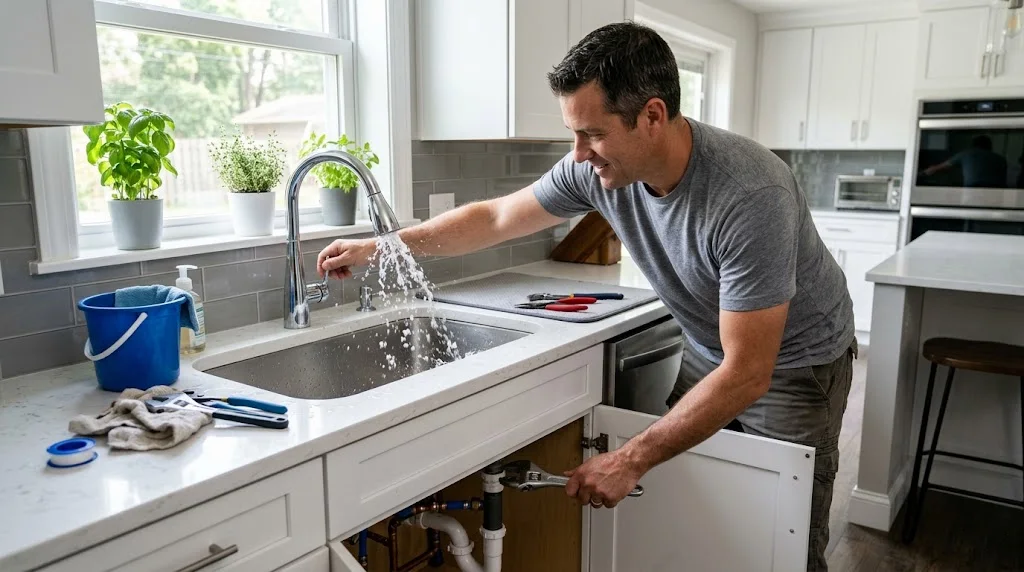
How to remove air in water pipes: Turn off your main water supply, then open all faucets from the highest floor to the lowest. Let them run until water flows steadily without spitting or sputtering. Close the faucets from lowest to highest. This flushes trapped air out of your plumbing system completely.
If you’ve ever turned on a faucet and heard a loud spitting sound — or watched water shoot out in short, uneven bursts — you already know how annoying air in water pipes can be. The good news is that learning how to remove air in water pipes is something most homeowners can handle on their own in under an hour. No special tools needed. No plumber required.
This guide walks you through exactly what causes the problem, how to identify it, and the best methods to fix it for good.
What Causes Air To Get Trapped in Water Pipes?
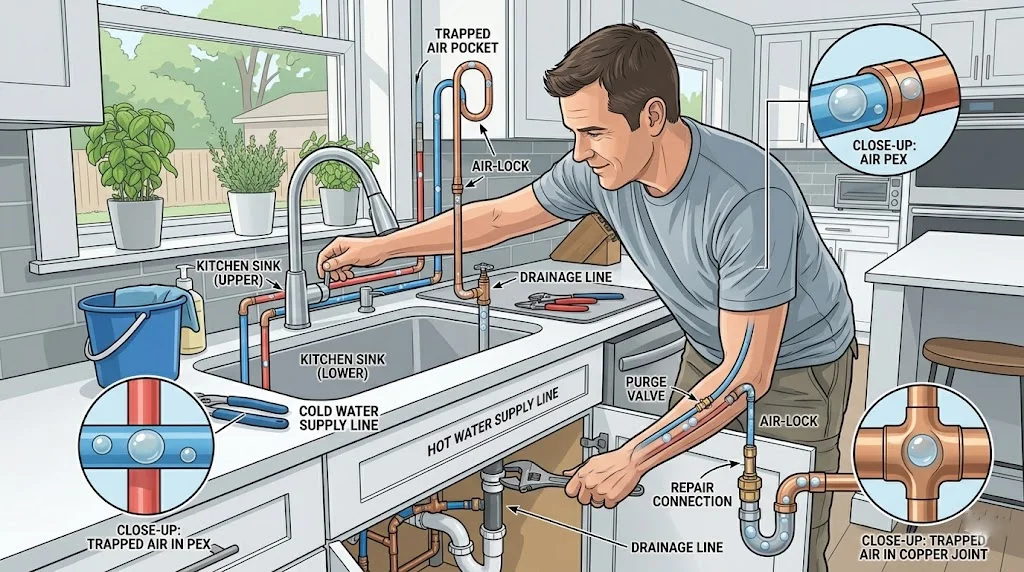
Air gets into your plumbing system in a few common ways, and knowing the source helps you prevent it from happening again.
The most frequent cause is a recent repair or maintenance job. Any time you shut off the main water supply and drain the pipes — to fix a leak, replace a fixture, or winterize your home — air rushes in to fill the empty space. When water is restored, that air gets pushed through the system but doesn’t always escape on its own.
A failing pressure tank in a well-water system is another culprit. When the air bladder inside the tank starts to lose pressure or fails entirely, air can mix directly into your water supply. If you’re on well water and you notice the problem happening repeatedly, the pressure tank is a good place to investigate.
Water heaters can also introduce air into the system, especially when they’re newly installed or haven’t been used for a while. Air pockets form inside the tank and travel through the hot water lines when you open a faucet.
Finally, a change in municipal water pressure — like work being done on local water mains — can occasionally push air into residential supply lines. This is usually temporary and fixes itself, but it still causes the same frustrating symptoms while it lasts.
Signs You Have Air in Your Water Pipes
You don’t need a pressure gauge or any professional equipment to spot this problem. Your pipes will tell you pretty clearly.
The most obvious sign is sputtering or spitting at the faucet. Water comes out in pulses or choppy bursts instead of a smooth, steady stream. You might also notice a hissing or gurgling sound coming from the pipes themselves, especially when you first open a tap.
Banging or knocking noises — sometimes called “water hammer” — can also point to air pockets, though water hammer has its own causes too. If the banging happens mostly when you turn a faucet on or off, air in the line is likely involved.
In some cases, the water pressure drops noticeably even though no fixtures are broken. Air interrupts the flow, making water delivery inconsistent across different parts of your home.
If any of this sounds familiar, you’re in the right place. Let’s fix it.
How To Remove Air in Water Pipes: Step-by-Step
This method works for most standard home plumbing systems connected to a municipal water supply. It’s sometimes called “bleeding the pipes,” and it’s the same approach plumbers use as a first step.
Step 1: Turn Off Your Main Water Supply
Find your home’s main shutoff valve — usually located near the water meter, in a utility room, basement, or crawl space. Turn it fully clockwise to close it. This stops water flow into your home.
Step 2: Open All Cold Water Faucets
Starting from the highest floor in your home and working down, open every cold water faucet. Include bathroom sinks, kitchen sinks, utility sinks, and any outdoor hose bibs. Leave them all open. Don’t forget to flush the toilets once to drain the water from the tank.
Step 3: Turn the Main Supply Back On Slowly
Go back to your main shutoff valve and open it very slowly — about a quarter turn at first. Water will start pushing through the system, and as it does, it carries air along with it toward the open faucets.
Step 4: Let the Faucets Run
Let water run from every open faucet until the flow becomes smooth and consistent. You’ll hear sputtering at first — that’s normal. It means air is escaping. Wait until the spitting stops and the stream is steady before moving on.
Step 5: Close Faucets Starting From the Lowest Floor
Once water is flowing cleanly, close the faucets starting from the lowest level of your home and working upward. This ensures any remaining air gets pushed up and out rather than getting trapped lower in the system.
Step 6: Open Your Main Valve Fully
After all faucets are closed, return to the main shutoff valve and open it completely. Check each faucet one more time to confirm steady flow.
This process takes about 20 to 30 minutes from start to finish, and it clears air from most residential plumbing systems without any tools or chemicals.
Removing Air From Hot Water Lines
Hot water lines need a slightly different approach because your water heater plays a role.
Start by turning off the water heater at the thermostat or breaker — never drain or flush a water heater while it’s running. Then follow the same faucet-opening method described above, but this time focus on hot water taps only.
Let the hot water faucets run until the flow smooths out. Because hot water lines are typically longer and involve more fittings, it may take a little more time than cold water lines.
Once the flow is steady, close the faucets and restore power to the water heater. Wait at least an hour before using hot water to let the tank reheat properly.
If your water heater itself is the source of the air, you may need to flush the tank. Attach a garden hose to the drain valve at the bottom of the tank, run the other end to a floor drain or outside, and open the valve to let sediment and trapped air escape with the water. This is a good maintenance step to do once a year anyway.
Fixing Air Problems in Well Water Systems
If your home draws water from a private well, air in the pipes usually points to an issue with the pressure tank or the well pump.
A pressure tank with a failed or undercharged bladder loses its ability to maintain steady water pressure. Air either escapes into the water line or the pump cycles so rapidly that it introduces air during each start-up. You’ll notice symptoms like surging pressure, rapid pump cycling, or water that sputters every few seconds.
Check the air pressure in your pressure tank using a tire pressure gauge on the Schrader valve (usually found near the top of the tank). The pressure should be about 2 PSI below your pump’s cut-in pressure. If it’s significantly lower, you may be able to recharge it with a bicycle pump. If the tank is waterlogged — meaning there’s no air left and the bladder has failed — the tank usually needs to be replaced.
It’s also worth checking that your well pump isn’t drawing air because of a drop in the water table, especially after a drought or heavy usage period. In that case, the pump may need to be lowered, or you may need to reduce water usage temporarily while the well recharges.
When To Call a Plumber
Bleeding the pipes is a DIY-friendly fix, but some situations call for professional help.
If you’ve gone through the full flushing process and the sputtering doesn’t improve, something else may be going on — a cracked pipe, a loose fitting, or a serious pressure issue that requires a pressure regulator. If you hear continuous banging in the walls after flushing the lines, water hammer arrestors may need to be installed.
Persistent air problems in a well system, especially with a pump that’s cycling too fast, can lead to pump motor burnout if left unaddressed. A well technician can diagnose pressure tank issues, check the pump, and ensure the entire system is working within safe limits.
Any time you see discolored water alongside the air symptoms, stop using the water and call a plumber or your utility company right away.
Preventing Air Buildup in the Future
Once you’ve cleared the air from your system, a few simple habits can keep it from coming back.
When you shut off your main water supply for any reason, always re-open it slowly when you restore service. A sudden rush of water creates turbulence that traps air more easily than a slow, steady refill. Open your faucets before you restore pressure to give any trapped air somewhere to escape.
Flush your water heater once a year to remove sediment and prevent air buildup inside the tank. If you have a pressure tank on a well system, check the air charge annually.
If your home is prone to water hammer — banging pipes when faucets close quickly — consider installing water hammer arrestors on washing machine connections and other high-pressure points. They’re inexpensive and easy to install.
Keeping your plumbing system in good shape overall is the best prevention. Regular inspections, prompt leak repairs, and annual maintenance go a long way toward a quiet, smoothly running water system.
Conclusion
Trapped air in your water pipes is a common, fixable problem. Once you understand why it happens, the solution is straightforward: open your faucets, let water push the air through, and close them again in order. For most homes, that’s all it takes.
If you’re dealing with a well-water system or a water heater issue, the fix involves a few extra steps, but it’s still well within DIY territory. Work through the steps in this guide, take your time, and your pipes should be running quietly and smoothly again in no time.
When in doubt, don’t hesitate to bring in a licensed plumber — but for most cases of sputtering faucets and gurgling pipes, you’ve got everything you need right here.
