

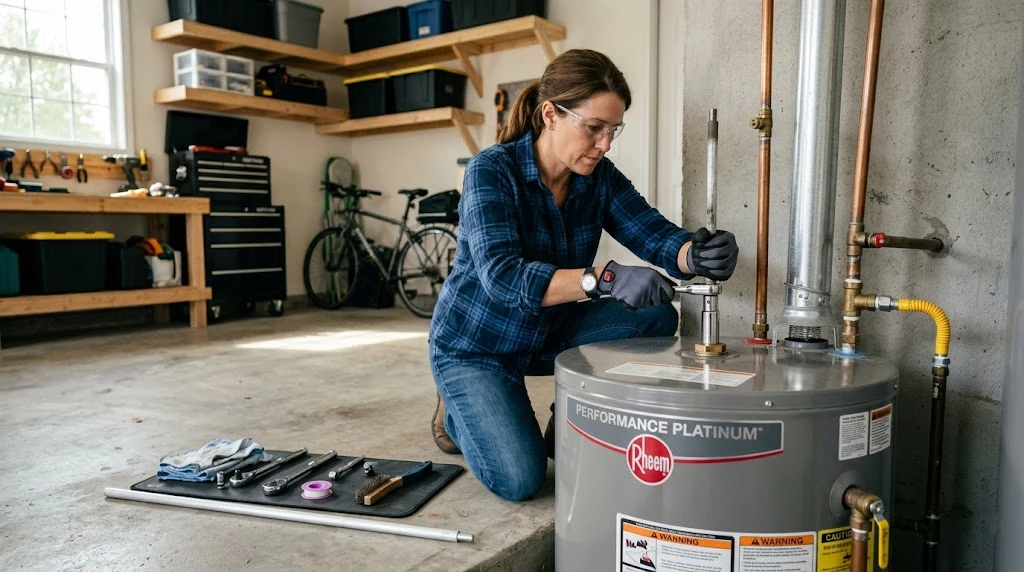
To change a water heater anode rod, shut off the power and water supply, drain a few gallons from the tank, locate the hex-head rod on top of the heater, unscrew it with a 1-1/16-inch socket, and install a new rod wrapped in Teflon tape. The whole job takes about an hour.
Your water heater works hard every day, but one small part inside it does a job most homeowners never think about. The anode rod quietly protects your tank from rusting out from the inside. Knowing how to change a water heater anode rod yourself can add years to your water heater’s life — and save you from a surprise $1,000+ tank replacement.
This guide walks you through the entire process, from gathering tools to turning the water back on, with no plumbing experience required.
What Is a Water Heater Anode Rod and Why Does It Matter?
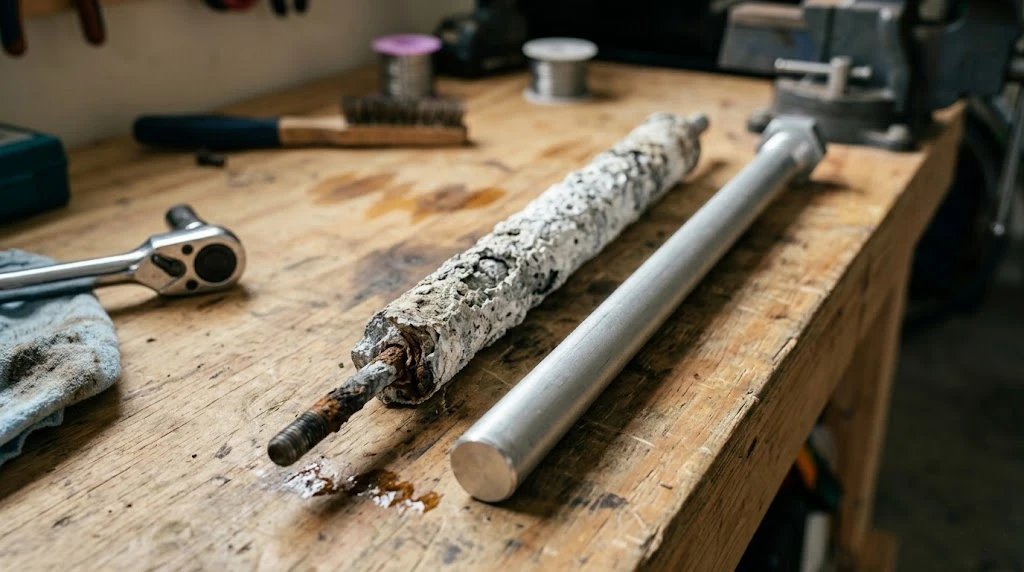
Most water heater tanks are steel with a thin glass lining to protect the metal from corrosion. Since the lining eventually cracks, tanks have a second line of defense against rust: the anode rod.
The anode rod is a long metal rod typically made of magnesium, aluminum, or zinc. It’s inserted into the water heater tank and acts as a sacrificial element, attracting corrosive elements in the water that would otherwise attack the tank’s steel lining.
In plain terms, the rod corrodes so your tank doesn’t have to. Once it’s fully eaten away, the tank itself starts to rust — and that’s when expensive problems begin. Replacing the anode rod before it fails can slow down corrosion inside the tank and significantly extend the life of the water heater, sometimes even doubling it.
How Often Should You Replace the Anode Rod?
The frequency can range anywhere from six months to six years depending on the composition of your water. If you have a water softener or particularly hard water, your anode will deteriorate more quickly. As a rule of thumb, replacing the anode every two to four years is a reasonable target.
If you live in an area with high water hardness, you’ll want to do this more often. And if you’ve just moved into a home, it’s worth finding out when the water heater was last serviced before assuming the rod is fine.
Check the manufacturer instructions for maintenance guidelines for your water heater and anode rod. In some cases, manufacturers require replacement at specific intervals to maintain water heater warranty validity. Skipping this can void your coverage entirely.
Signs Your Anode Rod Needs Replacing
You don’t always need to pull the rod out to know something’s wrong. Your water heater will usually give you a few clear signals first.
A distinctive rotten egg smell when you run hot water is a common sign of a failing anode rod. This smell often results from the rod’s deterioration, which triggers a reaction between the tank’s bacteria and the water supply. To rid your water heater of the rotten egg smell long-term, switch out your aluminum or magnesium anode rod with a zinc-aluminum anode rod, which has enough zinc to combat the bacteria causing the odor.
Other common indicators include rusty or discolored water, unusual noises from the water heater, reduced hot water efficiency, and a metallic taste in the water.
An annual inspection is the only way to see how fast the rod is actually wearing out in your specific water. Hard water makes the rod corrode much faster. A quick yearly check is far cheaper than replacing the whole tank.
What You Need Before You Start
Getting the right tools together before you begin saves time and frustration. Here’s what you’ll need:
A ratchet wrench with a 1-1/16-inch deep socket is the most important tool. If the hex head is set below the top of the heater, you’ll need a 1-1/16-inch socket to reach it. You’ll also need Teflon thread-seal tape, a garden hose, a bucket, and your replacement anode rod.
Choosing the right anode rod matters — magnesium rods are generally used in areas with softer water, while aluminum rods are better suited for hard water areas. Pick up your replacement rod at any hardware store for $20–$50.
If you have less than 44 inches of clearance above your water heater, you’ll need a flexible or segmented anode rod. These bend or come in connected sections, so you can feed them in without needing a lot of overhead room.
How To Change a Water Heater Anode Rod: Step-by-Step
Step 1: Shut Off Power and Water
Safety first. For gas water heaters, turn the gas off or set the control valve to the vacation setting. For electric water heaters, switch off the circuit breaker. Then close the cold-water supply valve at the top of the tank.
Step 2: Open a Hot Water Faucet
Go to the nearest sink or tub and open a hot water tap. This breaks the vacuum in the piping and allows water to flow freely from the drain cock without sputtering or stalling. Leave this faucet open throughout the draining process.
Step 3: Drain Part of the Tank
Close the shutoff valve, turn on the hot water at a faucet to relieve pressure, and open the drain valve near the bottom of the tank to drain out several gallons of water. You don’t need to fully empty the tank — just enough to drop the water level below the anode rod port.
Step 4: Locate the Anode Rod
In many electric and gas water heaters, the anode rod is located at the top of the tank, often hidden beneath a cap. Remove any insulation cover if your model has one. You’ll see a hexagonal bolt head — that’s what you’ll be turning.
Step 5: Remove the Old Rod
This step is where most people hit a snag. Chances are your old anode rod will be frozen in place by corrosion. To loosen the rod, douse the head with a spray lubricant such as WD-40 and give it a few minutes to penetrate. You may also have to slip a “cheater” pipe over the wrench handle to increase your torque.
Turn the socket counterclockwise. Once it breaks free, unscrew it fully and pull the rod straight up and out of the tank. The rod may be as long as 44 inches, so tilt it slightly as you lift.
Inspect what you pull out. If it’s less than half an inch thick or shows bare wire at the core, it was well past due for replacement.
Step 6: Install the New Anode Rod
Wrap Teflon tape around the threads of the new anode rod, insert it into the water heater, and tighten with the 1-1/16-inch socket. Snug it down firmly but don’t overtighten — you don’t want to crack the tank fitting.
If you’re using a flexible or segmented rod, feed it in section by section and connect the pieces inside the tank.
Step 7: Restore Water and Power
Close the drain valve and remove the garden hose. Slowly reopen the cold-water supply valve and let the tank refill. Keep the hot water faucet you opened earlier running until water flows steadily without air sputtering out — that means the tank is full. Then close the faucet.
For gas heaters, restore the gas supply and relight the pilot if needed. For electric heaters, flip the breaker back on. Give the water heater an hour to heat up before testing.
Choosing the Right Replacement Rod
Not every anode rod is the same, and picking the wrong type for your water supply can mean replacing it sooner than necessary — or not solving your odor problem at all.
Magnesium rods offer the strongest protection in soft water areas and are a solid first choice if you’ve never replaced your rod before. Aluminum rods hold up better in hard water and tend to last longer under those conditions. Zinc-aluminum alloy rods are the best pick if you’re dealing with that rotten egg smell, as the zinc content kills the sulfur-producing bacteria.
A powered anode rod is another option — installation is often as easy as removing the old sacrificial rod, inserting the new powered rod, and plugging it in. Powered rods use a small electrical current to prevent corrosion rather than corroding themselves, which means they never need replacing. They cost more upfront — typically $150–$200 — but eliminate the ongoing maintenance cycle.
When To Call a Plumber Instead
Most homeowners can handle this job with basic tools and a free afternoon. But there are a few situations where calling a professional makes more sense.
If the anode rod is completely seized and won’t budge even with a cheater bar, forcing it risks cracking the tank fitting — a much bigger problem than a stuck rod. A plumber with an impact wrench and experience with seized fittings can get it out safely.
You should also call a plumber if you notice significant corrosion around the rod port, if the tank itself shows rust or pitting, or if your water heater is already 10–12 years old. At that age, a modest $30 to $400 repair is far better than facing a $3,000 to $12,000 disaster involving tank replacement and water damage repairs — but it may also be worth weighing whether the tank has enough life left to justify the work.
Changing a water heater anode rod is one of the most cost-effective maintenance tasks you can do as a homeowner. A $20–$50 part and an hour of your time can tack years onto the life of a tank that costs $800–$1,500 to replace. Check yours every one to two years, replace it when it’s worn down, and your water heater will reward you with reliable hot water for far longer than it would without the attention.
Also Read : How Much Does Sump Pump Installation Cost in 2026?
