

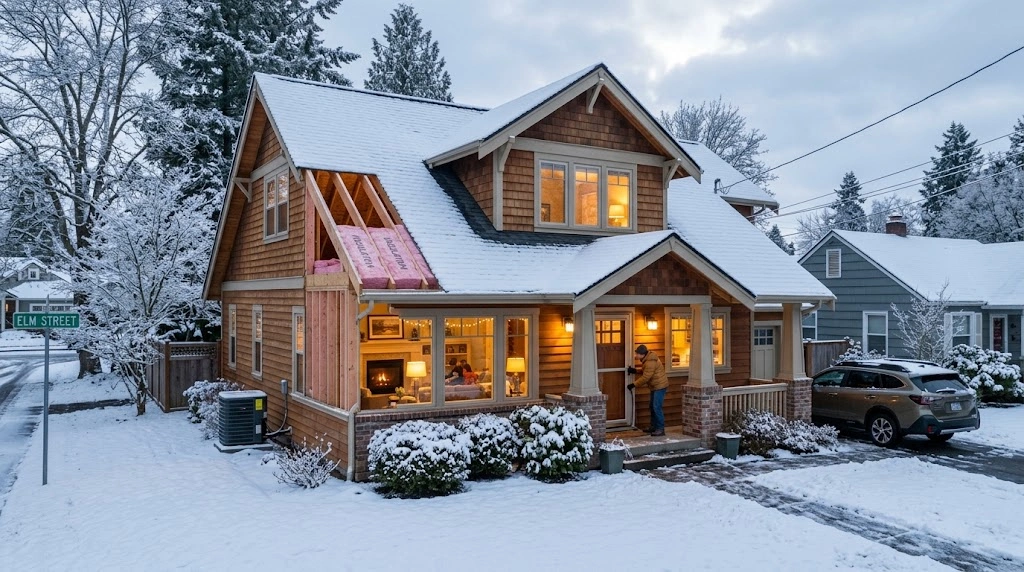
As winter temperatures drop, heating becomes one of the largest ongoing expenses for homeowners. According to energy department estimates, the average household spends over 40% of its annual energy budget on space heating alone. Much of this expensive heat escapes through uninsulated attics, drafty doors and windows, unsealed ductwork, and cold exterior wall gaps—forcing furnaces and heat pumps to run continuously just to maintain comfortable indoor temperatures.
Winterizing your home is not just about staying warm; it is a high-return investment that protects your property from costly winter damages like frozen burst pipes, roof ice dams, and moisture condensation mold, while reducing monthly utility bills by up to 25–30%.
In this exhaustive 2500+ word DIY master guide, you will learn how to conduct a home draft audit, seal air leaks around doors and windows, insulate attics and exposed water pipes, tune up your heating system, prevent ice dams, and adopt simple energy-saving habits that cut heating costs without sacrificing comfort.
Step 1: Conduct a Comprehensive Home Draft Audit
Before spending money on insulation or weatherstripping, pinpoint exactly where cold outdoor air is entering your home.
1. The Incense Stick Draft Test
On a windy day, close all exterior doors and windows. Turn on exhaust fans in the kitchen and bathrooms to lower interior air pressure slightly. Light an incense stick or candle and hold it near window sashes, doorframes, baseboards, electrical outlets, and attic hatches. If the smoke blows horizontally or flickers wildly, you have discovered an active air leak.
2. Major Air Leak Hotspots
- Windows & Exterior Doors: Gaps around movable window sashes and door bottoms.
- Attic Hatches & Pull-Down Stairs: Uninsulated access panels opening into unconditioned attic spaces.
- Electrical Wall Outlets: Gaps behind faceplates on exterior walls.
- Utility Pipe Penetrations: Openings where plumbing, gas lines, or outdoor AC lines pass through exterior walls.
- Basement Rim Joists: Spaces where wooden floor joists rest on top of foundation walls.
Step 2: Seal Windows and Exterior Doors Against Drafts
Windows and doors account for nearly 30–40% of total residential heat loss.
1. Install Heavy-Duty Door Weatherstripping and Sweeps
- V-Strip & Foam Weatherstripping: Apply self-adhesive EPDM rubber or foam weatherstripping along door frame jambs to create a tight pressure seal when doors latch shut.
- Adjustable Door Sweeps: Screw a heavy-duty aluminum and rubber door sweep onto the bottom inside face of exterior doors to eliminate the gap above thresholds.
2. Seal Window Perimeter Gaps
- Rope Caulk & Removable Weather-Sealing Caulk: Apply removable clear caulk along drafty window sash joints. It seals air leaks tightly all winter and peels off cleanly in spring.
- Apply DIY Window Shrink Film Kits: Cover drafty single-pane windows with clear heat-shrink plastic insulation film (like 3M Window Insulator Kits). Apply double-sided tape along the window trim, press the film sheet into place, and shrink it tight using a household hairdryer. This creates an insulating dead-air thermal barrier that stops cold glass radiance.
Step 3: Insulate Attics, Basement Joists, and Water Pipes
Proper thermal insulation holds warmth inside living spaces like a heavy winter jacket.
1. Upgrade Attic Insulation Depth
Heat naturally rises. Uninsulated or under-insulated attics allow indoor warmth to radiate directly out through roof decking.
- Target R-Value: Building standards recommend an attic insulation depth of R-38 to R-60 (roughly 12 to 18 inches of blown cellulose or fiberglass batts).
- Seal the Attic Hatch: Glue a 2-inch thick rigid foam board onto the back of your attic access hatch door and apply foam weatherstripping along its rim.
2. Insulate Basement Rim Joists
Cold wind easily penetrates uninsulated wooden rim joists along basement perimeters. Cut pieces of 2-inch rigid extruded polystyrene (XPS) foam board to fit into rim joist pockets, and seal perimeter edges with expanding spray foam sealant (such as Great Stuff).
3. Protect Water Pipes Against Freezing
Frozen water pipes expand and burst, causing thousands of dollars in indoor flood damage.
- Install Foam Pipe Sleeves: Snap pre-slit polyethylene foam pipe insulation tubes over all exposed hot and cold water pipes running through unheated basements, crawlspaces, garages, or exterior wall cavities.
- Disconnect Outdoor Hoses: Drain and disconnect all outdoor garden hoses from exterior spigots before freezing temperatures hit. Install insulated foam faucet covers over outdoor hose bibbs to prevent freeze backup.
Step 4: Maximize Heating System Efficiency
Tuning up your central heating unit ensures maximum heat output with minimum fuel consumption.
1. Replace Furnace Filters
Clogged air filters restrict air circulation across furnace heat exchangers, causing the unit to overheat, cycle off prematurely, and consume extra fuel. Replace furnace filters every 30 to 60 days throughout the winter season.
2. Reverse Ceiling Fan Rotation (Clockwise Direction)
Ceiling fans are not just for summer cooling. Flip the direction switch on fan motor housings so fan blades rotate clockwise at low speed. This creates a subtle updraft that pulls cool air upward, forcing warm air that naturally traps near high ceilings down along walls into living areas (“destratification”).
3. Bleed Hot Water Radiators (For Boiler Systems)
If you have hot water radiator heating, trapped air pockets prevent hot water from filling the entire radiator casing, leaving top sections cold. Insert a radiator key into the bleed valve at the top of each unit, turn counterclockwise until trapped air stops hissing and water trickles out, then tighten shut.
Step 5: Prevent Roof Ice Dams and Moisture Control
Ice dams form when heavy snow on roofs melts over warm attic spots, runs down to cold eave overhangs, and freezes into thick ice ridges. Trapped meltwater backs up under roof shingles, leaking directly into ceiling drywall.
Prevention Steps:
- Seal Air Leaks into the Attic: Prevent warm indoor air from leaking into the attic space using spray foam around recessed ceiling lights, vent stacks, and chimney flues.
- Maintain Unobstructed Attic Ventilation: Ensure soffit vents and ridge vents remain clear of insulation batts so cold outdoor air flows continuously beneath roof decking, keeping the roof surface uniformly cold.
- Clean Rain Gutters in Autumn: Remove fallen leaves and twigs from gutters before winter so melting snow drains freely without overflowing and freezing into heavy icicles.
Step 6: Smart Thermostat Strategies for Maximum Savings
Managing indoor temperature schedules prevents wasting money heating empty rooms.
- Set Back Temperatures at Night: Lower your thermostat to 68°F (20°C) when family members are awake, and dial back to 60°F to 62°F (15°C–16°C) during sleep hours or when everyone is away at work.
- Install a Programmable / Smart Thermostat: Smart thermostats (like Nest or Ecobee) adjust temperatures automatically based on your daily routine, cutting heating bills by up to 10–12% annually without manual intervention.
Quick Reference Summary Checklist
- Perform an incense stick draft audit to identify air leaks.
- Seal drafty doors with EPDM rubber weatherstripping and door sweeps.
- Cover single-pane windows with heat-shrink insulation plastic film.
- Insulate exposed water pipes with foam sleeves and cover outdoor spigots.
- Set ceiling fans to run clockwise at low speed to push trapped heat downward.
- Keep attic depths insulated to R-38 to R-60 and seal basement rim joists with spray foam.
- Install a smart thermostat to automatically drop overnight temperatures.
Final Thoughts
Winterizing your home is a simple, cost-effective weekend DIY project that delivers immediate dividends in energy savings, indoor warmth, and structural protection against severe winter weather. By systematically sealing air gaps, insulating exposed plumbing and attics, tuning your heating equipment, and using smart thermostat scheduling, you can enjoy a cozy, comfortable home while keeping winter heating bills as low as possible.
