

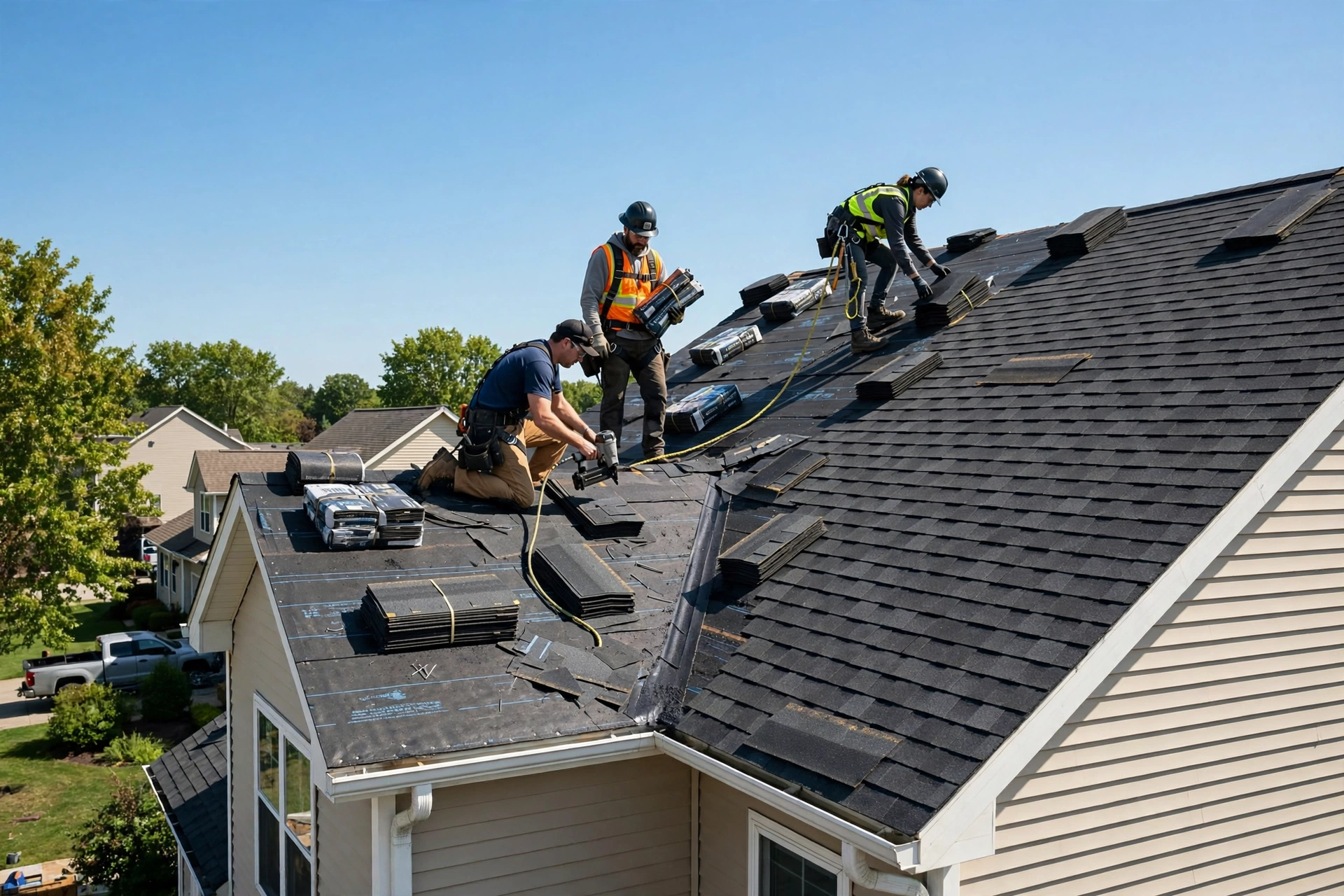
How Much Does a Roof Replacement Cost in 2026?
A roof replacement is one of the biggest investments you’ll ever make in your home — and one of the most important. Nationally, a full roof replacement in 2026 typically runs $8,000 to $25,000 for an average single-family home, with most homeowners paying around $12,000–$15,000. But that range swings wildly based on material, roof size, and where you live. This guide breaks down exactly where the money goes so you can budget with confidence.
Average Roof Replacement Cost by Material
Material choice is the single biggest cost driver:
- Asphalt shingles: $8,000–$15,000. The most popular choice in America — affordable, decent lifespan (20–30 years), and quick to install. Architectural shingles cost more than basic 3-tab but last longer and look far better.
- Metal roofing: $15,000–$35,000. Standing-seam metal costs 2–3x asphalt upfront but lasts 40–70 years, reflects heat (lowering cooling bills), and handles snow and wind exceptionally well.
- Clay or concrete tile: $20,000–$45,000. Beautiful and extremely durable (50+ years), but heavy — many homes need structural reinforcement, which adds cost.
- Wood shakes: $15,000–$30,000. Natural look, 30-year lifespan, but higher maintenance and fire concerns in some regions.
- Slate: $25,000–$50,000+. The premium option — a slate roof can last a century, but the material and specialized labor are expensive.
What Else Drives the Price?
- Roof size and complexity. Roofers price by “square” (100 sq ft). A simple gable roof is cheapest; multiple valleys, dormers, and steep pitches add labor hours fast. Anything steeper than a 6:12 pitch typically carries a surcharge.
- Tear-off vs. overlay. Removing the old roof adds $1,000–$3,000 but lets the contractor inspect the decking. Overlaying new shingles over old ones is cheaper but hides problems and shortens the new roof’s life.
- Decking repairs. Rotten plywood discovered during tear-off runs $2–$5 per square foot to replace. Budget a contingency for this.
- Location. Labor rates vary enormously — expect to pay 30–50% more in high-cost metro areas than in rural regions.
- Permits and disposal. Most municipalities require a roofing permit ($150–$500), and dumpster/disposal fees add a few hundred more.
Repair vs. Replace: How to Decide
Don’t replace a roof that just needs repairs. Repair when: the roof is under 15 years old, damage is localized (a few missing shingles, one leaking vent pipe flashing), and the decking is solid. Replace when: the roof is past 20–25 years, you’re seeing widespread curling/cracking/missing shingles, there are multiple leaks, or daylight is visible through the boards in the attic.
Small, contained problems like a leaking flat-roof section can often be patched for a few hundred dollars — a full replacement would be overkill.
Choosing a Contractor (Where Most People Go Wrong)
- Get at least three written estimates — and be suspicious of any bid dramatically lower than the others.
- Verify license and insurance yourself; don’t take their word for it.
- Ask for local references from the last 1–2 years and actually call them.
- Make sure the quote specifies the exact shingle brand and model, underlayment type, and warranty terms (manufacturer warranty vs. workmanship warranty are different things).
- Never pay the full amount upfront — a typical schedule is a deposit, a mid-project payment, and the balance on completion.
Timing and Maintenance Tips
Late summer through fall is the ideal window in most climates — and a good time for a pre-winter roof inspection to catch problems before snow and ice exploit them. After installation, keep gutters clean, trim overhanging branches, and have the roof inspected every few years. A little maintenance easily adds years to any roof’s life.
The Bottom Line
Budget $12,000–$15,000 for a quality asphalt shingle replacement on an average home, more for premium materials or complex roofs. Get multiple quotes, don’t cheap out on underlayment and flashing (the parts that actually keep water out), and remember: the cheapest bid is rarely the cheapest roof in the long run.
