

Your Gutters Are Quietly Protecting Your Whole House
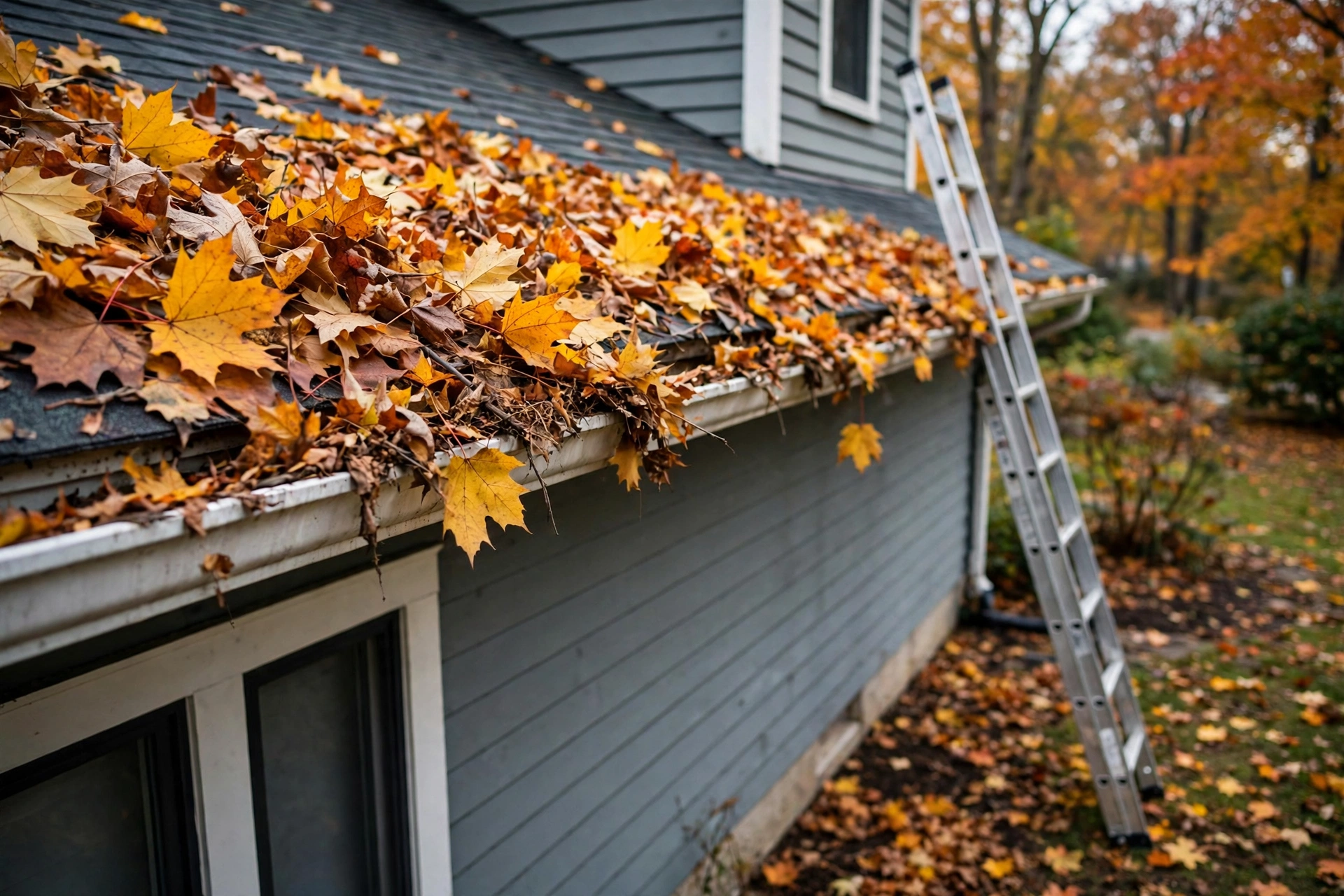
Gutters are the most ignored part of most homes — until they fail. Their job is simple but critical: catch the hundreds of gallons of water pouring off your roof in a storm and carry it safely away from your foundation. When gutters clog, that water overflows where it shouldn’t: behind siding, into the basement, pooling around the foundation, and in winter, freezing into the destructive ice ridges called ice dams. Cleaning them twice a year takes a few hours and prevents thousands in damage. With leaves falling now, there’s no better time.
Signs Your Gutters Need Attention Now
- Water spills over the sides during rain instead of flowing to downspouts
- You see plants or grass growing in the gutter channel
- Gutters sag, pull away from the fascia, or tilt
- Water stains on siding beneath the gutters
- Basement dampness or pooling water near the foundation after storms
- Birds, squirrels, or insects nesting in the gutters
- It’s been more than 6 months since the last cleaning (especially under trees)
Ladder Safety First (Read This Before Climbing)
More than 160,000 Americans end up in emergency rooms from ladder falls each year. Gutter cleaning is safe if you respect the ladder:
- Use a sturdy extension ladder on firm, level ground — never on soft soil or uneven pavers without leg levelers.
- Follow the 4-to-1 rule: for every 4 feet of height, the base sits 1 foot from the wall.
- Extend the ladder 3 feet above the gutter line and secure the top if possible.
- Never stand on the top two rungs; keep your belt buckle between the rails (don’t overreach — move the ladder instead).
- Wear gloves (gutter debris hides sharp metal and nails), non-slip shoes, and eye protection.
- Have someone footing the ladder if possible, and never work in wind, rain, or near power lines.
- If heights aren’t your thing, hire it out — pro gutter cleaning runs $150–$300 and is money well spent.
What You’ll Need
- Sturdy extension ladder
- Work gloves, eye protection, dust mask
- Gutter scoop or small garden trowel (a plastic scoop won’t scratch)
- Bucket with a handle (hang it from the ladder) or a tarp on the ground
- Garden hose with spray nozzle
- Plumber’s snake or pressure washer attachment for downspouts
- Caulk gun with gutter sealant for minor repairs
Step 1: Scoop Out the Debris
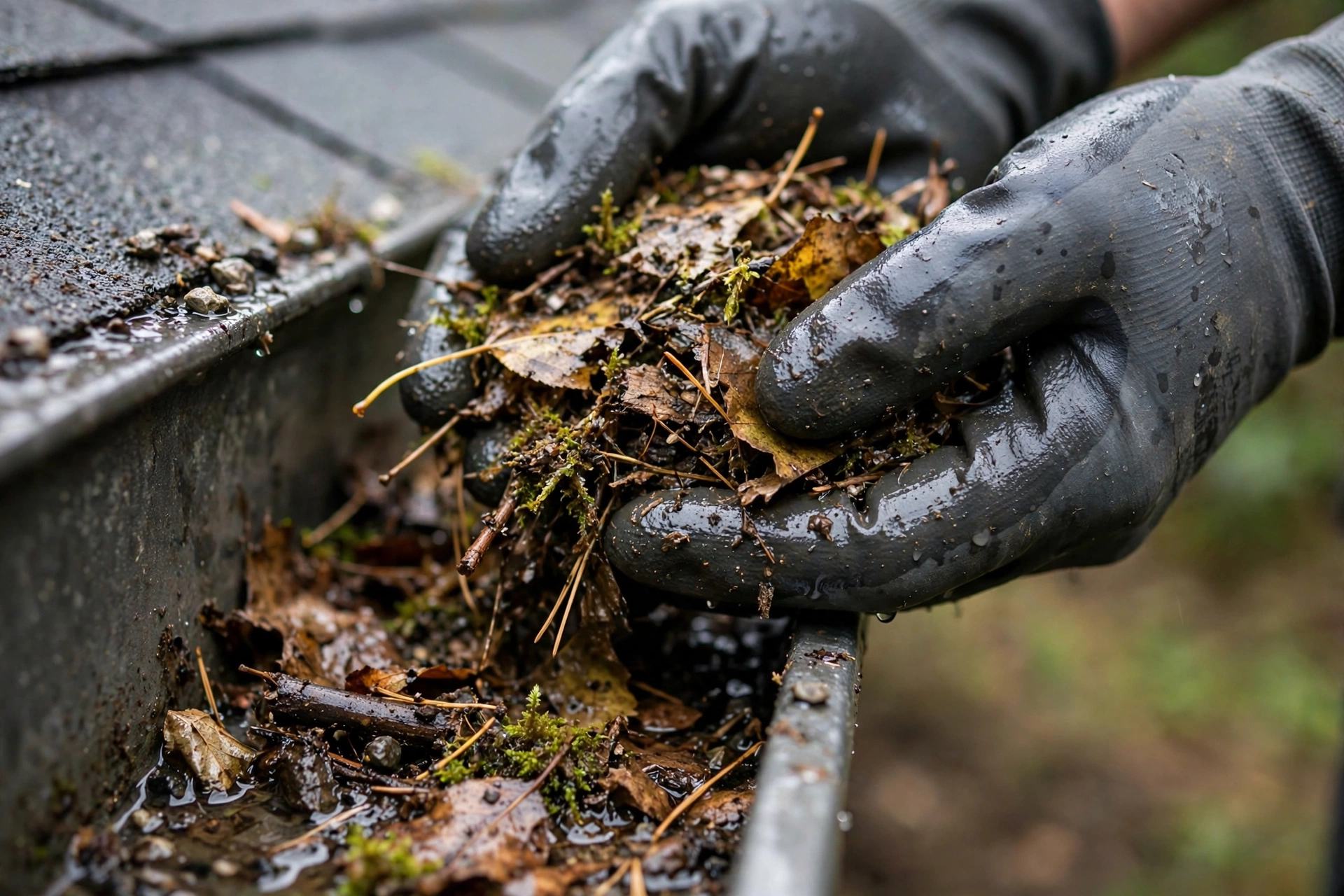
Start near a downspout and work away from it. Scoop leaves, twigs, and the decomposed muck underneath into your bucket — that black sludge is what really blocks water flow. Don’t push debris toward the downspout; you’ll just pack the clog tighter. For long runs, reposition the ladder every few feet rather than stretching.
Step 2: Flush With the Hose
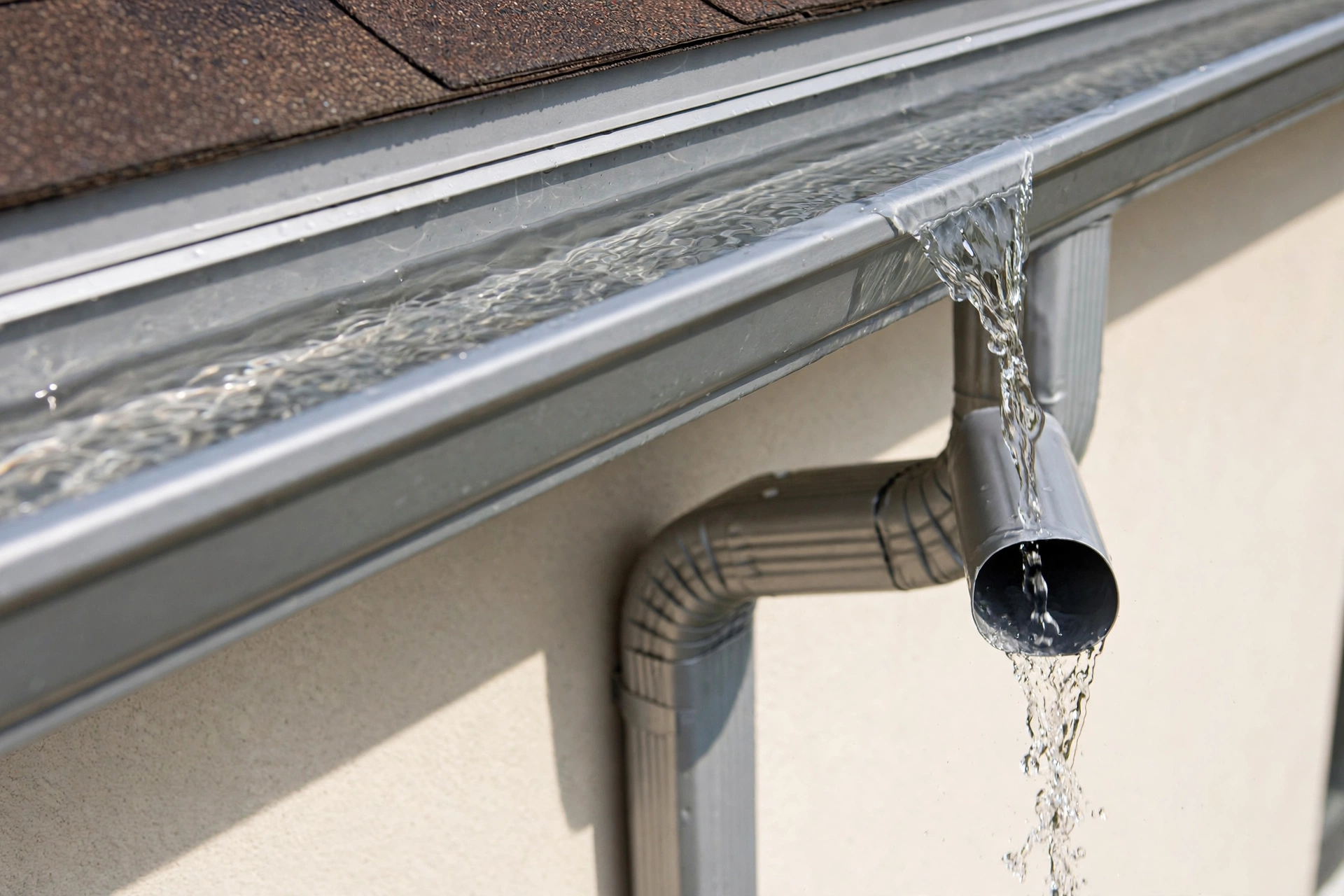
Once the big debris is out, flush the gutter toward the downspout with the hose on full pressure. Watch the flow: water should run freely and exit the downspout bottom in a strong stream. Weak flow means a clog downstream. This flush also reveals leaks — mark any dripping joints with tape for repair after everything dries.
Step 3: Unclog the Downspouts
Downspout clogs usually sit at the top elbow or the bottom shoe:
- Try blasting upward from the bottom with the hose nozzle — water pressure often dislodges the clog.
- If that fails, feed a plumber’s snake down from the top.
- For stubborn clogs, disconnect the downspout sections (most unscrew or unclip) and clear them on the ground.
- Reattach and flush again to confirm free flow.
Check that downspout extensions carry water at least 4–6 feet from the foundation. Extensions that dump water right at the house wall defeat the entire purpose of gutters.
Step 4: Inspect and Repair
While you’re up there, look for:
- Leaking joints: clean, dry, and reseal with gutter sealant (not regular caulk).
- Sagging sections: tighten or replace hangers — gutters should slope about 1/4 inch per 10 feet toward downspouts.
- Rust spots: sand, prime, and paint; extensive rust means that section needs replacing.
- Fascia damage: soft or rotted wood behind the gutter needs repair before rehanging.
- Missing end caps or loose screws: cheap fixes — do them now.
Gutter Guards: Are They Worth It?
Gutter guards (mesh screens, micro-mesh, or solid covers) reduce how often you clean — they don’t eliminate it. Honest assessment:
- Pros: block most leaves and large debris; cut cleaning frequency roughly in half; help in heavily wooded lots.
- Cons: $7–$12+ per linear foot professionally installed ($1,500–$2,500+ for an average home); fine debris and shingle grit still get through; some designs worsen ice dams in cold climates.
- Verdict: worth considering if you have big trees overhanging the roof; skip if your gutters are easily accessible and you don’t mind twice-yearly cleaning.
How Often? The Seasonal Schedule
- Late fall (now): the big one — clear fallen leaves before winter. Clogged gutters + freezing temperatures = ice dams.
- Late spring: clear seed pods, blossoms, and winter debris; check for damage from ice and snow.
- After major storms: quick visual check for clogs and detached sections.
- Heavily wooded lots: add a mid-summer check.
The Ice Dam Connection
This deserves emphasis heading into winter: clogged gutters are a leading contributor to ice dams. When meltwater can’t drain, it pools, refreezes at the eaves, and backs up under shingles — causing leaks, damaged insulation, and stained ceilings. Clean gutters are your first line of defense; proper attic insulation and ventilation are the second. See our ice dam prevention guide and attic insulation guide for the full winter-protection picture — and if your roof itself is aging, our 2026 roof replacement cost guide helps you budget ahead.
Gutter Materials Compared
If replacement is on the table, here’s how materials stack up:
- Vinyl ($4–$8/ft installed): cheapest, DIY-friendly, never rusts — but becomes brittle in cold climates and sags in heat. Lifespan 10–20 years.
- Aluminum ($8–$12/ft): the standard. Lightweight, rust-proof, seamless options, 20–30 year lifespan. Dents from ladders and hail.
- Steel ($10–$18/ft): strongest, handles heavy snow loads — but can rust if the coating chips. 20+ years with maintenance.
- Copper ($20–$35/ft): beautiful, lasts 50+ years, develops an elegant patina. The luxury choice — priced accordingly.
- Zinc ($15–$25/ft): long-lived European favorite, self-healing patina, but limited installer availability in the US.
For most homes, seamless aluminum is the sweet spot of cost, durability, and appearance.
Where Should Downspouts Really Drain?
Cleaning means nothing if water dumps at your foundation. Ideal drainage:
- Extensions carry water 4–6 feet minimum from the foundation — 10 feet is better.
- Grade the soil so it slopes away from the house (6 inches of fall over the first 10 feet).
- For problem areas, bury solid (not perforated) drain pipe to carry water to a daylight outlet or dry well.
- Never connect downspouts to foundation drain tile — it overloads the system.
- In freezing climates, ensure buried outlets drain fully — trapped water freezes and backs up.
When to Replace Instead of Repair
Clean and repair as long as the system is sound, but consider replacement if: gutters are 20+ years old with widespread rust or cracks, sections repeatedly pull away from the fascia (the wood may be fine — the hangers and gutters are just worn out), you see standing water from improper slope that rehanging can’t fix, or you’re already doing fascia/roof work and it’s cheap to bundle. Seamless aluminum gutters ($8–$12/ft installed) are the standard upgrade — fewer joints means fewer leaks.
Winterizing Your Gutters: The Fall Checklist
Since you’re up there anyway, finish the job for winter:
- Confirm every downspout flows freely — frozen clogs become ice dams.
- Check that all hangers are tight; snow load will exploit any weakness.
- Trim back branches overhanging the roof — winter storms drop them into gutters.
- Make sure extensions are reattached after cleaning (they’re often left off).
- Consider heat cables only as a last resort for chronic ice dam spots — they treat the symptom; insulation and ventilation cure the disease.
Hiring a Pro: What to Expect
Professional gutter cleaning typically costs $150–$300 for a single-story home and $250–$450 for two stories. A good service includes: full debris removal, downspout flushing, basic re-securing of loose hangers, and a written note of any repairs needed. Get quotes from 2–3 companies, confirm they’re insured (ladder work + your roof = you want their liability coverage, not yours), and ask whether minor repairs are included or extra. The best time to book is early fall — before the rush, when schedules are open and prices are normal.
The Bottom Line
Twice a year, a ladder, a scoop, and a hose. That’s the entire maintenance program standing between your home and thousands in water damage. Do the fall cleaning now — your foundation, basement, and roof will thank you all winter.
