

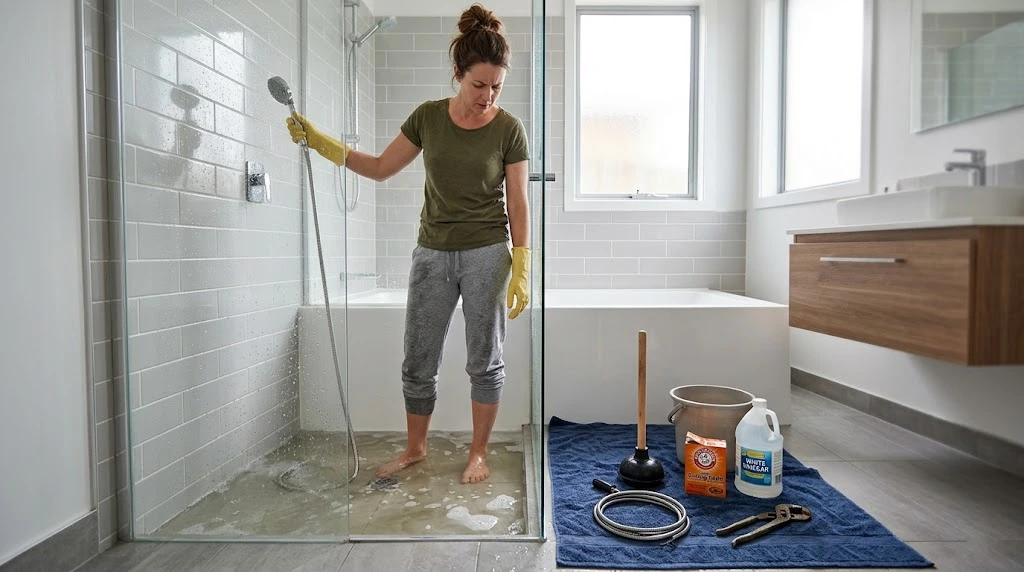
How To Fix a Slow-Draining Tub Remove the drain cover and clear visible hair by hand. Pour boiling water down the drain to dissolve soap scum. If that doesn’t work, use ½ cup baking soda followed by ½ cup white vinegar, wait 10 minutes, then flush with hot water. For stubborn clogs, use a plunger or drain snake.
Standing in ankle-deep water while you shower is nobody’s idea of a good time. If your bathtub is draining slowly, you’re dealing with one of the most common household plumbing problems — and the good news is that you can almost always fix it yourself without calling a plumber.
To fix a slow-draining tub, start by removing the drain stopper and clearing out any visible hair or debris. Then work your way through a few simple methods: boiling water, baking soda and vinegar, a plunger, or a drain snake. Most clogs clear up quickly with one of these approaches.
Why Your Tub Is Draining Slowly
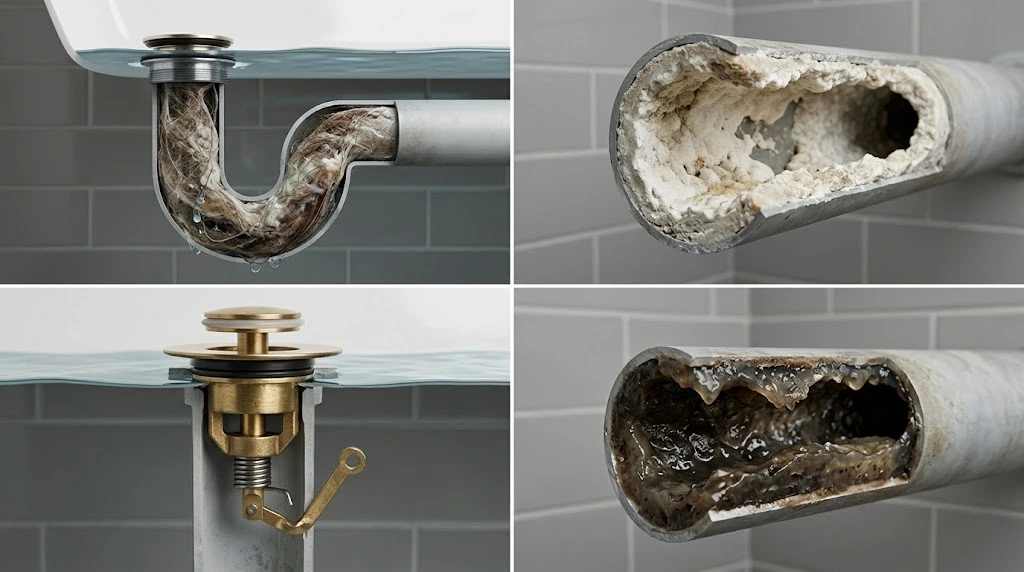
Before you start fixing the problem, it helps to know what’s causing it. Most slow tub drains share the same handful of culprits.
Hair is the number one offender. Every time you shower or bathe, hair sheds and goes down the drain. Over time, it mixes with soap scum and other residues, forming blockages that slow down water flow. You might not notice it happening, but those strands build up faster than you’d think.
Soap scum is the second major cause. Soap becomes soap scum after breaking down in water, and being made of grease or fat, it’s sticky. It clings to the inside walls of the drain and builds up over time.
If you live in an area with hard water, mineral buildup is also worth considering. Hard water contains minerals like calcium and magnesium that stick to pipe walls and accumulate over time, potentially leading to drain blockages.
Less common causes include a misaligned or damaged drain stopper, small objects lodged in the P-trap, or — in older homes — rust and scale inside cast iron pipes that narrow the drain over the years.
Understanding the root cause makes it much easier to pick the right fix on the first try.
What You’ll Need
You don’t need a toolbox full of specialty equipment. Most of these items are probably already in your home:
A pair of rubber gloves, a flathead screwdriver, boiling water, baking soda, white vinegar, a standard cup plunger (not a flange/toilet plunger), and a drain snake or wire coat hanger for tougher clogs.
Step 1: Remove the Drain Stopper and Clear Visible Debris
This is always the first step, and it often solves the problem on its own.
Most bathtub clogs start at or just below the drain stopper. Unscrew the stopper’s knob — you may need pliers if it’s stuck — then use a flathead screwdriver to lift out the drain stopper assembly.
Once it’s out, put on your gloves and reach into the drain opening. Pull out any clumps of hair, soap gunk, or debris you can see or feel. It won’t be pretty, but removing this buildup manually is one of the most effective things you can do.
Clean the stopper itself before setting it aside. Soap scum and hair tend to cling to the underside, and a clogged stopper can restrict water flow even when the pipe itself is clear.
Step 2: Try Boiling Water First
This is the simplest fix and works surprisingly well for drains clogged primarily with soap scum or light grease buildup.
Boil a full kettle of water, then carefully pour it directly down the drain in stages. Wait about a minute between each pour to let the hot water loosen the debris.
Hot water melts the fatty residue in soap scum, freeing it from the pipe walls so it can flush through. If your drain starts moving noticeably faster after this, you may not need to do anything else.
One caution: if you have PVC pipes, use very hot tap water rather than a full boil. Repeated exposure to boiling water can soften PVC joints over time.
Step 3: Use Baking Soda and Vinegar
If hot water alone doesn’t do the trick, this classic combination is your next move. It’s cheap, eco-friendly, and gentle on pipes — unlike many commercial drain cleaners.
Mixing baking soda (a base) and vinegar (an acid) releases carbon dioxide, which creates expanding bubbles that can break down clogs in your drain.
Here’s how to do it properly:
Start with a dry drain — remove any standing water from the tub first. Pour ½ cup of baking soda down the drain, follow it with ½ cup of white vinegar, then cover the drain opening with a cloth or plug to keep the reaction inside the pipe. You’ll hear fizzing and bubbling — that’s exactly what you want.
Wait about 10 to 15 minutes, then flush the drain with boiling water. Check whether the water is draining faster. If it has improved but still seems sluggish, repeat the process once more.
For extra scrubbing power, some people mix in a cup of table salt along with the baking soda and vinegar. The salt adds a bit of extra mechanical scraping action as the fizzing mixture works through the pipe.
Step 4: Plunge the Drain
A plunger creates suction and pressure that can break up clogs the baking soda method can’t reach. It works best for blockages a bit further down the drain line.
Use a sink plunger with a flat end, not a toilet-style flange plunger. Coat the rim with petroleum jelly for a better seal, then run enough water into the tub to just cover the plunger cup.
Place the plunger firmly over the drain, ensuring a good seal. Plunge vigorously for 20 to 30 seconds, then lift the plunger and check whether the water drains more quickly. Repeat if necessary.
One useful trick: if your tub has an overflow plate (the oval cover near the top of the tub wall), plug it with a wet rag before you plunge. This prevents air from escaping through that opening, which makes the plunger significantly more effective.
Step 5: Use a Drain Snake for Stubborn Clogs
When the methods above haven’t fully resolved the problem, a drain snake — also called a plumbing auger — is your best option. It physically reaches into the pipe and breaks up or retrieves whatever is causing the blockage.
A drain snake is a flexible tool that reaches into pipes. Insert it into the drain, twist, and pull out any trapped hair or debris. Inexpensive plastic versions are available at most hardware stores and are perfectly adequate for typical bathtub clogs.
For common drain problems, a 25-foot cable that is at least ¼-inch thick is usually sufficient. Insert the spike end into the drain and crank the handle so the snake rotates as it travels through the pipe.
Go slowly and gently. You’re trying to hook the clog and pull it back out — not push it further down. When you pull the snake back, expect to retrieve a fair amount of hair and gunk.
If you don’t have a drain snake, a straightened wire coat hanger with a small hook bent at one end works as a decent improvised substitute for clogs close to the drain opening.
Step 6: Check the Overflow Plate
This step often gets overlooked. Consider removing the overflow plate — the cover on the tub wall near the faucet end — and pulling out the linkage connected to it. You’ll often find a large clump of hair at the bottom of that linkage.
Hair accumulates there just as it does at the main drain, but most people never think to check. Clearing it out can make a real difference in how fast your tub drains.
Once you’ve removed any buildup, replace the linkage and overflow plate, then test the drain again.
When To Call a Plumber
Most slow tub drains can be fixed with the steps above. But some situations call for professional help.
An unclogged tub with a slow drain might also indicate an issue deeper in the plumbing system — a hidden blockage, pipe corrosion, or an outdated drain design. Ignoring it can lead to costly repairs down the road.
If multiple drains in your home are running slowly at the same time, that’s a sign the problem is in the main sewer line, not just your tub. Tree root intrusion and sewer line sludge buildup are common causes that require professional equipment to address.
Similarly, if you’ve worked through all the steps above and the tub still drains slowly, don’t keep forcing the issue. A licensed plumber can use a camera inspection to see exactly what’s happening inside the pipe and solve it efficiently.
How To Keep Your Tub Draining Well
Once your drain is flowing freely again, a little ongoing maintenance will keep it that way.
Flush the drain weekly with hot water to prevent buildup, and use a mixture of baking soda and vinegar monthly for natural cleaning. These two habits alone will dramatically reduce how often you have to deal with slow drainage.
Installing a drain hair catcher is one of the best things you can do. These inexpensive devices sit over or inside the drain and catch hair before it enters the pipe. They’re easy to install and simple to clean. Emptying it after every shower or bath takes about five seconds and saves a lot of hassle down the road.
Also make a habit of cleaning the drain stopper every few weeks. Soap scum and hair cling to it over time and can restrict flow even when the pipe itself is clear.
Conclusion
A slow-draining tub is frustrating, but it’s almost always fixable without professional help. Start simple — remove the stopper, clear the visible debris, and try hot water. Work your way through baking soda and vinegar, a plunger, and a drain snake if needed. Check the overflow plate, too, since that’s a spot many people miss.
With a drain hair catcher in place and a quick monthly flush, you’ll likely never have to deal with this problem again. And if you do, you now know exactly how to handle it.
