

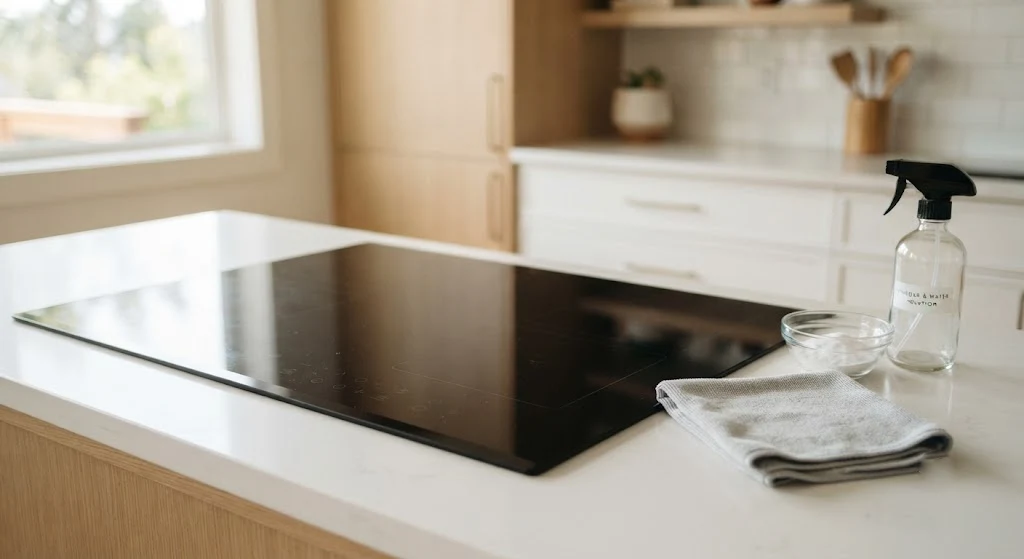
To clean a glass stovetop without ruining the shine, wipe up spills while the surface is still warm, then use a soft cloth with a mix of dish soap and warm water for daily cleaning. For baked-on grime, apply a baking soda paste, let it sit, and wipe gently with a non-abrasive sponge. Always finish with a dry microfiber cloth to prevent streaks.
Nothing looks worse in a clean kitchen than a glass stovetop covered in cloudy streaks, greasy fingerprints, or burnt-on food. If you’ve ever scrubbed too hard and noticed dull patches afterward, you already know how easy it is to damage that glossy finish. Learning how to clean glass stovetop without ruining the shine comes down to using the right tools, the right products, and a little patience.
The good news is you don’t need expensive cleaners or fancy gadgets. Most of what you need is probably already in your kitchen. This guide walks you through simple, safe methods that lift grease and burnt spots while keeping your stovetop looking brand new.
Why Glass Stovetops Lose Their Shine
Glass cooktops are smooth and elegant, but that smooth surface is also delicate. Scratches happen easily when people use rough sponges, steel wool, or gritty cleaning powders. Over time, these small scratches build up and make the surface look foggy instead of glossy.
Heat is another factor. When grease or food spills bake onto hot glass, they bond to the surface. Scraping at this residue with the wrong tool, or using too much force, wears down the protective coating that gives the glass its shine.
Understanding this helps explain why gentle, consistent cleaning habits matter more than harsh, occasional deep scrubs.
What You’ll Need Before You Start
You don’t need a cabinet full of supplies. A soft microfiber cloth, warm water, dish soap, baking soda, and white vinegar cover almost every cleaning situation. A plastic scraper or an old credit card also comes in handy for lifting stubborn spots without scratching the glass.
Avoid anything abrasive. Steel wool, scouring pads, and powdered cleansers with grit are the biggest culprits behind dull, scratched cooktops. If a product feels rough between your fingers, it’s too rough for glass.
Daily Cleaning Routine for a Streak-Free Shine
The easiest way to keep a glass stovetop shiny is to clean it after every use, while it’s still warm but not hot. Waiting until spills cool and harden makes cleanup much harder later.
Start by wiping the surface with a soft, damp cloth to remove loose crumbs and light residue. Then add a few drops of dish soap to warm water and wipe the entire surface in gentle, circular motions. Rinse the cloth and go over the stovetop again to remove any soapy residue, since leftover soap can leave streaks once it dries.
Finish by drying the surface completely with a clean microfiber cloth. This last step is what gives the glass that polished, streak-free look, so don’t skip it even if you’re in a hurry.
Handling Everyday Spills
If something bubbles over while cooking, turn off the burner and let the surface cool just enough to touch safely. Wipe the spill with a damp cloth right away. Fresh spills lift off far easier than ones that have had time to bake onto the glass.
How to Remove Burnt-On Food Without Scratching
Burnt spots need a bit more effort, but you still don’t need anything abrasive. Sprinkle baking soda over the stained area, then lay a warm, damp cloth on top and let it sit for about ten to fifteen minutes. The moisture and heat soften the burnt residue.
Once the time is up, remove the cloth and gently rub the area with a soft sponge or the damp cloth itself. Use light pressure and let the baking soda do the work instead of scrubbing hard.
For spots that don’t budge, a plastic scraper held at a low angle can help lift the residue. Push gently and slowly rather than scraping quickly, which reduces the risk of scratching the surface.
Using Vinegar for Extra Shine
After removing stubborn stains, spray the stovetop lightly with white vinegar and wipe it down with a clean cloth. Vinegar cuts through any remaining grease film and helps restore shine without leaving a residue behind. Just avoid using vinegar on stovetops with a special coating unless the manufacturer says it’s safe.
How to Clean Glass Stovetop Without Ruining the Shine Using Household Items
Many people search specifically for how to clean glass stovetop without ruining the shine because they’ve had bad experiences with harsh cleaners. The truth is, simple household items work better than most commercial products.
Baking soda acts as a gentle abrasive that lifts grime without scratching. Vinegar cuts grease and disinfects naturally. Dish soap handles everyday buildup. Together, these three ingredients cover almost every cleaning need without exposing your stovetop to harsh chemicals that can wear down its protective layer over time.
If you prefer a store-bought option, look for cleaners labeled specifically for ceramic or glass cooktops. These are formulated to clean effectively while protecting the glass finish, unlike all-purpose kitchen cleaners that may be too harsh.
Mistakes That Dull the Shine
A few common habits cause more damage than people realize. Using paper towels instead of a soft cloth can leave tiny fibers and even light scratches over time. Cleaning the stovetop while it’s still very hot can also cause streaking, since the water evaporates too quickly to lift dirt properly.
Another mistake is letting spills sit for days before cleaning them. The longer grease and food sit, the more they bond to the glass, which means you’ll need more scrubbing to remove them later. That extra scrubbing is exactly what leads to scratches and dull patches.
Skipping the final dry-off step is another small habit that adds up. Water spots and soap residue left to air-dry often leave a cloudy film, making the surface look dirtier than it actually is.
Tips to Keep Your Stovetop Looking New
Wiping down the stovetop after every use, even with just a dry cloth, prevents buildup from forming in the first place. Using flat-bottomed pots and pans also helps, since uneven cookware can scratch the glass when slid across the surface.
It also helps to lift pots and pans instead of dragging them. Sliding cookware, especially cast iron, is one of the fastest ways to create fine scratches that dull the shine permanently.
Cleaning up spills quickly, sticking to gentle products, and drying the surface thoroughly after each wash are the three habits that matter most. None of these take much extra time, but together they make a noticeable difference in how long your stovetop stays glossy.
Final Thoughts
Keeping a glass stovetop shiny doesn’t require special skills or expensive products. It just takes consistency and a gentle touch. Wipe up spills while they’re fresh, stick to soft cloths and mild cleaners like baking soda and vinegar, and always finish with a dry buff to avoid streaks.
Once these habits become part of your regular kitchen routine, you’ll spend less time scrubbing and more time enjoying a stovetop that looks freshly installed, even after months of daily cooking.
