

To get rid of lawn grubs, apply beneficial nematodes or milky spore for a natural approach, or use a chemical grub control product containing chlorantraniliprole (preventive) or trichlorfon (curative). Water treatments into the soil right away. Treat in late spring through early fall for best results.
You walk outside one morning, and something looks off. Patches of your lawn are turning yellow. The grass feels spongy underfoot. You pull at a section and it lifts up like a piece of old carpet. Sound familiar? You probably have a grub problem. Knowing how to get rid of lawn grubs before the damage spreads can save your yard — and your sanity.
The good news is that grubs are very manageable once you know what you’re dealing with. Whether you prefer a natural fix or a faster chemical solution, there’s a method that works for your situation.
What Are Lawn Grubs, Exactly?
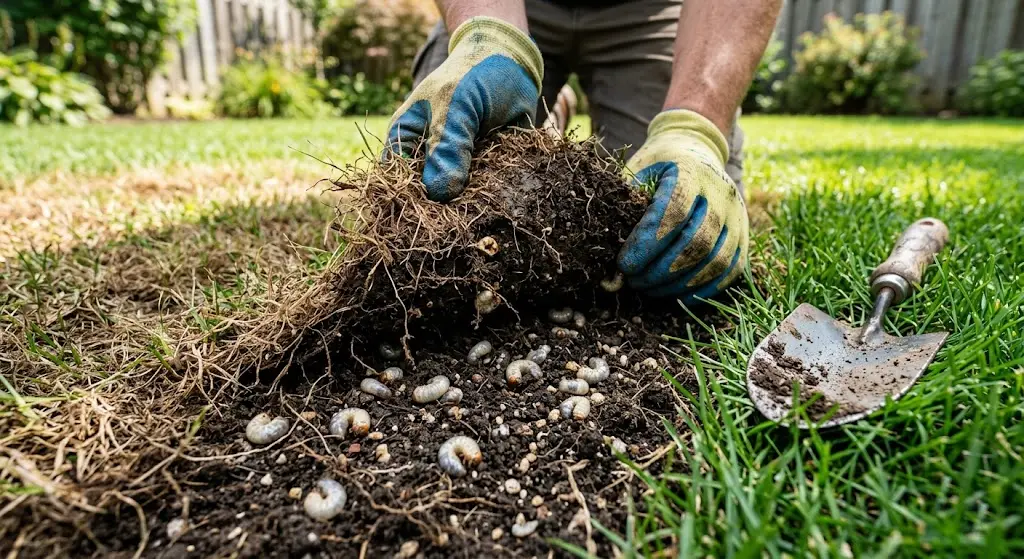
Lawn grubs are the fat, white, C-shaped larvae of beetles — most commonly Japanese beetles, European chafers, and June bugs. They live in the top few inches of soil and spend their time eating one thing: the roots of your grass.
Without roots, your grass can’t absorb water or nutrients. That’s why grub damage looks a lot like drought stress at first. The difference? Drought-stressed grass usually bounces back with watering. Grub-damaged grass does not.
Most grubs hatch from eggs in midsummer, feed through fall, go dormant in winter, then resume feeding briefly in spring before turning into adult beetles. The cycle then starts all over again.
How to Tell If You Have a Grub Infestation
Before you spend money on treatments, make sure grubs are actually your problem. A few grubs here and there are completely normal — most lawns can handle five or fewer per square foot without showing any damage. The trouble starts when populations climb higher than that.
Here’s a simple test: cut a one-square-foot section of turf in a damaged area and peel it back. Check the top three to four inches of soil. If you count more than five to ten white, curled larvae, you have enough grubs to warrant treatment.
Beyond the dig test, watch for these warning signs. Irregular brown patches that don’t respond to watering are the most common clue. You might also notice the grass feels unusually spongy when you walk on it — that’s the root system breaking down underneath. If birds, skunks, raccoons, or moles suddenly start tearing up your lawn, they’ve likely found a grub buffet below the surface. Animal digging is often the first obvious sign that something is wrong underground.
One thing worth knowing: grub damage can look a lot like fungal disease or pet urine spots. Fungal damage tends to form rings or circular patterns. Pet urine usually leaves a green center patch surrounded by dead grass. Grub damage shows up as irregular, scattered brown areas with no distinct pattern — and the turf peels up easily when you tug at it.
When Is the Best Time to Treat for Grubs?
Timing matters more than almost anything else with grub control. Treat at the wrong time and the product may do very little.
The most effective window for treatment is late spring through midsummer — roughly May through August. This is when grubs are young and small, feeding close to the soil surface, and most vulnerable to treatment. Young grubs are far easier to kill than mature ones.
By late fall, grubs burrow deeper into the soil to wait out winter. Treatments applied at this point struggle to reach them and are largely wasted.
If you missed the preventive window and your lawn is actively showing damage in late summer or early fall, a fast-acting curative treatment is still your best option. It won’t undo existing damage, but it stops the grubs from causing more.
Natural Ways to Get Rid of Lawn Grubs
If you prefer to keep things organic — especially in a yard where kids and pets spend time — there are several natural methods worth trying. They take more patience than chemical options, but they work well over time.
Beneficial Nematodes
Beneficial nematodes are microscopic roundworms that occur naturally in soil. When you apply them to your lawn, they seek out grubs, burrow inside, and release bacteria that kill the host within a few days. They’re completely safe for people, pets, plants, and beneficial insects like earthworms and pollinators.
You apply nematodes by mixing them with water and spraying the solution over your lawn, typically in the evening to protect them from sunlight and heat. Keep the soil moist for a few days after application so the nematodes can move through it freely.
The main downside is timing: nematodes need to be used quickly after purchase (they’re perishable), and full results can take several weeks to a few seasons to build up. Still, they’re one of the most effective long-term natural tools available.
Milky Spore
Milky spore is a naturally occurring bacteria — Bacillus popilliae — that infects and kills Japanese beetle grubs. You apply it as a powder directly to your lawn, and over time it spreads through the soil on its own as affected grubs die and release more spores.
The catch is that milky spore only works on Japanese beetle larvae, not other grub species. It also takes two to four years to establish itself in sufficient quantities to make a real dent. However, once it’s in your soil, it can remain active and protective for ten to twenty years.
Let the Lawn Dry Out
Grubs need moist soil to survive and move around. If your lawn can handle going dormant for a few weeks, stopping irrigation in July — before eggs have hatched and while young grubs are most vulnerable — can kill a significant portion of the population. This works best in areas that aren’t getting summer rain.
Just be careful not to stress cool-season grasses too severely. Most established lawns handle a few weeks of dormancy without permanent harm.
Invite Natural Predators
This one requires zero effort on your part. Birds like robins, starlings, and crows actively hunt for grubs. Setting up birdbaths, feeders, and nesting boxes makes your yard more attractive to them. Chickens, if you keep them, are especially effective grub hunters.
Chemical Grub Control: What Actually Works
When the infestation is severe or you need results faster, chemical treatments are the most reliable option. The key is choosing the right product for the right situation.
Preventive Treatments
Preventive grub killers are applied in late spring or early summer, before eggs hatch. The active ingredient to look for is chlorantraniliprole, found in products like Scotts GrubEx. It creates a protective barrier in the soil so that newly hatched grubs consume it as soon as they start feeding.
Preventive products are gentler on the environment than curative options and are generally the smarter choice if you’ve had grub problems in previous years. The only downside is cost — they tend to be more expensive than curative options.
Curative Treatments
If your lawn already has an active infestation showing visible damage, you need a curative product. Look for trichlorfon (sold under the brand name Dylox) or carbaryl, both of which kill existing grubs quickly on contact.
Apply curative treatments in late summer or early fall when young grubs are still feeding near the surface. These products don’t work well once grubs have grown large or burrowed deep.
No matter which chemical product you use, always water it into the soil immediately after application — ideally within 24 hours. Products left sitting on the surface break down in sunlight and lose effectiveness before they ever reach the grubs below.
Apply in the early morning or evening when bee activity is low to protect pollinators, and always read the label carefully before handling or applying any chemical product.
How to Repair a Lawn After Grub Damage
Treating the grubs is only half the job. Once the infestation is under control, your lawn still needs help recovering.
Start by raking out the dead grass and loosening the soil in damaged areas. Aerate the lawn if it feels compacted — this helps water and nutrients reach the root zone and makes your lawn less hospitable to future grub populations. If areas are bare or patchy, overseed with a grass type appropriate for your region and keep the soil consistently moist until new growth fills in.
Adding a light layer of compost before overseeding gives new grass a strong nutritional head start. Once the lawn fills back in, resume your normal fertilizing and mowing routine. Keeping grass at three to four inches tall makes it harder for beetles to lay their eggs in the soil in the first place.
How to Keep Grubs From Coming Back
A healthy, well-maintained lawn is your best long-term defense. Thatch buildup and compacted soil create exactly the kind of environment grubs love. Annual aeration removes that compaction and makes your lawn more resilient.
If your yard has had a grub problem before, it will likely come back. Apply a preventive grub control product each spring as part of your regular lawn care routine. Monitor for adult beetle activity in early summer — lots of beetles around your lights and plants means eggs are being laid nearby.
Keeping irrigation reasonable also helps. Overwatered lawns stay consistently moist and soft, which encourages beetle egg-laying. Water deeply but less frequently to encourage deep root growth and drier surface conditions.
Conclusion
Lawn grubs can quietly devastate a yard before you even realize what’s happening. But once you spot the signs, you have real options — from patient, natural approaches like nematodes and milky spore to fast-acting chemical treatments for serious infestations.
The most important thing is to act at the right time. Treat young grubs in late spring and summer for the best results, water treatments in promptly, and follow up with good lawn care habits to discourage future infestations.
A little attention in early summer goes a long way toward keeping your lawn thick, healthy, and grub-free all season long.
