

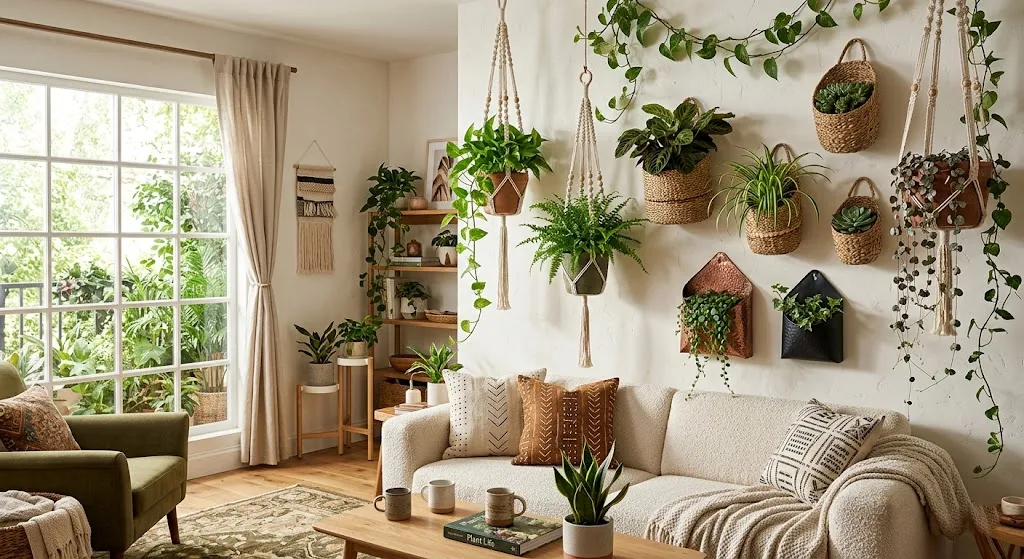
Hanging wall planters are a creative way to display plants on vertical surfaces, saving floor space while adding natural beauty to any room or outdoor area. Popular styles include macramé hangers, wood pallet planters, metal wall pockets, mason jar displays, and woven basket arrangements — all suited to different aesthetics and plant types.
Why Hanging Wall Planters Are Everywhere Right Now
If you’ve been scrolling through home décor feeds lately, you’ve probably noticed one thing popping up constantly — plants on walls. Stunning hanging wall planter ideas have taken over both indoor and outdoor decorating, and honestly, it makes total sense.
Floor space in most homes is precious. Whether you’re in a compact apartment, a busy kitchen, or a narrow balcony, putting your plants on the wall frees up room while adding something truly alive and beautiful to your space. It’s a practical choice that also happens to look incredible.
The beauty of wall planters is how flexible they are. You can go rustic and handmade, clean and modern, or full boho with layers of texture and trailing vines. Whatever your style, there’s a version of this trend that fits your home perfectly.
Let’s walk through the best ideas, materials, and plants to help you create your own stunning wall garden — indoors or out.
Macramé Hangers: The Classic That Never Goes Away
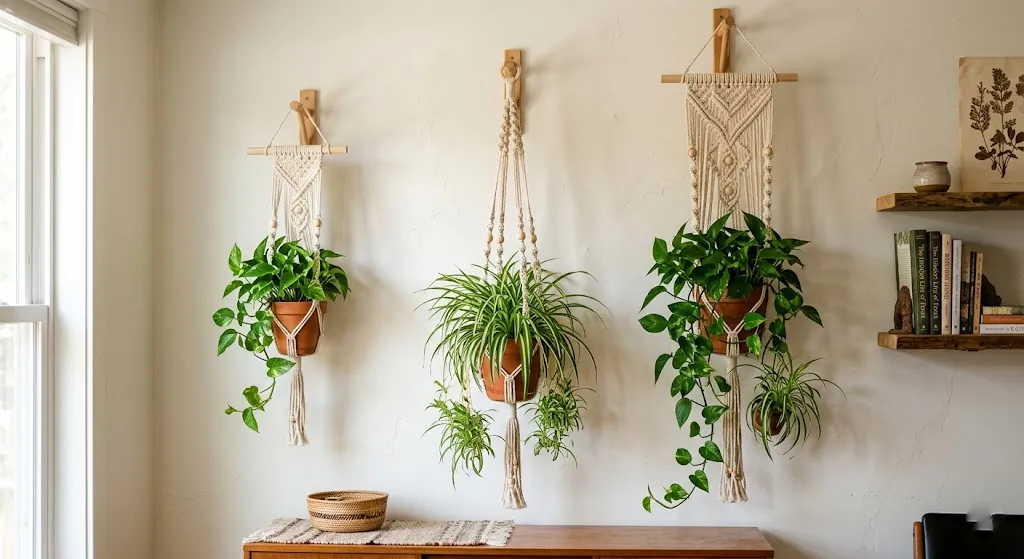
Macramé is probably the most recognized style when people think of hanging wall planters. It uses knotted cord — usually cotton, jute, or hemp — to cradle a pot in a beautifully textured holder that hangs from a hook or nail.
What makes macramé so enduring is how naturally it fits with almost any room. Crisp white macramé brightens up minimalist spaces, while earthy jute tones add warmth to bohemian or mid-century décor. In 2025, two-tone cords and mixed materials like copper rings and wooden dowels have made macramé feel fresh again.
You don’t need to be an artist to make one either. The basic knots involved are learnable in an afternoon, and there are free beginner patterns everywhere online. Once you get comfortable, you can customize the length, add beads or seashells, and create something that’s genuinely yours.
For the most visual impact, try hanging three macramé planters at different heights along one wall. The staggered, cascading effect turns even a blank corner into something that feels curated and alive.
Best Plants for Macramé Planters
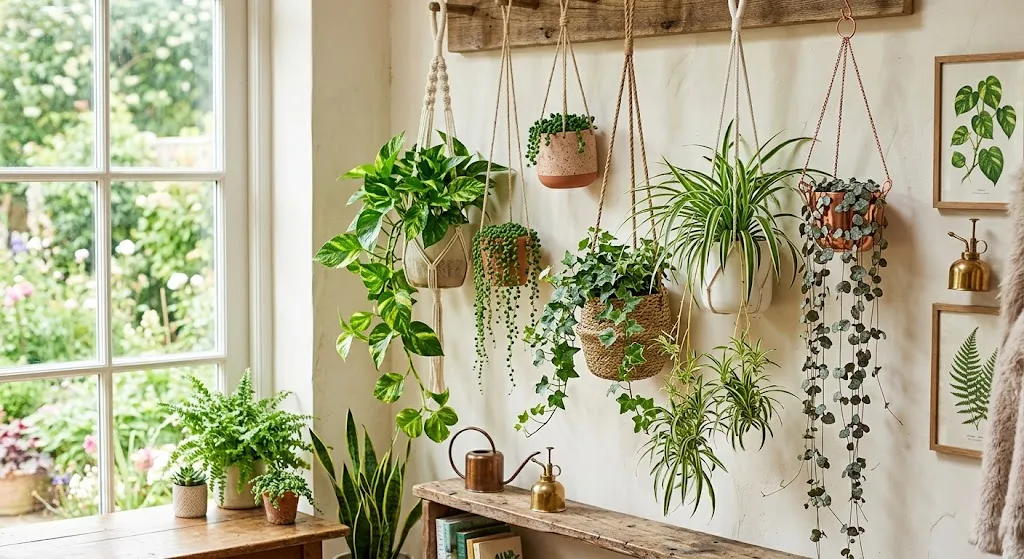
Trailing plants are your best friends here. Spider plants, pothos, English ivy, and string of pearls all cascade beautifully from macramé holders. Boston ferns bring a lush, tropical look, while string of hearts adds a delicate, romantic touch. If you want something low-maintenance, air plants need no soil and barely any watering, making them ideal for anyone who tends to forget their plants exist.
Wooden Pallet and Frame Planters: Rustic Charm on a Budget
A wooden pallet leaned against a wall or mounted flat is one of the most budget-friendly and satisfying DIY hanging wall planter projects you can tackle. You add a backing to keep soil in place, attach pots or planting pockets between the slats, and suddenly you have a vertical garden that looks like it belongs on a farm-to-table restaurant patio.
This works beautifully outdoors — on a fence, a patio wall, or even propped against the side of a house. Herbs thrive in this setup because they’re easy to grab when cooking, and they look gorgeous all season long. You can grow basil, rosemary, mint, and thyme in the same frame, keeping your garden both productive and pretty.
Indoors, a smaller wooden wall-mounted frame with individual pots is a cleaner, more refined version of the same idea. Pair it with terracotta pots and a clean white wall for a farmhouse feel, or use matte black containers on dark wood for something more modern and dramatic.
Metal Wall Pockets and Galvanized Planters: Industrial Meets Organic
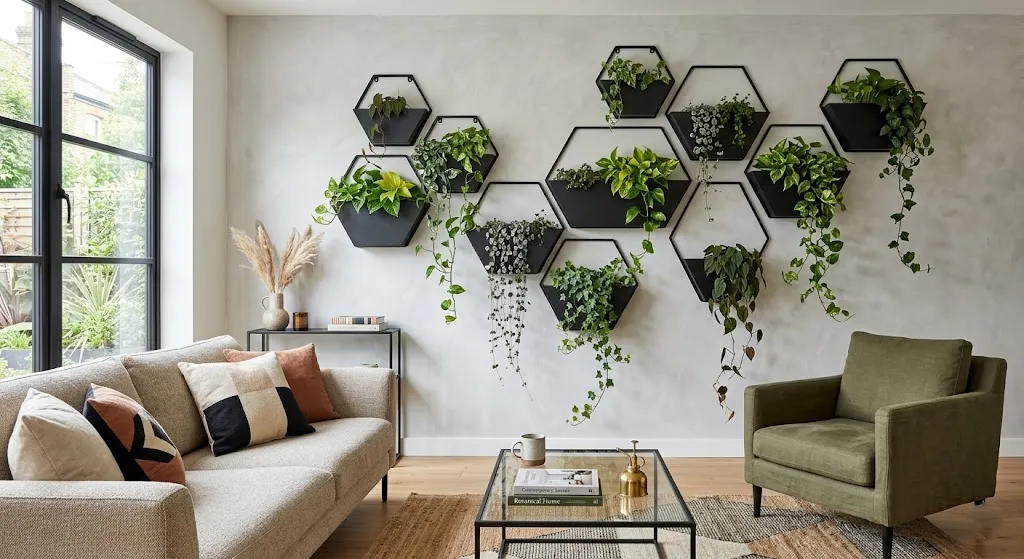
If you love the contrast between hard, structural materials and soft green plants, metal wall planters might be exactly what you’re looking for. Galvanized steel, wrought iron, and powder-coated metal wall pockets give any space an industrial edge while still feeling warm when filled with trailing foliage or bright blooms.
Farmhouse-style galvanized planters paired with weathered wood frames have become especially popular for covered porches and entryways. They’re sturdy enough for outdoor use year-round, and they develop a beautiful aged patina over time that feels completely at home in rustic or cottage-style spaces.
For a more contemporary look, sleek matte black metal wall planters arranged in a geometric pattern create a striking focal point in a modern living room or home office. The plants do the softening work — especially trailing varieties that spill out of the containers and break up the clean lines.
Terracotta and Ceramic Wall Pots: Timeless and Elegant
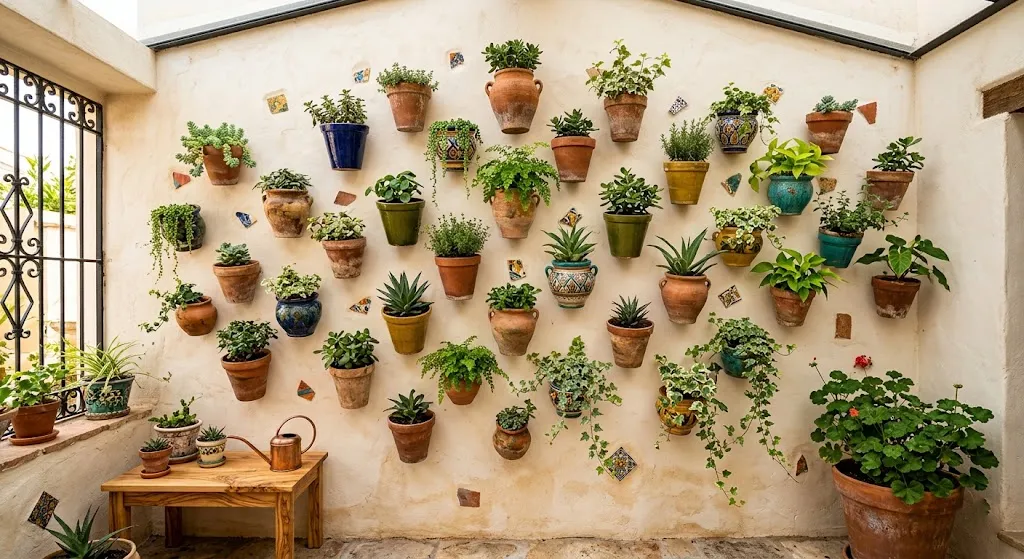
There’s a reason terracotta has been used in gardening for thousands of years. These clay pots breathe well, helping roots stay healthy, and they age in a way that’s genuinely beautiful. Wall-mounted terracotta planters feel at home in Mediterranean, earthy, or traditional décor — but they work just as well in a modern kitchen with their warm, sandy tones.
Ceramic wall pots open up the design possibilities further. You can find them glazed in every color imaginable, from muted sage green to cobalt blue, letting you tie your plant wall to the rest of your room’s palette. Mounting a collection of mismatched ceramic pots together creates an eclectic, gallery-wall effect that’s full of personality.
One important practical note: ceramic and terracotta are heavier than plastic or fabric planters, so make sure the hardware you use to mount them is rated for the weight. Proper anchoring is what keeps a beautiful wall installation from becoming a frustrating mess.
Glass Jar and Bottle Planters: Light, Airy, and Unique
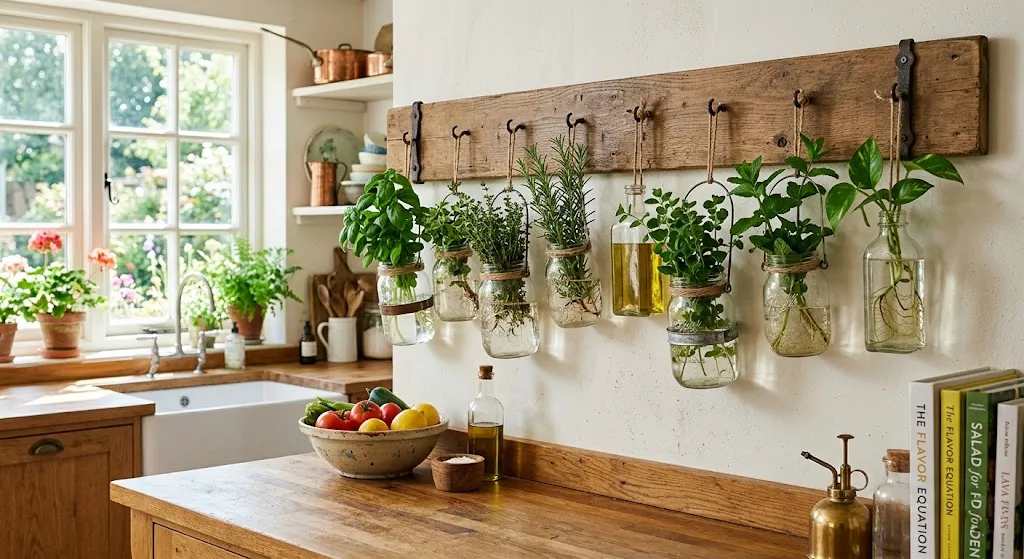
For something truly different, glass jar and bottle planters bring a light, airy quality that you simply can’t get from other materials. Glass catches and scatters light throughout the day, creating a subtle, shifting effect that makes your wall garden feel almost alive.
The simplest version involves wrapping twine around glass bottles or mason jars and hanging them from a wall-mounted rod or branch. These work especially well for cuttings, fresh herbs, or air plants, all of which look spectacular through clear glass. In a sunlit kitchen or near a bright window, the effect is stunning.
A row of hanging glass jars at slightly different heights along a kitchen backsplash, each holding a different herb, is both functional and one of the prettiest things you can do with an otherwise plain wall. It’s the kind of detail that makes people stop and ask you about it.
Woven Basket and Cone Planters: Texture and Sculptural Style
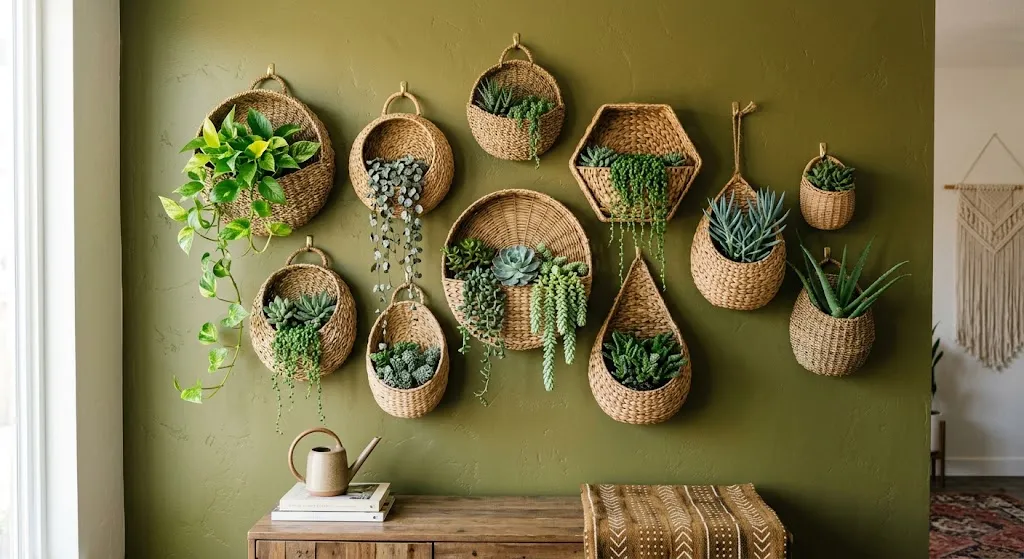
Woven rattan, seagrass, or fabric planters bring an organic texture to your wall that painted pots simply can’t match. Cone-shaped woven planters in particular have become popular for their sculptural quality — they look almost like artwork on their own, even before you add plants.
These work beautifully with succulents and trailing varieties, especially against a bold-colored wall. A deep blue or olive green backdrop makes the natural tones of woven planters stand out dramatically. For a more neutral room, a cluster of varied woven baskets in similar earth tones creates richness without feeling busy.
The key to making this look intentional rather than scattered is repetition and variation. Use the same material or color family, but vary the size and height of the planters. That contrast — similar but not identical — is what gives the arrangement its visual energy.
Vertical Garden Systems: Going Big With Your Wall
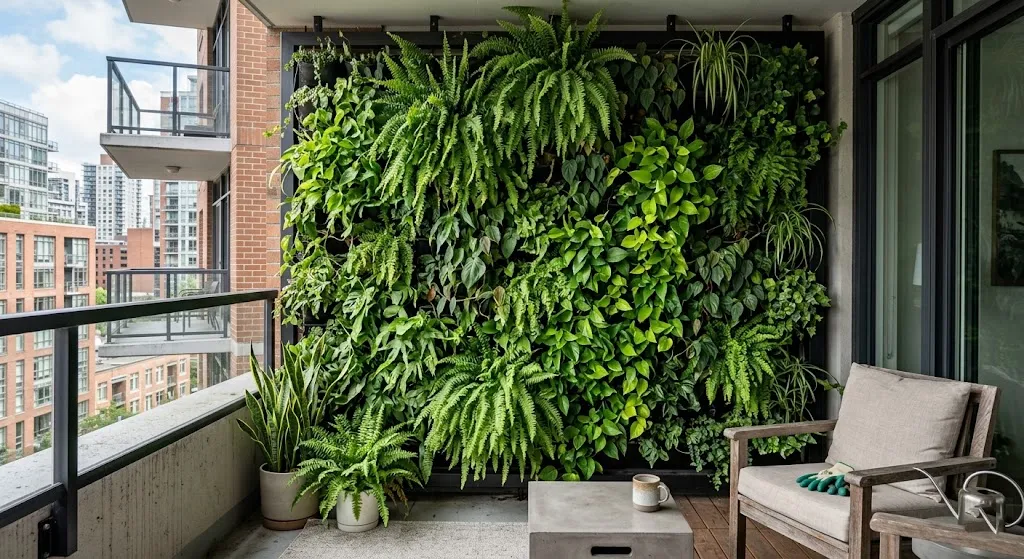
If you really want to commit to the idea, a full vertical garden system takes hanging wall planters to the next level. These are modular setups — panels or frames with multiple individual planting pockets — that let you cover a large wall section in living greenery.
Outdoors, vertical garden systems are incredible for balconies and small patios, where they create privacy and a lush garden feel without needing any ground space at all. Some premium systems even include built-in drip irrigation, which takes the watering work almost entirely out of the equation.
Indoors, a living wall panel in a living room or entryway is a genuine showstopper. The key is choosing the right plants — ones that thrive in your light conditions and don’t mind sharing close quarters with their neighbors. Pothos, philodendrons, and ferns are all excellent choices for indoor living walls because they’re forgiving and grow quickly.
Choosing the Right Location for Your Hanging Wall Planter
A beautiful planter in the wrong spot won’t stay beautiful for long. Before you install anything, think about light. Most flowering plants and herbs need several hours of direct or bright indirect sunlight each day. Trailing foliage plants like pothos and ivy are more tolerant of lower light, making them ideal for hallways or rooms with smaller windows.
Outdoors, consider wind exposure and rain. Planters in exposed spots should be secured properly, and plants should be matched to your local climate. A covered porch is often the ideal location — it gives your wall planters protection from the harshest weather while still providing outdoor air and light.
Inside, think about walls near windows or south-facing exposure first. A beautiful macramé arrangement that slowly dies because it doesn’t get enough light is a disappointing outcome that’s entirely avoidable with a little planning upfront.
Simple Tips for Keeping Your Wall Garden Thriving
Watering wall planters can be trickier than watering floor pots, mainly because runoff needs somewhere to go. Self-watering inserts, drip trays, and planters with built-in reservoirs solve this problem elegantly and reduce how often you need to water.
Choose a light, well-draining potting mix for any wall planter. Heavy soil stays wet too long in contained spaces, which leads to root rot. Adding perlite or coco coir to your mix helps keep things loose and breathable.
Fertilize during the growing season — spring through early fall — to keep your wall plants lush and healthy. A diluted liquid fertilizer every few weeks during this period is usually all they need.
And don’t be afraid to rotate plants in and out. If something isn’t thriving in a particular spot, move it and try something else. Wall planters are designed to be flexible, and part of the fun is experimenting until you find what works best for your home.
Final Thoughts: Your Walls Are Ready to Grow
Hanging wall planters are one of those rare décor ideas that are genuinely better than they look on paper. They add life, color, texture, and warmth to any space — and they do it without taking up a single square foot of floor space.
Whether you start with one simple macramé hanger or go bold with a full vertical garden system, the impact is immediate. Choose plants you love, find a style that suits your home, and don’t overthink the starting point. The best wall garden is the one you actually build — and it only gets better from there.
