

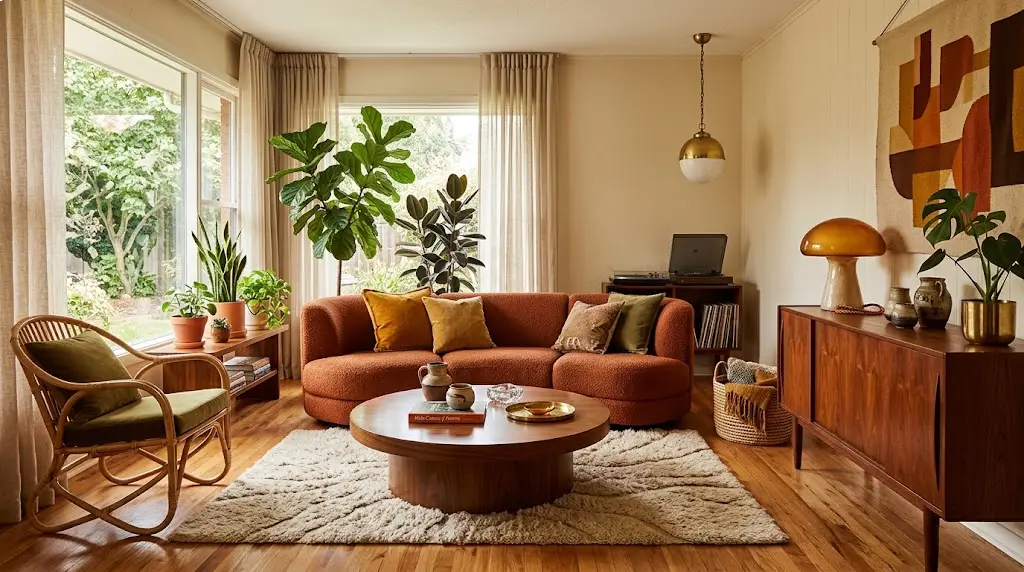
A 70s inspired living room blends earthy colors, curved furniture, and natural textures into one warm, relaxed space. Start with a base of rust, mustard, or olive, add a rounded sofa and a wool or shag rug, then finish with sculptural lighting and a few vintage pieces you genuinely love.
After years of gray walls and matching furniture sets, a lot of us are ready for something with more personality. That’s exactly why the 70s inspired living room has come roaring back. This look leans on warm earth tones, soft curves, and natural materials like cane and wool, and the result feels lived-in instead of staged.
The good news is that you don’t need wood-paneled walls or a sunken conversation pit to pull it off. Most people get there by borrowing the feeling of the decade, not copying it detail for detail. Below, I’ll walk you through the colors, furniture shapes, textures, and lighting choices that make this style work in a modern home, plus the mistakes that tip it from groovy into tired.
What Makes a 70s Inspired Living Room Feel Right
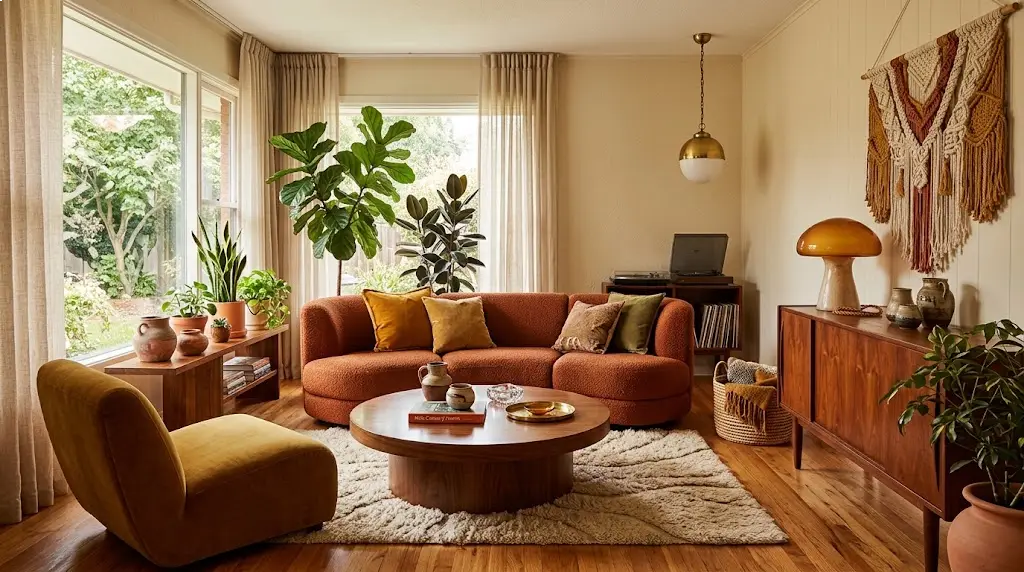
The 1970s pushed back against the shiny, bright look that came before it. People wanted rooms that felt grounded, handmade, and connected to nature. That’s why the era gave us terracotta pottery, macramé wall hangings, houseplants in every corner, and furniture built from oak, teak, rattan, and cane.
That same instinct is driving the revival now. We spend most of the day on screens, and a room full of warm wood and soft, tactile fabric offers a real break from that. Designers describe the current version as a reinterpretation rather than a costume. You keep the clean proportions and good lighting of a modern room, then layer in retro warmth where it counts.
Think of it as a 70/30 split. Roughly seventy percent of the room stays calm and current: your sofa, your walls, your window treatments. The other thirty percent carries the retro story through color, shape, and a handful of characterful pieces. That balance is the difference between a stylish space and a theme room.
Start With an Earthy Color Palette
Color does more heavy lifting here than anything else. The core palette runs through burnt orange, rust, terracotta, mustard, ochre, olive and avocado green, chocolate brown, and warm cream. These shades feel cozy because they pull directly from clay, moss, wood, and late afternoon sun.
You have two solid ways to use them. The bold route is color-drenching, where you paint the walls, trim, and sometimes the ceiling in one earthy tone. A muted olive or a soft clay color wraps the room like a blanket and makes wood furniture glow. The gentler route keeps walls in a warm off-white or oat shade, then brings color in through a rust sofa, mustard cushions, or an olive armchair.
One tip that saves a lot of regret: choose warm whites over cool ones. A crisp blue-white makes terracotta and mustard look muddy and slightly sad. Creamy whites with a yellow or pink base let those tones sing.
If you’re nervous about commitment, test your palette in daylight and at night before you buy paint. Earth tones shift dramatically under warm bulbs, and a color that reads sophisticated at 2 p.m. can turn orange by 9 p.m.
Choose Furniture With Curves and Real Character
Straight lines and boxy sofas belong to a different decade. Seventies seating was low, round, and built for sinking into. That’s why curved and modular sofas have taken over showrooms again, along with tub chairs, low-slung lounge chairs, and puffy ottomans.
A rounded sofa or a curved sectional instantly signals the era without a single retro accessory. If a new one sits outside your budget, a single curved accent chair in bouclé, corduroy, or caramel leather does a surprising amount of work. Corduroy upholstery in particular has come back strongly, and it reads as period-perfect while feeling completely current.
For coffee tables and side tables, look for warm wood with a satin finish, travertine, smoked glass, or a chunky pedestal base. Burl wood veneer is another strong signal of the decade and shows up on everything from cabinets to nightstands now.
Mixing old and new keeps the room from feeling flat. One genuine vintage piece — a teak sideboard, a leather sling chair, a rattan peacock chair — gives the whole space credibility that reproductions can’t quite match.
Layer in Natural Textures Everywhere
Texture is what separates a warm 70s inspired living room from a room that’s simply painted orange. The decade celebrated handmade and natural materials, and that gives you a lot to play with.
Rattan and cane belong front and center, whether that’s a cane-front media cabinet, a rattan floor lamp, or a hanging chair in the corner. Wool, jute, sheepskin, and linen add softness at different scales. And yes, shag is back, though today’s version usually appears as a high-pile wool or tufted area rug rather than wall-to-wall carpet.
Plants matter more than people expect. Trailing pothos, a fiddle leaf fig, a tall snake plant, or a spider plant in a macramé hanger brings the greenery that defined the era. Cluster a few at different heights near a window and the room comes alive.
Ceramics finish the job. Handmade vases, stoneware bowls, and glazed planters in brown, cream, and rust tie your palette together and cost very little at thrift stores and flea markets.
Lighting Sets the Entire Mood
If you only change one thing, change the lighting. Seventies rooms glowed rather than glared, and that atmosphere is hard to fake with a single ceiling fixture.
Layer three sources. Start with something sculptural overhead, like a mushroom pendant, a smoked glass globe, or a multi-arm chandelier with exposed bulbs. Add a floor lamp with an arc or a chrome base beside your seating. Then scatter table lamps with fabric or rattan shades to soften the corners.
Bulb temperature is the detail most people skip. Choose warm bulbs in the 2200K to 2700K range so wood and terracotta look rich instead of washed out. Put your main lights on a dimmer, and the room will shift from bright and practical during the day to golden and relaxed at night.
Stained glass is having a moment too. A small leaded shade, a colored glass lamp base, or a suncatcher in the window throws warm patterns across the floor and nails the period feeling in one small object.
Add Pattern Without Overwhelming the Room
Seventies pattern was loud and proud, from swirling geometrics to oversized florals. You can absolutely use it, but scale and placement decide whether it reads as confident or chaotic.
Pick one pattern to lead. That might be a geometric wallpaper on the wall behind your sofa, a bold floral on a pair of cushions, or a striped wool rug. Once you’ve chosen your lead, keep everything else fairly quiet in solid colors drawn from that same pattern.
Botanical prints, animal prints, and abstract 70s geometrics all fit the brief, and they work best in small, well-spaced doses. A leopard-print ottoman on one side of the room and a graphic art print on the other gives each piece room to breathe. Piled together, they compete.
Wall art helps too. Pop art posters, vintage travel prints, abstract canvases in earth tones, and textile hangings all suit the era, and a gallery wall of mismatched frames feels more authentic than one oversized print.
Mistakes That Make the Look Feel Dated
The fastest way to go wrong is treating the room like a set. Wood paneling on every wall, a shag carpet, orange everything, and a beaded curtain in the doorway crosses from stylish into costume.
Watch your lighting levels, too. Deep earth tones drink up light, so a small north-facing room drenched in brown can feel gloomy rather than cozy. In darker rooms, keep the walls lighter and put your color into furniture and textiles instead.
Busy geometric wallpaper is another common trap. In a small, low-light space it closes the room in and dates quickly. Use it on one wall or inside an alcove where it works as an accent.
Finally, resist buying a full matching collection. Seventies rooms looked collected because they were collected, gathered slowly from different places over years. Buy one good piece at a time and let the room build.
Pulling It All Together
A 70s inspired living room comes down to warmth, curves, and natural materials used with a bit of restraint. Choose your earthy palette first, bring in one rounded statement piece, layer wool and rattan and greenery, then fix the lighting so everything glows.
Start small if the whole project feels daunting. Swap in warm bulbs, add a terracotta cushion and a plant, and see how the room shifts. Once you feel that warmth, the rest of the decisions get much easier — and the space will feel far more like yours than any showroom set ever could.
