

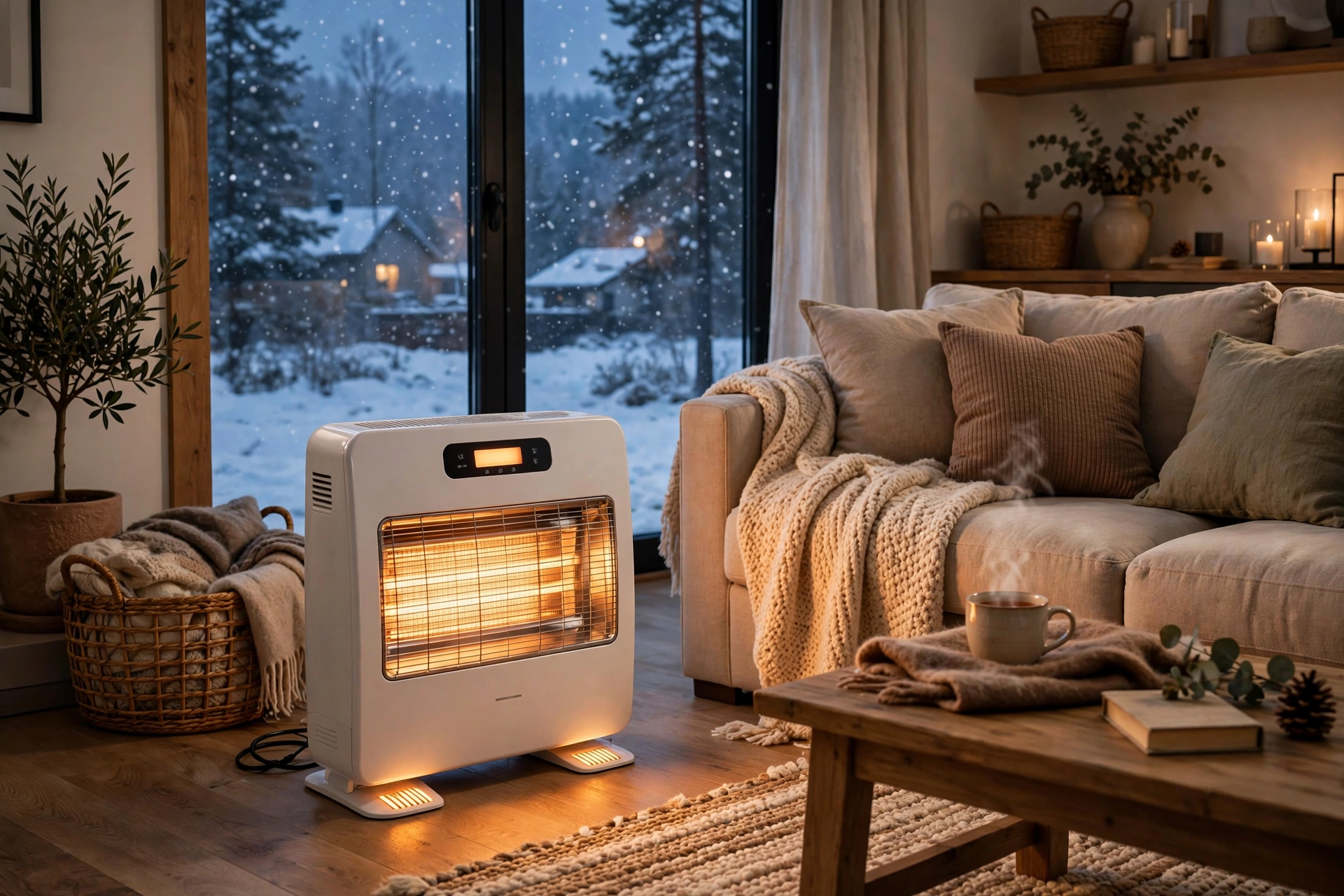
Warmth Shouldn’t Come With Worry
Space heaters are wonderfully effective — and statistically one of the most dangerous appliances in the home. According to the National Fire Protection Association, heating equipment is a leading cause of home fires, and portable space heaters account for a disproportionate share: they’re involved in roughly a third of home heating fires and the vast majority of heating fire deaths. The tragedy is that nearly all of these fires are preventable. Whether you’re warming a home office or supplementing a chilly bedroom, these rules keep the comfort without the risk.
Rule 1: Buy a Safe Heater in the First Place
Not all space heaters are created equal. Look for these non-negotiable safety features:
- Tip-over protection: automatically shuts off if knocked over. Essential with kids, pets, or high-traffic rooms.
- Overheat protection: thermal cutoff that kills power if internal temperatures climb too high.
- Certification mark: UL, ETL, or CSA listed — independently tested to safety standards. Never buy an uncertified heater.
- Sturdy, cool-touch housing with a stable, wide base.
Avoid heaters with glowing exposed elements around children and pets, and be wary of ultra-cheap no-name models — the safety certifications are worth the extra $20.
Rule 2: The 3-Foot Rule (The Big One)
Keep everything — curtains, bedding, furniture, papers, clothing, rugs — at least 3 feet from the heater in all directions. Most space heater fires start because something combustible was too close. This single rule prevents more fires than all others combined. When you set up the heater, physically measure the clearance; “eyeballing it” consistently underestimates distance.
Rule 3: Placement Matters
- Place on a flat, hard, level surface — never on carpet (blocked air intakes cause overheating), beds, or unstable tables.
- Keep away from high-traffic paths where it can be knocked over.
- Never use in bathrooms or damp areas unless specifically rated for it — water + electricity is obvious, but steam corrodes internals too.
- Don’t place under desks with dangling cords or near curtains that billow.
- Face it into the room, not at a wall or furniture.
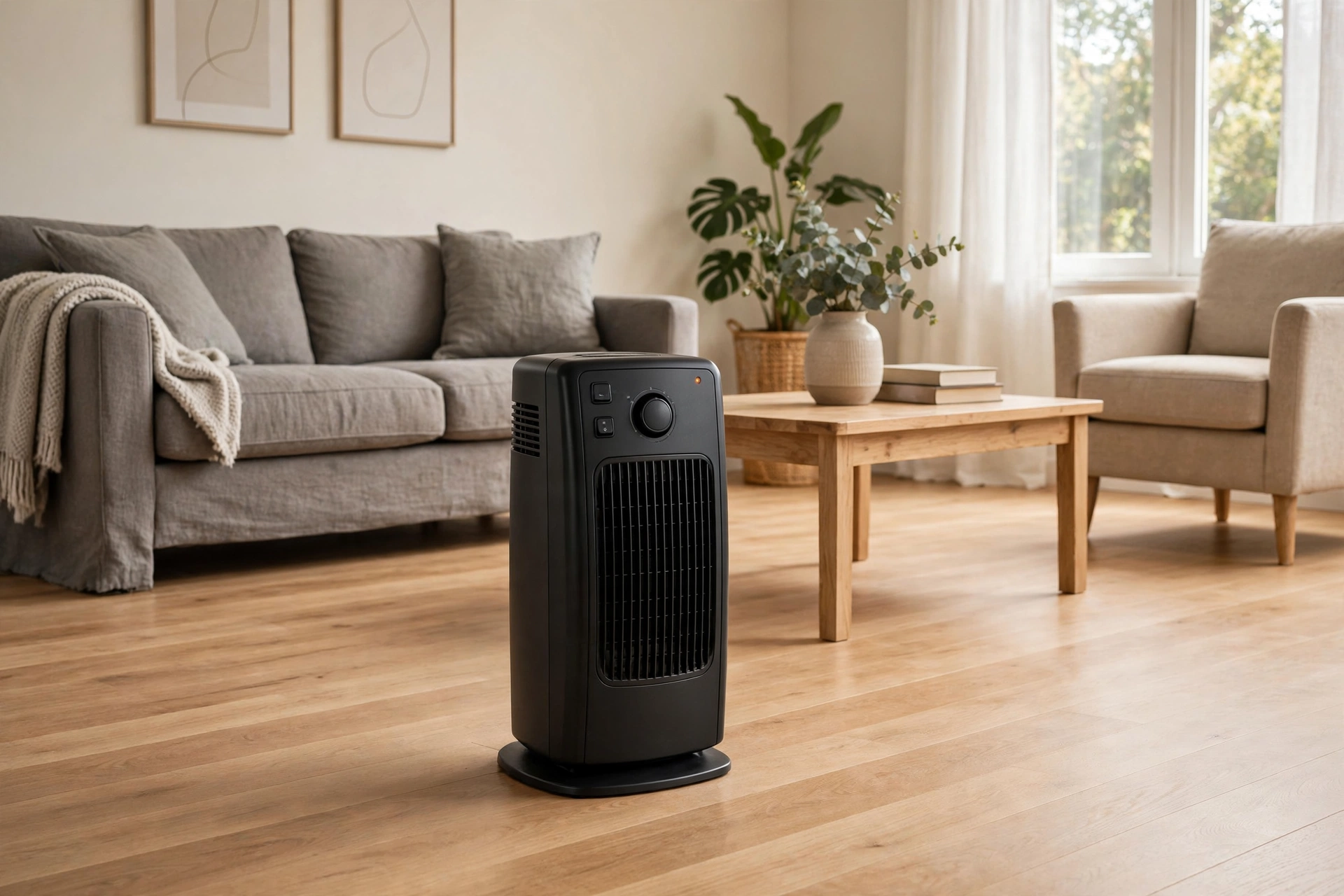
Rule 4: Plug Directly Into the Wall — No Exceptions
This is the rule people break most. Space heaters draw 1,500 watts — near the maximum for a standard household circuit. Never use extension cords or power strips; they overheat and melt under sustained high current, and they’re a leading ignition source in heater fires. Plug directly into a wall outlet, and ideally give the heater its own circuit — if the breaker trips when the heater runs alongside other devices, that’s the circuit telling you it’s overloaded. Also: never plug two heaters into the same outlet or circuit.
Rule 5: Turn It Off When You Leave (Or Sleep)
Never leave a space heater running unattended — not “just for a minute,” not while you sleep. Unattended operation is implicated in the majority of fatal heater fires. Make it a habit like locking the door: heater off when you leave the room. Modern heaters with timers and thermostats help, but they’re a backup, not a substitute for the habit.
Rule 6: Inspect Before Each Season
Before the first cold snap, check: frayed or cracked power cord (replace the heater — don’t tape it), loose plug prongs, dust-clogged grilles and intakes (vacuum them — dust buildup is both a fire risk and an efficiency killer), and test the tip-over switch by gently tilting the unit while it’s on (it should cut out immediately). If anything’s damaged, replace the heater — repairs on heating elements aren’t DIY territory.
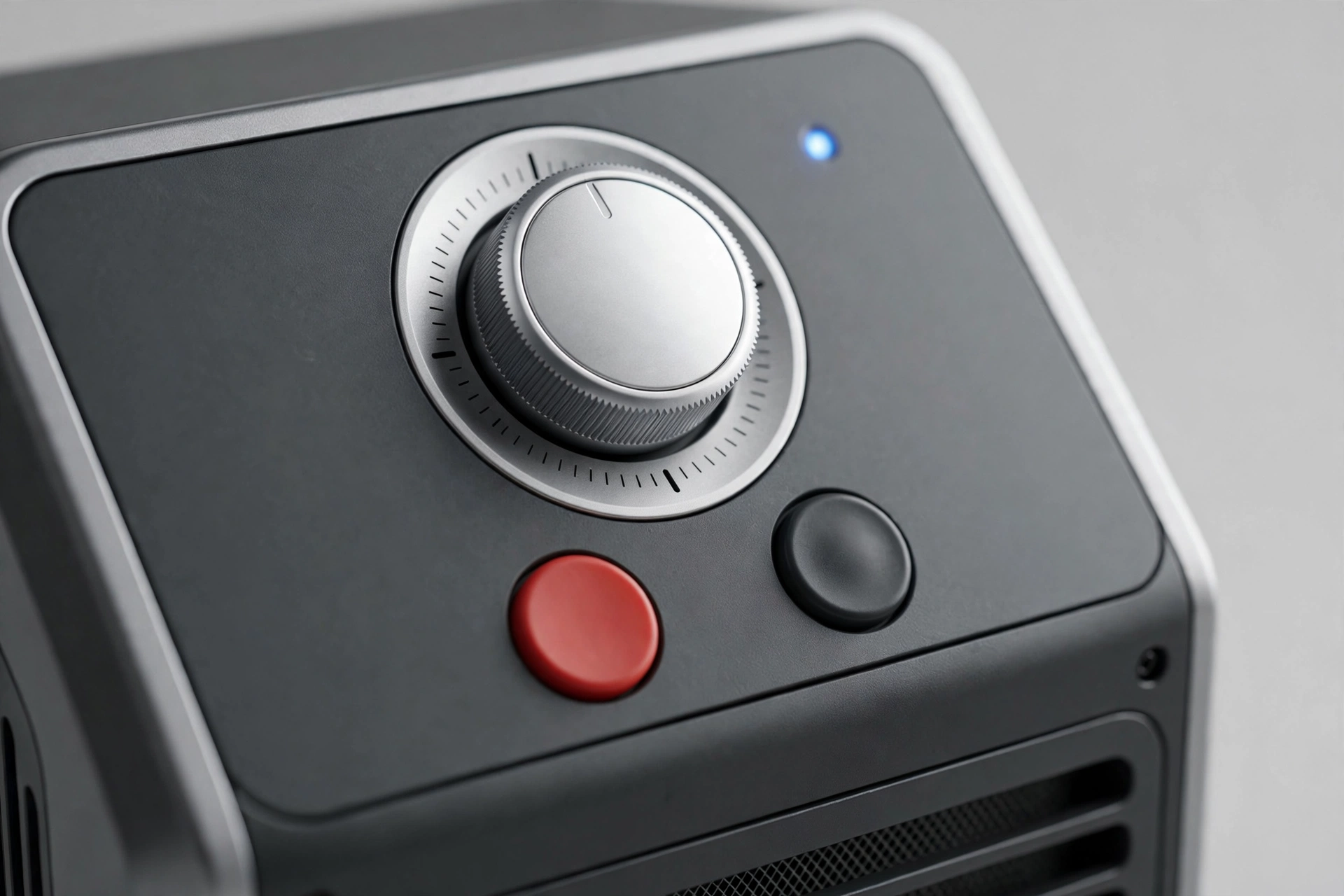
Heater Types Compared: Which Is Safest?
- Oil-filled radiators: the safety winner for most homes. No exposed elements, surface stays relatively cool, silent, and excellent steady heat. Slow to warm up, heavy to move.
- Ceramic fan heaters: fast warmth, compact, affordable. The fan and enclosed element are reasonably safe, but keep the 3-foot rule strictly — the concentrated hot airflow can ignite nearby fabrics.
- Infrared/radiant: heats objects and people directly, great for spot warming. But the glowing element runs very hot — highest burn and ignition risk of the common types.
- Micathermic: thin panels combining convection and radiant; slim profile fits tight spaces. Moderate surface temperatures, decent safety profile.
For bedrooms and kids’ rooms: oil-filled radiator, no contest. For quick warm-ups in an office: ceramic with tip-over and overheat protection.
The Real Cost of Running One
A 1,500W heater running 8 hours a day at $0.15/kWh costs about $1.80/day — roughly $54/month per heater. Two heaters can exceed the cost of just turning up the central heat. Space heaters make economic sense for zone heating (warming one occupied room while keeping the thermostat low) — not for heating the whole house. For the bigger efficiency picture, see our home energy audit guide and winterizing checklist. And here’s a free trick: in winter, run ceiling fans clockwise on low to push warm air down — our ceiling fan direction guide explains how this cuts heating demand.
Heating a Home Office: The Smart Setup
Remote workers are the biggest space heater demographic — one cold room, 8 hours a day. The efficient setup:
- Use an oil-filled radiator with a thermostat and timer: set it to warm the office 30 minutes before you start, then maintain — not blast.
- Keep the office door closed so you’re heating 150 sq ft, not the whole house.
- Lower the central thermostat 3–5 degrees while the office heater runs — that’s where the savings come from.
- Place the heater where its warmth reaches you without sitting within the 3-foot danger zone of papers and cables.
- Never run it under a desk with a tangle of power strips — the #1 office heater fire scenario.
Space Heaters and Home Insurance: What to Know
A detail most people miss: insurance claims after heater fires sometimes face scrutiny. Protect yourself:
- Use only certified (UL/ETL/CSA) heaters — uncertified equipment can complicate claims.
- Follow manufacturer instructions exactly; misuse documented in a fire report can affect coverage.
- Keep smoke alarms working and documented — some policies ask.
- Landlords: check local regulations — some jurisdictions restrict tenant space heater use, and providing safe supplemental heat may be your responsibility.
- When in doubt, a quick call to your insurer about “supplemental heating” takes five minutes and removes uncertainty.
Kids, Pets, and Elderly: Extra Precautions
- Use barriers or gates to keep toddlers and pets from touching hot surfaces.
- Teach kids the heater is never a toy and never to drape clothes over it “to dry.”
- For elderly users, choose models with large, simple controls and automatic shutoff — avoid anything requiring bending to hard-to-reach switches.
- Never use a space heater as a primary heat source for someone who can’t respond quickly in an emergency.
Smoke Alarms, CO Detectors, and Escape Plans
Safety equipment is the backstop: working smoke alarms on every level and in every bedroom (test monthly, replace batteries yearly), a carbon monoxide detector if you use any fuel-burning heat, and a family escape plan with two exits per room. Space heaters don’t produce CO themselves (they’re electric), but winter is when furnaces and fireplaces run too — and a heater fire’s smoke is what kills, long before flames reach anyone.
Dorms, Offices, and Rentals: Know the Rules
Many dorms, offices, and rental agreements ban space heaters outright — check before you buy. If allowed, the same rules apply, plus: never daisy-chain through a cubicle power strip, keep it visible (not hidden under a desk where papers accumulate), and unplug — not just switch off — at day’s end. In rentals, document any heater-related outlet damage immediately; melted outlets are an electrical hazard your landlord must fix.
Smarter Alternatives to Space Heaters
Before buying another portable heater, consider options that heat more safely and cheaply:
- Electric blanket or heated mattress pad ($30–$80): uses ~100W vs. 1,500W — pennies per night, zero fire-clearance issues.
- Oil-filled radiator on a timer: if you must use portable heat, this is the safest form factor.
- Mini-split heat pump: the real upgrade — 2–3x more efficient than any resistance heater, and it cools in summer too. Higher upfront cost, transformative comfort.
- Seal the leaks first: a $8 tube of caulk around drafty windows (see our window caulking guide) often eliminates the cold room that made you buy the heater.
What To Do If Something Goes Wrong
- Smell burning or see smoke: turn off and unplug immediately (if safe), get everyone out, call 911. Don’t try to carry a smoking heater outside.
- Heater tips over: tip-over protection should cut power; if it doesn’t, unplug and retire that heater.
- Outlet or plug feels hot: stop using it on that outlet and have an electrician check the circuit — the wiring may be undersized.
- Small fire: only attempt an extinguisher if it’s truly small, you have an exit behind you, and you know how to use it. Otherwise, get out.
The Bottom Line
Certified heater, 3 feet of clearance, straight into the wall, off when you leave. Four habits — and space heaters go from one of the riskiest appliances in your home to one of the coziest.
