

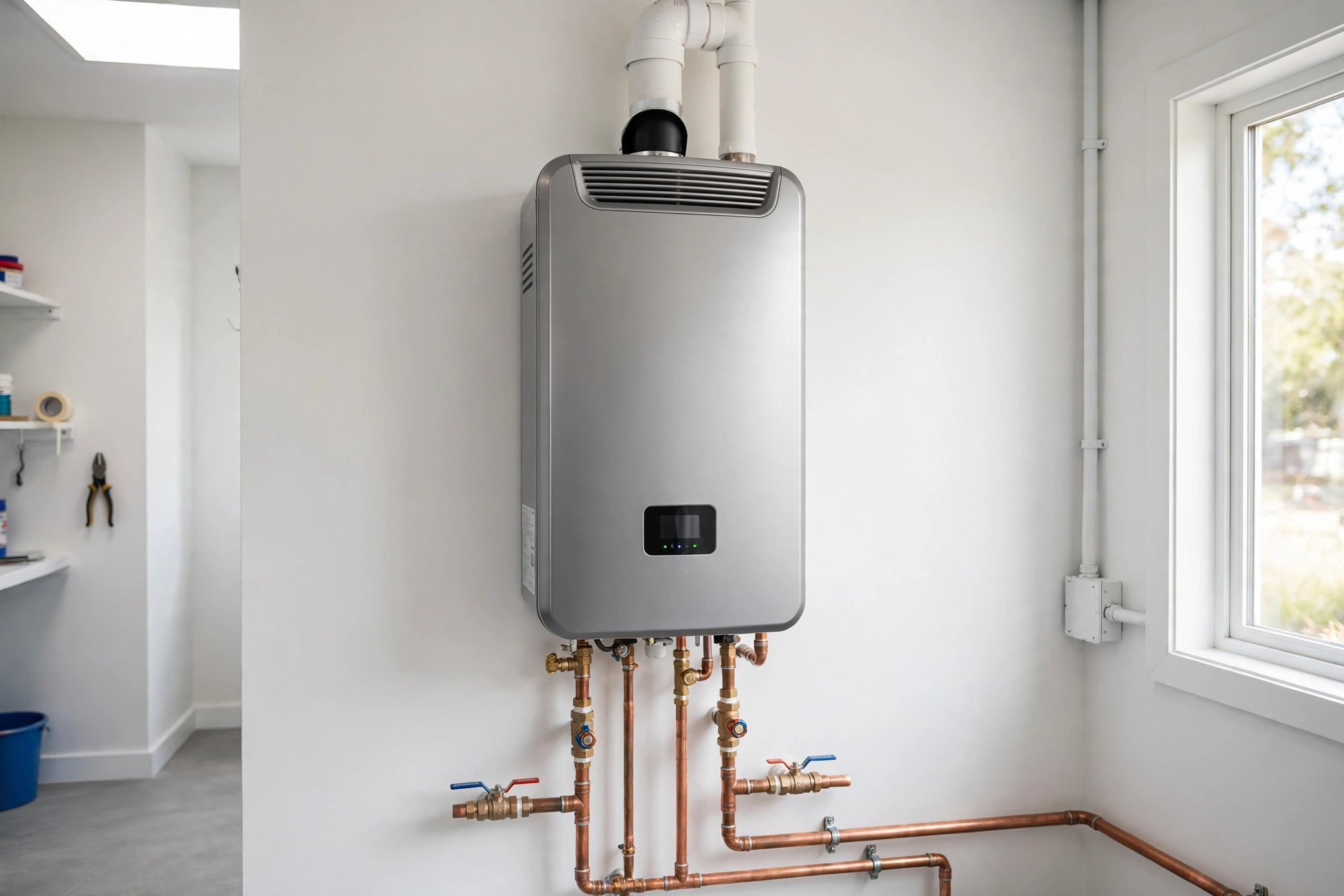
Tank vs. Tankless: The Core Difference
Every home needs hot water, but how you heat it matters more than most people realize. A traditional tank water heater keeps 40–80 gallons hot around the clock, ready whenever you turn the tap. A tankless (on-demand) water heater heats water only when you need it, as it flows through the unit — no storage, no standby heating. Both get the job done, but they suit very different households. Here’s an honest comparison.
Upfront Cost and Installation
- Tank: $800–$1,800 installed for a standard 40–50 gallon gas or electric unit. Installation is straightforward — it usually drops into the same spot as the old one.
- Tankless: $2,500–$5,000+ installed. The unit itself costs more, and installation is more involved: gas models often need a larger gas line and special stainless-steel venting; electric models may require a panel upgrade to handle the huge instantaneous draw.
Winner on upfront cost: tank, by a wide margin.
Energy Bills and Efficiency
This is tankless’s big selling point. A tank heater reheats stored water 24/7 (standby heat loss), while tankless only burns energy during actual use. The U.S. Department of Energy estimates tankless units are 24–34% more efficient for homes using under 41 gallons of hot water daily. For a typical family, that translates to roughly $100–$200 a year in savings.
Do the math honestly, though: at $150/year in savings against a $2,000+ price premium, the payback period is often 10–15 years — uncomfortably close to the unit’s lifespan. High-usage households save more and break even faster.
Winner on efficiency: tankless — but the payback is slower than marketing suggests.
Lifespan and Maintenance
- Tank: 10–15 years. The tank eventually corrodes from the inside out. Annual flushing and replacing the anode rod every few years extends life significantly.
- Tankless: 20+ years — there’s no tank to rust through. But they need annual descaling (flushing with vinegar), especially in hard-water areas, or mineral buildup chokes performance.
Winner on lifespan: tankless, roughly double.
Hot Water Delivery: The Real-World Difference
A tank gives you its full capacity at once, then needs 30–60 minutes to recover — run out during back-to-back showers and you’re waiting. Tankless never “runs out,” but it’s limited by flow rate: a typical unit delivers 5–8 gallons per minute. Run two showers plus the dishwasher simultaneously in winter (when incoming water is coldest) and a single unit may not keep up. Cold-climate or large households sometimes need two units or a higher-capacity model.
Winner: it depends. Small-to-medium households love endless hot water; large simultaneous-demand households need careful sizing.
Space and Placement
Tankless units are about the size of a carry-on suitcase and mount on the wall — a huge advantage in tight utility closets or if you want to reclaim floor space. Tanks need a dedicated footprint plus clearance. If you’re finishing a basement or short on space, this alone can decide it.
So Which Should You Buy?
- Choose tank if: you’re on a budget, your household is large with simultaneous hot-water demand, your home’s gas/electrical infrastructure can’t easily support tankless, or you plan to move within 10 years.
- Choose tankless if: energy efficiency is a priority, you have moderate hot-water usage, space is tight, you’re in a mild climate (better performance), or this is your “forever home” where the long lifespan pays off.
Don’t Neglect the Rest of Your Plumbing
Whichever you choose, the water heater is only one part of a healthy plumbing system. Keep an eye on the small stuff too: a dripping faucet wastes thousands of gallons a year, a leaking toilet can run up bills silently, and if your showers feel weak, our low water pressure guide walks through the fixes.
The Bottom Line
Tankless wins on efficiency, lifespan, and space; tank wins on upfront cost and simplicity. For most budget-conscious families, a modern high-efficiency tank is the smart buy. For efficiency-focused homeowners planning to stay put, tankless earns its premium over time.
