

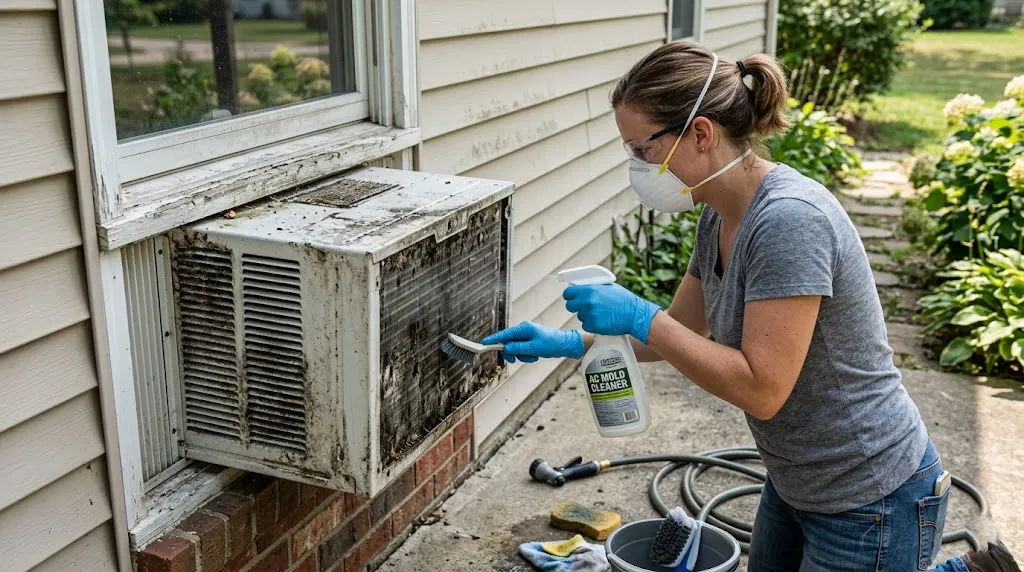
To clean mold from your air conditioner, turn off and unplug the unit, then remove and wash the filter. Mix equal parts white vinegar and water (or use a diluted bleach solution), scrub moldy surfaces with a soft brush, let the solution sit for 10 minutes, then rinse and allow everything to dry completely for up to 24 hours before reassembling.
You noticed a musty smell every time your AC kicks on. Maybe you spotted some dark fuzzy patches near the vents, or someone in your home has been sneezing more than usual. These are classic signs that you need to clean mold from your air conditioner — and the sooner, the better.
The good news is that small to moderate mold growth is something most homeowners can handle on their own with the right supplies and a bit of patience. This guide walks you through the entire process, from spotting the problem to preventing it from coming back.
Why Mold Grows Inside Your Air Conditioner
Your AC unit is basically a moisture magnet. It pulls warm, humid air from your home, cools it down, and returns it as dry, conditioned air. During that process, condensation forms on the evaporator coils, and that moisture collects in a drain pan below. When things are working properly, that water drains away. But when maintenance slips, drainage gets blocked, or humidity levels climb, that moisture sticks around.
Add some dust — which accumulates naturally inside any AC unit — and mold has everything it needs to thrive: moisture, warmth, darkness, and a food source. A dirty filter can actually serve as a food source for mold, speeding up its growth significantly.
The result is often black or green mold on the filter, inside the vents, on the evaporator coils, or along the drain pan. Dirty evaporator coils that accumulate grime combined with condensation create an ideal breeding ground for mold and mildew.
How To Tell If Your AC Has Mold
You don’t always need to see mold to know it’s there. The most common warning sign is a musty, earthy smell that hits you when the air conditioner first turns on. That odor is actually caused by mold spores being blown through your vents and into your living space.
Other signs to watch for include visible dark spots (often black, green, or gray) around the vents or on the filter, increased allergy symptoms in your household, and visible moisture or standing water near the unit.
Grab a flashlight and look inside the unit for signs of mold. If you see heavy mold growth that covers half or more of the unit’s surface area, call a professional for AC mold removal. For smaller deposits, you can tackle the cleaning yourself.
What You’ll Need Before You Start
Getting your supplies together before you begin makes the whole job go smoother. You’ll want rubber gloves, safety goggles, and an N95 or similar respirator mask — mold spores are not something you want to breathe in during cleaning.
For cleaning solutions, you have two solid options. The first is a mixture of equal parts white vinegar and water, which is gentler and safer around pets. The second is a diluted bleach solution — roughly half a cup of household bleach per gallon of hot water — which is more aggressive and works well for tougher growth.
You’ll also need a soft-bristle brush or scrubbing sponge, a few clean cloths, a vacuum with a brush attachment, and a spray bottle.
If the mold isn’t widespread, you’ll only need to spend less than $50 at a local home improvement store to purchase must-have cleaning supplies and protective gear.
How To Clean Mold From Your Air Conditioner Step by Step
Step 1: Turn Off and Unplug the Unit
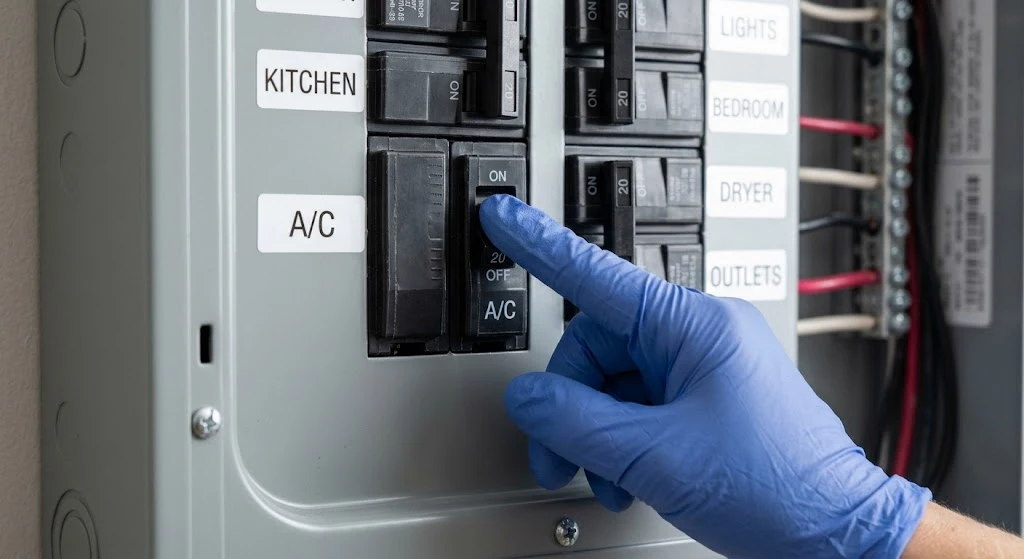
This is non-negotiable. Before cleaning your air conditioner, turn off the power supply to the unit to avoid any electrical hazards. You can do this by shutting off the mains or switching off the circuit breaker.
For window AC units, unplug the unit from the wall. Never spray liquids into or around an AC unit that still has power running to it.
Step 2: Move It Outdoors If Possible
It’s best to remove mold from air conditioner parts outdoors so you have plenty of fresh air to combat the mold and any fumes from the cleaner. For window units, have someone help you carry it to the garage or outside. For central air systems, you’ll work in place, so open windows for ventilation before you begin.
Step 3: Disassemble the Unit
Remove the front grille — most snap off by pulling them forward, while others are held by screws. Once the grille is off, pull out the air filter. Set both aside for separate cleaning.
For central air systems, you’ll remove the access panel to reach the evaporator coil compartment and drain pan.
Step 4: Clean or Replace the Filter
The filter is often the most mold-prone component because it traps so much moisture and dust. Remove the air filter, which is prone to mold growth due to moisture and humidity, and clean it with a mild detergent and warm water. Let it dry completely before putting it back into the unit.
If the filter is heavily contaminated or looks damaged, replace it. The standard recommendation for cleaning your AC air filter is every three months or once a season. However, your filter may need more frequent cleaning if you have pets, smokers, or allergies.
Step 5: Vacuum Out Dust and Debris
Before you apply any cleaning solution, use a vacuum with a soft brush attachment to remove loose dust, dirt, and debris from inside the unit — including the coils, drain pan, and interior surfaces. This removes the “food” that mold feeds on and makes your cleaning solution more effective.
Step 6: Apply Your Cleaning Solution
Spray the solution onto the moldy surfaces and let it sit for 10 to 15 minutes. Make sure you cover the evaporator coils, drain pan, interior walls, and any visible mold spots on the grille.
Dip a soft brush or cloth into the solution and scrub the affected areas gently. Rinse thoroughly with clean water and allow the components to dry completely before reassembling.
If mold is persistent and doesn’t come off easily after scrubbing, that’s a signal to call a professional rather than scrub harder.
Step 7: Clean the Drain Line
The condensate drain line is a common hiding spot for mold because it’s constantly damp. If mold is present in the condensate drain line, use a drain line cleaning kit or a mixture of bleach and water to disinfect and remove the mold. A small bottle brush or a flexible cleaning brush works well here. Clearing blockages in the drain line also helps prevent future moisture buildup.
Step 8: Rinse and Wipe Everything Down
After scrubbing, rinse the cleaned surfaces with clean water and wipe them down with a fresh cloth. Allow the cleaning solution to sit on the central air conditioner for about 10 minutes before spraying it with clean water and wiping it with a clean cloth.
Avoid getting water near the electrical controls, especially on window units. The housing is mostly waterproof, but the control panel area is not.
Step 9: Let Everything Dry Completely
This step is critical and easy to rush — don’t. Give the drying process 24 hours before you put it back together. Any residual moisture you seal back inside the unit will become tomorrow’s mold problem. Use fans to speed up drying if needed, and don’t reassemble until every component feels completely dry to the touch.
Step 10: Reassemble and Test
Once everything is dry, reassemble the unit, reinstall it, and power it back on. Run it for a few minutes and pay attention to any lingering musty smell. If you notice a bad smell or feel sudden allergy symptoms, there’s likely still mold in your unit.
When To Call a Professional
Some mold situations are simply beyond what a homeowner can safely handle. If mold covers more than half the unit’s interior, or if it’s growing on the evaporator coil inside a central air system, bring in an HVAC professional.
Mold is serious and can cause damage to your lungs, so treating it as an immediate call to the professional is the right call when the problem is significant.
If mold appears on the inside of the evaporator coil, it’s important to have an HVAC professional perform a thorough coil cleaning. The best way to prevent mold growth long-term is to install a UV lamp that consistently shines on the coil.
Professional mold remediation for HVAC systems can run into the thousands of dollars for serious cases, so catching and cleaning mold early on your own is always the smarter financial move.
How To Keep Mold From Coming Back
Cleaning mold is only half the battle. Keeping it gone requires a few simple habits.
Change or clean your filter every one to three months, depending on your household. A clogged, dusty filter creates exactly the conditions mold loves. Clean your air conditioner at least once a year. However, if you live in a humid climate or notice signs of mold growth, more frequent cleaning may be necessary.
Keep indoor humidity levels in check. A dehumidifier can control moisture levels when the AC is idle in a humid environment. Set the dehumidifier level between 30% and 50% to avoid excess moisture.
Make sure your condensate drain line stays clear by flushing it with a diluted vinegar solution every few months. Check occasionally for standing water in the drain pan, which signals a blockage that needs clearing.
Finally, run your AC regularly rather than letting it sit idle for weeks at a time. A constantly running unit can actually prevent mold growth, as mold prefers stagnant air and high humidity.
Conclusion
Finding mold in your air conditioner is unsettling, but it’s a very solvable problem. With the right safety gear, a good cleaning solution, and enough drying time, most homeowners can clean moderate mold growth themselves and get their AC running clean again.
The biggest thing to remember is this: don’t wait. The longer mold sits in your unit, the more it spreads — through your system, through your air, and potentially through your home. Act early, clean thoroughly, and build a few simple maintenance habits so you never have to deal with it again.
Your family breathes the air that passes through that unit every day. It’s worth the few hours it takes to keep it clean.
