

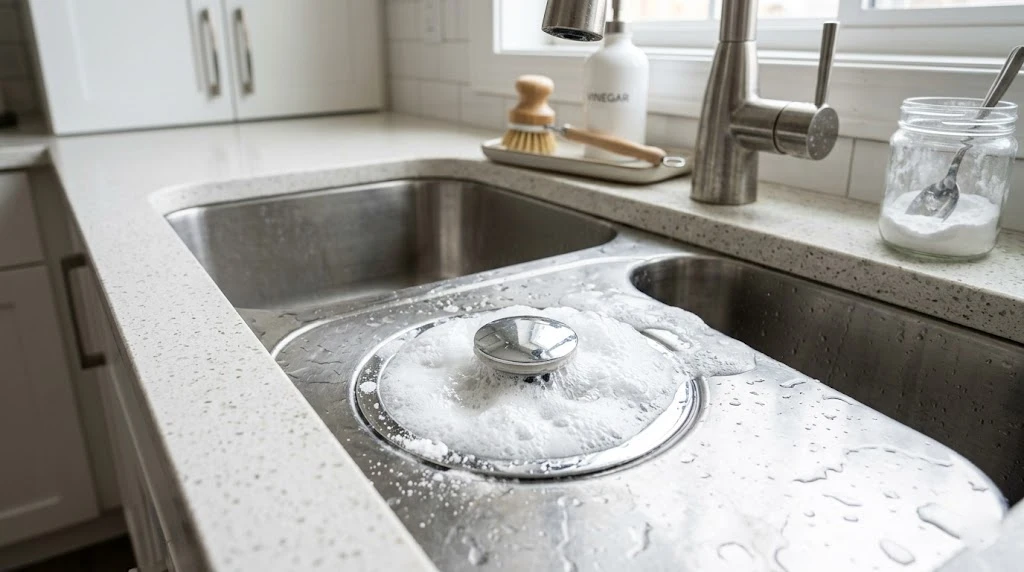
How to clean a kitchen sink drain: Pour half a cup of baking soda down the drain, then add one cup of white vinegar. Let it fizz for 10–15 minutes, then flush with boiling water. For regular maintenance, do this weekly and use a drain strainer to stop food debris from building up.
A slow, smelly kitchen sink drain is one of those problems that sneaks up on you. One day the water drains fine, and the next you’re standing in a puddle wondering what went wrong. The good news? Learning how to clean a kitchen sink drain is easier than most people think — and you probably already have everything you need under your kitchen counter.
This guide walks you through every method, from quick weekly flushes to deep cleaning the P-trap, so your drain stays clear, odor-free, and working properly year-round.
Why Your Kitchen Sink Drain Gets Dirty So Fast
Your kitchen sink handles a lot every single day. Grease from pans, food scraps from plates, soap residue, and even bacteria from raw meat all go down that drain. Over time, this mix sticks to the inside of the pipe walls and slowly builds up.
According to research cited by Consumer Reports, the kitchen sink drain ranked as one of the germiest spots in the home in tests, with scientists finding yeast, mold, and E. coli present. That’s not something you want sitting inside your pipes.
Experts recommend cleaning the sink daily and doing a more thorough weekly clean that focuses on the basin bottom, corners, and drain. A few minutes each week can save you from a serious clog — or a plumber’s bill — down the road.
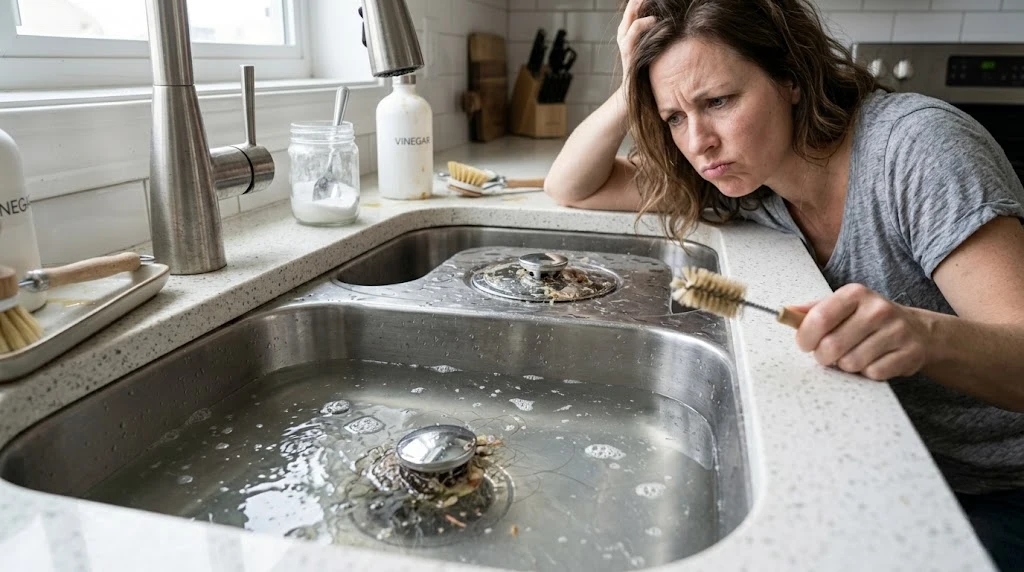
What You Need Before You Start
You don’t need any fancy products to clean a kitchen sink drain well. Most of what works best is already in your home.
For natural cleaning, grab baking soda, white vinegar, and boiling water. These three together handle most of the grease, soap scum, and organic buildup that causes odors and slow draining. You’ll also want rubber gloves to protect your hands, an old toothbrush for scrubbing around the drain opening, and a drain strainer if you don’t already have one.
For tougher jobs, a plunger, a drain snake, and a small bucket (for P-trap cleaning) round out your toolkit nicely.
How to Clean Kitchen Sink Drain with Baking Soda and Vinegar
This is the method most homeowners rely on, and for good reason. It’s cheap, safe for your pipes, and effective on minor buildup and odors.
Start by removing any visible debris around the drain opening. Use a gloved hand or paper towel to pull out any food particles sitting near the top. If your sink has a removable strainer, take it out and wash it separately with dish soap and warm water.
Next, bring a kettle of water to a boil and carefully pour it directly into the sink drain. This helps loosen any fats or oils that have solidified inside the pipe. Think of it as a warm-up step before the main event.
Then pour half a cup of baking soda into the drain, followed by a full cup of white vinegar. Let this combination sit and fizz for 10 to 15 minutes. The reaction breaks down organic material and deodorizes the drain at the same time.
Once the fizzing stops, flush the drain with another round of boiling water. This clears away the loosened residue and leaves the pipe noticeably cleaner. Repeating this process monthly goes a long way toward preventing buildup and blockages from forming.
The Salt and Baking Soda Method
If you want to give your drain an overnight treatment, the salt and baking soda combination is worth trying. Mix equal parts salt and baking soda and pour the mixture into the drain. Allow it to sit overnight to loosen debris, then flush with hot or boiling water in the morning.
The salt acts as a mild abrasive that helps break up grease and stuck-on gunk, while the baking soda neutralizes odors. It’s a great option if your drain smells a bit off but isn’t fully clogged yet.
How to Use a Plunger on a Kitchen Sink Drain
Sometimes the baking soda and vinegar method isn’t quite enough, especially if a partial clog has already formed. That’s when a plunger becomes your best tool.
Fill the sink with 3 to 4 inches of water to make sure the plunger seals properly around the drain opening. If you have a double sink, hold a wet rag tightly over the second drain to keep the pressure focused on the clogged side.
Push the plunger down firmly and then pull up sharply. Repeat this motion for about 20 seconds with good force. On your final pull, pop the plunger off the drain to release any built-up pressure. If the water starts draining freely, you’ve broken through the clog.
How to Clean the P-Trap
The P-trap is the curved pipe directly beneath your sink — it’s shaped like the letter U and sits inside your under-sink cabinet. This is where grease, food scraps, and debris tend to collect when a clog gets serious.
Cleaning it isn’t as intimidating as it sounds. Start by placing a pan or bucket underneath the P-trap to catch any water or debris that falls out. Unfasten it from the drainpipe, clear out anything stuck inside, and then replace it — making sure all connections are tightened securely.
Once it’s back in place, run warm water through the pipes for a few minutes to confirm everything is draining properly and there are no leaks at the joints. Cleaning the P-trap every three months or so keeps this common trouble spot under control.
Cleaning a Kitchen Sink Drain with a Garbage Disposal
If your sink has a garbage disposal, the drain cleaning routine gets a little more involved because the disposal itself can hold onto grease, food residue, and bacteria over time.
Sprinkle half a cup of baking soda into the disposal, then pour in one cup of white vinegar. Let the mixture fizz for a few minutes while you boil a kettle of water, then flush it all down with the hot water.
For a deeper clean, add one to two cups of ice to the disposal followed by half a cup of rock salt, then run it. The ice and salt combination works as a natural scrubber inside the grinding chamber.
Citrus peels are also a great natural option — place a handful of lemon, lime, or orange peels in the grinder and run it with cold water. The peels help loosen debris while leaving behind a fresh scent.
Always make sure the disposal is turned off and unplugged before you do any hands-on cleaning near the drain opening.
When to Use a Drain Snake
If plunging and natural cleaning solutions haven’t solved a stubborn clog, a drain snake (also called a plumber’s auger) is your next step before calling a professional.
Feed the snake slowly into the drain opening until you feel resistance. That resistance is usually the clog. Tighten the setscrew on the snake and turn the handle clockwise to work the tip through the blockage. Once you’ve broken through, pull the snake back out and flush the drain thoroughly with hot water.
A basic drain snake is affordable at any hardware store and handles most clogs that sit within the first several feet of pipe.
How to Keep Your Kitchen Sink Drain Clean Long-Term
Cleaning your drain reactively — only when something goes wrong — means more work and more frustration. A simple weekly routine is far easier than dealing with a full clog.
Pour boiling water down the drain once a week to keep grease and soap scum from accumulating. Using a drain strainer catches food particles before they enter the pipe, which is one of the single most effective preventive steps you can take.
Never pour cooking grease or oil down the drain. It might go down easily when it’s hot, but it solidifies as it cools inside your pipes and causes serious blockages over time. Pour cooled grease into a container and throw it in the trash instead.
Running water through your pipes at least once a week — even in drains you don’t use often — helps prevent sewer smells and keeps buildup from hardening.
Signs Your Drain Needs Attention Right Now
It’s easy to put off drain cleaning until the problem gets serious. Watch for these warning signs so you can act early. Water draining more slowly than usual is often the first signal. A persistent bad smell coming from the sink, even after you’ve cleaned the basin, usually points to buildup inside the pipe. Gurgling sounds after the water drains, or water backing up into a second sink, are signs a clog is already forming deeper in the line.
Catching these early means a simple baking soda flush will likely do the job. Waiting too long often means a plunger or drain snake — and sometimes a plumber.
When to Call a Professional Plumber
Most kitchen drain problems are fully DIY-friendly, but there are situations where calling a plumber is the smarter move.
If multiple drains in your home are clogged at the same time, or if the problem keeps coming back even after you’ve used a drain snake, that usually points to a larger issue deeper in the plumbing system. Visible leaks under the sink, cracks in the P-trap, or a drain that’s completely unresponsive to all home remedies are also good reasons to bring in a professional.
A plumber has access to high-powered tools that can clear blockages far beyond what household equipment can reach, and getting the job done right the first time is always cheaper than dealing with water damage later.
Conclusion
Keeping your kitchen sink drain clean doesn’t require expensive products or special skills. With a few simple ingredients — baking soda, vinegar, and hot water — and a consistent weekly routine, you can prevent most clogs and odors before they ever start.
Start with the boiling water flush and baking soda method today, pick up a drain strainer if you don’t have one, and remember to clean the P-trap every few months for good measure. A little regular attention goes a long way toward a drain that works quietly and reliably in the background, exactly the way it should.
