

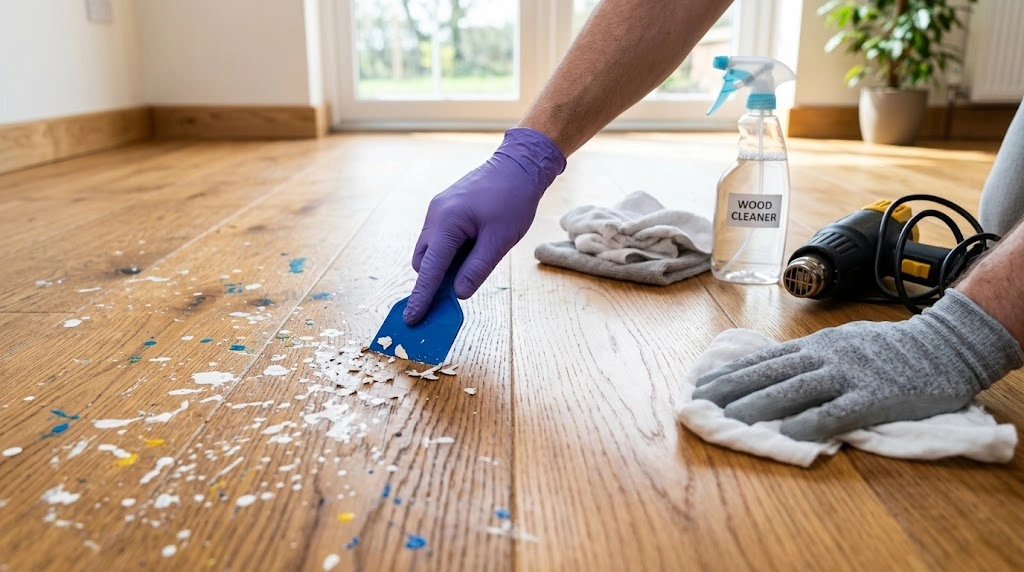
Paint on Hardwood Floors? Don’t Panic
Paint stains on wood floors can look scary—but they are not permanent.
Maybe you just painted a room and spilled a few drops. Or maybe you moved into a home where someone was not careful with paint. No matter the reason, the good news is this:
You can remove paint from wood flooring without ruining it—if you use the right method.
In this guide, you will learn:
- How to identify the type of paint
- Safe ways to remove it
- Tools you need
- Mistakes to avoid
Let’s start step by step.
Step 1: Identify the Type of Paint
Before removing paint, you need to know what kind it is.
There are two main types of paint:
- Water-based paint (latex or acrylic)
- Oil-based paint
Simple Test to Identify Paint Type
Use this quick method:
- Take a clean cloth
- Add a little rubbing alcohol (isopropyl)
- Rub it on the paint spot
👉 What happens?
- If paint comes off easily → Water-based paint
- If nothing happens → Oil-based paint
Paint Type Comparison Table
| Feature | Water-Based Paint | Oil-Based Paint |
|---|---|---|
| Easy to remove | Yes | No |
| Smell | Mild | Strong |
| Drying time | Fast | Slow |
| Removal method | Soap, alcohol | Chemicals, heat |
Step 2: Check Your Floor Condition
Before you start removing paint, take a close look at your floor.
Look for These Problems:
- Cracks or damaged wood
- Soft or weak areas
- Old repairs or patches
- Thin finish (from sanding)
👉 If your floor is weak, be extra gentle.
Important Safety Warning (Very Important)
If your house was built before 1978, the paint may contain lead.
Lead paint is dangerous.
What You Should Do:
- Test paint before scraping
- Avoid sanding (it spreads dust)
- Use a mask and gloves
Step 3: Prepare the Area
Preparation makes your work easier and safer.
Follow These Steps:
- Move furniture away
- Cover nearby items
- Open windows for fresh air
- Use a fan if possible
- Clean the floor (remove dust)
👉 Always test your method in a hidden spot first.
Tools and Materials You Will Need
Basic Tools
| Tool | Purpose |
|---|---|
| Plastic putty knife | Scraping paint safely |
| Soft cloth or rags | Cleaning |
| Safety goggles | Eye protection |
| Gloves | Protect hands |
| Mask | Avoid breathing fumes |
| Soft brush | Cleaning stubborn spots |
Cleaning Materials
| Material | Use |
|---|---|
| Dish soap + water | For light paint stains |
| Rubbing alcohol | For water-based paint |
| Lemon juice | Helps soften paint |
| Paint remover | For strong stains |
| Paint thinner | For oil-based paint |
Method 1: Remove Water-Based Paint (Easy Method)
This method works best for fresh or light paint stains.
Steps:
- Mix warm water with a few drops of dish soap
- Dip a cloth into the solution
- Place it on the paint for 5–10 minutes
- Gently scrape using a plastic putty knife
- Wipe clean with water
For Stubborn Paint
If paint is still there:
- Mix:
- 3 parts rubbing alcohol
- 1 part lemon juice
- Apply it to the paint
- Wait 5 minutes
- Scrub gently with a cloth or soft brush
👉 Always follow the wood grain when cleaning.
Method 2: Use Heat (Works for All Paint Types)
Heat helps soften paint so you can remove it easily.
You Can Use:
- Heat gun
- Hair dryer
Steps:
- Turn heat tool to medium setting
- Hold it 2–3 inches from paint
- Move it slowly in circles
- When paint bubbles → scrape gently
- Wipe with a damp cloth
Heat Method Safety Tips
- Do not keep heat in one place
- Avoid very high temperature
- Keep children away
- Work slowly
👉 Too much heat can burn wood.
Method 3: Remove Oil-Based Paint (Strong Method)
Oil-based paint is harder to remove. You may need chemicals.
Steps:
- Apply paint remover on the stain
- Wait 1–5 minutes
- Gently scrape paint
- Wipe with a clean cloth
For Tough Stains
- Use paint thinner on a cloth
- Rub gently on paint
- Do not spread it too much
- Clean area with water
Important Safety Rules
Safety is very important when removing paint.
Always Do This:
- Wear gloves
- Use safety goggles
- Wear a mask
- Work in a ventilated area
Safety Checklist Table
| Safety Item | Why It’s Important |
|---|---|
| Gloves | Protect skin from chemicals |
| Mask | Avoid breathing harmful fumes |
| Goggles | Protect eyes |
| Ventilation | Reduce toxic air |
Big Mistake to Avoid: Do NOT Sand Paint
Many people think sanding is the easiest way.
❌ This is a mistake.
Why You Should Avoid Sanding:
- It scratches wood
- Removes floor finish
- Creates dust (dangerous if lead paint)
👉 Only professionals should sand floors.
Pro Tips for Best Results
Here are some expert tips:
- Always work slowly
- Use plastic tools (not metal)
- Test first in hidden area
- Clean after every step
- Be patient
Quick Method Comparison Table
| Method | Best For | Difficulty | Risk Level |
|---|---|---|---|
| Soap + Water | Light paint | Easy | Low |
| Alcohol Mix | Water-based paint | Easy | Low |
| Heat Gun | All paint types | Medium | Medium |
| Paint Remover | Oil-based paint | Hard | High |
When Should You Call a Professional?
Sometimes, DIY is not enough.
Call an Expert If:
- Paint covers large area
- Floor is damaged
- You suspect lead paint
- You are not confident
How to Keep Your Floors Safe in the Future
Prevention is always better.
Tips:
- Use drop cloths when painting
- Tape edges carefully
- Clean spills immediately
- Keep tools controlled
Final Thoughts
Removing paint from wood flooring may seem difficult, but it is very possible.
You just need:
- The right method
- The right tools
- Patience
Start with the simplest method first. Only move to stronger solutions if needed.
Soon, your floor will look clean, smooth, and beautiful again.
Ready to Fix Your Floors?
Now you know how to safely remove paint from wood flooring.
👉 Try one method today and see the difference.
If you found this guide helpful, save it or share it with someone who needs it.
