

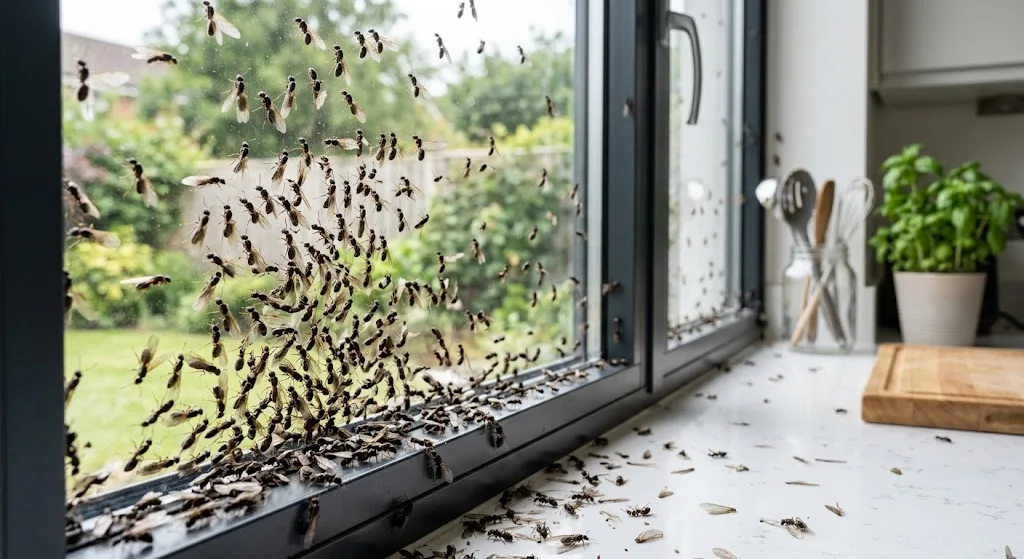
To get rid of flying ants, vacuum up swarms immediately, spray soapy water on visible ants, and seal cracks around windows and doors. For a lasting fix, find and treat the nest with ant bait, since killing visible ants alone won’t stop the colony from producing more.
Finding a swarm of flying ants in your kitchen or bathroom is unsettling, especially when they seem to appear out of nowhere. The good news is that you can get rid of flying ants quickly using a few simple steps, and you can stop them from returning with a little follow-up work. This guide walks you through exactly what to do, starting with the ants you can see right now and ending with how to keep your home ant-free long term.
Why Flying Ants Show Up in the First Place
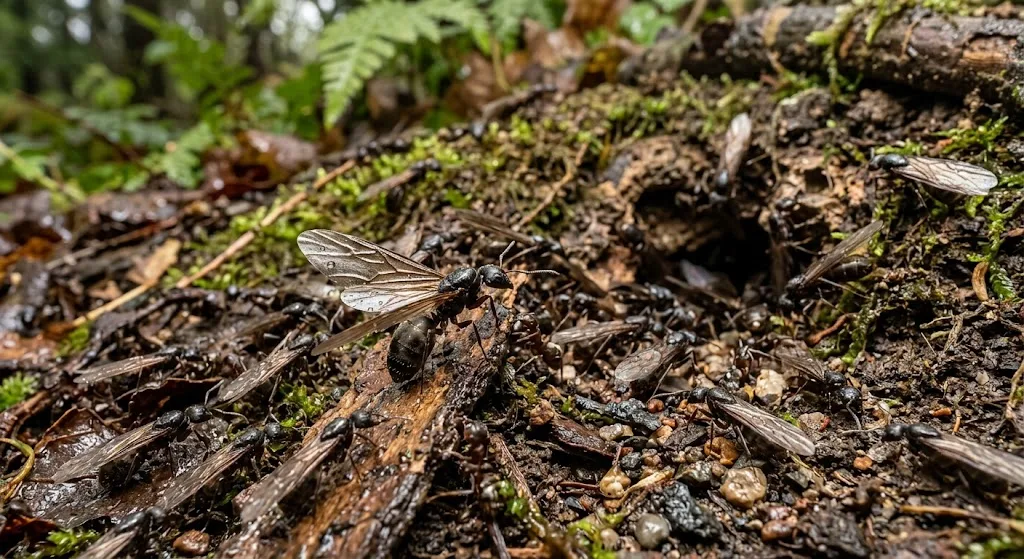
Flying ants aren’t a separate species. They’re regular ants that grew wings for one specific reason: to mate and start new colonies. Pest control experts call these winged ants “alates” or “swarmers.” Once a colony matures and has enough workers to support itself, it produces winged males and winged females whose only job is to leave the nest, find a partner, and establish a brand-new colony somewhere else.
This swarming usually happens during warm, humid weather, often right after rain. That’s why you might notice flying ants appearing suddenly in spring or early summer, then vanishing again within a day or two. The males die shortly after mating, while the females shed their wings and search for a place to dig in and start laying eggs.
If you’re seeing flying ants inside your house, it usually means one of two things. Either a few wandered in by accident while looking for a mate, or there’s an established colony already living somewhere in or near your home. The second scenario is the one worth paying closer attention to.
Flying Ants or Termites? Here’s the Difference
Before you treat anything, it helps to know exactly what you’re dealing with, since flying ants and termite swarmers look similar at a glance but require very different solutions.
Flying ants have bent, elbow-shaped antennae and a noticeably pinched waist between their thorax and abdomen. Their front wings are larger than their back wings. Termite swarmers, on the other hand, have straight antennae, a thicker waist with no pinch, and two pairs of wings that are roughly equal in size.
If you’re not sure which one you’ve found, take a close look at a few of the insects, or snap a photo and zoom in. Termites can cause serious structural damage over time, so if you suspect they’re the culprit, it’s worth getting a professional opinion sooner rather than later.
How Do You Get Rid of Flying Ants Indoors?
Once you’ve confirmed you’re dealing with ants and not termites, you can move on to actually clearing them out. The approach depends on how many ants you’re seeing and how long the problem has been going on.
Quick Fixes for a Few Stray Ants
If you’ve only spotted a handful of flying ants, a vacuum is your fastest tool. Run the vacuum over windowsills, light fixtures, and any surfaces where ants have landed, then empty the canister or remove the bag outside right away so the ants can’t crawl back out.
For ants you can see but haven’t vacuumed yet, mix a few drops of dish soap with water in a spray bottle and spritz them directly. The soap breaks down the waxy coating on their exoskeleton, which kills them fast and is safe to use around food prep areas and kids.
Dealing With a Larger Swarm
A bigger swarm usually points to a nest somewhere nearby, which means spot-treating the ants you can see won’t solve the underlying problem. Start by tracing where the ants are coming from. Check along baseboards, around window frames, near plumbing fixtures, and outside along your foundation for trails or small piles of debris.
Once you find the likely entry point or nesting area, ant bait stations are far more effective than spray for this stage. Worker ants carry the bait back to the colony, where it gets shared with the queen and the rest of the nest. This takes a little patience, usually a few days to a couple of weeks, but it targets the actual source instead of just the ants you happen to see.
Sticky traps placed near windows, doors, and other entry points can also catch ants as they try to get inside, which helps cut down on numbers while the bait does its slower work on the colony itself.
Natural Remedies Worth Trying
If you’d rather avoid chemical sprays, a few natural options can help manage flying ants while you work on a longer-term fix.
Diatomaceous earth is a fine powder made from fossilized algae, and it works by scratching the ants’ exoskeletons and drying them out. Sprinkle a thin layer along entry points, baseboards, and any spots where you’ve seen ant activity. It’s non-toxic to humans and pets when used as directed, though it’s not a complete colony killer on its own.
White vinegar mixed with water in a spray bottle is another option. The strong smell disrupts the scent trails ants use to communicate and navigate, which can make an area less appealing to them. It won’t eliminate a nest, but it’s a handy short-term deterrent for entry points like window sills and door thresholds.
Essential oils such as peppermint, tea tree, and lemon are also known to repel ants when diluted with water and sprayed around common entry areas. These work best as part of a prevention routine rather than a cure for an active swarm.
How to Stop Flying Ants from Coming Back
Getting rid of the ants you can see is only half the job. Keeping them from coming back means making your home less appealing in the first place.
Start with moisture control, since damp conditions are one of the biggest draws for ants. Fix leaky pipes, wipe down sinks and tubs after use, and run a dehumidifier in particularly humid rooms like basements or laundry areas. Carpenter ants in particular are drawn to wood that’s been softened by water damage, so this step matters even more if you suspect that species.
Next, take a walk around your home’s exterior and look for gaps. Cracks in the foundation, gaps around window and door frames, and torn screens all give ants an easy way inside. A tube of caulk and a few replacement screens go a long way toward sealing these entry points.
Food matters too. Store pantry items in airtight containers, wipe up spills quickly, especially anything sugary, and don’t leave pet food sitting out for long periods. Even small crumbs can be enough to attract scouting ants looking for a food source to report back to their colony.
Outdoor lighting plays a role as well, since many flying ants are drawn to bright lights at night. Switching to yellow-toned bulbs or simply turning off unnecessary outdoor lights during peak swarming season can reduce how many ants end up near your doors and windows in the first place.
When to Call a Pest Control Professional
DIY methods work well for occasional stragglers or a swarm that shows up once and clears out on its own. But if flying ants keep appearing week after week, or if you’ve found a large nest you can’t fully access, it’s time to bring in a professional.
Pest control technicians can identify the exact species you’re dealing with, locate nests that aren’t visible from the surface, and apply treatments strong enough to wipe out an entire colony rather than just the visible ants. This is especially important if there’s any chance you’re dealing with carpenter ants or termites, since both can cause damage that’s far more costly to fix than a pest control visit.
Final Thoughts
Flying ants look alarming, but they’re a manageable problem once you understand what’s actually happening. Most swarms are simply ants on the move, looking for a new place to settle down, and a combination of quick cleanup, targeted bait, and a few preventive changes around your home will usually clear them out for good. If the problem keeps repeating or you’re not confident in what you’re seeing, don’t hesitate to call in a professional who can confirm the source and handle it properly. A little effort now saves you from dealing with the same swarm again next season.
