

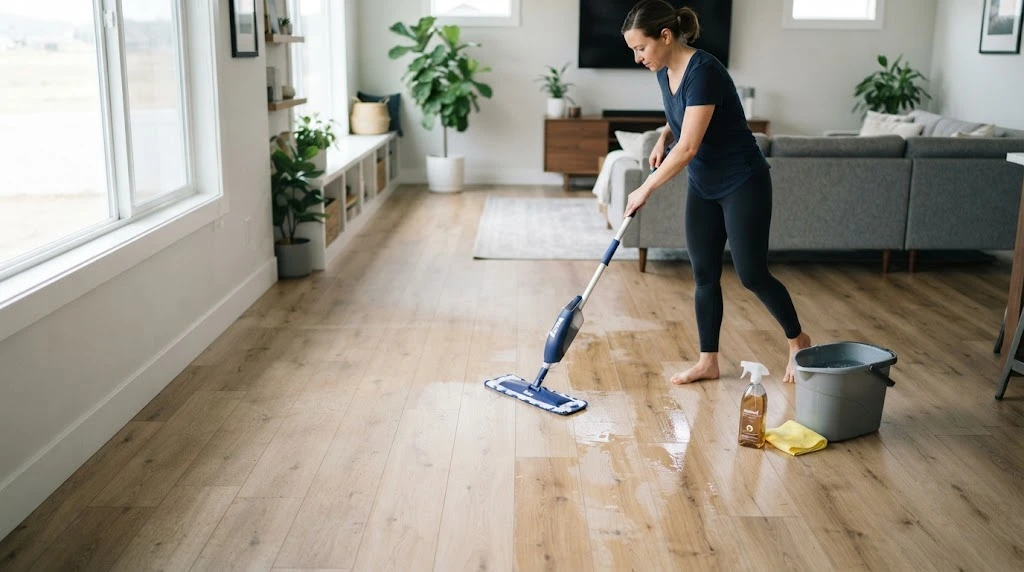
Laminate flooring gives you the warm, natural look of hardwood or stone without the steep price tag. It’s tough enough to handle busy households with kids and pets, and it comes in dozens of styles to match almost any decor. But durable doesn’t mean indestructible. If you want your laminate floors to stay scratch-free and beautiful for years, you need to clean them the right way.
The good news? Cleaning laminate floors isn’t complicated once you know the rules. This guide walks you through the best tools, cleaning solutions, and techniques to keep your floors looking new — plus how to avoid the mistakes that cause permanent damage.
Tools You Need for Cleaning Laminate Floors
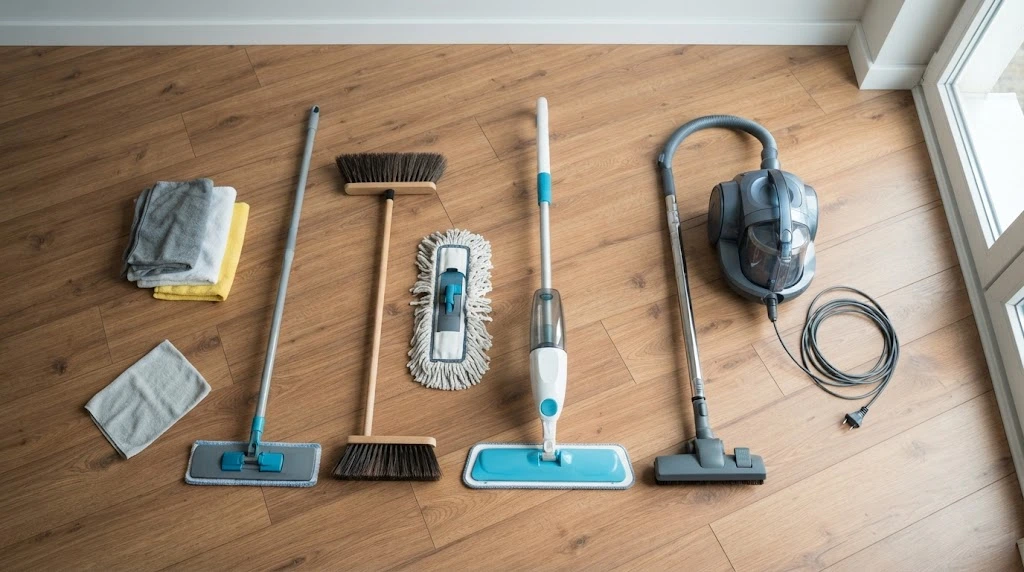
Laminate has a protective wear layer on top, but that layer can be scratched, dulled, or worn down by the wrong tools. Having the right equipment on hand makes daily upkeep quick and keeps deeper cleans safe.
Tools That Work Well
- Microfiber cloths
- Microfiber mop
- Soft-bristled broom or dust mop
- Spray mop (with a laminate-safe setting)
- Vacuum cleaner with a soft brush attachment
When you use a microfiber mop, glide it in one direction along the grain of the planks instead of scrubbing back and forth. This picks up more dirt and reduces streaking. A mop head with a slight electrostatic charge works even better, since it grabs dust and pet hair instead of just pushing it around.
Sticky spots need fast attention. Dab a damp cloth with a small amount of floor cleaner and rub the spot until it lifts. If bending over isn’t comfortable, place a rag under one foot and use your body weight to scrub instead.
For vacuuming, always switch to the bare-floor or hardwood setting. This turns off the spinning brush roll, which can otherwise leave fine scratches across the surface. A HEPA-filter vacuum is a smart choice too, since it traps fine dust instead of blowing it back into the air. If you’d rather automate the job, a robot vacuum built for hard floors works well — just pick a model with at least an hour of runtime so it can finish a full room before recharging.
Pro Tip: Brett Miller, a technical expert at the National Wood Flooring Association, cautions against “too much water, any amount of steam” on laminate. Steam might look like it deep-cleans, but the heat and moisture can break down the floor’s protective coating and cause the core layer underneath to swell and warp.
Tools to Avoid
Some common cleaning tools do more harm than good on laminate. Skip these entirely:
- Abrasive scrubbers or steel wool
- Steam mops
- Vacuums with beater bars or rotating brush rolls
- String mops or any tool that leaves the floor soaking wet
Daily Maintenance: Sweeping and Vacuuming
Dust and grit might seem harmless, but left alone, they act like sandpaper every time someone walks across the floor. A quick sweep or vacuum each day (or every other day in busy households) prevents that slow, invisible wear.
How to Sweep Laminate Floors the Right Way
Use a soft-bristled broom or a dry dust mop, and always sweep with the direction of the planks rather than across them. This keeps debris from getting pushed into the seams, where it can build up over time. For tight corners and edges, a small hand brush and dustpan will catch what a full-size broom misses.
Safe Vacuuming Practices
Set your vacuum to its hardwood or bare-floor mode so the beater brush stays off, and attach the soft brush head if your model has one. Move the vacuum along the length of the planks, the same direction you’d sweep in.
Pro Tip: As This Old House Magazine notes, a soft floor nozzle is a must — brush rolls and beater bars are designed for carpet fibers, not laminate’s finish, and they can leave fine scratches with repeated use. If sticky messes show up between vacuuming sessions, treat them right away with a barely damp cloth, a small dab of floor cleaner, and a firm rub.
How to Mop Laminate Floors Without Damaging Them
Laminate isn’t waterproof, but that doesn’t mean mopping is off-limits. The trick is controlling how much moisture touches the floor.
Choosing the Right Mop
A microfiber mop or a spray mop made for laminate gives you the most control. Spray mops in particular let you apply cleaner in a fine mist rather than soaking the pad, which keeps water away from the seams between planks.
Mopping Technique That Actually Protects Your Floor
Dampen the mop — never soak it — and work in long strokes that follow the direction of the planks. Standing water is laminate’s biggest enemy, so resist the urge to use more liquid “for a deeper clean.” A light, even pass does the job without risking swelling or warping along the seams.
Always Dry the Floor Afterward
Once you’ve finished mopping, go over the floor with a dry microfiber cloth or towel to soak up any leftover moisture. Pay close attention to corners, edges, and doorway thresholds, since water tends to collect and linger in those spots longer than in open areas.
Best Cleaning Solutions for Laminate Floors
Not every floor cleaner is laminate-safe, and using the wrong one can leave a dull film or, worse, eat away at the protective coating.
Store-Bought Laminate Cleaners
Look for a cleaner labeled specifically for laminate flooring. These are formulated to cut through dirt and grease without leaving streaks or residue, and they won’t strip the wear layer the way general-purpose cleaners can.
DIY Cleaning Solutions
If you’d rather skip store-bought products, two simple homemade solutions work well:
- Mild dish soap mix: 1 teaspoon of clear, unscented dish soap in 1 gallon of warm water.
- Vinegar solution: 1 part white vinegar to 3 parts water.
Both are gentle enough for regular use and cheap enough to make in bulk. Just remember: less is more. Dip your mop, wring it out well, and apply lightly.
Cleaning Products to Avoid
Certain ingredients can strip the finish or leave lasting damage. Steer clear of:
- Ammonia-based cleaners
- Abrasive or gritty cleaning powders
- Wax or oil-based polishes
- Bleach or chlorine-based products
Dealing With Stains and Spills on Laminate
Spills happen — the key is how fast you respond. Laminate’s finish resists staining fairly well, but only if liquid doesn’t sit long enough to seep into the seams.
Quick-Response Cleanup
Blot spills immediately with a soft, absorbent cloth rather than wiping, which can spread the mess. For sticky spills like juice or syrup, follow up with a slightly damp cloth, then dry the spot completely.
Removing Stubborn Stains
Different stains call for different fixes:
- Chewing gum or candle wax: Let it harden completely, then gently lift it off with a plastic scraper (never metal, which can scratch the surface).
- Ink or marker: Dab — don’t scrub — with a cloth lightly dampened in rubbing alcohol.
- Oil-based stains: Apply a small amount of acetone-based nail polish remover to a cloth and wipe the area, then clean and dry as usual.
Before trying any of these on a visible section of flooring, test it in a hidden spot first, like inside a closet or under an appliance, to make sure it won’t discolor the laminate.
How to Protect Laminate Floors Long-Term
Laminate can’t be sanded and refinished like hardwood, so once it’s scratched or damaged, that damage is permanent. Prevention is genuinely your best tool.
Simple Habits That Save Your Floors
- Place doormats at every entrance to catch dirt and moisture before it reaches the laminate.
- Ask family and guests to remove shoes indoors.
- Keep pet nails trimmed short to prevent scratch marks.
- Clean up spills the moment they happen instead of letting them sit.
Pro Tip: Jeff Hosking, a flooring expert featured in This Old House Magazine, points out that laminate resists scratches better than most wood floors — but once it scratches, there’s no fixing it. “I expect plastic laminate floors to last 8 to 15 years,” he says. “By then the homeowner gets tired of looking at the scratches and replaces the floor.” Since refinishing isn’t an option with laminate, staying ahead of scratches is the only real strategy.
Use Furniture Pads
Stick felt pads under the legs of chairs, tables, and other furniture to prevent scuffing when items get moved or shifted. Check them every few months and swap them out once they start to wear thin or fall off.
Common Laminate Cleaning Mistakes to Avoid
A few small habits are responsible for most laminate damage. Watch out for:
- Letting water pool or sit on the surface
- Ignoring spills instead of cleaning them right away
- Scrubbing with abrasive pads or harsh chemicals
- Using a steam mop or a soaking-wet string mop
- Over-wetting the floor during regular mopping
Caring for Laminate in High-Traffic Areas
Hallways, entryways, and living rooms take far more foot traffic than the rest of the house, so they need a bit of extra attention.
- Lay down area rugs in busy spots to absorb wear.
- Sweep or vacuum high-traffic zones more often than the rest of the home.
- Add chair mats under rolling office chairs to prevent grooves and scuffs.
- Rotate furniture occasionally so wear doesn’t concentrate in the same spots.
Pro Tip: Pat Hunt, a flooring contractor who has worked on multiple This Old House projects, warns that tracked-in grit is one of the most damaging things a floor faces. “When you walk into the house from outdoors, particularly in the winter, the bottoms of your shoes are like sandpaper,” he explains. His fix is simple: put non-slip mats at every entry point so dirt gets trapped before it ever touches your laminate.
Seasonal Laminate Floor Care Tips
Your cleaning routine should shift a little with the seasons, since each one brings its own challenges.
Spring and Summer
- Clean air conditioning vents regularly to cut down on circulating dust.
- Sweep and vacuum more often to handle pollen and higher foot traffic.
- Run a dehumidifier if your home tends to get humid, since excess moisture in the air can affect laminate over time.
Fall and Winter
- Keep indoor humidity at a steady level to prevent gaps from forming between planks as the air dries out.
- Place absorbent mats near every entrance to catch snow, slush, and salt.
- Go over the floor with a slightly damp mop to remove salt residue, which can otherwise leave a chalky film.
Final Thoughts
Laminate flooring rewards a little consistency. Sweep or vacuum regularly, mop with a light touch, use the right cleaning solution, and handle spills the moment they happen. Combine that with a few smart habits — doormats, felt furniture pads, trimmed pet nails — and your laminate floors can easily last well past their expected 8- to 15-year lifespan without looking worn out.
The bottom line: laminate doesn’t need complicated care, just the right care. Stick to these steps, and your floors will keep their shine for years to come.
