

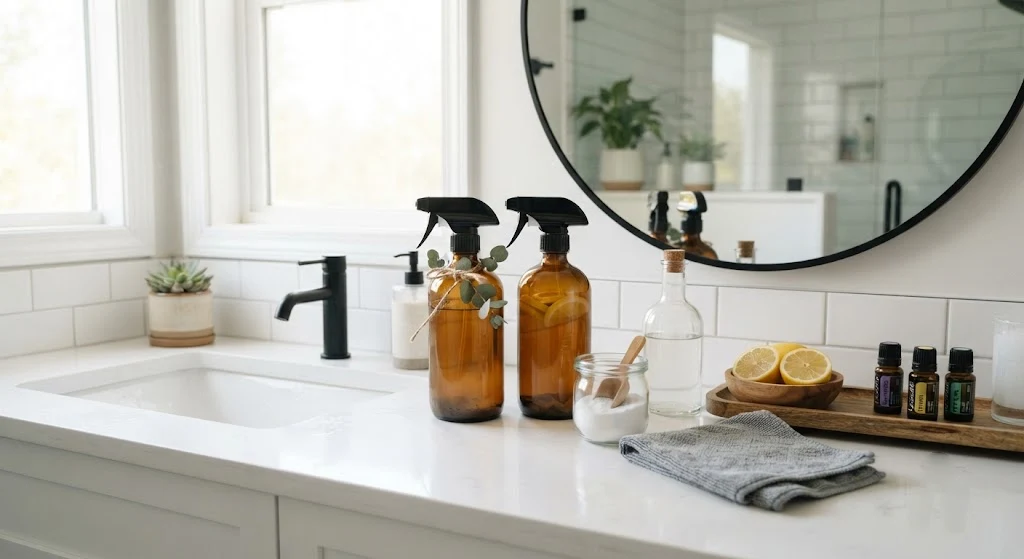
Store-bought bathroom cleaners can cost a lot. They also smell harsh and pack in chemicals you can’t pronounce. The good news? You can make your own bathroom cleaner with things already sitting in your kitchen cabinet.
This guide walks you through five DIY bathroom cleaner recipes, the safety rules you need to know, and how to use essential oils to make your cleaners smell amazing. By the end, you’ll have everything you need to ditch the pricey sprays for good.
What to Expect From DIY Bathroom Cleaners
Let’s clear up a few myths first.
Homemade cleaners really are cheaper than most name-brand products. In many cases, they work just as well. But there’s a catch: they usually take more effort. Store-bought cleaners use detergents and foaming agents built for speed. If you expect vinegar or baking soda to match that convenience with zero extra scrubbing, you’ll be let down.
Here’s another myth worth busting: “natural” doesn’t always mean “safe.”
Borax is a common ingredient in homemade cleaners, but it’s also used as a pesticide. Breathing in or swallowing borax powder can make you sick, just like ingesting a bottled cleaner would. Isopropyl alcohol is highly flammable. And mixing the wrong ingredients together, like bleach and ammonia, can be dangerous.
The word “natural” isn’t regulated by any government agency. That means “eco-friendly” and “less-toxic” labels can still hide ingredients that harm you or the environment if misused. DIY cleaners can absolutely be safer than some store-bought options, but you still need to handle them with care.
Pro tip: Mineral deposits on faucets respond well to a squeeze of fresh lemon juice, which dissolves the stains almost instantly. For foggy shower doors, spray undiluted white vinegar, then wipe with a sponge dipped in water and a few drops of dish soap.
Essential Ingredients for Homemade Bathroom Cleaners
Most homemade bathroom cleaners rely on a small set of powerful cleaning agents, sometimes paired with essential oils for scent and a little extra cleaning power.
Cleaning Agents
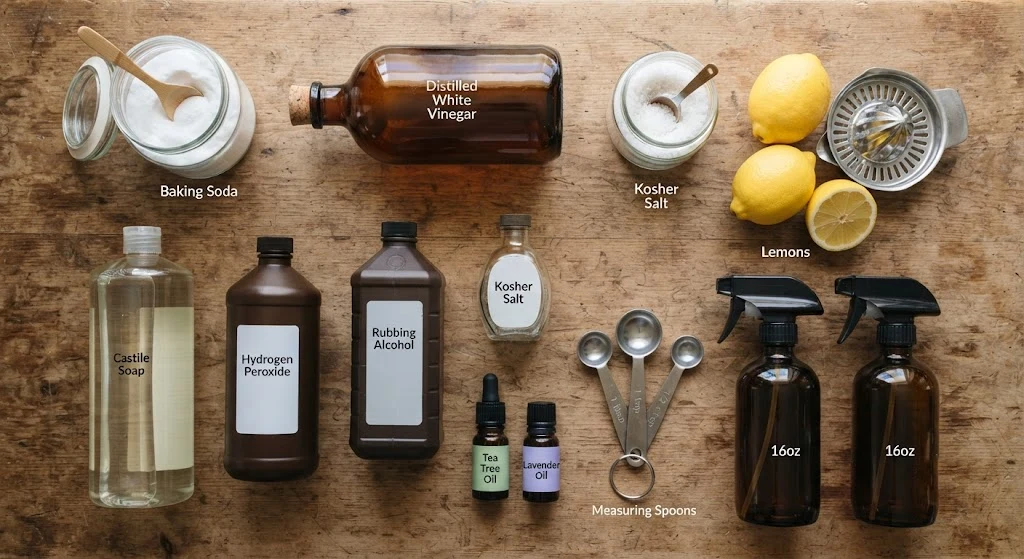
- Baking soda – scrubs, deodorizes, and brightens surfaces
- Borax – cleans and deodorizes tough grime
- Cleaning vinegar or distilled white vinegar – cuts through dirt, oil, and bacteria
- Dish soap – breaks down grease
- Distilled water – won’t leave mineral residue like tap water can
- Hydrogen peroxide (3% or stronger) – kills certain germs and bacteria
- Isopropyl alcohol (70% or stronger) – kills certain germs and bacteria
- Kosher salt – scours away grime and residue
- Liquid castile soap – lifts dirt, grime, and bacteria
Pro tip: Vinegar and baking soda fizz when combined, which can help loosen gunk in drains. But once the fizzing stops, the leftover liquid isn’t a strong cleaner on its own. For sprays or scrubs, stick to recipes that use either vinegar or baking soda, not both at once.
Essential Oils
Essential oils mainly add a pleasant scent and help mask bad odors. Some studies suggest mild antimicrobial benefits, but there’s a big difference between killing germs in a lab dish and disinfecting your bathroom counter. Enjoy the fragrance, dilute properly, and don’t rely on oils alone for disinfecting.
Popular options include:
- Eucalyptus oil
- Lavender oil
- Lemon oil
- Peppermint oil
- Tea tree oil
Pro tip: Tea tree oil is a go-to for musty smells and mold. Mix a few drops with rubbing alcohol or cheap vodka, then spray it on anything that smells stale. The alcohol evaporates fast, leaving the tea tree oil behind to fight the odor at its source.
Tools You’ll Need
- Funnel – for pouring liquids into spray bottles without a mess
- Jars – for storing dry cleaning mixes
- Labels – so you always know what’s inside each container
- Measuring cups and spoons – for accurate ingredient amounts
- Spray bottles – for mixing and applying liquid cleaners
How to Use DIY Bathroom Cleaners Safely
Before jumping into the recipes, here are the best practices that make homemade cleaners work better and last longer.
Tips and Principles
- Cleaning vinegar has a higher acid concentration than the grocery-store kind, so it cleans more effectively.
- Skip vinegar on natural stone, waxed wood, cast iron, or aluminum. It can damage these surfaces.
- Shake sprays well before each use since ingredients tend to separate.
- For stubborn stains, mix an abrasive ingredient with distilled water into a paste. Let it sit for 15 to 30 minutes before scrubbing.
- If a cleaner leaves streaks or residue, cut back on the soap or baking soda in the mix.
- Gentle ingredients like vinegar and castile soap need a few minutes to break down grime, so let them sit before you scrub.
- Powders like baking soda and cornstarch can clog spray nozzles, so they work best applied dry or as a paste.
- Abrasive powders such as baking soda, borax, and salt are great for tough tile but can scratch softer surfaces like natural stone, aluminum, or fiberglass.
- Store any cleaner with essential oils in glass containers, not plastic, since the oils can break plastic down over time.
- Always test a new cleaner on a small hidden spot before using it everywhere.
Pro tip: Cleaning your bathroom often, rather than letting grime build up, makes every cleaner — homemade or store-bought — work faster and easier.
Safety Precautions
- Label every homemade cleaner clearly.
- Wash spray bottles and jars before filling them.
- Keep isopropyl alcohol sprays far away from open flames.
- If a cleaner ever changes smell, color, or texture, toss it and mix a fresh batch.
- Never combine bleach with anything except water. Mixing it with other chemicals can release toxic fumes.
- Store all cleaners well out of reach of kids and pets.
- Wear gloves, especially if you have sensitive skin.
- Save the Poison Control number (800-222-1222) in your phone before you start mixing.
Pro tip: Only buy or mix as much cleaner as you’ll actually use. Common household chemicals like bleach are classified as hazardous, so proper storage and disposal matter for your safety and the environment.
5 DIY Bathroom Cleaner Recipes
Now for the fun part. Here are five tried-and-true recipes to tackle almost anything in your bathroom.
1. All-Purpose Baking Soda Cleaner
- 1 tablespoon baking soda
- 2 cups distilled water
- 2 tablespoons liquid castile soap or dish soap
- Up to 20 drops essential oil (optional)
Combine everything in a 16-ounce spray bottle. Use glass if you’re adding essential oils. Shake before each use since the baking soda settles at the bottom. This mix stays effective for up to a month.
2. All-Purpose Vinegar-Based Cleaner
- 1 cup distilled white vinegar
- 1 cup distilled water
- 1 tablespoon liquid dish soap
- 10–15 drops essential oil (optional)
Pour everything into a spray bottle and shake gently to combine. Spray on counters, tile, and fixtures, then wipe clean. Skip this one on natural stone or waxed surfaces.
3. Scouring Powder for Tough Stains
- 1 cup baking soda
- ½ cup kosher salt
- 10 drops tea tree or lemon essential oil (optional)
Mix the dry ingredients in a jar with a tight lid. Sprinkle onto a damp sponge or directly onto stubborn stains, then scrub in small circles. Rinse thoroughly.
4. Mirror and Glass Cleaner
- 1 cup distilled water
- ¼ cup distilled white vinegar
- 1 tablespoon cornstarch
Combine in a spray bottle and shake before each use. Spray onto glass or mirrors, then wipe with a lint-free cloth or newspaper for a streak-free shine.
5. Disinfecting Toilet Bowl Cleaner
- ½ cup baking soda
- ½ cup distilled white vinegar
- 10 drops tea tree oil (optional)
Sprinkle the baking soda around the bowl, then pour in the vinegar. Let the mixture fizz and sit for 10 minutes before scrubbing with a toilet brush and flushing.
Eco-Friendly Packaging and Storage Tips
Reuse old spray bottles to cut down on plastic waste, but clean them thoroughly first. This avoids accidentally mixing leftover chemicals with your new solution. Mason jars work well for storing dry mixes, especially ones with essential oils. Since every container should be labeled anyway, try reusable or biodegradable tags.
Swap paper towels for washable microfiber cloths to reduce waste even further. Natural sponges and brushes are another easy upgrade since they biodegrade once worn out, unlike their synthetic counterparts.
Final Thoughts
The biggest mistake people make with homemade cleaners is expecting instant results. Baking soda and vinegar won’t blast through soap scum the way a heavy-duty spray might, and that trips a lot of people up. If you’re patient and willing to put in a bit of extra scrubbing, DIY bathroom cleaners can save you money without sacrificing a spotless bathroom.
FAQs About DIY Bathroom Cleaners
How do I make my own bathroom cleaner?
Mix distilled water, vinegar, liquid soap, and a few drops of essential oil in a spray bottle for a simple, effective all-purpose cleaner.
What’s the best natural bathroom cleaner?
It depends on what you’re cleaning. Acidic cleaners like vinegar dissolve rust and hard water stains, while soap-based cleaners lift dirt and grease.
What’s the best homemade cleaner for showers and tubs?
A vinegar-based or baking soda-based all-purpose cleaner works well for most shower and tub grime. A homemade scouring powder handles tougher buildup.
How do you make a homemade bathroom cleaner with vinegar?
Combine equal parts vinegar, rubbing alcohol, and distilled water, then add a splash of liquid soap and a few drops of essential oil.
Are DIY cleaners as effective as store-bought ones?
They can be, but they usually need more time and scrubbing, especially for stubborn grime and built-up stains.
For more money-saving home hacks and lifestyle tips, keep exploring zillohome.com
