

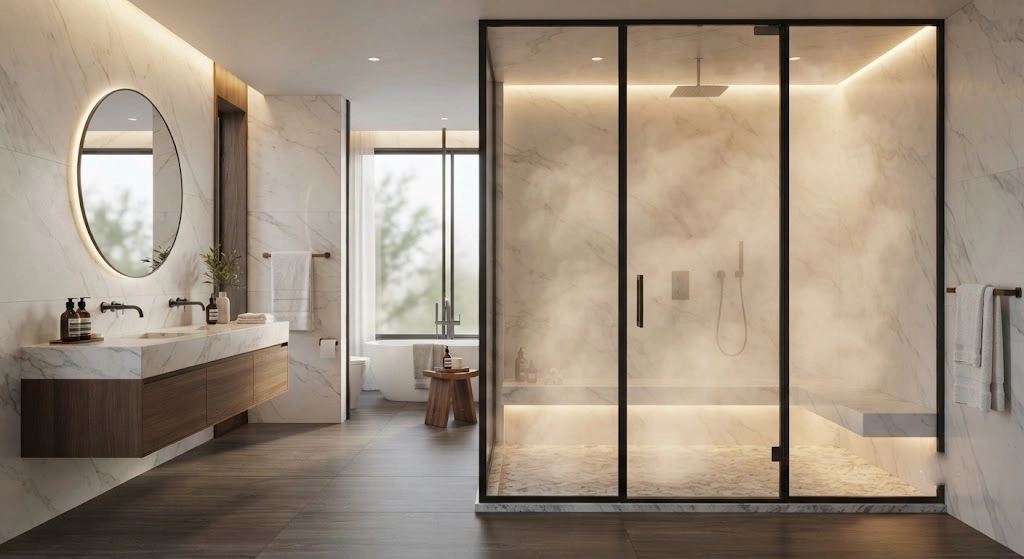
Imagine stepping into a warm cloud of steam after a long day, feeling your muscles loosen and your stress melt away — without ever leaving your house. That’s the appeal of a steam shower, and it’s why more homeowners are turning their bathrooms into personal wellness retreats.
Steam rooms have long been prized for their health perks: better circulation, deeper muscle relaxation, and skin that looks refreshed and glowing. Installing a steam shower brings all of that home, letting you enjoy a spa-quality experience whenever you want it — no appointment, no travel, no crowds.
This guide walks you through exactly how steam showers work, what installation involves, how much you should expect to pay, and how to choose a dealer you can trust. We’ll also cover the key features worth considering and share expert-backed tips for anyone thinking about tackling the project as a DIY build.
What Is a Steam Shower?
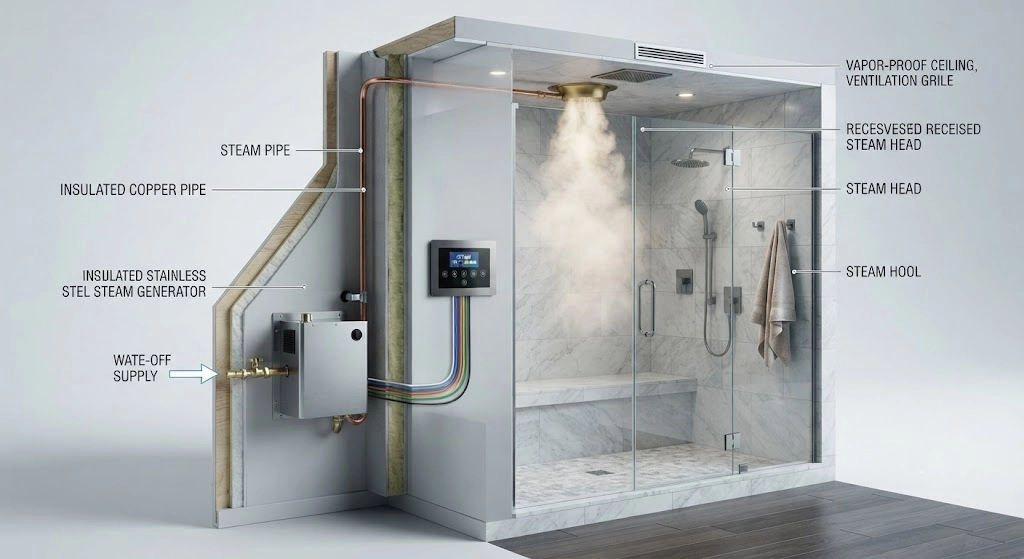
A steam shower is a fully sealed, moisture-tight shower enclosure designed to fill with steam before, during, or after your shower. Here’s the basic idea: cold water travels into a steam generator, where it’s heated until it boils. The resulting steam is piped into the shower stall through a small vent, called a steam head, and digital controls let you adjust the temperature and how long the steam runs.
Many modern systems go beyond basic steam, offering built-in aromatherapy, mood lighting, and even speakers for music — turning a simple shower into a full sensory experience. And if a full custom enclosure isn’t in the budget or the floor plan, you can often retrofit a steam generator into your existing shower stall instead.
Pro tip: A steam shower enclosure has to be completely sealed, or you risk serious moisture damage. According to plumbing experts featured in This Old House Magazine, unsealed steam can escape the stall and cause the wallpaper throughout your entire upper floor to peel. Sealing isn’t optional — it’s essential.
How Does a Steam Shower Work?
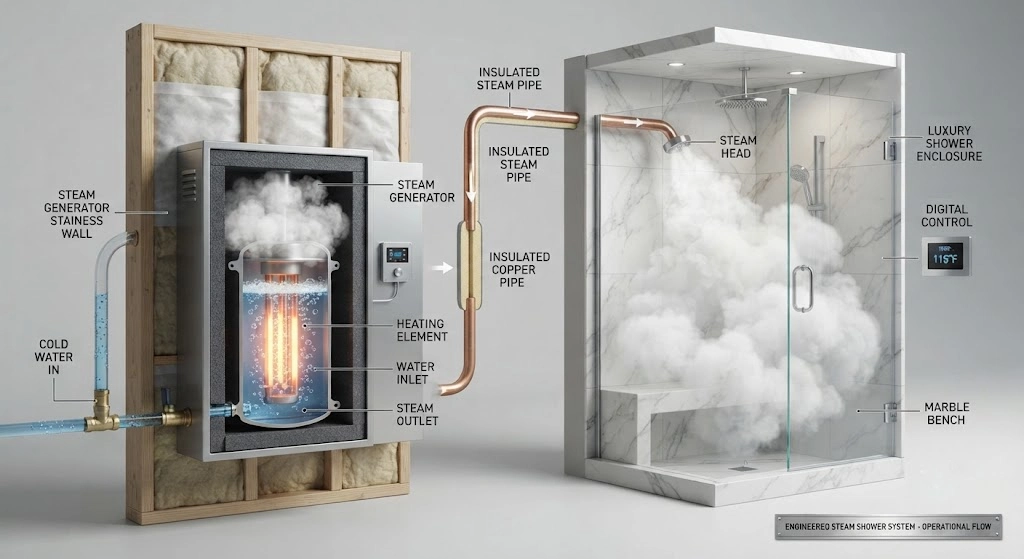
The mechanics behind a steam shower are simpler than you might expect. Once you press the digital control panel, a short sequence kicks off:
- An electric valve fills a compact steam generator (roughly the size of a breadbox) with about a gallon of cold water.
- An electric heating element inside the generator brings that water to a rolling boil.
- The resulting steam travels through a pipe to the steam head inside your shower, filling the enclosure with warm, humid air that’s kept at a safe maximum of around 118°F.
From there, you simply relax for as long as you like. A 20-minute steam session uses only about 2 gallons of water — but keep in mind that running the heating element will noticeably bump up your electric bill.
Steam Shower Installation: What to Expect
You have two main installation routes: a prefabricated kit or a fully custom build.
- Prefab kits are typically faster to install and more budget-friendly, since most of the enclosure and hardware comes pre-measured and ready to assemble.
- Custom designs cost more but give you full control over materials, layout, tile, and extra features like built-in seating or a rain shower head.
Once you’ve chosen a route and selected a manufacturer, a dealer will typically visit your home to identify the best spot for the enclosure (if you’re building a standalone stall) and determine where to hide the steam generator. The generator usually needs to sit within about 25 feet of the shower stall for the system to work efficiently.
“To get the most steam, you want as direct and short a pipe run as you can get from the generator to the shower,” plumbing experts note. A nearby linen closet or walk-in closet often works well, as long as there’s still enough room to access the unit for future maintenance.
From there, the project typically involves:
- A tiling contractor and shower-door installer to build a properly sealed, steam-tight enclosure
- A plumber to connect the water supply lines
- A licensed electrician to wire the generator’s 220-volt power supply and hook up the digital controls
If You’re Installing It Yourself
Steam shower installation is a demanding project, and hiring licensed professionals is strongly recommended — especially for the electrical and plumbing work. But if you have solid DIY experience and want to take it on, here are the essentials to get right:
Generator sizing. Steam generators are sized to match your shower stall’s volume (in cubic feet), its shape, and the material lining it. As a general benchmark, a standard 4-by-5-by-8-foot stall (160 cubic feet) finished in ceramic tile needs at least a 7-kilowatt generator. Stone-lined stalls absorb more heat, so you’ll typically need double that capacity to get the same steam output.
Ventilation. Removing excess moisture from the room is critical to prevent mold and mildew. If you’re retrofitting an existing bathroom, you may already have adequate ventilation in place. If not, plan to install an exhaust fan system rated for high-humidity environments.
Waterproofing. Beyond ventilation, waterproofing your walls before tiling is one of the most important steps for preventing hidden mold growth. Use a proper waterproofing membrane system underneath your tile to keep moisture from seeping into the wall structure.
How Much Does a Steam Shower Cost?
Steam shower pricing depends heavily on the brand, features, materials, and overall project scope. On average, homeowners spend around $4,300, with most projects falling somewhere between $2,800 and $7,100.
A few factors that move the price up or down:
- Retrofitting an existing shower with a steam generator is generally cheaper than building a brand-new stall from scratch.
- Custom designs cost more than prefabricated kits because of the added labor and materials.
- Premium add-ons — like natural stone slabs, built-in benches, or a jetted tub — will push the final cost higher.
Note: Cost figures in this guide are based on data from Angi unless otherwise noted.
Steam Shower Features Worth Considering
As you compare models and dealers, keep an eye out for these features that can make a real difference in day-to-day use:
- Auto-flush function – Automatically clears calcium deposits from the heating element, saving you from a manual flush-out roughly every 50 uses.
- Fast steam delivery – Higher-quality generators can build a full head of steam in under a minute, so you’re not waiting around.
- Remote or app controls – Adjust steam time and temperature without ever leaving your bench.
Steam generator sizing isn’t just about the square footage of your shower. Industry professionals typically calculate the total cubic footage of the stall, then factor in the surface material — ceramic tile, glass block, or natural stone — along with the distance the steam has to travel from the generator to the shower head. Getting this calculation right is key to a system that performs well and doesn’t waste energy.
Where to Find Reputable Steam Shower Brands
Several well-established manufacturers make it easy to find a local, authorized dealer through their websites. Some of the most trusted names in the industry include:
- Amerec
- Mr. Steam
- Steamist
- Thermasol
Working with an authorized dealer helps ensure your equipment is properly matched to your space and that installation meets manufacturer warranty requirements.
How to Build a Steam-Proof Shower Stall
Not every home has room for a separate steam shower enclosure, which is why many homeowners simply add a generator to their existing shower. But if you do have the space to build a dedicated stall, proper construction is essential to keep moisture from penetrating your walls and causing mold.
You can absolutely hire a contractor for this part of the project, but experienced DIYers can follow these steps to build a properly sealed enclosure:
- Slope the ceiling slightly. A flat ceiling lets condensed steam collect and drip straight down on you. A gentle slope directs moisture toward the walls instead.
- Protect wood framing. Staple sheets of 6-mil plastic over the studs and joists, overlapping every edge by at least a foot to create a solid moisture barrier.
- Seal the backer-board seams. Use mesh tape and thinset mortar to seal the joints between concrete backer-board panels, which resist moisture damage on their own.
- Apply a waterproof membrane. Cover every inch of the backer board with either two coats of a roll-on liquid polymer (such as Laticrete’s Hydro-Ban) or embedded sheets of flocked polyethylene membrane (such as Schluter Systems’ Kerdi) set in wet thinset.
- Tile and grout as usual. If you’re using natural stone, apply a stone impregnator/sealer, and plan to reapply it roughly every two years to maintain its protective barrier.
- Seal every fixture penetration. Use the gaskets or O-rings supplied by the manufacturer to seal around shower heads, steam heads, digital control panels, and valves anywhere they pass through the tile.
Following these steps carefully — or hiring a contractor who will — is the difference between a steam shower that lasts for decades and one that leads to costly mold remediation down the road.
Final Thoughts
A steam shower can genuinely transform your daily routine, offering real health benefits like improved circulation, deeper muscle relaxation, and lower stress — all from the comfort of your own bathroom. Whether you go with a simple retrofit generator or a fully custom enclosure, the investment can pay off in relaxation value for years to come.
Before you get started, weigh your options between a prefabricated kit and a custom design based on your budget, space, and desired features. While a professional installation is the safer route for most homeowners — particularly for the electrical and waterproofing work — experienced DIYers can take on the project with careful attention to generator sizing, ventilation, and moisture protection.
Whichever path you choose, prioritizing proper waterproofing, correctly sized equipment, and adequate ventilation will ensure your new steam shower stays safe, efficient, and enjoyable for years to come.
