

The Appliance You Abuse the Most
Your washing machine handles the dirtiest job in the house — and gets the least maintenance in return. Most people never clean it, never check the hoses, and overload it weekly. The result: washers that die at 8 years instead of lasting 12–15, mildew smells that “just won’t go away,” and the occasional catastrophic hose burst that floods the laundry room. None of this is inevitable. A washing machine asks for maybe two hours of attention a year. Here’s the complete maintenance routine.
The Monthly Clean: Kill the Mildew
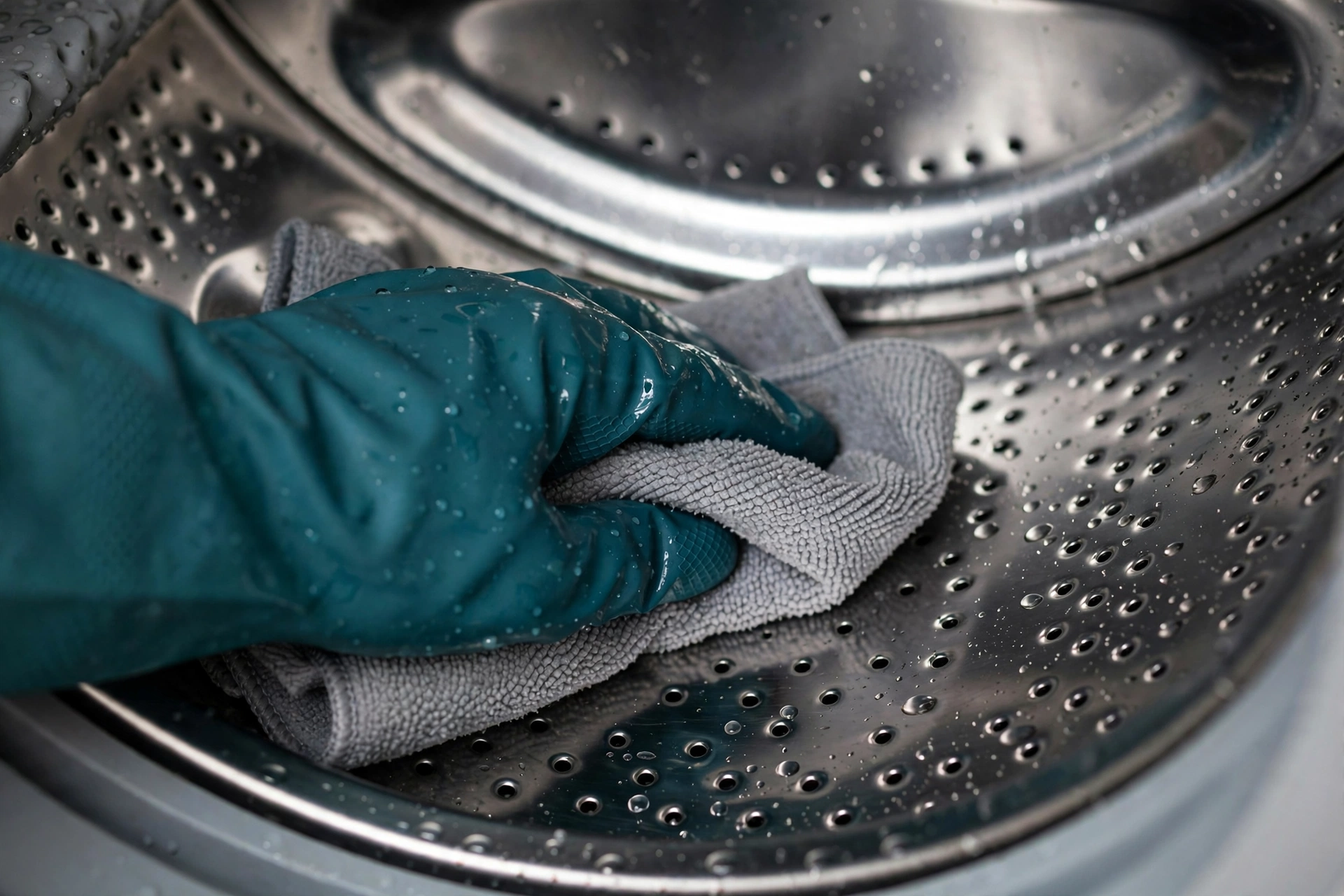
That musty smell isn’t “just how washers smell” — it’s mold and biofilm thriving on detergent residue in a damp, dark drum:
- Run a hot cleaning cycle: empty washer, hottest water, longest cycle. Add 2 cups white vinegar to the drum (or a washing machine cleaner tablet).
- Clean the gasket (front-loaders): pull back the rubber door seal and wipe the hidden groove — gray slime lives here. An old toothbrush and vinegar handle it.
- Clean the dispenser drawer: pull it out (most release with a tab press), scrub out detergent crust in hot soapy water.
- Wipe the door and drum after the cycle; leave the door and drawer open between washes — this single habit prevents most mildew.
Do this monthly. If you use liquid detergent and cold water exclusively (the mildew dream team), consider switching to powder and warm washes — they leave far less residue.
The Hose Check: Prevent the $10,000 Flood
Burst supply hoses are one of the most expensive preventable home disasters — a burst hose pumps gallons per minute into your house while you’re at work:
- Inspect every 6 months: look for bulges, cracks, blisters, or dampness at the connections.
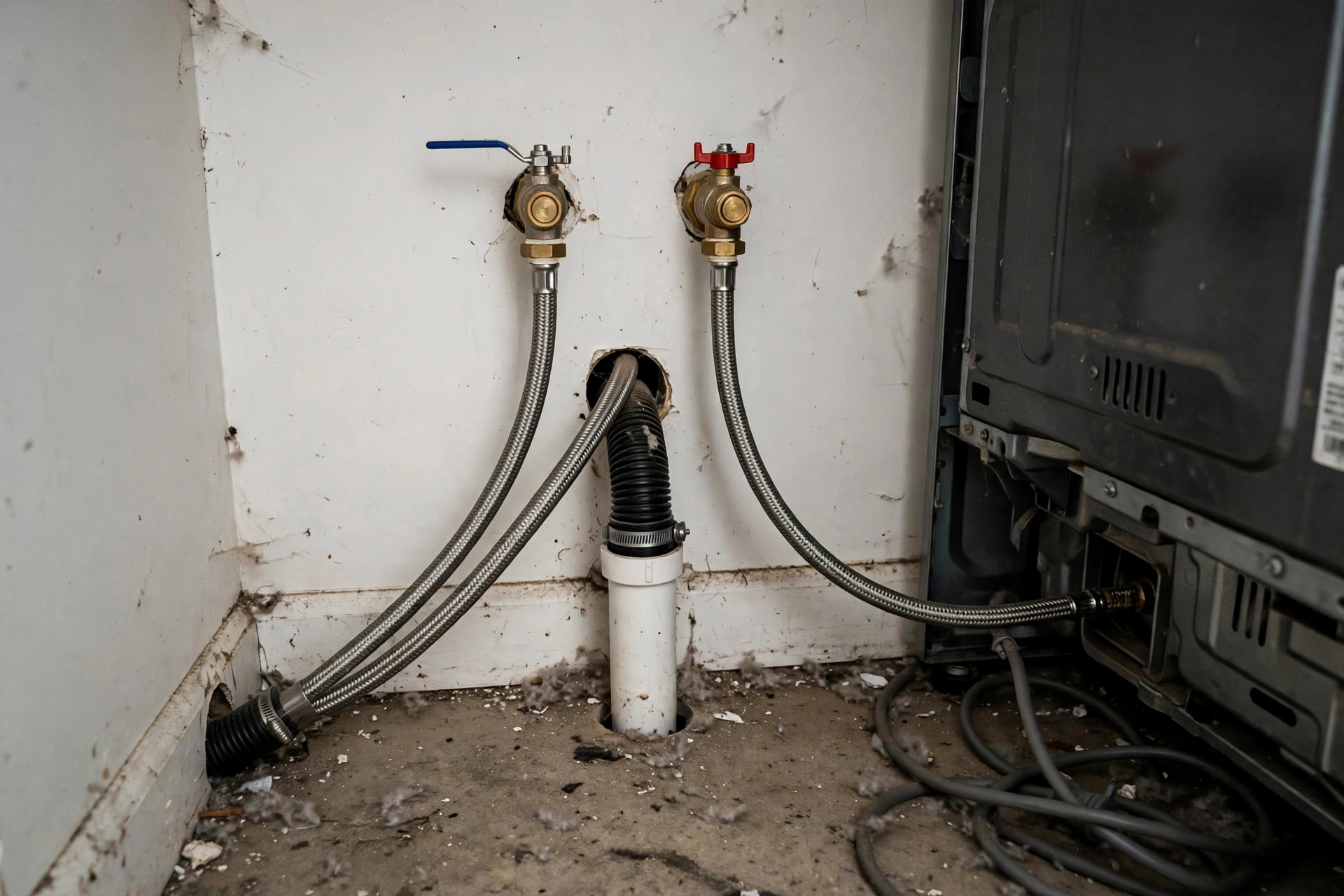
- Replace rubber hoses every 3–5 years — or better, upgrade to braided stainless steel hoses ($15–$25/pair) that resist bursting.
- Consider auto-shutoff valves: $50–$150 devices that cut water when they detect a leak — cheap flood insurance.
- Turn off the supply valves when leaving for vacations longer than a few days.
- Check that the drain hose is secured in the standpipe (not sealed airtight — it needs an air gap) and not shoved more than 6–8 inches down.
Level It: Stop the Shaking
A washer that walks across the floor or bangs violently on spin is usually just unlevel — not broken:
- Place a level on top, front-to-back and side-to-side.
- Adjust the front feet (they screw up/down) until level.
- Tighten the lock nuts against the frame so feet can’t drift.
- Make sure all four feet actually touch the floor — a rocking washer destroys itself over time.
- Put it on a solid floor if possible; bouncy wood floors amplify vibration (anti-vibration pads help).
Also: stop overloading. Cramming the drum strains the suspension, bearings, and motor — the #1 cause of premature washer death. If you have to force the door shut, it’s too full.
Detergent: You’re Using Too Much
- HE washers need HE detergent — regular detergent over-suds, leaving residue that feeds mildew and can damage the machine.
- Use less than you think: 1–2 tablespoons of HE detergent handles a normal load. The cap’s “fill line” is marketing, not engineering.
- Skip the fabric softener (or use vinegar instead) — softener coats the drum and dispensers in waxy buildup.
- Powder detergent dissolves cleaner than liquid in most machines.
Clean the Filters Most People Don’t Know Exist
- Drain pump filter (front-loaders): behind the small access panel at the bottom front. Coins, hair ties, and lint collect here — clean it every 2–3 months or the washer drains slowly and smells.
- Inlet screens: tiny mesh screens where hoses connect to the machine. Sediment clogs them, causing slow fills. Unscrew hoses, pop out screens, rinse.
- Lint: top-loaders with lint filters — clean them like a dryer’s.
What That Noise Means
- Banging on spin: unbalanced load or unlevel machine — redistribute clothes, check feet.
- Grinding: something (underwire, coin) between drum and tub — stop and fish it out.
- High-pitched squeal: worn belt or bearings — bearings on a 10+ year machine often mean replacement time.
- Gurgling drain: partial drain blockage — check the pump filter and standpipe.
- Clicking: usually the lid lock mechanism — normal on modern machines.
Top-Loader vs. Front-Loader: Maintenance Differences
- Front-loaders: mildew-prone (gasket care essential), gentler on clothes, use less water, but bearings are expensive to replace.
- Top-loaders (no agitator): fewer mildew issues, but the low-water wash can leave detergent residue — use even less detergent.
- Top-loaders (agitator): toughest on clothes, simplest mechanically, easiest and cheapest to repair.
When to Repair vs. Replace
- Repair: hoses, belts, lid switches, drain pumps, inlet valves — all cheap parts ($15–$80) on machines under 10 years.
- Replace: failed bearings or transmission on a 10+ year machine (labor exceeds value), multiple simultaneous failures, or repair quotes over 50% of new.
- Buying new: measure the space and doorways, check energy ratings, and skip the WiFi features nobody uses — reliability ratings matter more than apps. Our appliance troubleshooting guides — dishwasher not draining and refrigerator not cooling — use the same diagnose-before-you-replace approach.
Hard Water and Your Washer
Hard water leaves mineral deposits on the drum, heating elements, and clothes — stiff laundry and a shorter machine life:
- Monthly vinegar cleaning cycles matter doubly in hard-water areas.
- Use slightly more detergent (hard water needs it), but still far less than the cap suggests.
- Consider a whole-house water softener if scale is severe — it protects every appliance, not just the washer.
- White vinegar in the rinse cycle (1/2 cup) softens clothes naturally and fights buildup.
Moving a Washing Machine Safely
- Install transit bolts (front-loaders) — they lock the drum during transport. Without them, the drum slams around and destroys the suspension. Keep the bolts that came with the machine.
- Disconnect hoses, drain them into a bucket, and tape them to the machine.
- Never lay a washer on its side if avoidable — if you must, keep it brief and let it stand 24 hours before running.
- Dolly it, don’t drag it — dragging cracks the feet and damages floors.
Seasonal and Situational Tips
- Freezing garage/basement: drain hoses and run a spin-only cycle to clear water before hard freezes — frozen pumps crack.
- Hard water: monthly vinegar cycles matter doubly; consider a whole-house softener if scale is severe.
- Second homes: shut off supply valves between visits, always.
- New washer smell: run two hot empty cycles with vinegar before first use — removes factory residues.
Error Codes: Reading Your Washer’s Complaints
Modern washers display error codes instead of just dying — learn your machine’s top five:
- Drain errors (OE, ND, E20): clogged pump filter or kinked drain hose — check both before calling anyone.
- Unbalance errors (UE, UB): redistribute the load; chronic occurrences mean worn suspension rods.
- Water inlet errors (IE, E10): clogged inlet screens or closed supply valves.
- Door lock errors: clean the latch area; persistent faults need a new lock assembly ($30–$60 part).
- Over-sudsing (SUD, Sd): too much detergent — run a rinse-only cycle and use less next time.
Your manual’s troubleshooting table resolves most codes without a service call.
Laundry Room Setup: Small Things That Prevent Big Problems
- Drain pan: a $30 washer drain pan under the machine catches slow leaks before they reach the floor — required by code in many upstairs laundry installations.
- Water hammer arrestors: if pipes bang when the washer’s valves snap shut, install arrestors ($15 each) — water hammer damages valves and joints over time.
- Ventilation: laundry rooms need airflow — humidity from the washer feeds the same mildew you’re fighting in the drum.
- Upstairs laundry: verify the floor can handle 200+ lbs of dynamic load plus water weight; consider reinforced flooring and an automatic shutoff valve as mandatory, not optional.
- Keep the manual: model-specific filter locations and error codes live there — tape it inside a cabinet door nearby.
The Annual 30-Minute Checklist
- Inspect and replace hoses if due.
- Clean drain pump filter and inlet screens.
- Check level and tighten feet.
- Run a deep clean cycle.
- Inspect the power cord and outlet.
- Verify the drain hose position and standpipe.
The Bottom Line
Monthly cleaning cycle, door left open, hoses checked twice a year, don’t overload, use less detergent. Five habits, two hours a year — and your washer hits 15 years instead of dying at 8.
